The internet has transformed the way people access information, communicate, conduct business, and develop professional relationships. It has made knowledge available across geographical boundaries and created opportunities for people to learn new subjects without depending entirely on traditional classrooms. However, despite this progress, one important challenge remains unresolved: the skills people acquire are not always easy to discover, verify, understand, or connect with the opportunities that need them. A student may complete multiple online courses, participate in internships, build practical projects, and earn certificates, yet employers may still struggle to understand what that student can actually do. This gap between possessing skills and making them digitally discoverable creates an opportunity for a new educational and technological framework known as the Internet of Skills.
The Internet of Skills describes a connected digital environment in which skills can be represented, verified, searched, compared, and connected with relevant learning opportunities, professional requirements, and real-world applications. Instead of treating skills as information hidden inside resumes, certificates, academic records, or personal profiles, this model makes them structured digital information that can be understood by learners, educational platforms, recruiters, and intelligent systems. It represents a possible evolution from an internet that primarily connects information and people toward an ecosystem that also connects capabilities with opportunities.
For EasyShiksha, this concept offers an important direction for the future of digital education. As an education platform offering learning opportunities such as online courses, quizzes, internships, certificates, degree-related pathways, games, and career guidance, EasyShiksha can explore how these experiences could contribute to a more connected system of skill discovery. The objective would not simply be to help students collect educational credentials. It would be to help them build, demonstrate, and communicate capabilities that can be understood beyond the boundaries of a single course or learning experience.
Understanding the Internet of Skills
The Internet of Skills is an emerging conceptual framework rather than one universally standardised technology or established global network. Its central idea is that skills should become digitally represented and discoverable in a structured manner, allowing people and systems to understand what an individual knows, what they can perform, how their abilities were developed, and where those abilities may be useful. The framework could combine skill taxonomies, digital credentials, verified assessments, project evidence, competency frameworks, artificial intelligence, and interoperable digital records.
Consider a student who has learned spreadsheet analysis, completed a financial modelling course, passed an assessment, and developed a project using real or simulated business data. In a conventional system, this information may appear in separate places. The course provider records the completion, a certificate platform stores the credential, the student saves the project in a portfolio, and the resume contains a short description of the experience. An employer must manually connect these pieces of information to determine whether the student is suitable for an entry-level financial analyst role.
Within an Internet of Skills framework, these separate records could be linked through a structured representation of competencies. Spreadsheet analysis, data interpretation, financial modelling, and reporting could appear as related skills supported by specific learning records and project evidence. An employer searching for candidates with these capabilities could discover the relevant information more efficiently, subject to the student's permission and the platform's verification standards.
The essential difference is that the system would not merely store educational information. It would organise that information around the capabilities it represents. This distinction could make skill discovery more meaningful for students, educators, employers, and digital learning platforms.
Why Skills Are Difficult to Discover Today
Modern learners develop skills through many different routes. Some learn through university programmes, while others gain knowledge from online courses, internships, independent projects, competitions, volunteering, professional assignments, and personal experimentation. This variety makes learning more accessible, but it also creates a fragmented record of individual capabilities. Different institutions use different terminology, assessment methods, certificate formats, and definitions of competence.
A learner may describe a capability as data analysis, while a course provider calls it business analytics and an employer lists it as analytical problem-solving. Although these expressions may overlap, digital systems cannot always identify the relationship automatically. When skills are described inconsistently, relevant opportunities can remain hidden from people who are qualified to pursue them.
Another challenge is that certificates do not always communicate the depth of a person's ability. A certificate may indicate that someone completed a course, but it may not explain whether the learner can apply the knowledge independently, solve unfamiliar problems, or perform a task under realistic conditions. Employers therefore need additional information to understand the relationship between learning achievements and workplace performance.
Skills can also become difficult to discover because they are scattered across digital platforms. A student might complete an online course on one website, practise through a quiz on another, publish a project elsewhere, and obtain internship experience through a separate organisation. Even when all these activities are valuable, they may not contribute to a unified professional identity.
The Internet of Skills could address these challenges by connecting skill descriptions with evidence, standardising relevant terminology, and enabling authorised systems to exchange meaningful information. For EasyShiksha, this creates an opportunity to connect the learning journey more closely with the way students communicate their capabilities to the outside world.
From Course Completion to Digitally Discoverable Capabilities
Traditional online education often measures progress through course enrolments, completed lessons, assessment scores, and certificates. These measurements are useful because they help learners understand their progress and provide evidence that learning activities have taken place. However, they do not always provide a complete picture of what a learner can accomplish.
The Internet of Skills introduces a different way of interpreting educational progress. Instead of viewing a course as the final unit of achievement, the system could identify the competencies that the course is designed to develop. A course in digital marketing, for example, might contribute to skills such as audience research, campaign planning, search engine optimisation, content strategy, performance analysis, and advertising fundamentals.
Each skill could then be connected to evidence showing how the learner developed or demonstrated it. Course completion might establish that the learner studied the relevant material. A quiz could demonstrate understanding of key concepts, while a practical assignment could provide evidence of application. An internship could offer additional information about performance in a professional environment.
This approach would not mean that every completed course automatically proves professional competence. Instead, it would distinguish between exposure to a subject, demonstrated understanding, practical application, and verified workplace experience. The distinction is important because learners and employers need accurate representations of ability rather than exaggerated claims.
EasyShiksha could explore a system in which learning activities contribute to an evolving skill profile. As learners complete courses, attempt quizzes, build projects, and participate in internships, their profiles could become more detailed. The value of the profile would come from the quality and clarity of the evidence, not simply from the number of achievements recorded.
How an Internet of Skills Ecosystem Could Work on EasyShiksha
An Internet of Skills ecosystem requires several connected layers to function effectively. It needs a common language for describing skills, a method for recording evidence, a way to verify the source of that evidence, and mechanisms for connecting skills with relevant opportunities. Artificial intelligence and search technology could make this information easier to interpret, while privacy controls would determine how and when it can be shared.
Within EasyShiksha, the first layer could be a structured skill framework. Instead of treating every course as an isolated product, the platform could map relevant learning outcomes to a shared catalogue of competencies. A programming course might connect to problem-solving, algorithmic thinking, debugging, and software development. A communication course could connect to presentation, professional writing, active listening, and audience awareness. This would allow related capabilities to remain connected even when learners study through different courses.
The second layer could focus on evidence. Course completion, assessment results, project submissions, internship evaluations, and certificates could be represented as distinct records associated with relevant skills. Each record would explain what was completed, who issued or evaluated it, when it was achieved, and what level of verification is available. Where appropriate, learners could also add independent work or experience, clearly distinguished from formally assessed evidence.
The third layer would support discovery. Learners could search for skills they want to develop, identify opportunities related to their existing abilities, and discover which competencies are commonly associated with a particular career. Employers or authorised partners could potentially search for relevant capabilities rather than relying exclusively on degree titles or keyword-heavy resumes. Any such functionality would require careful implementation, reliable data, and appropriate access permissions.
The fourth layer could support continuous development. Skills are not permanently fixed achievements. They can improve through practice, become outdated when technologies change, or transfer from one professional area to another. A connected platform could help learners identify emerging requirements, discover relevant courses, and strengthen existing capabilities through projects or internships.
Together, these layers could transform EasyShiksha from a place where learners access individual educational opportunities into a platform that helps them understand and communicate the relationship between learning, capability, and career development. This is a potential product direction, not a claim that every component already exists on the platform.
Artificial Intelligence as the Discovery Engine
Artificial intelligence could play an important role in making skills digitally discoverable because skill information is often expressed in different words, formats, and levels of detail. Natural language processing could help identify related terms, interpret course descriptions, analyse job requirements, and connect learning outcomes with a common skill framework.
Suppose a student has completed courses in Python, statistics, and data visualisation but has never described themselves as an aspiring data analyst. An AI-supported system could identify the relationship between these learning experiences and the foundational competencies associated with data analysis. It could then suggest relevant projects or additional learning activities that help the student strengthen the profile.
The same approach could help learners understand the difference between their current capabilities and the requirements of a target role. If a job description emphasises SQL, dashboard development, data cleaning, and business communication, an intelligent system could compare those requirements with the evidence the learner has chosen to share. It could identify relevant strengths, distinguish missing evidence from missing skills, and recommend suitable next steps.
The distinction between missing evidence and missing skills is particularly important. A learner may already know how to create dashboards but have no project demonstrating that ability. In another case, the learner may have completed an introductory course without yet developing independent practical competence. An effective system should not treat both situations as identical.
AI could also support personalised recommendations by considering a learner's interests, existing skills, preferred learning methods, and career goals. Rather than recommending the same course to everyone interested in technology, the system could propose different pathways for a beginner learning programming, a graduate strengthening software development skills, or a professional moving into data engineering.
However, AI should not be treated as an unquestionable authority on competence. Automated systems can misunderstand context, misclassify skills, or overestimate ability based on incomplete information. EasyShiksha would need transparent criteria, correction mechanisms, human review where appropriate, and clear explanations of why a particular skill or recommendation appears in a learner's profile.
The Relationship Between Courses, Quizzes, Projects, and Internships
One of the strongest opportunities for EasyShiksha lies in connecting different learning formats through a shared skill framework. Courses, quizzes, projects, and internships often perform different educational functions, but their value increases when they reinforce one another.
Online courses can introduce concepts and provide structured learning materials. Quizzes can help learners test understanding and identify misconceptions. Practical projects can demonstrate whether knowledge can be applied to a specific task, while internships can offer opportunities to practise skills in a professional setting. Certificates can document defined achievements, although the meaning of each certificate depends on the assessment and verification behind it.
An Internet of Skills model could connect these experiences without reducing them to a single score. For example, a student learning web development might first complete an introductory course, then pass assessments on HTML, CSS, and JavaScript, and subsequently build a working website. An internship could provide further evidence of collaboration, debugging, communication, or delivery against project requirements.
The student's profile could present these achievements as related but distinct pieces of evidence. A recruiter could understand that the learner has studied the subject, demonstrated knowledge in assessments, and applied that knowledge in a project. If internship feedback is available and shared with permission, it could add another dimension to the profile.
Educational games could contribute to the same ecosystem when they are designed around meaningful competencies. A game involving logical challenges might help learners practise reasoning, while a simulation could provide opportunities to apply decision-making or resource-management skills. The system would need to distinguish between participation in a game and verified mastery of a competency. Game performance should only support a skill claim when the activity has a defensible relationship with the ability being measured.
This connected approach would encourage a more complete learning journey: discover a skill, study the relevant concepts, test understanding, practise through projects, gain experience, and return to learning when new requirements emerge.
Making Hidden Skills Visible to Employers
Many students possess useful abilities that are not immediately apparent from their academic qualifications. A commerce graduate might have strong spreadsheet skills, a humanities student might be an excellent researcher, and a self-taught programmer might have developed several functional applications. Traditional recruitment processes may overlook these capabilities when resumes are evaluated primarily through degrees, previous job titles, or a narrow set of keywords.
Digitally discoverable skills could provide an additional way for candidates to communicate their strengths. Rather than relying only on a general statement such as "good analytical skills," a learner could share relevant evidence from assessments, projects, and professional experiences. Employers could use this information to understand what the candidate has actually practised and how closely the evidence relates to the role.
For EasyShiksha, this possibility connects education with employability. A future skills-based discovery system could help students identify which abilities are relevant to internships and entry-level positions. It could also help employers or participating organisations explore candidate profiles according to specific, job-related criteria, provided the platform establishes appropriate partnerships and access controls.
The purpose would not be to replace degrees or make hiring decisions entirely automated. Formal qualifications remain important in many professions, and some roles require specific credentials, licences, or regulatory approvals. Instead, digitally discoverable skills could complement existing hiring methods by adding more detailed evidence of practical capability.
Recruiters would also need to understand the limitations of digital skill records. A quiz score may demonstrate knowledge of a concept but cannot establish every dimension of professional performance. A personal project may show initiative and technical ability, but it may not demonstrate experience working within a team. A well-designed system should communicate these differences rather than presenting all achievements as equivalent.
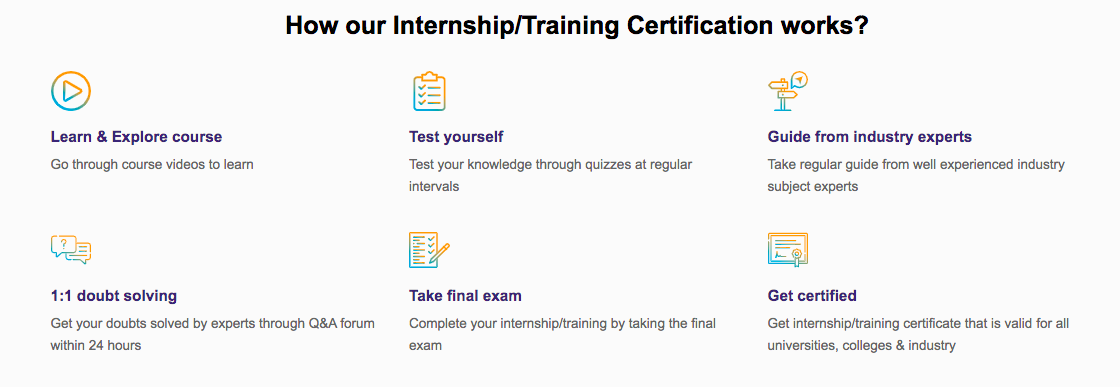
How EasyShiksha Internship/Training Program Works
The Role of Digital Credentials and Verification
The Internet of Skills depends on trust. If anyone can claim any skill without evidence, digital discoverability may make inaccurate information easier to spread rather than improving the quality of skill matching. Verification must therefore be an essential part of the system.
Digital credentials can help establish that a particular learning or assessment achievement was issued by an identifiable organisation. Depending on the credential design, they may include information about the issuer, the learner, the achievement, the issue date, and the criteria associated with it. Standards such as the W3C Verifiable Credentials model offer ways to represent digitally verifiable claims, although implementation depends on the systems and organisations involved.
A credential should communicate what it actually proves. A certificate for attending a workshop should not automatically be treated as proof of advanced competence. Similarly, completing a course should not be presented as equivalent to passing a practical assessment unless the course includes such an assessment and clearly defines its outcomes.
EasyShiksha could explore consistent metadata for certificates and other learning records so that skills are easier to interpret across the platform. Where supported by the relevant technology and issuing organisation, credentials could be made verifiable without requiring a recruiter to contact the provider manually. The platform could also show whether an achievement is self-reported, automatically recorded, assessed by an instructor, or independently verified.
Verification should not be limited to certificates. Project evidence may be assessed through defined rubrics, while internship experience may be confirmed by participating organisations. Different forms of evidence could carry different descriptions of reliability, giving users a clearer understanding of what has been demonstrated.
A trustworthy Internet of Skills ecosystem would therefore focus on evidence quality, transparent assessment standards, and clear distinctions between participation, completion, and competence.
A Skills-Based Search System for Learning and Careers
Search is one of the most practical applications of digitally discoverable skills. Today, a student may search for a course using a subject name, a career title, or a specific certificate. However, learners do not always know which skills they need, and employers do not always use the same terminology as course providers.
A skills-based search system could allow users to begin with a capability rather than a product. A student interested in digital marketing could search for audience research, campaign analytics, or search engine optimisation. The platform could then identify relevant courses, assessments, practical projects, and internship opportunities connected to those skills.
The search process could also work in the opposite direction. A learner could explore a career such as business analyst and discover the competencies commonly associated with it. The platform could explain how different skills relate to the role, which ones the learner has already supported with evidence, and which ones may require additional learning or practice.
For instance, a learner with experience in spreadsheets and business communication might discover that a business analyst pathway also involves requirements gathering, data interpretation, documentation, and visual reporting. EasyShiksha could recommend a sequence of learning experiences that helps the learner develop these capabilities without forcing them to restart their entire education journey.
Such a system could improve the relevance of recommendations because it would focus on the relationship between a learner's goals and the capabilities needed to achieve them. It could also help learners discover opportunities they might never have found through conventional keyword searches.
The system would still need to avoid presenting every career pathway as universal. Skill requirements vary by industry, employer, experience level, and location. Recommendations should therefore be framed as guidance based on available information rather than guarantees of employability.
The Internet of Skills and Personalised Career Guidance
Career guidance often begins with a student's interests, academic background, or preferred profession. These are useful starting points, but they do not always reveal the specific capabilities a learner already possesses or the practical steps needed to reach a career goal.
An Internet of Skills framework could make career guidance more evidence-based by connecting aspirations with demonstrated competencies. A student interested in cybersecurity, for example, could explore the skills commonly associated with entry-level roles, identify relevant learning activities, and build a profile showing progress over time. The system could suggest introductory networking, security fundamentals, practical labs, and suitable projects according to the student's current experience.
The process could also help students explore related career options. A learner developing programming and analytical skills might discover pathways in software development, quality assurance, data analysis, or technical support. Rather than assuming that the first career choice must remain permanent, the platform could explain how existing capabilities may transfer to adjacent roles.
EasyShiksha could potentially connect career guidance with learning recommendations and internship discovery. A learner who identifies a skills gap could move directly to a relevant course, test understanding through quizzes, practise through a project, and look for appropriate internship opportunities. As new evidence becomes available, the learner's career profile could evolve.
This would create a more continuous relationship between education and professional development. Career guidance would not be limited to a single counselling session or a static list of job titles. It could become an ongoing process of exploration, learning, evidence building, and informed decision-making.
However, career recommendations should remain understandable and open to correction. Students should be able to explore interests that do not align with their current profiles, challenge inaccurate assumptions, and make their own choices. Digital skill data should expand career possibilities rather than restrict learners to paths predicted by an algorithm.
Benefits for Students, Educators, and Employers
For students, digitally discoverable skills could improve the visibility of learning achievements. Instead of keeping certificates, assessments, and projects in disconnected locations, learners could gradually develop a structured record of their capabilities. This could make it easier to communicate relevant strengths when applying for internships, entry-level positions, or further education.
The framework could also help learners understand the practical value of their education. When a course is connected to specific skills and those skills are linked to projects or professional requirements, students can see how learning contributes to longer-term goals. This may help them make more informed decisions about which subjects to study next and where additional practice is needed.
For educators and course providers, a shared skill framework could make learning outcomes easier to communicate. Providers could describe the competencies a course aims to develop, identify suitable assessments, and explain how their programmes relate to other learning opportunities. Over time, this could support more transparent comparisons between courses without assuming that every programme is identical.
Employers could benefit from a clearer view of candidate capabilities. Instead of relying entirely on resumes and self-reported skills, they could review relevant evidence that candidates choose to share. This might help organisations identify promising applicants who have gained useful abilities through nontraditional routes, including independent projects and online learning.
Educational platforms could also gain insights into the connections between learning and employment. Aggregated, privacy-protected information could help identify which skills learners frequently pursue, where course pathways are incomplete, and which competencies are difficult to demonstrate. Such information could inform improvements to course design and career guidance, provided the analysis is conducted responsibly.
These benefits would depend on implementation quality. Digital skill records cannot automatically guarantee better hiring, stronger learning outcomes, or fairer opportunities. Their value would come from making relevant information more reliable, accessible, interpretable, and useful for decision-making.
Challenges: Privacy, Bias, and the Risk of Oversimplifying Skills
Making skills digitally discoverable raises important questions about privacy. A detailed skill profile may reveal educational history, professional interests, assessment performance, career plans, and other information that a learner may not want to share with every organisation. A responsible system must allow individuals to control what information is disclosed and for what purpose.
EasyShiksha would need to consider consent, data minimisation, secure storage, access controls, retention policies, and processes for correcting or deleting information where applicable. Students should understand which records are visible, which organisations can access them, and whether data is used to generate recommendations or analytical insights. Sensitive learning information should not become publicly searchable simply because it has been collected digitally.
Another challenge is the possibility of algorithmic bias. If AI systems learn from incomplete or historically biased employment data, they may favour familiar education pathways or undervalue candidates with nontraditional experiences. A skill-matching system must be tested for unfair outcomes and should not use a learner's educational history as a simplistic measure of their potential.
There is also a risk of reducing human capability to a list of labels. Skills such as empathy, leadership, creativity, judgement, and collaboration are complex and context-dependent. Some can be assessed in specific situations, but they cannot always be represented accurately through a single score or certificate. The framework should preserve context and explain how evidence was collected rather than pretending that every capability can be measured in the same way.
Finally, digitally discoverable skills could create pressure to continuously document every activity. If students believe that every project, quiz, or learning interaction must be recorded to remain competitive, education may become excessively focused on measurable achievements. EasyShiksha should encourage meaningful development rather than turning learning into a race to accumulate profile entries.
A successful Internet of Skills ecosystem must balance discoverability with privacy, standardisation with context, and automated assistance with human judgement.
Building an Internet of Skills Strategy for EasyShiksha
Developing this concept would require a phased approach rather than launching a complex network immediately. The first step could be to define a clear skill taxonomy for selected learning categories. Each skill would need a consistent name, a useful description, relevant learning outcomes, and a distinction between introductory understanding and more advanced application.
The next step could be to map existing learning resources to this framework. Courses, quizzes, certificates, projects, and internship opportunities could be associated with relevant skills where the connection is justified. This would make it possible to explore how a learner's different educational activities could contribute to a coherent skill profile.
EasyShiksha could then test a learner-controlled skills profile that distinguishes between course completion, assessed knowledge, practical project evidence, and verified experience. Rather than immediately assigning a universal skill score, the profile could explain the source and nature of each record. This would provide a more transparent foundation for future discovery features.
A later phase could introduce skill-based recommendations. Learners might identify a career goal, compare it with the capabilities they have demonstrated, and receive suggestions for courses, quizzes, projects, or internships. The platform could test whether these recommendations improve the relevance of learning choices and help users understand their next steps.
Partnerships would be important for extending discovery beyond the platform. Educational institutions, internship providers, employers, and credential issuers could contribute compatible information where agreements and technical integrations permit. Common standards would help prevent the system from becoming another isolated database that works only within one website.
Before expanding the framework, EasyShiksha would need to evaluate whether learners can understand their profiles, whether evidence is reliable, whether recommendations are useful, and whether employers find the information meaningful. Success should be measured through practical outcomes, including skill-profile completion, learner engagement with recommended pathways, verified evidence of capability, and the usefulness of matching results. The goal should be to improve the connection between education and opportunity rather than maximise the number of records stored.
Empower your team. Lead the industry
Get a subscription to a library of online courses and digital learning tools for your organization with
EasyShiksha
The Future: From Digital Learning Records to a Connected Skills Economy
The Internet of Skills could become increasingly relevant as work changes, professional roles evolve, and people develop capabilities through a growing variety of educational experiences. Traditional qualifications will continue to matter, but learners may increasingly need ways to communicate the specific skills they possess and the evidence supporting those claims.
In a connected skills ecosystem, educational achievements could become more portable and useful across different platforms. A learner might build capabilities through multiple providers while maintaining a clear, permission-based record of relevant evidence. Intelligent systems could help interpret that evidence, identify related learning opportunities, and connect individuals with work that matches their abilities.
The concept could also support lifelong learning. Skills that are relevant at the beginning of a career may need to be updated as technologies and professional expectations change. A dynamic skills profile could help learners identify emerging requirements and understand which existing capabilities remain useful. It could also show how skills developed in one field may transfer to another, supporting career transitions and continued professional growth.
For EasyShiksha, the opportunity lies in connecting education, assessment, practical experience, credentials, and career development around a shared understanding of skills. The platform could help learners move beyond the idea that education is simply a collection of completed courses. Instead, it could support a continuous process in which learners develop capabilities, demonstrate them through meaningful evidence, and use them to explore new opportunities.
The future Internet of Skills should not become a system that permanently ranks people or determines their professional worth through automated profiles. Its purpose should be to make abilities easier to communicate and opportunities easier to discover while preserving individual choice and the complexity of human potential.
Conclusion: Making Skills Visible, Verifiable, and Valuable
The Internet of Skills represents a possible next stage in the development of digital education. It shifts attention from disconnected learning records toward structured, discoverable capabilities that can be connected with courses, assessments, projects, internships, and career opportunities. By combining consistent skill descriptions, reliable evidence, intelligent discovery, and privacy-conscious sharing, this model could make the relationship between education and employment easier to understand.
For EasyShiksha, the concept provides a strategic opportunity to connect its educational offerings through the capabilities they help learners develop. Online courses could introduce knowledge, quizzes could test understanding, projects could demonstrate application, internships could provide professional exposure, and certificates could document defined achievements. When these experiences are connected carefully, they could contribute to a clearer picture of a learner's developing abilities.
The most important shift is from asking how many courses a student has completed to understanding which capabilities the student has developed and how those capabilities can be demonstrated. A digitally discoverable skill becomes more useful when its meaning is clear, its evidence is trustworthy, and the learner can decide when and how to share it.
If implemented responsibly, an Internet of Skills approach could help EasyShiksha move toward a more connected education-to-career ecosystem. It could make learning achievements easier to interpret, help students discover relevant opportunities, and support a future in which capabilities are recognised across different educational and professional environments. Ultimately, the goal is not to digitise every aspect of human ability. It is to make valuable skills easier to discover without losing sight of the people, experiences, and potential behind them.
Anshika Jain is an Engineer, Developer, and Educational Content Author known for her dedication to technology and knowledge sharing. With a strong analytical mindset and a passion for innovation, she has consistently contributed to creating meaningful digital solutions and insightful educational articles.
Her ability to simplify complex technical concepts into engaging and easy-to-understand content makes her work valuable for students and learners across various platforms. Along with her technical expertise, Anshika is admired for her creativity, professionalism, and commitment to continuous learning.
She represents a perfect blend of technical excellence and impactful communication, inspiring others through both her development work and educational contributions.