Personalization has become one of the most promising capabilities in digital education. Learning platforms can recommend courses based on a student's interests, adjust the difficulty of assessments, suggest revision activities, provide reminders and guide learners towards relevant career opportunities. Artificial intelligence can make these experiences more responsive by analysing learning progress and identifying what a student may need next. Ideally, personalization helps learners make better decisions, overcome learning difficulties and achieve their educational goals more efficiently.
However, an important question emerges as educational systems become increasingly capable of influencing human behaviour: when does personalization stop supporting a learner and begin controlling the learner's choices?
A platform that reminds a student to complete an unfinished lesson may provide useful assistance. A platform that repeatedly uses anxiety about falling behind to pressure the student into purchasing another course operates differently. Both systems influence behaviour, but their purposes, methods and effects are not the same. One supports a learner's stated goal, while the other may exploit psychological pressure to achieve a platform objective.
This distinction can be described through the concept of the Learning Manipulation Boundary. It represents the ethical and operational boundary between personalization that strengthens a learner's ability to make informed decisions and personalization that attempts to steer, pressure or constrain behaviour for purposes that may not align with the learner's interests.
For EasyShiksha, this question is particularly relevant because an education ecosystem can connect online courses, quizzes, internships, certificates, university programmes, games, projects and career guidance. Such an ecosystem could potentially use learning data to recommend meaningful next steps throughout a student's educational journey. Yet the more effectively a platform understands learner behaviour, the greater its responsibility to use that understanding carefully.
The future of intelligent education should therefore not be measured only by how successfully a platform increases engagement, course completion or enrolment. It should also be evaluated by whether learners retain control over their decisions, understand why recommendations appear and can choose a different path without being manipulated.
What Is the Learning Manipulation Boundary?
The Learning Manipulation Boundary is a proposed framework for distinguishing learner-centred personalization from behavioural influence that undermines learner autonomy. It asks whether an educational system is helping students pursue their own goals or attempting to shape their behaviour primarily to serve the interests of the platform.
Personalization is not inherently manipulative. A student learning JavaScript may benefit from recommendations that address gaps in functions, arrays or asynchronous programming. A learner preparing for an internship may appreciate reminders about application deadlines. A student who struggles with a particular concept may benefit from a simpler explanation or a targeted practice exercise.
These interventions become ethically questionable when their design relies on hidden pressure, misleading information, emotional exploitation or unnecessary restrictions on choice. For example, an education platform might use a student's fear of failure to encourage repeated purchases, imply that a certificate is essential for employment without sufficient evidence or make it difficult to decline recommendations that generate revenue for the platform.
The central issue is not simply whether a system changes behaviour. Education itself involves influencing behaviour: teachers encourage practice, assessments motivate preparation and career guidance helps students reconsider their plans. The important question is how that influence operates, whose interests it serves and whether the learner can understand and resist it.
A responsible personalization system should make learners more capable of directing their educational journeys. It should help them understand their options, recognise their learning needs and make informed choices. It should not quietly replace their priorities with the priorities of the organisation delivering the experience.
The Difference Between Guidance, Persuasion and Manipulation
To understand the boundary, it is useful to distinguish three forms of influence: guidance, persuasion and manipulation. These categories can overlap, but they provide a practical way to examine educational technology.
Guidance provides relevant information that helps learners make decisions. If a student completes an introductory course and receives a recommendation for a more advanced programme, the platform can explain the prerequisite knowledge, expected learning outcomes and alternative pathways. The learner receives information that supports independent judgement.
Persuasion attempts to encourage a particular choice by presenting reasons or highlighting benefits. A platform might explain why completing a practical project could strengthen a student's portfolio. Persuasion can be appropriate when its claims are accurate, its purpose is transparent and the learner remains free to disagree.
Manipulation becomes a concern when influence relies on deception, concealed incentives, exploitation of vulnerabilities or pressure that interferes with informed decision-making. A platform might exaggerate the risk of unemployment to push students towards a paid programme, use false scarcity to create urgency or repeatedly target a learner who has expressed financial concerns.
The distinction depends on more than the wording of a message. A recommendation can sound helpful while being generated primarily to maximise revenue. Conversely, a firm reminder may be appropriate if a student has explicitly requested deadline notifications.
For EasyShiksha, the practical objective would be to ensure that recommendations, reminders and personalized learning pathways are aligned with genuine educational purposes. When commercial incentives influence recommendations, that influence should be managed transparently rather than hidden behind the appearance of objective educational advice.
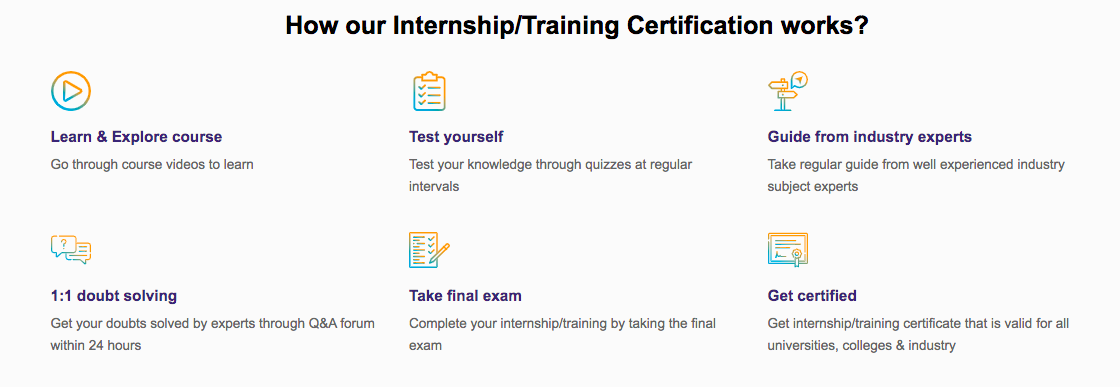
How EasyShiksha Internship/Training Program Works
Why Personalization Creates a New Ethical Challenge
Traditional educational systems have always influenced students, but digital platforms can potentially influence behaviour at a much greater level of detail. They may observe which lessons learners complete, which questions they answer incorrectly, how frequently they return, what recommendations they follow and where they abandon a learning activity.
When combined with artificial intelligence, these signals can be used to predict which content a learner might engage with or which intervention could encourage a particular action. Such capabilities can improve learning support, but they can also make behavioural influence more targeted.
A generic reminder may have limited impact. A system that knows a student frequently abandons lessons after difficult assessments could send a supportive revision suggestion at that moment. That may be beneficial if the learner wants help overcoming the difficulty. However, the same information could be used to target the student with an emotionally persuasive message, a paid upgrade or an unnecessary product recommendation.
The ethical challenge therefore grows as personalization becomes more precise. A system may understand a learner's behaviour without necessarily understanding the learner's broader circumstances, intentions or best interests.
A student who stops studying might be tired, occupied with family responsibilities, reconsidering a career choice or simply taking a planned break. Interpreting every interruption as a problem to be corrected can turn personalization into persistent behavioural management.
An ethical learning platform must recognise that not every deviation from an engagement target represents a failure. Sometimes the appropriate response is to provide support. Sometimes it is to ask the learner what they need. Sometimes it is to leave the learner alone.
Engagement Is Not the Same as Learning
One of the most important risks in personalized education arises when engagement becomes the primary measure of success. Platforms can often measure clicks, session duration, daily visits, lesson completion and interaction frequency more easily than they can measure lasting understanding or independent capability.
These engagement indicators can provide useful information, but they are not reliable substitutes for learning outcomes. A student may spend considerable time on a platform without developing strong practical skills. Another may complete a short, focused session and achieve meaningful progress.
If a personalization system is optimised mainly to increase time spent on the platform, it may learn to recommend activities that keep learners active rather than activities that help them progress. It could repeatedly suggest familiar content because it is comfortable, encourage unnecessary revision or make it harder for learners to leave after completing their goals.
This creates a conflict between platform engagement and learner benefit. More engagement can be valuable when it supports learning, but it is not inherently desirable.
EasyShiksha could potentially address this challenge by evaluating personalization against meaningful outcomes such as knowledge retention, practical performance, independent problem-solving and progress towards learner-defined goals. The system should recognise when a student has achieved the intended outcome, even if that achievement requires fewer sessions or less time on the platform.
The goal should be effective learning rather than continuous engagement.
The Dark Pattern Problem in Educational Technology
Dark patterns are interface and interaction designs that steer people towards choices they might not otherwise make, often by exploiting confusion, friction or psychological pressure. In education, such patterns can undermine trust because students may believe that recommendations are designed exclusively to improve their learning.
Consider a student who completes a course and receives a certificate. If the platform presents a clear explanation of optional advanced programmes, the student can decide whether further study is appropriate. If the platform repeatedly implies that the certificate has little value unless the student purchases additional courses, without adequate evidence, the experience becomes more coercive.
Other examples include making paid upgrades easier to accept than decline, using misleading countdowns to create urgency, hiding cancellation controls or framing an optional subscription as necessary for career success. These designs may increase conversions in the short term, but they can weaken the learner's ability to make informed choices.
Educational platforms also need to be careful with streaks, rankings and progress indicators. A learning streak can help a student maintain a study routine, particularly when the student has chosen that goal. However, a design that makes learners feel ashamed or excessively anxious about breaking a streak can shift motivation away from learning and towards preserving an arbitrary metric.
For EasyShiksha, interface decisions should be assessed according to whether they clarify choices or distort them. Important options should be understandable, commercial offers should be distinguishable from educational recommendations and students should be able to decline optional services without unnecessary difficulty.
Emotional Vulnerability and the Responsibility of AI
Students do not approach learning with identical emotional states. Some feel confident and curious, while others experience examination anxiety, career uncertainty, financial pressure or fear of falling behind their peers. An intelligent system may detect certain patterns in a learner's interactions, but those patterns do not provide a complete or reliable picture of the person's emotional condition.
This creates a significant ethical responsibility. A platform should not use inferred vulnerability as an opportunity to increase commercial pressure. A student who performs poorly on a quiz should receive constructive feedback and an appropriate opportunity to improve, not a message suggesting that failure is inevitable without a paid upgrade.
Similarly, a learner who has not secured an internship should not be targeted with exaggerated claims about how quickly a particular course will guarantee employment. Career uncertainty can make students especially receptive to promises of success, even when those promises are not supported by evidence.
An ethical system can still provide encouragement. It can explain that a student has several ways to strengthen their profile, recommend relevant projects and suggest practical steps for improving interview readiness. The difference is that support expands the learner's options instead of using fear to narrow them.
EasyShiksha could potentially establish clear limits on the use of behavioural signals in recommendations. The platform should avoid making sensitive psychological inferences without a legitimate basis and should never treat a student's anxiety, confusion or lack of confidence as a commercial opportunity.
When Gamification Supports Learning and When It Controls Behaviour
Games and gamified learning experiences can make difficult subjects more engaging. Points, levels, progress indicators, challenges and achievements can provide feedback and help students recognise progress. They can also create a sense of structure when a learner is beginning a new subject.
However, gamification becomes problematic when rewards and penalties begin to dominate the learning objective. A student may start choosing activities because they produce the most points rather than because they address a genuine learning need. Another may continue practising familiar questions to maintain a ranking while avoiding more challenging tasks that would improve their understanding.
The risk increases when educational rewards are designed to create compulsive participation. Artificial scarcity, unpredictable rewards and persistent pressure to return can encourage repeated interaction without demonstrating that the activity improves learning.
A healthier approach connects game mechanics to meaningful educational outcomes. A badge might recognise successful completion of a practical challenge. A progress level might reflect demonstrated mastery. A collaborative activity might reward constructive teamwork rather than merely the number of times a student interacts with others.
For EasyShiksha, educational games could potentially support motivation while preserving learner control. Students should understand what a reward represents, be able to participate without excessive pressure and have the opportunity to pause or leave an activity without losing essential learning records.
Gamification should make progress visible, not make disengagement feel like a personal failure.
Recommendation Systems and Hidden Commercial Incentives
Course recommendation systems can help students navigate large educational catalogues. A learner interested in data analytics may benefit from suggestions for spreadsheet skills, statistics, SQL, data visualisation and practical projects. A student preparing for a web development internship may need a different pathway.
However, recommendations can be influenced by multiple objectives. A platform might prioritise educational relevance, course quality, learner readiness, commercial partnerships or revenue. Problems arise when these objectives conflict and the system presents its recommendations as if they were based entirely on the learner's needs.
For example, an expensive course might be recommended over a suitable free learning resource because the former produces greater revenue. Alternatively, a student who has already mastered a concept might receive repeated introductory recommendations because those courses are commercially promoted.
A transparent system should distinguish between recommendations based on demonstrated learning needs and recommendations influenced by sponsorship or commercial arrangements. It should also explain why a course appears, what prerequisites it assumes and what alternatives are available.
EasyShiksha could potentially design recommendation logic around learner-defined objectives, prerequisite knowledge and evidence of progress. Commercial considerations may remain part of a sustainable business model, but they should not silently override educational relevance.
The important principle is that the learner should be able to understand the recommendation well enough to make an independent decision about whether to follow it.
Designing for Learner Autonomy
Learner autonomy means that students retain meaningful control over their educational goals, choices and pace. An autonomous learner can decide what to study, evaluate recommendations, change direction and stop an activity when appropriate. Personalization should strengthen this ability rather than gradually replace it.
One way to support autonomy is to allow students to define their own goals. A learner may want to prepare for an examination, improve a professional skill, explore a new subject or build a portfolio. The platform can use those goals to guide recommendations while allowing them to change as circumstances evolve.
Another approach is to explain the reasoning behind important suggestions. If a system recommends a React course, it could show that the learner has demonstrated foundational JavaScript knowledge and that React may support the stated goal of pursuing frontend development. It should also allow the learner to reject the recommendation or choose an alternative route.
Control over notifications is equally important. Students should be able to select reminder frequency, pause notifications and decide which kinds of updates they want to receive. A learner who temporarily stops studying should not be subjected to increasingly urgent messages designed to force a return.
For EasyShiksha, autonomy could become a core design principle. The system should provide guidance, make progress understandable and support decisions, while leaving the student in control of the destination.
The Learning Manipulation Boundary Framework
A practical Learning Manipulation Boundary framework could assess personalized interventions through several connected questions. The first concerns purpose: does the intervention support a clearly defined learning goal or primarily advance an unrelated commercial objective? A recommendation that addresses a demonstrated knowledge gap has a stronger educational justification than one designed only to increase spending.
The second concerns transparency. Can the learner understand why the intervention appears and what information influenced it? A system does not need to expose every technical detail of an algorithm, but it should provide a meaningful explanation of important recommendations and disclose relevant commercial influences.
The third concerns choice. Can the student decline the recommendation, change settings or pursue another path without unnecessary friction? If the system makes refusal difficult or repeatedly pressures the learner after a clear decision, its behaviour moves closer to coercive design.
The fourth concerns proportionality. Is the intervention appropriate to the importance of the goal? A brief reminder about a deadline may be reasonable, while repeated urgent notifications about an optional course may be excessive.
The fifth concerns evidence of benefit. Does the intervention improve meaningful learning outcomes, or does it merely increase clicks, time spent and purchases? A system should be able to justify its design in terms of learner benefit rather than engagement metrics alone.
These questions could help EasyShiksha evaluate personalized messages, course recommendations, gamification features, reminders and AI-generated career guidance. The framework would not eliminate every difficult ethical judgement, but it could make those judgements more systematic and accountable.
AI Personalization Should Be Auditable
As educational platforms introduce more advanced AI, it becomes increasingly important to examine how personalization decisions are made. A recommendation system may work well for one group of students while producing less useful or more pressuring experiences for another. Without evaluation, these differences can remain hidden.
An audit could examine whether recommendations accurately reflect learner goals, whether commercial content is clearly identified, whether notifications respect user preferences and whether the system relies on misleading claims. It could also test how the platform behaves when learners decline recommendations, reduce engagement or change their goals.
For example, a learner who repeatedly rejects a course recommendation should not automatically receive increasingly forceful messages promoting the same course. The system could instead ask whether the recommendation is relevant, offer alternatives or stop showing it.
Auditing should also consider the outcomes that the AI is optimising. If the system is rewarded primarily for increasing course purchases, it may discover strategies that improve conversions without improving learning. If it is evaluated on demonstrated learning progress, learner satisfaction, autonomy and long-term outcomes, its incentives may be better aligned with educational goals.
EasyShiksha could potentially establish periodic reviews of personalization features, including feedback from students and educators. Significant changes to recommendation logic should be tested for both effectiveness and unintended behavioural effects.
Data Privacy and the Limits of Behavioural Inference
Personalized learning depends on information about student activity, but collecting more data does not automatically produce better educational decisions. Excessive monitoring can create privacy risks and encourage platforms to make assumptions that the available evidence cannot support.
A student who pauses a course may be busy, tired, reconsidering the subject or simply satisfied with their current progress. A system that interprets the pause as a lack of motivation may send inappropriate messages or recommend unnecessary interventions.
Behavioural data should therefore be interpreted cautiously. Patterns can indicate that a student may need support, but they should not be treated as definitive evidence of emotional state, personal circumstances or long-term potential.
Data collection should be proportionate to the educational purpose. Students should receive understandable information about how their data is used, and access to essential learning should not depend on agreeing to unrelated behavioural tracking. Where personalization relies on optional data or preferences, learners should have meaningful control over those choices.
For EasyShiksha, privacy-conscious personalization could help establish trust. The platform could use relevant learning information to improve recommendations without treating every aspect of a student's behaviour as something to monitor, predict or influence.
Empower your team. Lead the industry
Get a subscription to a library of online courses and digital learning tools for your organization with
EasyShiksha
If educational platforms want to avoid manipulative personalization, they need measures of success that go beyond immediate engagement and commercial conversion. Click-through rates and enrolments can reveal whether students respond to an intervention, but they do not establish whether the intervention is educationally beneficial.
A more balanced evaluation could consider whether learners improve their knowledge, retain skills, complete meaningful projects and become more capable of solving problems independently. It could also examine whether students understand recommendations, feel able to reject them and believe that the platform respects their goals.
Longer-term evaluation is particularly important. A reminder may increase course completion in the short term but create frustration if it is too frequent. A gamified feature may increase daily activity while encouraging superficial practice. A career recommendation may generate an immediate enrolment but prove poorly matched to the learner's actual needs.
EasyShiksha could potentially test personalization features against these broader outcomes. Where possible, the platform could compare alternative designs, gather learner feedback and investigate whether observed engagement translates into stronger learning.
The objective is not to remove every persuasive element from education. It is to ensure that influence is justified by educational value and remains compatible with learner autonomy.
Building a Trustworthy Personalized Education Ecosystem
Trust is essential when students rely on an education platform to guide decisions about time, money and career development. Learners need confidence that recommendations are relevant, claims are credible and their interests are taken seriously.
A trustworthy ecosystem explains the purpose of its learning interventions, distinguishes educational advice from commercial promotion and provides alternatives when several pathways are reasonable. It also recognises that learners have different circumstances and that changing direction can be a legitimate choice rather than a problem to correct.
EasyShiksha could potentially apply these principles across its broader ecosystem. Courses could be recommended according to demonstrated learning needs. Quizzes could identify knowledge gaps without using poor performance to generate fear. Projects and internships could be suggested because they provide relevant practical experience. Certificates could be described accurately, without implying that every credential guarantees employment. Career guidance could present multiple pathways and explain the trade-offs between them.
This approach would make personalization more than a mechanism for increasing platform activity. It would turn personalization into a service that helps learners understand their options, make deliberate choices and develop capabilities aligned with their own goals.
Conclusion: Personalization Should Expand Choice, Not Replace It
The Learning Manipulation Boundary highlights a fundamental challenge for intelligent education. The same technologies that make learning more relevant and responsive can also be used to influence behaviour in ways that learners do not fully understand or genuinely want. The distinction depends on the purpose of the intervention, the transparency of its design, the strength of the evidence behind it and the degree of control retained by the learner.
Personalization is most valuable when it helps students identify knowledge gaps, discover relevant opportunities, overcome difficulties and make informed decisions. It becomes ethically concerning when it exploits anxiety, hides commercial motives, creates unnecessary pressure or makes it difficult to reject a recommendation.
For EasyShiksha, this concept offers a way to think more carefully about the future of AI-supported education. Courses, quizzes, games, projects, internships, certificates and career guidance could potentially become part of a personalized learning journey that adapts to student needs while respecting student choice.
The measure of success should not be how effectively a platform can keep a learner engaged, influence a purchase or direct behaviour towards a predefined outcome. It should be whether the learner becomes more knowledgeable, more capable and better equipped to make independent decisions.
Ultimately, intelligent education should use its understanding of learners to expand their possibilities, not to narrow them through hidden pressure. The most responsible personalization is not the personalization that controls behaviour most effectively, but the personalization that helps learners remain in control of their own learning.
Anshika Jain is an Engineer, Developer, and Educational Content Author known for her dedication to technology and knowledge sharing. With a strong analytical mindset and a passion for innovation, she has consistently contributed to creating meaningful digital solutions and insightful educational articles.
Her ability to simplify complex technical concepts into engaging and easy-to-understand content makes her work valuable for students and learners across various platforms. Along with her technical expertise, Anshika is admired for her creativity, professionalism, and commitment to continuous learning.
She represents a perfect blend of technical excellence and impactful communication, inspiring others through both her development work and educational contributions.