How much does a prime minister earn? The answer can range from a few million rupees a year to tens of crores, depending on where they govern. Across countries, political leaders are paid under very different systems; some receive a fixed salary, while others get additional parliamentary pay, bonuses or allowances.
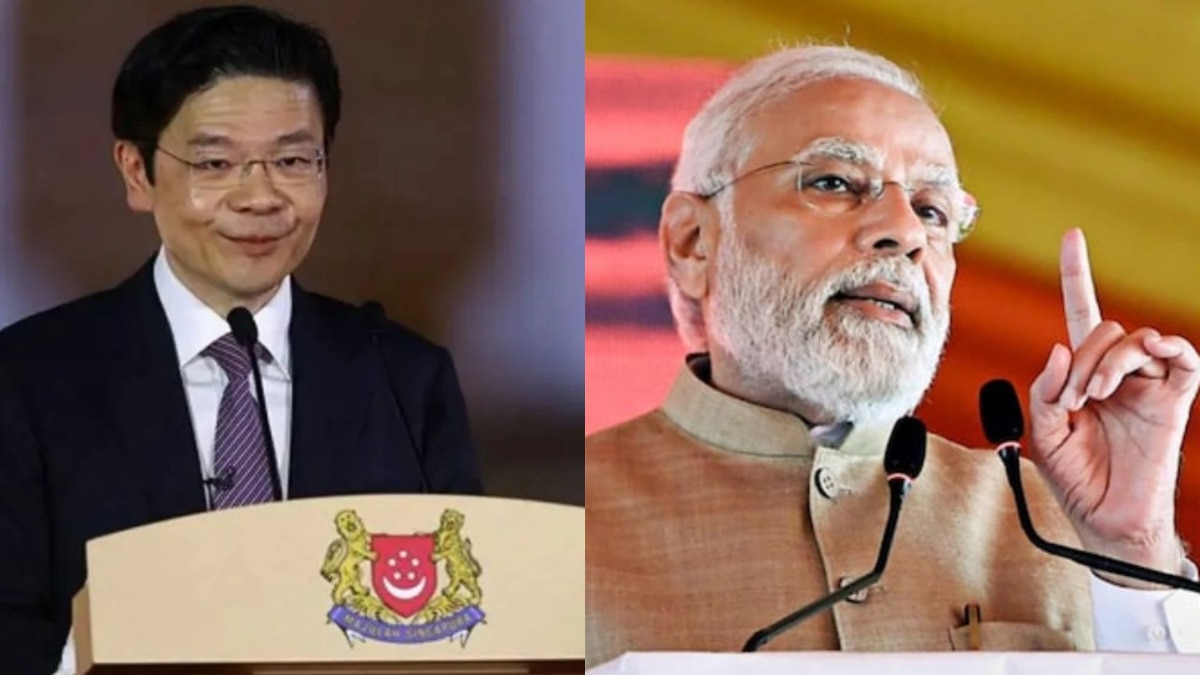
Singapore's Prime Minister Lawrence Wong is set to receive a 64 percent increase in his annual salary norm, taking it to SgD 3.6 million, or around Rs 27 crore, under a revised pay framework that takes effect from October 15, 2026. The figure includes bonuses and other variable components.
So, how much do prime ministers earn around the world, and how does their pay compare?
CANADA: CAD 217,700 PLUS MP SALARY
Canada's Prime Minister receives an additional salary of CAD 217,700 for serving as prime minister, on top of the CAD 217,700 parliamentary sessional allowance. That puts the two components at CAD 435,400 a year before other applicable benefits or allowances. Canada's House of Commons lists these rates as effective from April 1, 2026.
INDIA: SALARY GOVERNED BY LAW
In India, the Prime Minister's pay and allowances are governed by the Salaries and Allowances of Ministers Act, 1952, along with statutory allowances and official benefits. The Act sets out the framework governing the remuneration of the Prime Minister and other ministers. The Prime Minister of India reportedly gets Rs 1.66 lakh per month.
SWITZERLAND: AROUND USD 606,000 A YEAR
Switzerland's president receives an annual salary of around US$606,000, according to Reuters. The figure places the Swiss presidency among the better-paid political leadership positions globally, although remuneration structures vary across countries.
HONG KONG: AROUND USD 719,000 A YEAR
According to Reuters, Hong Kong's chief executive earns an annual salary of around US$719,000, placing the office among the world's highest-paid political positions.
NEW ZEALAND: NZD 520,500 A YEAR
New Zealand Prime Minister's salary is set at NZD 520,500 a year from July 1, 2026, until polling day for the next general election. The figure is specified in the country's official parliamentary remuneration determination and represents the annual salary payable to the PM.
US: USD 400,000 A YEAR
The US President receives an annual salary of USD 400,000, according to Reuters, in addition to other official allowances and benefits.
NORWAY: NOK 2.23 MILLION A YEAR
The Norwegian Prime Minister receives an annual remuneration of NOK 2,234,978. The figure was published by the Norwegian government in June 2026 under its official remuneration framework for political leaders.
UK: AROUND USD 230,000 A YEAR
According to Reuters, the UK Prime Minister earns around US$230,000 a year, making it one of the higher salaries among major political leaders.
IRELAND: EUR 132,820 PLUS PARLIAMENTARY PAY
In Ireland, the country's PM has a published ministerial salary of EUR 132,820. However, this is only the ministerial component. The PM also receives a parliamentary salary as a member of the Dil. As a result, the EUR 132,820 figure cannot be directly compared with a total remuneration package published by another country.
AUSTRALIA: AUD 579,000 PLUS PM COMPONENT
The Australian Prime Minister's remuneration consists of his parliamentary salary as well as an additional amount for serving as PM. The parliamentary base is AUD 579,000, with an additional office-holder component determined under Australia's remuneration framework.
Australia, like the UK and Ireland, therefore uses a system in which the PM's parliamentary and executive roles are reflected separately in remuneration.
SINGAPORE: SGD 3.6 MILLION A YEAR
Singapore's new SGD 3.6 million annual package puts its PM in a different league from most of the other leaders in this comparison. The package is designed differently from a straightforward annual salary. It includes a 13th-month bonus, an Annual Variable Component and a National Bonus, meaning the headline figure reflects several elements of remuneration.
Singapore has long defended its high political salaries on the grounds that ministers and political leaders should be competitively compensated to attract and retain talent.
The comparison, however, comes with an important caveat: PM salaries are not calculated uniformly across countries. A figure described as a salary in one country may be a basic salary, while another country's published number may include bonuses, parliamentary remuneration or other components.
So while the figures offer a striking snapshot of how differently political leadership is valued and compensated around the world, they should not be treated as a perfectly like-for-like ranking.