Education has traditionally been organised around timetables, semesters, course schedules, and fixed curricula. Students learn a concept during a particular week, complete an assessment, and move to the next topic. This structure helps institutions organise teaching and measure academic progress. However, it does not always match when learners actually need particular knowledge.
A student might study spreadsheet analysis months before using it during an internship. A developer might learn a programming concept and forget important details before starting a practical project. A graduate might encounter a workplace challenge that requires knowledge covered during an earlier university course. In each situation, the knowledge was taught, but its timing did not fully match the learner's needs.
This creates an important opportunity for a different educational approach. Chrono-Learning Architecture is a proposed framework for organising learning around the time knowledge becomes useful. It considers when students should acquire information, when they should revisit it, and when they should apply it. Instead of treating teaching schedules as the primary organising principle, it connects learning with readiness, retention, upcoming tasks, and real-world requirements.
For EasyShiksha, this concept could connect online courses, quizzes, internships, projects, certificates, university programmes, and career guidance. Students could learn foundational concepts before they need them, refresh important knowledge before practical assignments, and receive targeted support when unfamiliar challenges arise. Learning would become a continuous process rather than a sequence of disconnected educational events.
The central idea is simple. Education should not only ask what students need to learn. It should also ask when learning will create the greatest value. This shift could make digital education more relevant, practical, and responsive to changing student needs.
What Is Chrono-Learning Architecture?
Chrono-Learning Architecture describes the design of educational experiences around the timing of knowledge acquisition, retention, retrieval, and application. It recognises that learning has a temporal dimension. The same information can have different value depending on when a learner receives and uses it.
A programming concept taught immediately before a practical assignment may be easier to apply than the same concept taught months earlier. A short revision session before an assessment may help reactivate knowledge that students previously understood. A workplace reference delivered during a difficult task may help resolve a problem more effectively than another general lecture.
These examples demonstrate why timing matters. Learning effectiveness depends not only on content quality but also on the relationship between instruction and the learner's current situation.
Chrono-Learning Architecture would coordinate these relationships through a structured learning system. It could consider the learner's existing knowledge, previous learning activity, upcoming assessments, practical projects, internship schedules, and career objectives. These signals could help determine which learning experience is appropriate at a particular moment.
This framework would not eliminate structured courses or academic calendars. Both remain important for building foundational knowledge and ensuring curriculum coverage. Instead, it would add a responsive layer that connects formal instruction with later application.
For EasyShiksha, Chrono-Learning Architecture could help bridge the gap between learning something and needing to use it. It would make timing an explicit part of educational design.
Why Traditional Learning Schedules Can Create Knowledge Gaps
Traditional education often assumes that students will retain knowledge after instruction and retrieve it when required. In practice, retention varies across subjects, learners, and learning conditions. Some concepts remain accessible for long periods, while others become difficult to recall without revision.
Students also encounter uneven opportunities to apply what they learn. A learner may understand a concept during a lesson but have no immediate reason to use it. By the time a relevant situation appears, the knowledge may require substantial revision.
The problem becomes more visible when educational content is disconnected from practical experiences. A student might study project management during one semester and encounter a real team project much later. The original instruction may not provide enough preparation for the specific demands of that project.
Fixed schedules also make personalisation difficult. Two students can attend the same lesson while having different prior knowledge and different upcoming needs. One may require immediate practice, while the other needs revision of earlier concepts.
Chrono-Learning Architecture addresses these limitations by connecting learning schedules with student readiness and anticipated application. It does not assume that every concept should be taught only when needed. Foundational learning still requires preparation before real-world tasks appear.
Instead, it seeks a better balance between early preparation, timely reinforcement, and immediate support. This balance can help students retain knowledge and apply it with greater confidence.
The Difference Between Learning Time and Knowledge Value
The time spent learning something does not necessarily determine its long-term value. A student may spend several hours studying a topic but struggle to apply it later. Another learner may need only a short refresher to reactivate previously acquired knowledge.
This distinction suggests that educational systems should examine learning value beyond instructional duration. Time spent in a lesson is useful information, but it does not directly reveal whether knowledge remains accessible or useful.
Chrono-Learning Architecture considers the relationship between learning activity and future requirements. It asks whether a student has developed the necessary foundation, whether that knowledge remains accessible, and whether additional instruction is needed before application.
For example, a learner studying digital marketing may complete a course on campaign analytics. If an internship begins several weeks later, a targeted revision session could refresh essential concepts before the learner analyses campaign data. The revision would be shorter than the original course but closely connected to the upcoming task.
EasyShiksha could potentially organise such experiences through connected courses, quizzes, and practical assignments. Students would receive learning opportunities according to their development stage rather than relying exclusively on the date of the original lesson.
The objective would not be to minimise learning time at any cost. It would be to use learning time more strategically, especially when knowledge must remain available for future application.
The Four Temporal Stages of Learning
Chrono-Learning Architecture can be understood through four connected stages: preparation, reinforcement, application, and reflection. Each stage serves a different purpose within the learner's journey.
Preparation introduces the knowledge required for a future task. Students acquire foundational concepts before encountering situations that depend on them. This stage helps establish understanding without requiring immediate professional application.
Reinforcement revisits important concepts after initial learning. Retrieval practice and spaced revision can help students strengthen access to previously learned material. The timing should reflect the learner's progress and the importance of the knowledge.
Application connects learning with a practical task. Students use concepts in projects, simulations, assessments, or internships. This stage reveals whether they can transfer knowledge beyond the original instructional context.
Reflection examines the results of application. Students consider what worked, where difficulties appeared, and which concepts require further development. Their reflections can inform the next learning cycle.
For EasyShiksha, these stages could connect existing educational activities. A course might establish foundational knowledge, a quiz could identify gaps, a project could test application, and an internship could reveal additional needs.
The process would then repeat as students encounter new challenges. Learning would become a continuous cycle rather than a one-time event.
Learning Before Knowledge Becomes Urgent
Some knowledge must be acquired well before it becomes immediately necessary. Students need foundational mathematics before advanced technical courses. Programming learners need essential syntax before developing complex applications. Business students need basic accounting concepts before interpreting financial statements.
Chrono-Learning Architecture should therefore distinguish between prerequisite knowledge and task-specific information. Prerequisites require sufficient preparation because learners cannot reliably skip them when a difficult task appears.
However, preparation does not mean teaching every possible detail years in advance. Excessive early instruction can overwhelm students with information they cannot yet connect to meaningful situations.
A more effective approach introduces essential foundations first and expands them as the learner approaches relevant applications. This preserves the sequence required for understanding while improving the timing of supporting instruction.
EasyShiksha could potentially use course pathways to organise these relationships. Students would complete foundational lessons before progressing to advanced concepts. Additional resources could appear shortly before projects require particular skills.
For example, learners preparing for a web development project might revisit responsive design shortly before implementing a mobile-friendly interface. They would already possess the foundational knowledge needed to understand the refresher.
This approach combines structured preparation with timely reinforcement. It helps students avoid both premature information overload and last-minute knowledge gaps.
Timely Reinforcement and the Science of Retention
Learning does not end when a lesson is completed. Students must retrieve and apply information over time if they want to retain it effectively.
Research on memory and learning supports techniques such as spaced practice and retrieval practice. Spaced practice distributes learning across multiple sessions rather than concentrating everything into one period. Retrieval practice asks learners to recall information instead of merely rereading it.
Chrono-Learning Architecture can incorporate these principles into educational scheduling. A platform could arrange revision sessions according to the learning objective, previous performance, and upcoming assessments.
For instance, a student might revisit an important concept after an initial lesson, then answer related questions several days later. A subsequent review could introduce a practical scenario requiring the same concept in a different context.
The exact schedule should not be assumed to work equally well for every learner or subject. Difficult concepts may require more frequent practice, while familiar material may need less intensive review. The system should also consider whether the learner can retrieve the information successfully.
EasyShiksha could potentially connect quizzes with spaced revision. Incorrect answers might trigger targeted practice, while consistently successful performance could lead to less frequent review.
This would make revision more purposeful. Instead of repeating entire courses unnecessarily, students could focus on the concepts that need reinforcement.
Just-in-Time Learning: Knowledge at the Point of Need
Just-in-time learning provides relevant information close to the moment it is required. It is especially useful when learners already possess foundational knowledge but need specific guidance for an unfamiliar task.
A student building a website might remember general JavaScript principles but need help understanding an unfamiliar browser API. A marketing intern might understand campaign analytics yet need a refresher on a particular reporting method. In these situations, concise guidance can support immediate performance.
However, just-in-time learning should not become a substitute for foundational education. Students cannot develop deep expertise by relying exclusively on disconnected instructions whenever a problem appears.
The most effective model combines prior preparation with timely support. Foundational courses establish the necessary concepts, while task-specific resources address immediate gaps.
EasyShiksha could potentially offer contextual learning resources connected to course modules and practical assignments. When students begin a project, they could access relevant explanations, examples, or quizzes without searching through unrelated content.
This would reduce unnecessary friction while preserving the learner's responsibility to understand the material. Students should still evaluate recommendations and apply concepts appropriately.
Just-in-time learning becomes especially valuable when it connects immediate problem-solving with long-term capability development. The goal is not merely to finish the task but to help learners understand why the solution works.
Chrono-Learning and the Internship Timeline
Internships create a strong use case for time-aware education because students must apply knowledge within a defined period. They may need specific skills before starting, targeted support during assignments, and additional learning after receiving feedback.
A student preparing for a digital marketing internship might need foundational knowledge of search optimisation, analytics, and content planning. Before the internship begins, targeted revision could reinforce those concepts. During the placement, task-specific resources could support unfamiliar activities.
After completing an assignment, the student could review performance and identify missing knowledge. A short follow-up lesson might address the exact concept that caused difficulty.
EasyShiksha could potentially connect courses, quizzes, and internships through this timeline. Learning would be organised around preparation, practical execution, and improvement rather than separate enrolment and completion events.
Such a system could also help students avoid unnecessary learning. Someone who already demonstrates a skill may not need to repeat an entire introductory course before beginning an internship.
Instead, the platform could identify specific preparation needs and recommend suitable practice. The approach would remain flexible because internship tasks differ across organisations and roles.
The result could be a more connected transition from education to professional experience.
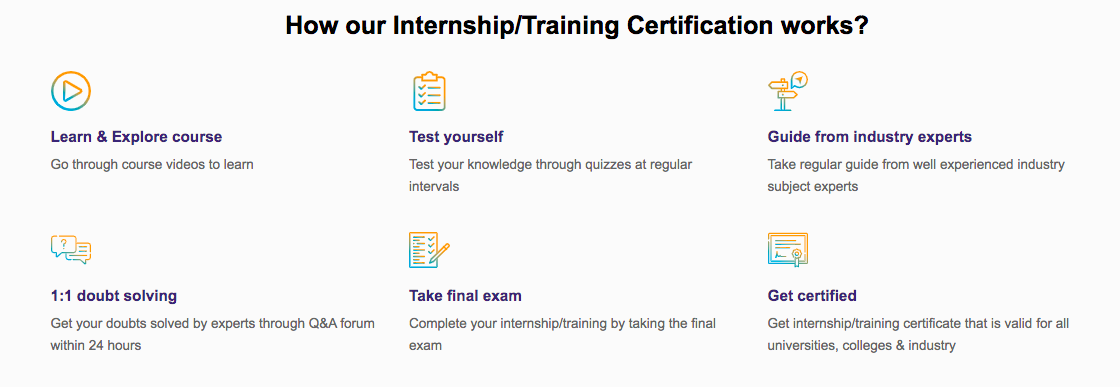
How EasyShiksha Internship/Training Program Works
Project-Based Learning and the Timing of Skills
Projects often require several skills at different stages. A student developing an application may need requirements analysis at the beginning, programming during implementation, testing near completion, and documentation before delivery.
Teaching every skill in one large block may separate learning from the moment of application. Yet introducing every concept only when it becomes necessary can leave students without sufficient preparation.
Chrono-Learning Architecture offers a middle path. Learners can acquire foundational knowledge before beginning a project, then receive targeted reinforcement as different project stages approach.
For example, students might study programming fundamentals before starting a web application. Before implementation, they could revisit relevant JavaScript concepts. Before testing, they could receive a focused lesson on debugging and test cases.
EasyShiksha could potentially organise project resources according to these stages. The system would not need to generate a completely different curriculum for every learner. It could provide structured project milestones with optional support based on demonstrated needs.
This approach would connect instructional content with practical progress. Students could understand why a concept matters because they encounter it near the point of application.
Project reflection would then inform the next learning cycle, helping students identify which capabilities require further practice.
AI as a Temporal Learning Coordinator
Artificial intelligence could support Chrono-Learning Architecture by helping coordinate learning activities across time. It could analyse course progress, quiz performance, upcoming assessments, project milestones, and stated learning goals.
These signals could inform recommendations about what to study next and when to revisit earlier material. A student struggling with a prerequisite might receive additional practice before advancing. Another student approaching an internship could receive a focused revision plan.
AI could also help distinguish between different learning needs. Some learners require a full explanation, while others need a short refresher or a single practice question. The appropriate intervention depends on the task and available evidence.
For EasyShiksha, an AI-supported learning coordinator could potentially connect courses, quizzes, projects, and career guidance. It might suggest preparation before a practical assignment and recommend revision after repeated mistakes.
However, recommendations should remain explainable and adjustable. Students should understand why a learning activity appears and should be able to correct inaccurate assumptions about their schedule or goals.
AI should support educational decisions rather than control them completely. Teachers, mentors, and learners must retain meaningful influence over important choices.
The objective is to make learning more timely without turning student activity into an inflexible automated schedule.
Building a Temporal Knowledge Map
A temporal knowledge map would represent what a learner has studied, when important concepts were practised, and where those concepts may be needed again. Unlike a simple course history, it would connect knowledge with future tasks and opportunities for reinforcement.
For example, a learner's map might connect spreadsheet formulas with data analysis projects and internship assignments. Programming concepts could connect with application development, debugging exercises, and later technical interviews.
The map would help show relationships between knowledge acquisition and practical application. It could also identify concepts that have not been revisited since their original instruction.
Such a map should not assume that knowledge automatically expires after a fixed period. Some concepts remain stable, while others depend on changing tools, standards, or professional practices. The system would need to distinguish between forgetting and genuine changes in the subject.
EasyShiksha could potentially use temporal knowledge mapping to organise revision and recommendations. Students might see which concepts support upcoming goals and which require renewed practice.
This would help learners understand their educational progress as a connected system. The focus would shift from counting completed courses toward maintaining useful knowledge across changing circumstances.
Career Guidance Based on Future Knowledge Needs
Career guidance often focuses on interests, qualifications, and possible job roles. Chrono-Learning Architecture adds another dimension by examining when learners will need particular skills.
A student preparing for a frontend development role might need programming fundamentals immediately, framework knowledge during project development, and interview practice before recruitment. These needs emerge at different stages.
A learner exploring digital marketing may need analytical foundations before handling campaign data. Later, the learner might need reporting skills, client communication, and practical experience.
EasyShiksha could potentially use career guidance to connect long-term goals with time-aware learning pathways. Instead of presenting a large list of courses, the platform could help students sequence learning around milestones.
The system could consider prerequisite knowledge, available study time, upcoming internships, and recruitment timelines. Recommendations would then become more relevant to the learner's current situation.
Career planning should still allow flexibility. Students change interests, and employment requirements evolve. A temporal learning plan should therefore be updated when goals or circumstances change.
The purpose is to help learners prepare at appropriate moments rather than study every potentially useful topic simultaneously.
Measuring Whether Timing Improves Learning
Chrono-Learning Architecture should be evaluated through learning outcomes rather than scheduling activity alone. A platform might deliver reminders at perfect intervals without improving understanding or practical performance.
Useful evaluation would examine whether students retain concepts, apply them accurately, and complete relevant tasks more effectively. It could also consider whether targeted revision reduces repeated mistakes.
Comparisons must be designed carefully. Students differ in prior knowledge, available time, motivation, and task difficulty. A simple improvement in quiz scores does not prove that timing alone caused the change.
EasyShiksha could potentially evaluate time-aware learning through controlled pilots. One group might follow a standard revision schedule, while another receives revision based on performance and upcoming tasks. Both groups would need comparable assessments and appropriate learning conditions.
The results could reveal whether adaptive timing provides meaningful benefits for particular subjects or learners. Different approaches might work better for foundational knowledge, practical skills, or rapidly changing professional topics.
The system should also monitor unnecessary notifications and excessive study demands. Timely learning is not effective if it overwhelms students or interrupts other important activities.
Measurement should support continuous improvement. The architecture should adapt according to evidence rather than assume that every temporal recommendation is beneficial.
Privacy, Consent, and Learner Control
A time-aware learning system may use information about student activity, assessments, schedules, and learning goals. Such information can improve recommendations, but it also creates privacy responsibilities.
Students should understand which data supports a recommendation and why the system considers a particular activity timely. They should have reasonable control over schedules, notifications, and learning preferences.
The system should avoid treating every pause as a problem. Students may be working, resting, managing responsibilities, or studying offline. Limited platform activity does not necessarily indicate disengagement.
Similarly, AI should not make overly confident predictions about a student's future performance from incomplete information. Recommendations should remain open to correction and review.
EasyShiksha could potentially design time-aware learning around transparent settings and learner choice. Students could adjust schedules, postpone nonessential reminders, and indicate changes in availability.
Educational data should be protected and retained only according to appropriate policies. The system should collect information that serves a clear learning purpose rather than monitoring students unnecessarily.
Trust is essential because Chrono-Learning Architecture depends on understanding when support may be useful. That understanding must be developed responsibly and with meaningful learner participation.
Empower your team. Lead the industry
Get a subscription to a library of online courses and digital learning tools for your organization with
EasyShiksha
The Future of Education: From Fixed Timetables to Responsive Learning
Education will continue to require structured curricula, academic schedules, and planned progression. These structures provide consistency and help ensure that students develop essential foundations.
However, digital platforms can add a more responsive layer. They can connect instruction with revision, upcoming tasks, practical experiences, and changing career objectives.
Chrono-Learning Architecture offers a way to coordinate these relationships. It treats time as an educational design factor rather than merely an administrative constraint.
For EasyShiksha, the opportunity lies in connecting learning activities across the student's journey. Courses could prepare learners for upcoming tasks, quizzes could identify concepts requiring revision, and projects could reveal new development needs. Internships and career guidance could then shape subsequent learning recommendations.
The approach would not require every learning experience to be personalised automatically. Even simple connections between course modules and project milestones could improve relevance.
Over time, carefully evaluated AI recommendations could make these connections more responsive. The system could help students focus on knowledge that is useful now while preserving foundations needed for future learning.
The result would be an educational experience organised around progression, retention, and application rather than course completion alone.
Conclusion: Education Should Deliver Knowledge at the Right Moment
The effectiveness of education depends partly on when knowledge is introduced, reinforced, and applied. Students need foundational instruction before complex tasks, repeated opportunities to retrieve important concepts, and practical experiences that reveal whether learning transfers beyond the classroom.
Chrono-Learning Architecture provides a proposed framework for coordinating these stages. It connects preparation, reinforcement, application, and reflection within a continuous learning process.
For EasyShiksha, this approach could bring courses, quizzes, projects, internships, certificates, university programmes, and career guidance into closer alignment. Students could prepare before important milestones, refresh knowledge when needed, and use practical experiences to identify their next learning priorities.
The model should remain evidence-based, flexible, and respectful of student privacy. Timely recommendations are valuable only when they improve learning without creating unnecessary pressure or dependence on technology.
The most effective educational platform will not simply deliver more content. It will help learners recognise which knowledge matters for their current goals and how to prepare for future challenges.
Anshika Jain is an Engineer, Developer, and Educational Content Author known for her dedication to technology and knowledge sharing. With a strong analytical mindset and a passion for innovation, she has consistently contributed to creating meaningful digital solutions and insightful educational articles.
Her ability to simplify complex technical concepts into engaging and easy-to-understand content makes her work valuable for students and learners across various platforms. Along with her technical expertise, Anshika is admired for her creativity, professionalism, and commitment to continuous learning.
She represents a perfect blend of technical excellence and impactful communication, inspiring others through both her development work and educational contributions.