





12
Articles published

Join thousands of students achieving their dreams with expert-led courses.
Join free and unlock everything on EasyShiksha.
Takes less than 3 seconds — no password needed
Please enter a valid email address.
Checking your email…
Almost done — just verify your number so we can send course updates and certificates.
Used only for verification & updates
Incorrect OTP. Please try again.
Takes less than 10 seconds
Please select your country.
Please select your state.


Refrigeration and air conditioning technologies play an important role in homes, offices, hospitals, hotels, shopping centres, food storage facilities, manufacturing units and transportation systems. These technologies help maintain suitable temperatures, support product preservation, improve indoor comfort and contribute to the reliable operation of various industrial processes. As cooling systems become more sophisticated, technical knowledge of installation, maintenance, troubleshooting and energy efficiency can be valuable across several sectors.
The Bachelor of Vocation (B.Voc) in Refrigeration and Air Conditioning is an undergraduate vocational programme focused on the principles and practical applications of refrigeration, air conditioning and related temperature-control systems. It introduces learners to mechanical and electrical components, thermodynamics, heat transfer, refrigeration cycles, air distribution, system servicing and workplace safety.
The programme is intended for students who prefer applied, skill-oriented learning alongside academic study. Depending on the institution, the curriculum may combine theoretical subjects, laboratory work, workshop activities, practical assignments and industry-related training.
Students exploring vocational education can also browse B.Voc programmes on EasyShiksha to compare available specialisations and identify options suited to their interests.
B.Voc in Refrigeration and Air Conditioning is a vocational undergraduate programme that develops foundational knowledge of systems used to remove heat, maintain low temperatures and regulate indoor environmental conditions. It focuses on how refrigeration and air-conditioning equipment works, how its components interact and how systems can be installed, inspected, maintained and repaired.
Refrigeration is commonly used in refrigerators, cold rooms, commercial display cabinets, food storage facilities and industrial cooling applications. Air conditioning focuses on managing indoor temperature, humidity, air movement and related comfort conditions. Heating, ventilation and air conditioning are often grouped under the term HVAC, although the exact scope of an individual programme may vary.
Students may learn about compressors, condensers, evaporators, expansion devices, refrigerants, electrical controls, sensors, piping and air-handling equipment. They can also develop an understanding of fault identification, equipment testing, preventive maintenance and safe working practices.
The qualification combines technical concepts with occupational skills. The precise degree structure, teaching mode, practical requirements and exit qualifications depend on the institution offering the programme.
Students should confirm the current duration, eligibility conditions, delivery mode and practical requirements on the relevant programme page before applying.
The programme introduces learners to equipment and systems used in refrigeration and air conditioning. Practical activities may help students understand how components operate, how to inspect systems and how to approach common maintenance tasks.
Cooling systems involve several connected disciplines. Students can gain introductory knowledge of mechanical components, electrical circuits, temperature controls, heat transfer and system operation.
Routine servicing and systematic fault identification are important in cooling technology. Students may learn to inspect equipment, recognise common performance problems and follow appropriate diagnostic procedures under suitable supervision.
Refrigeration and air-conditioning equipment is used in residential, commercial and industrial environments. This gives learners exposure to different application areas, including building services, cold storage, hospitality and manufacturing.
After graduation, eligible students may consider advanced vocational training, relevant technical certifications or higher studies, depending on admission rules and their career goals.
Eligibility for B.Voc in Refrigeration and Air Conditioning varies by institution. A common entry requirement is completion of Class 12 or an equivalent qualification from a recognised educational board.
Some institutions may also consider applicants who have completed an eligible ITI or polytechnic qualification after Class 10. Such alternatives should not be assumed to apply everywhere.
Applicants should review the following requirements before submitting an application:
Meeting the general eligibility criteria does not automatically guarantee admission. Final eligibility is determined according to the institution's current admission policy.
The curriculum is designed to introduce the scientific principles, components and practical processes involved in refrigeration and air conditioning. Subject names and the balance between theory and practical training may differ across institutions.
Students learn the basic purpose and principles of refrigeration, including heat removal, temperature control and the role of refrigeration systems in domestic, commercial and industrial settings.
Topics may include refrigeration terminology, system components, cooling applications and an introduction to common refrigeration cycles.
Thermodynamics helps explain the relationship between heat, work, energy and temperature. Learners may study basic thermodynamic laws, properties of substances and the operation of systems that transfer heat.
These concepts provide a foundation for understanding refrigeration cycles and evaluating equipment performance.
Heat transfer covers the movement of thermal energy through conduction, convection and radiation. Students may examine how insulation, surface area, temperature differences and airflow affect cooling performance.
This knowledge is relevant to cold rooms, refrigerated storage, building cooling and the design or maintenance of temperature-controlled environments.
Learners may study the main components of vapour-compression refrigeration systems, including compressors, condensers, expansion devices and evaporators.
The curriculum can explain the function of each component, the movement of refrigerant through the system and how component performance influences the overall cooling process.
This subject introduces the processes involved in maintaining indoor environmental conditions. Students may explore temperature, humidity, air circulation, ventilation, cooling loads and basic air-conditioning system arrangements.
The knowledge is relevant to residential units, offices, commercial buildings and other spaces requiring controlled indoor conditions.
Refrigeration and air-conditioning equipment relies on electrical components and control mechanisms. Students may learn basic electrical concepts, wiring principles, motors, switches, relays, sensors and control devices.
Practical work, where included, should emphasise appropriate safety procedures and the importance of following equipment specifications.
Installation and maintenance topics may cover tools, piping, component inspection, equipment setup, routine servicing and preventive maintenance.
Learners may develop an understanding of how to prepare equipment for operation, identify visible signs of malfunction and follow systematic maintenance procedures.
Refrigerants are essential to many cooling systems, but their handling requires appropriate technical knowledge and safety practices. Students may be introduced to refrigerant properties, safe handling procedures, leakage awareness, recovery practices and environmental considerations.
The specific procedures taught should reflect applicable safety requirements, equipment instructions and current regulations.
Troubleshooting involves identifying possible causes of a system fault and determining suitable corrective action. Students may learn to observe equipment behaviour, take measurements, examine components and interpret basic system indicators.
Performance assessment can also introduce concepts such as cooling capacity, operating efficiency, airflow and temperature differences.
Depending on the programme, learners may participate in laboratory exercises, practical workshops, supervised maintenance activities, projects or on-the-job training.
These activities can help connect classroom concepts with technical tasks. Students should check whether practical sessions and industry placements are compulsory, how they are delivered and what facilities are available.
B.Voc in Refrigeration and Air Conditioning may help learners develop a combination of technical, analytical and workplace skills.
Technical understanding: Knowledge of refrigeration cycles, air-conditioning systems, electrical controls and cooling equipment.
Equipment inspection: The ability to recognise components, conduct basic inspections and follow maintenance checklists.
Troubleshooting: A systematic approach to identifying faults and understanding possible causes of equipment problems.
Measurement and observation: Familiarity with temperature measurements, operating indicators and basic performance checks.
Safety awareness: Understanding the importance of protective equipment, electrical safety, refrigerant handling and manufacturer instructions.
Communication: Explaining technical issues, documenting service activities and interacting professionally with customers or colleagues.
Problem-solving: Applying scientific and practical knowledge to equipment-related challenges.
The extent to which each skill is developed depends on the curriculum, practical exposure and the learner's own experience.
Graduates may explore entry-level and developing career opportunities in refrigeration, HVAC services, equipment maintenance and related technical fields. Actual job titles and responsibilities depend on the employer's requirements, practical competence, experience and any additional certifications required.
Refrigeration technicians work with equipment used for cooling and temperature-controlled storage. Their responsibilities may include inspecting systems, carrying out routine servicing, identifying faults and assisting with repairs.
Potential workplaces include refrigeration service companies, commercial facilities and cold-storage operations.
HVAC technicians help install, maintain and troubleshoot heating, ventilation and air-conditioning equipment. Tasks may include checking system components, cleaning equipment, inspecting controls and supporting repairs.
The work may involve residential buildings, offices, hotels, hospitals and commercial premises.
These professionals focus on air-conditioning equipment. Their work may include installation support, preventive maintenance, cleaning, inspection, performance checks and basic troubleshooting.
Specialised equipment or more complex repairs may require additional training, experience or certification.
A service assistant supports experienced technicians with equipment preparation, maintenance activities, tool handling, documentation and site work.
This can be a possible starting point for graduates who want to build practical experience before taking on greater responsibility.
Maintenance technicians help keep mechanical and cooling equipment operational. Depending on the employer, they may inspect systems, carry out scheduled maintenance, record equipment conditions and report technical issues.
Some positions may require broader mechanical or electrical knowledge beyond the programme's core subjects.
Installation assistants support the setup of air-conditioning and ventilation systems. Tasks can include preparing materials, assisting with mounting and piping, following technical drawings and observing commissioning procedures.
Experience and further training can help workers progress to more independent installation responsibilities where permitted.
Companies supplying cooling equipment and components may recruit people who can explain product features, help customers identify suitable products and coordinate service requests.
These roles often require communication skills and a clear understanding of equipment specifications in addition to technical knowledge.
Cold-storage facilities use refrigeration systems to maintain controlled temperatures for products such as food and other temperature-sensitive materials. Graduates may seek support roles involving inspections, routine maintenance coordination and equipment monitoring.
Specific positions may require additional training in industrial refrigeration and facility safety.
The skills associated with this specialisation can be relevant to several sectors.
The availability of employment opportunities varies by location, industry demand, employer expectations and the candidate's practical skills.
Graduates who want to continue learning can investigate higher studies or specialised training related to mechanical systems, HVAC technology, refrigeration, building services or energy efficiency.
Possible routes include:
Before choosing a progression route, students should check whether the qualification meets the entry requirements of the intended institution. A B.Voc degree does not automatically guarantee eligibility for every engineering degree or postgraduate programme.
Students should compare more than the programme title when selecting a course.
Check whether the subjects cover refrigeration principles, air conditioning, electrical fundamentals, installation, maintenance, troubleshooting and relevant safety practices.
Ask about laboratories, workshop facilities, equipment access, supervised training and the way practical assessments are conducted.
Check whether the programme is offered online, on campus or through another arrangement. Refrigeration and air-conditioning training can involve hands-on activities, so understand how any practical requirements are fulfilled in the advertised mode.
Review the accepted entry qualifications, duration, academic structure, assessment methods and final award.
Ask about access to learning materials, instructor assistance, practical guidance and academic support.
Students can explore university programmes on EasyShiksha to compare options and then verify programme-specific details before making a decision.
The application process varies by institution. A typical process may include the following steps.
Find the programme
Visit the relevant programme page and review the course overview, eligibility criteria, duration, curriculum and delivery mode.
Check your eligibility
Confirm that your educational qualification meets the institution's admission requirements. Contact the admissions team if you are applying with an alternative qualification.
Complete the application form
Enter your personal, contact and academic details carefully. Check all information before submitting the form.
Upload the required documents
Provide the documents requested by the institution, which may include academic records, identity proof and photographs.
Submit your application
Follow the stated submission procedure and complete any required application formalities. Review the official instructions for the programme you intend to join.
Complete verification and enrolment
Respond to requests for clarification or additional documentation. Enrolment is subject to the institution's eligibility checks and admission decision.
Review learning arrangements
After enrolment, confirm how classes, practical sessions, assessments, learning resources and any required workshop activities will be organised.
B.Voc in Refrigeration and Air Conditioning is an undergraduate vocational programme that focuses on refrigeration systems, air-conditioning technology, thermodynamics, electrical controls, installation, maintenance and troubleshooting. The course combines technical concepts with applied learning, depending on the curriculum and practical arrangements offered by the institution.
The programme is commonly offered over three years and may be organised into six semesters. However, duration and academic structure can vary by institution. Applicants should confirm the current programme details and any available exit options with the institution before applying.
Class 12 or an equivalent qualification is a common entry requirement. Some institutions may accept eligible ITI or polytechnic diploma holders. Minimum marks, subject requirements and alternative entry routes differ, so candidates should check the admission criteria published for their chosen programme.
The curriculum may include refrigeration fundamentals, thermodynamics, heat transfer, air-conditioning principles, electrical systems, refrigeration components, refrigerants, installation, maintenance, troubleshooting and workshop practice. Exact subjects depend on the institution's syllabus and the balance between theoretical instruction and practical training.
Many programmes in this field include laboratory exercises, workshops, equipment demonstrations, projects or on-the-job training. The format and extent of practical learning vary. Students should ask about facilities, supervised equipment access and how hands-on requirements are fulfilled, particularly when considering an online programme.
Graduates may explore roles such as refrigeration technician, HVAC technician, air-conditioning service technician, maintenance technician, installation assistant or technical support associate. Opportunities depend on practical competence, employer requirements, relevant experience and any additional qualifications required for specialised tasks.
The course may provide foundational knowledge relevant to refrigeration systems used in cold-storage facilities. Graduates can investigate suitable maintenance support and technical roles. Industrial refrigeration can involve specialised equipment and safety procedures, so some positions may require additional training or relevant experience.
Some institutions advertise this programme in an online format. However, students should carefully verify how practical work, equipment demonstrations, workshops and assessments are delivered. The suitability of the format depends on the institution's actual arrangements and the hands-on competencies required by the curriculum.
Further study may be possible through relevant vocational qualifications, diplomas, certificates or other eligible academic programmes. Admission depends on the receiving institution's rules, the qualification completed and any required subjects or prerequisites. Candidates should confirm eligibility before selecting a progression pathway.
Students should review the curriculum, admission requirements, programme duration, teaching mode, practical training, assessment methods and final qualification. They should also verify how workshops are arranged, whether any specialised training is needed and whether the programme aligns with their technical interests and longer-term goals.
B.Voc in Refrigeration and Air Conditioning offers a vocational route for students interested in cooling systems, HVAC technology, equipment maintenance and temperature-control applications. The programme can introduce learners to refrigeration cycles, thermodynamics, electrical controls, air-conditioning principles, installation practices and troubleshooting.
Its value depends on the quality and relevance of the curriculum, opportunities for supervised practical learning and the student's development of technical competence. Career options may extend across building services, refrigeration maintenance, hospitality, retail, cold storage and technical support, subject to employer requirements and further training where necessary.
Before applying, students should compare available programmes, confirm eligibility and understand the practical arrangements associated with the selected mode of study. Reviewing these details can help them choose a vocational pathway that supports their interests and future learning goals.
More News Click here








Discover thousands of colleges and courses, enhance skills with online courses and internships, explore career alternatives, and stay updated with the latest educational news..

Gain high-quality, filtered student leads, prominent homepage ads, top search ranking, and a separate website. Let us actively enhance your brand awareness.
Download EasyShiksha Mobile Apps from Android Play Store, Apple App Store, Amazon App Store, and Jio STB.
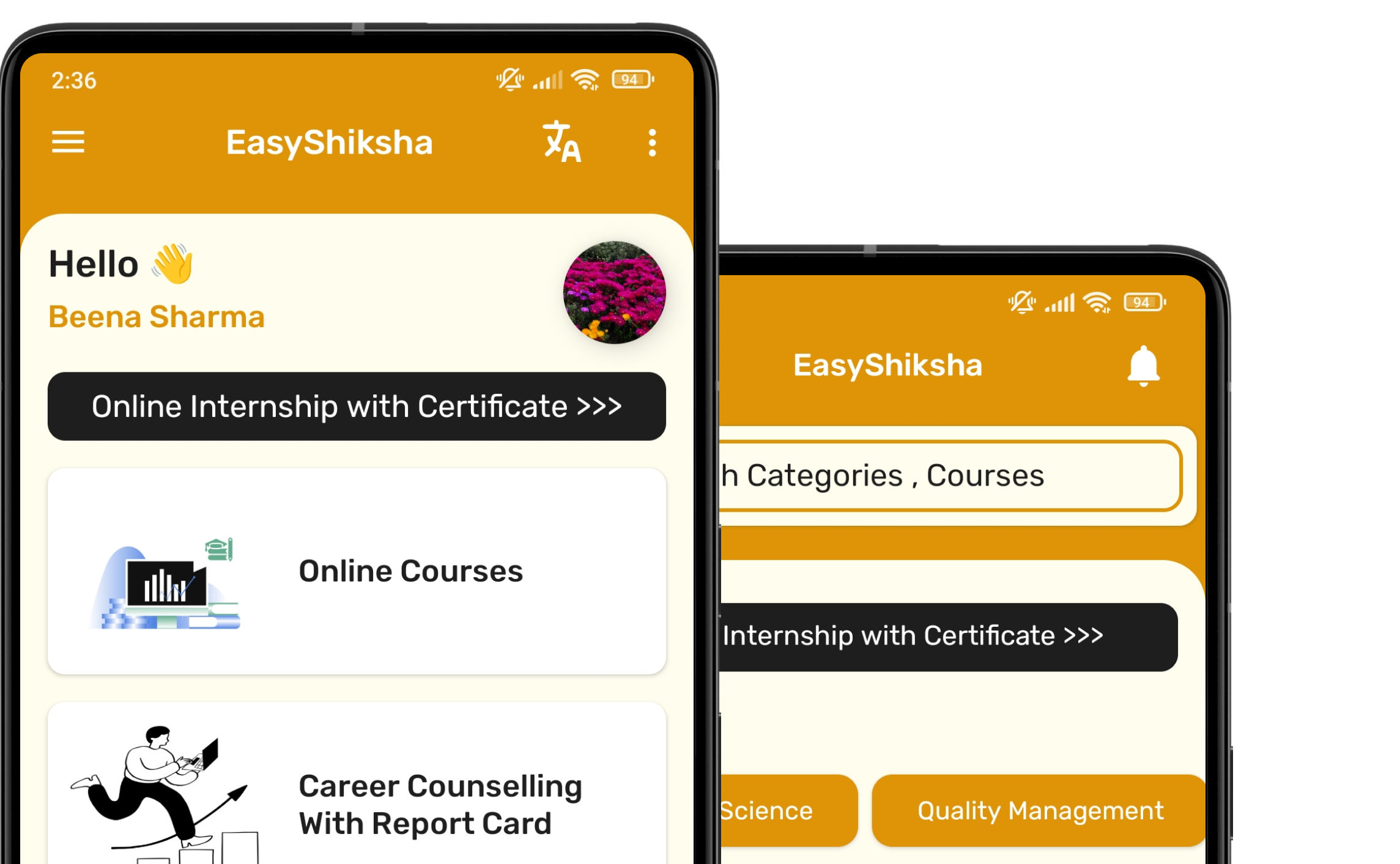


1 million+ learned on the EasyShiksha App
Trusted by Standards & Global Compliance Frameworks





Built under internationally recognized standards for quality, information security, educational excellence and business continuity.
ISO 9001:2015 | ISO/IEC 27001:2022 | ISO 21001:2018 | ISO 22301:2019 | DPIIT Recognized Startup | MSME Registered