








Join thousands of students achieving their dreams with expert-led courses.
Join free and unlock everything on EasyShiksha.
Takes less than 3 seconds — no password needed
Please enter a valid email address.
Checking your email…
Almost done — just verify your number so we can send course updates and certificates.
Used only for verification & updates
Incorrect OTP. Please try again.
Takes less than 10 seconds
Please select your country.
Please select your state.

Auditing plays an important role in maintaining the accuracy, reliability and transparency of financial information. Businesses prepare financial statements to communicate their financial position and performance, but these records may contain errors, omissions or irregularities. Auditing helps examine financial information and evaluate whether it has been prepared according to applicable accounting standards and requirements.
In the Master of Commerce (M.Com.) programme, Auditing is generally included as a core subject, compulsory paper or specialised elective. Depending on the curriculum, students may study auditing principles, audit planning, internal controls, company audits, audit evidence, professional standards and audit reporting.
The subject is useful for students interested in accounting, auditing, financial reporting, internal control, compliance and assurance-related careers.
Auditing in M.Com. is an academic subject that explains the systematic examination of financial records, transactions, accounting systems and supporting documents.
It helps students understand how auditors collect evidence, evaluate financial information, identify potential errors and prepare audit reports. The subject also introduces the responsibilities of auditors and the professional standards that guide audit engagements.
For example, an auditor examining a company's financial statements may verify sales records, check supporting invoices, review bank statements and examine whether transactions have been recorded correctly.
The subject may cover:
Meaning, objectives and principles of auditing
Types and classifications of audits
Audit planning and procedures
Audit evidence and documentation
Vouching, verification and valuation
Internal control and internal audit
Company audit and statutory audit
Audit of specialised organisations
Auditing and assurance standards
Auditor responsibilities and professional ethics
Audit reports and opinions
Computerised and technology-based auditing
Auditing is generally studied as a subject or specialised paper within M.Com. It is not a universally available standalone M.Com. degree.
Auditing helps commerce students understand how financial information is examined and how organisations maintain reliable accounting records.
Students learn how auditors examine financial statements and supporting records to evaluate whether financial information is reliable.
The subject introduces practical audit activities such as vouching, verification, evidence collection and audit documentation.
Students learn how organisations establish procedures to protect assets, reduce errors and maintain proper financial records.
Auditing introduces professional standards and guidelines that influence how audit engagements are planned and conducted.
Students learn how auditors examine unusual transactions, accounting inconsistencies and potential control weaknesses.
The subject explains how auditors communicate their findings through audit reports and professional opinions.
Auditing knowledge can support career development in accounting, internal audit, financial reporting and assurance-related work.
Auditing is generally available as part of an M.Com. programme. Therefore, eligibility depends on the admission requirements of the selected postgraduate commerce course.
Applicants generally need:
A recognised bachelor's degree in Commerce or a related discipline.
An undergraduate qualification such as B.Com. or an equivalent degree, where accepted.
The minimum marks or grade required under the applicable admission rules.
Some institutions may accept graduates from other disciplines if they satisfy the prescribed eligibility requirements.
B.Com. graduates generally have a foundation in financial accounting, business studies, taxation and financial reporting. This knowledge can help them understand audit procedures and accounting records.
Some M.Com. programmes accept graduates from other academic backgrounds. Applicants should check whether their undergraduate qualification is accepted and whether additional requirements apply.
Certain institutions allow final-year students to apply provisionally. Admission may be confirmed after submission of the required academic results and documents.
Admission may be based on undergraduate marks, entrance examinations, merit lists or other selection procedures, depending on the programme.
An M.Com. programme is commonly structured as a two-year postgraduate degree divided into four semesters. However, the duration and academic structure may vary according to the applicable education framework and institution.
Auditing may be offered as an individual paper, an advanced subject or part of an accounting specialisation. Some programmes include separate papers for Advanced Auditing, Specialised Auditing or Auditing and Assurance.
| Academic stage | Indicative learning areas |
|---|---|
| Semester 1 | Introduction to auditing, audit principles and types of audit |
| Semester 2 | Audit planning, evidence collection, vouching and verification |
| Semester 3 | Company audit, internal controls and specialised audits |
| Semester 4 | Audit reporting, professional standards, assurance and contemporary audit practices |
This is an illustrative structure rather than a fixed semester-wise syllabus. Students should consult the current curriculum of their selected programme.
The syllabus generally combines auditing concepts, accounting procedures, professional standards and practical applications. The exact topics depend on the academic structure of the programme.
This section introduces the meaning, nature, objectives and importance of auditing.
Topics may include:
Meaning and definition of auditing
Objectives and scope of auditing
Basic principles of auditing
Importance of independent examination
Relationship between accounting and auditing
Advantages and limitations of auditing
Auditor responsibilities
Types and classifications of audits
Students learn why organisations use auditing to improve the reliability of financial information.
Audits can be classified according to their purpose, scope, timing and the organisation being examined.
Common types include:
Internal audit
External audit
Statutory audit
Financial audit
Cost audit
Tax audit
Management audit
Operational audit
Compliance audit
Information systems audit
Students learn how the objectives and procedures of different audits vary.
Audit planning involves understanding the organisation, identifying important risks and deciding how the audit will be conducted.
Topics may include:
Audit planning and preparation
Audit programmes
Audit procedures
Audit risk assessment
Materiality
Audit sampling
Collection of audit evidence
Audit working papers
Audit documentation
Audit checklists
This section explains how auditors organise their work and collect sufficient appropriate evidence.
These are important audit procedures used to examine financial transactions, assets and liabilities.
Vouching involves checking transactions against supporting documents such as invoices, receipts and payment records.
Verification involves examining the existence, ownership and relevant details of assets and liabilities.
Valuation involves evaluating whether financial items have been recorded at appropriate values according to applicable accounting requirements.
Topics may include:
Vouching of cash transactions
Verification of assets
Verification of liabilities
Valuation of fixed assets
Inventory verification
Examination of supporting documents
Verification of financial statements
Internal control refers to the policies and procedures established by an organisation to support reliable operations and financial reporting.
Students may study:
Meaning and objectives of internal control
Internal control systems
Internal check
Internal audit
Evaluation of control procedures
Identification of control weaknesses
Relationship between internal and external audit
Internal audit reporting
This section helps students understand how organisations prevent errors and improve financial discipline.
Company auditing examines the financial records and reporting responsibilities of companies under applicable legal and professional requirements.
Topics may include:
Appointment and eligibility of auditors
Rights and duties of auditors
Auditor independence
Company audit procedures
Examination of financial statements
Audit of share capital and liabilities
Audit of income and expenditure
Statutory audit requirements
Auditor's report
Students may study relevant provisions of the Companies Act, 2013, depending on the syllabus.
Different organisations have different operational and financial structures. Their audit requirements may therefore involve specific procedures.
Possible areas include:
Bank audit
Insurance company audit
Cooperative society audit
Educational institution audit
Trust and non-profit organisation audit
Hotel and hospitality business audit
Government-related audit
Tax audit
The actual coverage depends on the curriculum.
Auditors follow professional standards and ethical requirements when conducting audit engagements.
Topics may include:
Auditing and Assurance Standards
Standards on Auditing
Auditor independence
Professional scepticism
Confidentiality
Professional competence
Ethical responsibilities
Audit documentation requirements
Communication with management
Students learn why professional standards are important for maintaining the quality and credibility of audit work.
An audit report communicates the auditor's findings and opinion regarding the financial statements.
Topics may include:
Meaning and objectives of audit reports
Contents of an audit report
Unmodified opinion
Qualified opinion
Adverse opinion
Disclaimer of opinion
Emphasis of Matter paragraphs
Reporting responsibilities
Communication of audit findings
Students learn how audit conclusions are presented to shareholders and other users of financial information.
Technology has changed how organisations record, process and store financial information. Auditors increasingly use digital tools to examine large volumes of transactions.
Possible topics include:
Computerised accounting systems
Information systems auditing
Audit software and analytical tools
Data-based audit procedures
Digital records and audit evidence
Cybersecurity-related audit risks
Electronic documentation
Continuous auditing concepts
Some programmes may also introduce data analytics and technology-assisted audit procedures.
Auditing is closely connected with practical accounting activities. Case studies and assignments help students understand how audit procedures are applied in different organisations.
Depending on the curriculum, practical activities may include:
Examining sample invoices and supporting documents.
Preparing a basic audit programme.
Performing vouching exercises using sample transactions.
Reviewing internal control procedures.
Preparing an audit checklist.
Studying an annual report and its auditor's opinion.
Examining inventory verification procedures.
Analysing common audit risks.
Preparing sample audit working papers.
Studying the audit of a company or other organisation.
Some M.Com. programmes may include visits to accounting firms, practical assignments, presentations or research projects. These activities depend on the academic structure.
Students interested in studying Auditing should first identify an M.Com. programme that includes auditing or an accounting specialisation.
The general admission process involves the following steps:
Explore available programmes: Identify M.Com. programmes that offer Auditing, Advanced Auditing or related accounting papers.
Check eligibility: Review the accepted undergraduate qualifications and minimum academic requirements.
Review the syllabus: Confirm whether Auditing is a core paper, compulsory subject or elective.
Complete the application: Submit the application form through the prescribed admission process.
Upload academic documents: Provide marksheets, degree certificates, identity documents and other required records.
Complete selection procedures: Attend an entrance examination or other selection process if required.
Confirm admission: Complete fee payment and remaining admission formalities.
Admission requirements and procedures vary across institutions.
M.Com. programmes may be offered through regular, online and distance learning modes. Students should verify whether Auditing is included in the curriculum of their selected programme.
Regular learning generally involves classroom lectures, discussions, practical exercises and scheduled academic activities.
Students may participate in audit case studies, document examination exercises and discussions about professional standards.
Online programmes may provide recorded lectures, live classes, digital study materials and online assessments.
Students can use digital learning resources to understand audit procedures, financial records and auditing concepts.
Distance learning generally offers flexibility through self-learning materials, digital resources and scheduled examinations. It may be suitable for working professionals and students who cannot attend regular classes.
Before enrolling, students should verify the programme's recognition and approval status for the selected learning mode.
Studying Auditing can help M.Com. students develop accounting, analytical and professional skills.
Students learn to examine financial information, identify unusual transactions and evaluate supporting evidence.
Auditing requires careful examination of records and documents. Students develop the ability to notice inconsistencies and missing information.
Students learn how audit evidence, working papers and supporting documents are organised and reviewed.
The subject introduces audit risk, materiality and internal control weaknesses, helping students understand how risks are identified.
Students learn why auditors need to evaluate evidence carefully and maintain independence while forming professional opinions.
Audit assignments and case studies can improve the ability to prepare structured findings and communicate financial observations.
Students develop familiarity with auditing standards, accounting systems and audit procedures. Additional software training can further support technical development.
Auditing can support career development in accounting, audit assistance, internal controls and financial reporting. However, the subject alone does not qualify students for every professional audit role. Employers generally consider the complete qualification, practical experience and applicable professional requirements.
Audit Assistants support audit teams by checking documents, examining financial records, preparing working papers and collecting supporting evidence.
Internal Audit Assistants help review organisational procedures, internal controls and financial processes to identify weaknesses or areas for improvement.
Accounts Executives maintain financial records, process transactions, reconcile accounts and support the preparation of financial statements.
Tax Audit Assistants may support documentation, financial record reviews and tax-related audit procedures under appropriate supervision. Specialist responsibilities require relevant knowledge of applicable tax laws.
These professionals support financial statement preparation, accounting documentation and reporting activities.
Compliance Assistants help maintain organisational records and support procedures related to applicable rules, policies and regulatory requirements.
This role may involve organising audit evidence, maintaining working papers, preparing checklists and supporting audit documentation.
Entry-level risk and control roles may involve reviewing business processes, documenting control procedures and supporting risk assessments. Some positions require additional professional or technical skills.
Auditing knowledge is relevant across different industries because organisations need reliable financial records and appropriate control systems.
| Employment sector | Possible work areas |
|---|---|
| Audit and accounting firms | Audit assistance, documentation and financial record examination |
| Banking and financial services | Internal audit support, control reviews and financial documentation |
| Manufacturing companies | Inventory audits, cost verification and internal controls |
| Insurance companies | Financial record examination and audit documentation |
| Corporate organisations | Internal audit, compliance support and financial reporting |
| Government-related organisations | Audit documentation and financial accountability |
| Non-profit organisations | Fund verification, expenditure review and financial reporting |
Actual responsibilities depend on the employer, job requirements and the candidate's additional qualifications.
Students interested in further education can explore research, accounting and professional development pathways.
A Ph.D. in Commerce may be suitable for students interested in research involving auditing, accounting standards, financial reporting, internal controls and assurance practices.
Students may explore research topics such as audit quality, auditor independence, technology in auditing, fraud risk assessment and corporate financial reporting.
Students interested in professional auditing and assurance careers may explore the Chartered Accountancy pathway. Admission, examination and training requirements are governed by the relevant professional body.
Students interested in cost audit, management accounting and cost control may consider the professional pathway in Cost and Management Accountancy, subject to its eligibility and examination requirements.
Additional training in internal auditing, risk assessment, information systems auditing and audit analytics may help students develop specialised knowledge.
Students can strengthen their technical skills through courses in spreadsheets, accounting software, data analytics and computer-assisted audit techniques.
Auditing is connected with several accounting and finance subjects, but each has a different academic focus.
| Subject | Main academic focus |
|---|---|
| Auditing | Independent examination of financial records, evidence and reporting |
| Financial Accounting | Recording transactions and preparing financial statements |
| Cost Accounting | Measuring and analysing the costs of products, services and operations |
| Management Accounting | Providing financial and non-financial information for internal decisions |
| Taxation | Understanding tax laws, tax calculations and compliance requirements |
| Corporate Governance | Systems for directing, supervising and holding companies accountable |
Auditing focuses on examining financial information and evaluating the reliability of records. Financial Accounting prepares the information, while Cost Accounting and Management Accounting serve different cost and decision-making purposes.
Students should review the complete M.Com. curriculum before selecting a programme. Auditing may be offered as a general subject, an advanced paper or part of an accounting specialisation.
Consider the following factors:
Check subject availability: Confirm whether Auditing is a core paper, compulsory subject or elective.
Review the syllabus: Look for audit planning, vouching, verification, internal controls, company audits and audit reporting.
Check professional standards: Review whether the syllabus introduces applicable auditing standards and professional responsibilities.
Examine practical learning: Look for document examination, audit assignments, case studies and project work.
Verify programme recognition: Check the recognition and approval status of the selected M.Com. programme.
Compare learning modes: Choose regular, online or distance learning according to your academic and professional requirements.
Consider future goals: Select a programme that supports your interest in accounting, auditing, internal controls or financial reporting.
Students can explore postgraduate commerce options through the EasyShiksha University Programs section and compare available programmes before applying.
Auditing in M.Com. introduces students to the examination of financial records, audit procedures, internal controls and professional reporting responsibilities. It helps learners understand how auditors collect evidence, evaluate financial information and communicate their findings.
The subject can be useful for students interested in audit assistance, accounting, internal controls, compliance support and financial reporting. Since the syllabus and availability differ across M.Com. programmes, students should review the current curriculum before applying.
Combining auditing knowledge with accounting skills, professional standards, practical experience and technical training can help learners prepare for opportunities across different business sectors.
Auditing is a subject that explains the systematic examination of financial records, transactions, accounting systems and supporting documents to evaluate the reliability of financial information.
No. Auditing is generally offered as a subject, core paper or specialised elective within a broader M.Com. programme. It is not a universally available standalone degree.
M.Com. is commonly structured as a two-year postgraduate programme divided into four semesters. The exact duration depends on the academic structure and applicable regulations.
Students generally need a recognised bachelor's degree that meets the admission requirements of the selected M.Com. programme. Minimum marks and accepted undergraduate disciplines vary.
Common topics include auditing principles, audit planning, audit evidence, vouching, verification, internal controls, company audit, auditing standards and audit reports.
Accounting involves recording, classifying and summarising financial transactions. Auditing involves examining financial records and evaluating whether the reported information is reliable and supported by appropriate evidence.
Vouching is the process of checking financial transactions against supporting documents such as invoices, receipts, payment records and other evidence.
Internal audit generally examines organisational processes and controls to support management and governance. External audit is conducted independently to provide an opinion on financial statements or another defined subject of examination.
Yes. Practical activities may include vouching exercises, audit planning, examination of financial documents, internal control reviews and preparation of audit working papers.
Depending on their complete qualification and experience, students may explore Audit Assistant, Internal Audit Assistant, Accounts Executive, Financial Reporting Assistant and Compliance Assistant roles.
M.Com. provides academic knowledge of auditing, but certain professional audit responsibilities require additional qualifications, membership or practical experience under applicable regulations.
An audit report is a formal document in which an auditor communicates the findings and professional opinion resulting from an audit engagement.
Auditing standards are professional requirements and guidelines that help auditors conduct audit engagements consistently and maintain the quality of audit work.
Yes. Eligible students may pursue doctoral research in Commerce or Accounting. Possible research areas include audit quality, auditor independence, internal controls and financial reporting.
It may be included in distance M.Com. programmes, depending on the curriculum. Students should verify subject availability and programme recognition before admission.
More News Click here










Discover thousands of colleges and courses, enhance skills with online courses and internships, explore career alternatives, and stay updated with the latest educational news..

Gain high-quality, filtered student leads, prominent homepage ads, top search ranking, and a separate website. Let us actively enhance your brand awareness.
Download EasyShiksha Mobile Apps from Android Play Store, Apple App Store, Amazon App Store, and Jio STB.
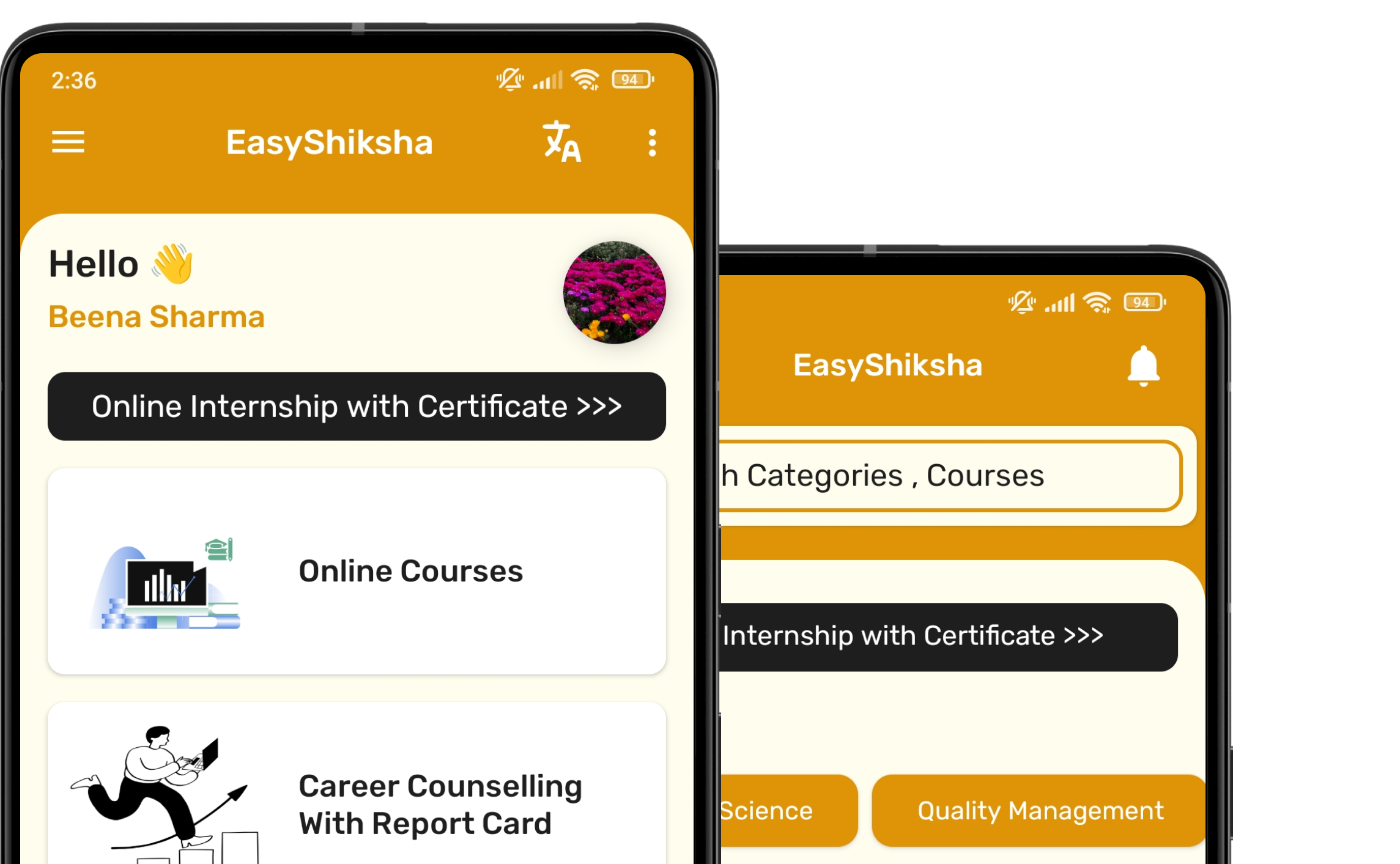


1 million+ learned on the EasyShiksha App
Trusted by Standards & Global Compliance Frameworks



Built under internationally recognized standards for quality, information security, educational excellence and business continuity.
ISO 9001:2015 | ISO/IEC 27001:2022 | ISO 21001:2018 | ISO 22301:2019 | DPIIT Recognized Startup | MSME Registered