Traditional education generally teaches professional knowledge through courses, lectures, assignments and examinations. Students learn the principles of accounting before managing financial records, study marketing concepts before handling a real campaign and practise programming before contributing to a production software system. Although these methods provide essential foundations, a significant gap remains between understanding professional concepts and applying them in environments where decisions have consequences. Students may know the correct definitions but still struggle when they encounter incomplete information, competing priorities, unfamiliar colleagues and unexpected problems.
An emerging approach to this challenge is the Alternate-Reality Curriculum, a proposed educational architecture in which students develop professional skills by moving through parallel simulated worlds. Each world represents a different version of a professional environment, with its own conditions, challenges, constraints and consequences. Students can apply the same underlying knowledge across these environments, compare the results and discover how professional judgment changes when circumstances change.
Imagine an EasyShiksha learner preparing for a career in digital marketing. Instead of studying marketing concepts only through course material and quizzes, the student enters a simulated business world in which a company has a limited advertising budget, uncertain customer demand and an underperforming campaign. In a parallel version of the same world, the company has a different target audience, stronger competition or a sudden change in customer behaviour. The learner must adapt the marketing strategy rather than repeat the same solution. Each world teaches the student how professional decisions depend on context.
A student learning software development could encounter one simulated company that prioritises rapid product delivery and another that prioritises security, reliability and long-term maintenance. A finance learner might manage similar businesses under different economic conditions. A project-management student could lead teams with different communication styles, resource limitations and deadlines.
The objective is not to replace real education with fictional experiences. It is to create a structured bridge between theoretical learning and professional practice. For EasyShiksha, the Alternate-Reality Curriculum could connect online courses, quizzes, educational games, practical projects, internships, certificates and career guidance through experiences that allow students to practise skills across multiple realistic contexts.
The central idea is that professional competence develops not only when students learn how to solve a problem, but also when they learn why a solution works in one situation and fails in another.
What Is an Alternate-Reality Curriculum?
An Alternate-Reality Curriculum is a learning framework that uses multiple connected simulated environments to teach the same professional capabilities under different conditions. Each environment represents a plausible version of a workplace, organisation, market, technical system or professional challenge. Students can move between these environments and observe how changing circumstances influence the decisions they should make.
The concept is different from a conventional simulation that presents one scenario with a predetermined set of tasks. An alternate-reality approach creates several related scenarios that share a common professional foundation but differ in meaningful ways. The learner may be asked to solve a similar problem in each environment, yet the available resources, stakeholders, risks and expected outcomes may change.
For example, a student learning project management might first lead a team working with a clear project scope, predictable deadlines and sufficient resources. In a parallel environment, the project scope may change halfway through development, a key team member may become unavailable and the client may introduce a new requirement. The student must decide which principles remain valid and which parts of the original strategy need to change.
This approach teaches students to distinguish between transferable principles and context-dependent decisions. Planning, communication, prioritisation and risk management remain important across both environments, but their practical application may differ.
An Alternate-Reality Curriculum therefore treats professional learning as the development of adaptable judgment rather than the memorisation of procedures. The learner must understand not only what to do, but also which conditions make a particular approach appropriate.
Why Professional Skills Require More Than One Learning Environment
Many professional skills are context-sensitive. A strategy that succeeds in one workplace may produce poor results in another because the surrounding conditions are different. Employees rarely operate with complete information or perfectly stable requirements, and professional decisions frequently involve trade-offs rather than a single universally correct answer.
A student may learn that effective communication is essential to project success, but the meaning of effective communication changes according to the situation. A short, direct message may be appropriate during an urgent technical incident, while a complex organisational change may require detailed explanations, consultation and careful coordination. Similarly, a marketing strategy that performs well for an established brand may be unsuitable for a new business with limited customer awareness and a small budget.
If students encounter only one version of a professional problem, they may unintentionally memorise the solution rather than understand the underlying principle. They may become skilled at completing familiar tasks but struggle when the situation changes.
Parallel simulated worlds address this limitation by introducing controlled variation. Students encounter related problems under different conditions and must determine which aspects of their previous experience remain useful. This encourages deeper understanding because learners must identify the relationship between the problem, the context and the decision.
For EasyShiksha, this could provide a valuable extension to structured online learning. Courses could introduce professional concepts, while alternate realities would help students explore how those concepts behave across different workplace conditions.
Designing Parallel Worlds Around Professional Competencies
A successful Alternate-Reality Curriculum should begin with the capabilities students need to develop rather than with the visual design of the simulated world. The educational objective determines which situations the learner encounters, what decisions they must make and how their performance is evaluated.
For instance, a curriculum designed to develop financial judgment might focus on budgeting, forecasting, cash-flow management and risk assessment. One simulated company could have stable revenue and predictable operating costs, while another might experience seasonal demand and delayed customer payments. A third could be expanding rapidly while struggling to maintain sufficient working capital.
The scenarios would share financial principles but expose learners to different pressures. Students would discover that profitability alone does not guarantee financial stability and that decisions must account for timing, liquidity, uncertainty and operational requirements.
The same design method could be applied to programming, cybersecurity, digital marketing, human resources, business administration and other professional fields. A programming curriculum might introduce projects with different architectural constraints. A cybersecurity curriculum could simulate organisations with different security weaknesses and operational priorities. A human-resources curriculum could explore recruitment, conflict resolution and workforce planning under different organisational cultures.
The worlds should be different enough to require genuine adaptation but sufficiently connected to allow meaningful comparison. If every environment is completely unrelated, students may struggle to recognise transferable principles. If every environment is nearly identical, the experience may reward memorisation instead of professional reasoning.
The World Architecture: Shared Foundations, Different Realities
The underlying architecture of an alternate-reality learning system could contain a shared professional foundation and several specialised simulated worlds. The foundation defines the knowledge, skills and standards common to the learning experience. Each world then introduces its own circumstances, constraints and challenges.
Consider an EasyShiksha curriculum focused on digital marketing. The shared foundation might include audience research, campaign objectives, content strategy, budget allocation and performance measurement. These principles remain relevant across every simulated environment.
The first world could represent a small startup launching its first product. The second could represent an established company attempting to regain market share. The third could involve a nonprofit organisation with limited funding and a mission-driven audience. Although the marketing principles overlap, the learner must adapt the strategy to the organisation's objectives and constraints.
The architecture could also preserve selected decisions across worlds. A student might first create a campaign, then enter a parallel environment in which the original strategy is tested against a different customer response. Alternatively, the learner could compare two possible decisions from the same starting conditions and examine how each produces a different outcome.
This structure makes it possible to investigate professional decisions without requiring access to real businesses or exposing students to genuine financial and operational risks.
For EasyShiksha, a reusable world architecture could also reduce the cost of developing new learning experiences. The platform could retain common assessment methods, skill definitions and simulation infrastructure while creating new environments for different industries and professional roles.
Learning Through Parallel Outcomes
One of the most valuable features of an Alternate-Reality Curriculum is the ability to compare outcomes that emerge from different decisions. In real workplaces, professionals usually observe only the consequences of the decisions they actually make. They cannot easily return to the same starting point and discover what would have happened if they had chosen another strategy.
A simulated environment can make such comparisons possible. Students could examine two versions of the same situation, each representing a different decision path. The comparison would help them identify which factors influenced the outcome and which assumptions were incorrect.
Imagine a student managing a simulated software project. In the first world, the student prioritises rapid delivery and postpones testing. The product reaches its release date, but several defects emerge after launch. In the parallel world, the student allocates more time to testing, delaying release slightly but reducing the number of serious issues. Neither outcome should be treated as automatically superior in every circumstance. The learner must consider the project's objectives, the consequences of defects and the cost of delay.
This comparison introduces a more mature understanding of professional judgment. Students learn that decisions involve competing priorities and that a successful strategy depends on what the organisation is trying to achieve.
EasyShiksha could potentially use this approach to help students analyse alternative solutions, explain their reasoning and compare short-term gains with long-term consequences. The learning experience would move beyond selecting a correct answer towards understanding the conditions under which different answers become appropriate.
Alternate Realities for Digital Marketing and Business
Digital marketing offers a particularly useful environment for parallel-world learning because campaign performance depends on multiple interacting factors. Audience behaviour, competition, pricing, platform changes, budget constraints and brand reputation can all influence the results of a strategy.
An EasyShiksha learner could begin in a simulated startup environment with a small advertising budget and limited brand recognition. The student would conduct audience research, select marketing channels, develop content and evaluate campaign performance. After completing the first scenario, the learner could enter a parallel world in which the product is established but customer engagement has declined.
The student would then need to determine whether the original strategy remains suitable. Continuing to focus on brand awareness may be less effective when the organisation's primary problem is customer retention. The learner might instead investigate customer experience, product positioning or the reasons existing customers are no longer engaging.
Another world could introduce a sudden change in customer demand or an increase in advertising costs. The learner would need to reconsider budget allocation and evaluate alternative channels.
These scenarios would teach more than the technical operation of marketing tools. They would develop strategic thinking, data interpretation and the ability to adapt a plan when the underlying problem changes.
The same architecture could support business-management education. Students could manage organisations at different stages of growth, compare operating strategies and examine how resource constraints influence decisions. Their performance could be assessed through the quality of their reasoning and the suitability of their decisions, rather than through the final numerical result alone.
Alternate Realities for Programming and Software Development
Software development is another field in which the same technical skill can be applied differently depending on the environment. A solution that works well for a small application may become difficult to maintain in a large system. A shortcut that is acceptable in a disposable prototype may create serious problems in a production environment.
An Alternate-Reality Curriculum could place students inside several simulated software teams. In one world, the learner builds a simple application with limited functionality and a short deadline. In another, the same application must support more users, handle sensitive information and remain maintainable over a longer period.
The student would encounter different engineering priorities. Rapid prototyping may be suitable when exploring an idea, while production software requires stronger testing, error handling, security and maintainability. The curriculum would help students understand why professional standards change with the intended use of the system.
A further scenario could introduce a software failure after deployment. Students would need to investigate logs, reproduce the problem, identify possible causes and decide whether to roll back a release or deploy a corrective change. A parallel version could present the same failure under different operational constraints.
For EasyShiksha, such experiences could complement programming courses and quizzes with practical decision-making. Students could practise debugging, testing, collaboration and technical communication in a controlled environment before progressing to independent projects or internship assignments.
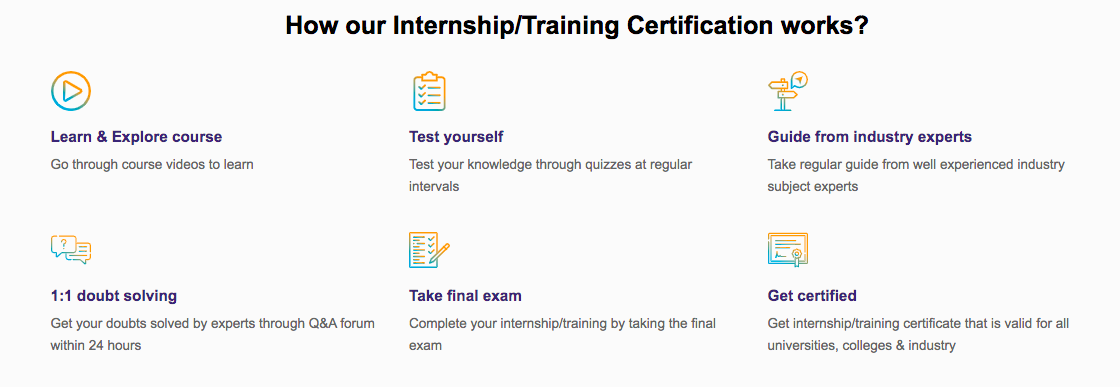
How EasyShiksha Internship/Training Program Works
Alternate Realities for Finance and Decision-Making
Financial decisions are shaped by uncertainty, timing, resource availability and competing objectives. A learner who understands financial formulas may still struggle to decide when a calculation is relevant, which assumptions are reasonable or how much risk an organisation should accept.
Parallel financial worlds could help students develop this judgment. One simulated business might have stable income, predictable expenses and sufficient reserves. Another might experience delayed payments, changing costs and uncertain demand. A third could be considering expansion while facing pressure to maintain liquidity.
The student would use similar financial principles across the scenarios, but the recommended actions could differ. A business with stable cash flow might be able to invest in long-term growth, while a business facing a temporary liquidity shortage might need to prioritise short-term obligations.
The curriculum could also introduce ethical dimensions. Students might compare decisions that maximise immediate financial performance with alternatives that preserve customer trust, employee stability or long-term resilience. The purpose would not be to impose one simplistic answer, but to help learners identify the stakeholders, risks and trade-offs involved.
EasyShiksha could potentially connect these simulations with finance courses, accounting exercises and project work. Students would learn to apply calculations within a decision-making context rather than treating financial concepts as isolated mathematical operations.
Alternate Realities for Cybersecurity and Risk Management
Cybersecurity education often requires students to understand how technical weaknesses interact with human behaviour, organisational processes and operational priorities. A system can be technically secure in one respect while remaining vulnerable through another route.
An alternate-reality cybersecurity curriculum could place learners in simulated organisations with different security conditions. One environment might contain weak access controls, another might involve poor incident reporting and a third could have strong technical protections but inadequate recovery planning.
Students would investigate the available evidence, identify vulnerabilities and decide how to prioritise remediation. Their decisions would change the simulated organisation's security posture and influence the incidents they encounter later.
For example, a learner might focus on correcting a visible software vulnerability while overlooking excessive access permissions. A later scenario could demonstrate how the unresolved permissions create another form of exposure. In a parallel world, the learner might prioritise access control first and compare the resulting risks.
Such experiences could develop risk assessment, prioritisation and incident-response judgment. They would also demonstrate that cybersecurity is not simply a list of technical procedures; it is an ongoing process of managing uncertainty and protecting systems under real operational constraints.
Any such simulation on EasyShiksha should remain within controlled, authorised environments. The purpose would be to teach defensive reasoning and safe professional practice rather than encourage harmful activity against real systems.
The Role of AI in Creating Responsive Simulated Worlds
Artificial intelligence could make alternate-reality learning more flexible by helping generate scenario variations, simulate stakeholder responses and provide contextual feedback. However, an educational simulation should not depend entirely on unpredictable AI-generated events. The world needs defined rules so that student actions produce coherent and educationally useful outcomes.
A practical approach would combine a structured simulation engine with AI-supported interaction. The simulation engine would control essential variables, rules and state changes. AI could help generate realistic dialogue, explain unexpected developments, introduce appropriate variations and respond to the student's questions within the boundaries of the scenario.
For example, an AI-generated customer in a marketing simulation could express dissatisfaction with a campaign, while the underlying engine maintains consistent rules governing customer trust and campaign performance. The student could ask questions, gather additional information and decide how to respond, but the environment would remain grounded in its established conditions.
AI could also support personalised scenario selection. A learner who has mastered basic budgeting might encounter more complex financial environments, while a beginner could receive additional guidance and simpler starting conditions. This personalisation should preserve the intended learning objectives rather than silently reducing the task to an easier activity.
For EasyShiksha, AI could therefore act as a supporting intelligence layer that makes simulated worlds more interactive without sacrificing consistency, safety or assessment quality.
Measuring Professional Skills Across Different Worlds
A major advantage of an Alternate-Reality Curriculum is that students can demonstrate the same underlying capability in more than one context. This provides a stronger basis for evaluating whether learning is transferable.
Suppose a student performs well in a single project-management simulation. That performance may indicate that the learner understands the scenario, but it does not necessarily demonstrate an ability to manage different kinds of projects. The student may have learned a strategy that works only under the conditions presented in that environment.
If the learner subsequently performs a related task in a different simulated world, educators can examine whether the underlying capability remains evident. The second scenario might introduce changing requirements, limited resources or conflicting stakeholder expectations. The learner would need to adapt rather than repeat the original sequence of actions.
Assessment should consider the reasoning behind the decisions, the use of relevant evidence, the ability to recognise risks and the quality of the final result. Where appropriate, students could also be asked to explain what changed between the two environments and why their strategy had to change.
EasyShiksha could potentially use these results to identify strengths and learning gaps, recommend relevant courses and suggest additional practical tasks. However, performance across simulations should be treated as one source of evidence rather than automatic proof of professional competence.
Connecting Alternate-Reality Learning With Projects and Internships
Simulated environments can prepare students for professional tasks, but they cannot reproduce every aspect of real workplace experience. Actual organisations involve genuine stakeholders, operational constraints, accountability and consequences that may be difficult to represent completely in a digital world.
The most effective approach is therefore to connect alternate-reality learning with practical application. Students could begin with structured courses, explore decisions through simulations and then apply their understanding through projects that require them to produce tangible outcomes.
A learner who completes several marketing scenarios might progress to designing a campaign for a fictional or authorised project brief. A programming student might build an application after practising software-development decisions across multiple simulated environments. A finance learner could prepare a structured analysis using a realistic dataset.
Internships could provide a further stage of development. Students would encounter real workflows, communicate with colleagues and work within the expectations of an organisation. The skills practised in simulated worlds would become a foundation for professional experience rather than a substitute for it.
EasyShiksha could potentially organise this progression as a connected learning pathway. The objective would be to help learners move from understanding professional concepts to applying them under increasingly realistic conditions, with each stage providing evidence that informs the next.
Preventing the Simulation From Becoming a Game of Guesswork
Alternate-reality learning can fail if students discover that success depends on guessing the preferences of the game designer rather than understanding the subject. If one option is always rewarded and another is always penalised, students may memorise the expected pattern without developing professional judgment.
A well-designed curriculum should allow multiple defensible strategies when the professional situation supports them. Different decisions may produce different outcomes, and students should be assessed on whether their choices are reasonable given the information available.
The system must also explain consequences clearly enough for students to learn from them. If a decision produces a poor result, the learner should have opportunities to examine the evidence, identify the assumptions involved and consider what might have been done differently. Unpredictability can make a simulation engaging, but arbitrary outcomes undermine its educational value.
Another important safeguard is to avoid presenting simulated scenarios as exact predictions of real workplaces. Real organisations are more complex than any educational model, and outcomes may depend on factors that the simulation cannot represent. Students should understand that the environment is a learning model designed to explore selected relationships, not a guarantee of how every professional situation will unfold.
For EasyShiksha, maintaining this distinction would support trust and help students use simulated experience as preparation for real decisions rather than as a rigid formula for success.
Privacy, Fairness and Student Control
As simulated learning systems become more adaptive, they may collect information about student choices, response patterns, problem-solving approaches and progress across different environments. These records can help personalise learning, but they also create responsibilities around privacy and fairness.
A student's unsuccessful decision in one simulated world should not become a permanent label about their professional potential. A learner may struggle with a particular scenario because the subject is unfamiliar, the instructions are unclear or the environment reflects assumptions that do not match the learner's experience.
EasyShiksha would need to distinguish between temporary performance, repeated evidence and verified capability. Students should be able to understand how their simulation results are used, correct inaccurate records and request appropriate review when a consequential recommendation relies on disputed evidence.
The platform should also avoid using game behaviour as a simplistic measure of personality or suitability for a career. A student who prefers to explore several options may be demonstrating curiosity rather than indecision. Another learner who chooses a cautious strategy may be responding rationally to the risks presented by the scenario.
The purpose of collecting learning data should be to improve educational support, not to turn every decision into an enduring judgment about the student.
Empower your team. Lead the industry
Get a subscription to a library of online courses and digital learning tools for your organization with
EasyShiksha
The Future of Alternate-Reality Curriculum on EasyShiksha
The Alternate-Reality Curriculum could provide EasyShiksha with a way to connect its educational services through a common learning experience. Courses would introduce concepts, quizzes would help examine understanding, simulated worlds would allow students to apply knowledge under different conditions, and projects would provide opportunities to produce practical work.
The approach could also support more engaging educational games. Instead of presenting isolated levels with predetermined outcomes, games could contain connected environments that respond to the learner's decisions. Students could revisit scenarios, compare alternative approaches and explore how changes in assumptions affect the results.
Career guidance could potentially use the experience to help students explore different professional contexts. A learner interested in technology might compare software development, cybersecurity and product-management simulations before deciding which subjects to study further. Such experiences would provide structured opportunities for exploration without claiming to predict a student's future with certainty.
Over time, EasyShiksha could develop a library of parallel worlds across professional domains, using consistent assessment principles while allowing each subject to retain its own specialised rules. This would make it possible to scale practical learning experiences beyond the limitations of a single classroom or physical training environment.
The long-term opportunity is to create a learning ecosystem in which students do not merely study descriptions of professional work. They explore carefully designed versions of that work, encounter different conditions and practise adapting their decisions.
Conclusion: Learning to Think Across Different Realities
Professional competence requires more than knowing the correct procedure. It requires understanding when a procedure is appropriate, recognising when circumstances have changed and adapting decisions without losing sight of the underlying objective. Students develop this capability when they encounter varied situations that require them to transfer knowledge rather than simply repeat familiar solutions.
The Alternate-Reality Curriculum offers a framework for creating these experiences through parallel simulated worlds. By presenting related professional challenges under different conditions, it helps learners compare outcomes, understand trade-offs and develop more flexible reasoning. AI can support scenario variation and personalised guidance, while structured simulation rules preserve consistency and educational purpose.
For EasyShiksha, this approach could connect online courses, quizzes, games, projects, internships, certificates and career guidance into a progression from foundational knowledge to practical application. Students could explore multiple versions of a professional environment, learn from the consequences of their decisions and build evidence of how they apply knowledge across different contexts.
The value of this approach does not lie in making education more fictional or more entertaining. It lies in creating opportunities to practise professional judgment before students encounter the full complexity of real work.
Anshika Jain is an Engineer, Developer, and Educational Content Author known for her dedication to technology and knowledge sharing. With a strong analytical mindset and a passion for innovation, she has consistently contributed to creating meaningful digital solutions and insightful educational articles.
Her ability to simplify complex technical concepts into engaging and easy-to-understand content makes her work valuable for students and learners across various platforms. Along with her technical expertise, Anshika is admired for her creativity, professionalism, and commitment to continuous learning.
She represents a perfect blend of technical excellence and impactful communication, inspiring others through both her development work and educational contributions.