The traditional university education system has generally treated academic learning and professional experience as two separate forms of development. Students attend lectures, complete assignments, participate in laboratory sessions, and appear for examinations to earn academic credits. Professionals, meanwhile, develop practical expertise through employment, internships, industry projects, technical assignments, business operations, and workplace problem-solving. Although both environments contribute to knowledge and professional capabilities, the skills developed in the workplace are not always formally recognised by universities. This creates an important question for modern higher education: can practical industry experience be converted into university credit without compromising academic standards?
The academic credit conversion problem refers to the difficulty of translating professional knowledge, workplace responsibilities, and demonstrated competencies into measurable academic value. A person who has spent several years managing digital marketing campaigns may understand consumer behaviour, analytics, advertising platforms, and campaign optimisation more deeply than someone who has only studied these concepts theoretically. Similarly, a software developer who has built and maintained production applications may possess substantial technical knowledge that is not represented by their formal academic qualifications. However, professional experience alone does not automatically demonstrate that an individual has achieved the learning outcomes of a university course.
The challenge is therefore not simply to reward the number of years someone has worked. It is to establish a reliable process through which universities can examine professional evidence, evaluate learning outcomes, measure competency levels, and determine whether particular experiences are equivalent to specific academic requirements. Such a system must be transparent, academically defensible, and consistent enough to protect the value of university qualifications.
For digital education platforms such as EasyShiksha, this concept creates an opportunity to connect online courses, practical projects, internships, assessments, certificates, and university learning pathways. By helping learners document what they know and demonstrate what they can do, education platforms can contribute to a more flexible relationship between academic education and professional development.
Understanding the Academic Credit Conversion Problem
Academic credits are structured measurements of learning completed within an educational programme. Universities generally award them after students complete defined courses, practical sessions, examinations, projects, or other approved academic activities. These credits represent more than the time spent studying. They are connected to curriculum requirements, learning outcomes, assessment standards, and institutional regulations.
Industry experience, on the other hand, develops through activities that are not necessarily organised according to an academic curriculum. A professional may learn database management while maintaining business systems, understand financial reporting through accounting responsibilities, or develop project management capabilities while coordinating a product launch. Although these experiences can produce meaningful knowledge, they may not have formal learning objectives, standardised assessments, or documented evidence of achievement.
This difference creates a conversion problem. Universities need to determine whether the knowledge developed outside the classroom is sufficiently comparable to the knowledge expected from an academic course. For example, completing two years of software development work does not automatically establish that a person has mastered every topic covered in a university-level programming course. The individual may have extensive experience with frontend development but limited exposure to algorithms, computational complexity, software architecture, or theoretical computer science.
A defensible credit conversion system must therefore evaluate the substance of experience rather than its duration alone. It should identify the competencies acquired, the complexity of the work performed, the level of independence demonstrated, and the evidence supporting the claimed knowledge. Only after these factors have been examined can an institution make a credible decision about academic credit recognition.
Why Industry Experience Deserves Academic Recognition
Professional environments increasingly operate as learning ecosystems. Employees continuously encounter new technologies, changing regulations, customer requirements, operational challenges, and complex business decisions. Their ability to perform effectively often depends on learning that extends beyond their original academic qualifications.
Consider a cybersecurity professional responsible for investigating suspicious network activity. Through workplace responsibilities, the individual may develop practical understanding of incident response, threat detection, vulnerability assessment, security monitoring, and digital investigation. These capabilities may be developed through repeated exposure to real systems rather than conventional classroom instruction. A university programme covering cybersecurity could potentially recognise some of this learning if the professional demonstrates that the required academic competencies have been achieved.
Industry experience can also develop knowledge that universities struggle to reproduce through conventional teaching. Real projects involve uncertain requirements, incomplete information, financial limitations, stakeholder expectations, operational risks, and unexpected technical failures. Students may learn theoretical project management principles, but professionals must apply those principles under conditions where decisions have measurable consequences.
Recognising this experience can make higher education more accessible to working professionals, career changers, independent developers, entrepreneurs, and individuals who have acquired expertise through non-traditional pathways. It can also reduce unnecessary repetition. If a learner has already demonstrated a particular competency through credible evidence, an institution may have a reason to assess whether repeating an equivalent learning component is necessary.
However, academic recognition should not become an automatic reward for employment. Its purpose is to recognise verified learning, not simply professional seniority. This distinction protects academic credibility while allowing universities to acknowledge valuable knowledge developed outside formal education.
Insights from Internship Students: Testimonials
×
Converting Workplace Activities Into Academic Learning Outcomes
The first major requirement for credit conversion is translating professional responsibilities into clearly defined learning outcomes. Job descriptions are usually written to explain what employees are expected to do, whereas academic curricula describe what learners should understand and demonstrate after completing a course. These two forms of documentation must be connected before experience can be evaluated academically.
For instance, a digital marketing executive may be responsible for managing paid advertising campaigns. This responsibility can be translated into several potential learning outcomes, including understanding audience segmentation, developing campaign objectives, interpreting performance metrics, managing advertising budgets, and evaluating conversion results. However, the job title itself does not establish that these competencies have been achieved. The individual must provide evidence demonstrating the quality and depth of their work.
The same approach can be applied to software development. A developer who builds web applications may demonstrate competencies in programming logic, interface development, API integration, database operations, testing, debugging, and deployment. An academic institution can compare these demonstrated capabilities with the learning outcomes of relevant programming or web development courses.
This process requires a structured competency mapping framework. Each professional activity should be connected to a specific knowledge area, practical skill, expected proficiency level, and measurable outcome. The mapping should also identify whether the experience demonstrates introductory understanding, intermediate application, advanced problem-solving, or independent professional judgement.
When workplace responsibilities are converted into academic learning outcomes, universities gain a more reliable basis for evaluating experience. Instead of asking how long someone has worked in a particular role, they can examine what the person has actually learned and whether that learning satisfies defined academic requirements.
The Difference Between Work Experience and Demonstrated Competency
One of the most important principles of academic credit conversion is separating participation from achievement. Being employed in a technical position does not necessarily mean that every required technical competency has been mastered. An employee may perform a narrow set of repetitive tasks for several years without developing the broader understanding expected from a university course.
For example, a person working in a software company may spend most of their time updating website content through a content management system. Although this role involves exposure to digital platforms, it does not automatically establish advanced programming knowledge, database architecture expertise, or software engineering capability. Similarly, an employee working in a finance department may process invoices regularly without demonstrating the analytical and regulatory knowledge required in an advanced accounting course.
Universities therefore need to assess the level of intellectual engagement involved in professional activities. They should examine whether the learner understands why a task is performed, can explain the underlying principles, can apply knowledge in unfamiliar situations, and can evaluate the results of their decisions.
Demonstrated competency also requires evidence of consistency. A successful result from one isolated project may not prove that a person can independently repeat the same performance under different conditions. Multiple examples, reflective explanations, practical demonstrations, and structured assessments can provide a stronger understanding of the learner's capabilities.
This distinction prevents academic credit conversion from becoming a system in which employment history is treated as an alternative to education without proper evaluation. Instead, it creates a process in which professional experience becomes a source of evidence that can be examined against academic standards.
Building an Evidence-Based Professional Learning Portfolio
A professional learning portfolio can serve as the foundation of a reliable credit conversion process. It is a structured collection of evidence demonstrating the knowledge and competencies developed through employment, internships, independent projects, professional training, and other practical activities.
Unlike a conventional resume, which primarily summarises job titles, responsibilities, and career achievements, a learning portfolio explains what an individual has learned and how that learning can be demonstrated. It may contain project reports, technical documentation, work samples, assessment results, presentations, design files, analytical reports, supervisor feedback, and reflective explanations of completed work.
For example, a frontend developer seeking recognition for practical web development experience could include documentation of applications created, explanations of component architecture, examples of responsive interfaces, testing procedures, and descriptions of technical challenges resolved. The portfolio could also contain an independently assessed project demonstrating the ability to apply knowledge beyond previously completed assignments.
A marketing professional could present campaign planning documents, anonymised performance reports, audience research, advertising strategies, and explanations of how campaign results influenced subsequent decisions. These materials would help an evaluator understand not only what work was completed but also the reasoning and knowledge behind it.
Confidentiality is particularly important when portfolios contain workplace material. Employees may not have permission to disclose customer information, internal company data, proprietary code, or commercially sensitive documents. A responsible portfolio framework should support anonymised evidence, redacted records, verified demonstrations, and employer-approved summaries.
The portfolio should also distinguish between original work, collaborative contributions, and activities completed under supervision. This helps universities evaluate the learner's actual role rather than assuming that every achievement associated with a team project represents individual competency.
How Universities Can Establish a Defensible Credit Conversion Model
A defensible conversion model requires more than a general policy stating that professional experience may be recognised. Universities need clearly defined procedures for identifying eligible learning, evaluating evidence, conducting assessments, and determining the amount of credit that can be awarded.
The process should begin with curriculum mapping. Academic departments must identify the learning outcomes, knowledge areas, practical requirements, and assessment standards associated with each course. These outcomes provide the reference point against which external experience can be evaluated.
The next stage involves evidence submission and preliminary review. Applicants provide their professional portfolios, employment records, project documentation, training certificates, and other relevant material. Academic evaluators examine whether the submitted evidence is sufficiently relevant to the course under consideration.
A detailed competency assessment can then determine the extent to which the learner has achieved the expected outcomes. Depending on the subject, this may involve a practical examination, technical demonstration, structured interview, written assessment, case study, or supervised project. A software developer might be asked to design and implement a small application, while a business professional could be required to analyse a realistic organisational problem.
After assessment, the institution can determine whether the demonstrated learning meets the requirements for partial or complete recognition of a particular course component. Any remaining learning gaps should be clearly identified so that the learner can complete the necessary academic work.
Finally, the credit decision should be recorded with an explanation of the evidence reviewed, the assessment criteria applied, and the academic requirements satisfied. This creates an auditable record that can support future verification and institutional quality assurance.
Measuring Credit Without Confusing Work Hours With Academic Value
One of the most difficult questions in academic credit conversion concerns measurement. Universities need a method for deciding how much academic credit a particular experience deserves. However, simply converting professional working hours into university credits would create serious problems.
An employee may work for 2,000 hours performing a narrow operational task without developing competencies equivalent to an entire academic course. Another individual may complete a complex research or engineering project in considerably fewer hours while demonstrating advanced analytical and technical capabilities. Time spent is therefore relevant to understanding the scope of experience, but it cannot independently establish academic equivalence.
A more reliable approach combines learning outcomes, demonstrated proficiency, assessment performance, and the academic workload associated with the relevant course. The institution can examine whether the learner has achieved the required knowledge, whether the achievement is sufficiently broad, and whether the demonstrated level matches the course's expected academic standard.
Credit conversion should also account for the difference between foundational and advanced knowledge. Professional experience may establish strong practical proficiency while leaving theoretical gaps. A person who has successfully managed digital campaigns may understand advertising operations but still require formal study of marketing theory, statistical analysis, consumer research methods, or strategic frameworks.
A transparent model should therefore permit partial recognition where appropriate. Instead of treating experience as either entirely acceptable or completely irrelevant, universities can recognise demonstrated learning while requiring learners to complete the components that remain unverified.
The Role of Prior Learning Assessment and Recognition
Prior Learning Assessment and Recognition, commonly known as PLAR, provides an established educational approach for evaluating knowledge acquired outside conventional academic programmes. Similar concepts are used internationally under terms such as recognition of prior learning, credit for prior learning, and recognition of prior experiential learning.
The central idea is that learning can occur through multiple environments. Formal education is one source, but professional employment, internships, independent study, community activities, entrepreneurship, and structured training can also develop meaningful competencies. PLAR processes attempt to evaluate these experiences against recognised learning standards.
For universities, prior learning assessment can provide a framework for recognising professional achievements without lowering academic requirements. Instead of assuming that experience is automatically equivalent to a qualification, institutions evaluate whether the individual has achieved the expected outcomes through another learning pathway.
A strong PLAR system also makes the assessment process more learner-centred. Applicants receive clear information about eligible evidence, assessment requirements, possible credit outcomes, and the academic gaps they may need to address. This transparency reduces uncertainty and helps professionals make informed decisions before applying.
In India, the broader policy direction around flexible learning pathways, credit accumulation, and academic mobility provides a relevant context for such discussions. The National Education Policy 2020 and the Academic Bank of Credits framework have encouraged greater flexibility in how academic learning is accumulated and recognised. However, the recognition of workplace experience still depends on applicable regulatory provisions, institutional policies, programme requirements, and approved assessment procedures. Professional experience should not be assumed to generate university credit automatically.
India's Academic Credit Framework and the Opportunity for Flexible Learning
India's higher education environment is gradually moving towards more flexible approaches to academic progression. Traditional programmes often require learners to follow a fixed sequence of courses within a particular institution. However, the growing availability of online education, vocational training, skill development programmes, internships, and multidisciplinary learning has increased the demand for more adaptable academic pathways.
The National Education Policy 2020 supports greater flexibility, multidisciplinary education, and the recognition of learning across different stages of education. The Academic Bank of Credits provides a digital mechanism for eligible academic credits to be accumulated and transferred in accordance with applicable rules. These developments are relevant to the academic credit conversion problem because they encourage institutions to think beyond rigid, institution-specific learning structures.
Nevertheless, there is an important distinction between transferring academic credits already earned through recognised educational programmes and awarding credits for professional experience. These processes are related but not identical. Credit transfer generally concerns the recognition of previously completed academic learning, whereas experience-based credit recognition requires an institution to evaluate learning that may not have been delivered or assessed through a conventional academic course.
For practical industry experience to become defensible university credit, institutions must establish appropriate assessment mechanisms and operate within the regulations applicable to their programmes. The existence of a digital credit infrastructure does not independently establish that every professional activity is eligible for credit.
This distinction is especially important for Indian learners who want to combine employment with higher education. A transparent system could eventually help working professionals pursue further qualifications without unnecessarily repeating knowledge they have already demonstrated. However, academic institutions must retain responsibility for maintaining programme standards and ensuring that recognised learning meets the required academic level.
AI-Based Competency Mapping and Academic Evaluation
Artificial intelligence could make academic credit conversion more efficient by helping universities analyse large amounts of professional evidence. Traditional assessment processes can be time-consuming because evaluators may need to examine lengthy portfolios, project reports, technical documents, certificates, and employment records. AI systems could assist by identifying relevant competencies and organising evidence according to predefined academic learning outcomes.
For example, an AI-supported platform could analyse a developer's project documentation and identify potential connections to programming, database management, software testing, API integration, and interface development. It could then compare these areas with the learning outcomes of a relevant academic course. This would help evaluators identify which competencies appear well supported and which require additional assessment.
Natural language processing could also assist with interpreting professional documents, extracting project responsibilities, and organising evidence into competency categories. Machine learning models might identify recurring patterns between successful assessments and different types of workplace experience. Such tools could help universities improve consistency and reduce administrative effort.
However, AI should not independently award academic credit. Professional documents may contain exaggerated claims, incomplete information, or terminology that appears relevant without proving actual competency. A person may describe participation in a complex project without having personally performed the technical work. AI systems may also misunderstand specialised professional contexts or evaluate different industries inconsistently.
Human academic judgement must therefore remain central to the process. AI can support evidence organisation, preliminary mapping, and assessment recommendations, but final decisions should be made through authorised institutional procedures. Any automated evaluation should be explainable, auditable, and open to human review.
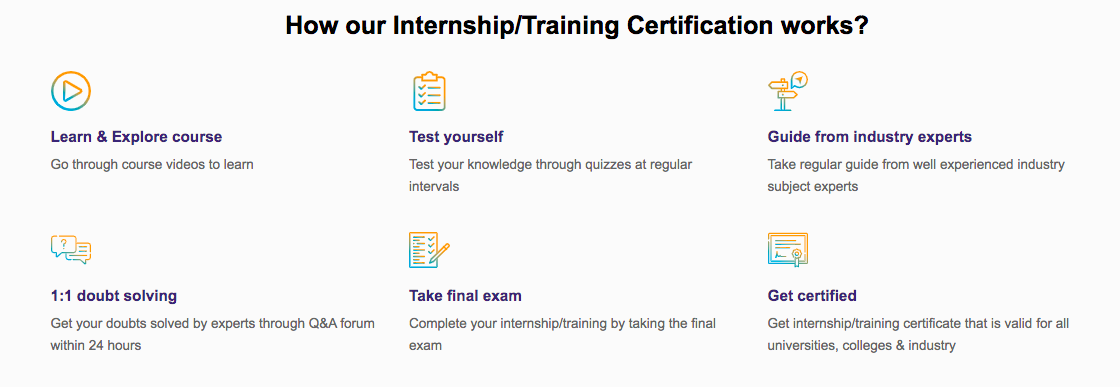
How EasyShiksha Internship/Training Program Works
Practical Assessments as a Bridge Between Industry and Universities
Practical assessments can help universities verify whether workplace experience represents genuine academic learning. A professional portfolio may provide useful information, but it cannot always establish that an individual can independently apply knowledge in a new situation. A structured assessment allows evaluators to examine the learner's understanding beyond the projects already included in the portfolio.
In technology programmes, practical assessment could involve building a small application, identifying vulnerabilities in a controlled environment, designing a database, or debugging an unfamiliar codebase. These activities can reveal whether the applicant understands underlying principles rather than simply repeating procedures used in an existing workplace.
In business and management programmes, assessment might involve evaluating a case study, preparing a financial analysis, designing a marketing strategy, or responding to a simulated organisational challenge. Such activities help establish whether professional experience has developed transferable knowledge and decision-making capabilities.
A practical assessment should be aligned with the academic level of the course. An introductory course should not demand advanced professional expertise, while an advanced programme should require evidence of deeper analysis, independent judgement, and complex problem-solving. Assessment design must also account for differences between professional environments so that candidates are evaluated fairly.
When practical assessment is combined with portfolio evaluation and academic interviews, universities gain a stronger basis for deciding whether experience deserves recognition. This approach also helps identify specific learning gaps that can be addressed through additional coursework or supervised projects.
Industry Partnerships and Employer-Verified Learning
Employers can play an important role in making industry experience more credible. Universities may find it difficult to verify every project independently, particularly when applicants have worked across multiple organisations or completed assignments in remote environments. Employers can provide supporting information about responsibilities, project contributions, technical tools, supervision, and performance.
A structured employer verification process could help distinguish between participation and individual achievement. For example, an organisation could confirm that an employee independently developed a reporting dashboard, managed a database migration, or coordinated a defined project phase. The employer could also provide information about the complexity of the assignment and the level of supervision involved.
However, employer confirmation should not replace academic assessment. A company may value an employee's performance for operational reasons, but its internal performance standards may not correspond to university learning outcomes. A highly productive employee may still have gaps in theoretical knowledge or broader academic understanding.
The strongest model combines employer verification with independent academic evaluation. Employers confirm the authenticity and context of professional work, while universities determine whether the demonstrated learning meets academic requirements. This division of responsibility helps maintain institutional independence while making industry knowledge more visible.
Education platforms can support this relationship by helping learners organise projects, document internship outcomes, obtain verified feedback, and maintain records of practical achievements. Such systems can create a more reliable bridge between workplace learning and academic evaluation.
The Role of Online Courses and Internships in Building Credit-Ready Skills
Online education can contribute to academic credit conversion by helping learners develop structured knowledge alongside professional experience. Workplace learning is often highly specialised. Employees may become proficient in particular tools or tasks without understanding the broader concepts that connect them to an academic discipline. Online courses can help address this imbalance.
For example, a professional who has practical experience in web development may benefit from structured learning in programming fundamentals, software architecture, database concepts, web security, and testing methodologies. This combination of workplace experience and formal online learning can create a stronger competency profile.
Internships also provide valuable evidence of applied learning, especially when they include defined responsibilities, supervision, practical assignments, and measurable outcomes. A structured internship can expose learners to real professional environments while maintaining an educational purpose. When internship activities are documented through project reports, evaluations, and assessments, they become easier to examine as evidence of learning.
However, completing an online course or internship certificate does not automatically result in university credit. Recognition depends on whether the programme is eligible under the applicable academic framework and whether the relevant institution accepts its learning outcomes and assessment standards. A certificate can support a learner's portfolio, but it is not necessarily equivalent to a university credit award.
This is where platforms such as EasyShiksha can contribute to a more organised learning journey. By connecting online courses, practical projects, internships, quizzes, and certificates, the platform can help learners develop and document competencies in a structured manner. Such records can support future applications for academic recognition, professional development, or further education, subject to the requirements of the receiving institution.
How EasyShiksha Can Support Experience-Based Learning Recognition
EasyShiksha operates within an educational ecosystem that connects online learning, internships, quizzes, certificates, university programmes, and career development. These elements can contribute to a structured approach in which learners do not simply complete courses but also develop evidence of what they can apply in practical environments.
A learner interested in web development, for example, could begin with an online course covering HTML, CSS, JavaScript, and React. The learner could then apply these concepts through practical assignments and projects that demonstrate the ability to create responsive interfaces, work with application logic, and connect different components. Quizzes could evaluate conceptual understanding, while project submissions could provide evidence of practical application.
An internship can extend this process by exposing learners to professional expectations and collaborative work. The learner may participate in website development, content management, testing, documentation, or frontend implementation under an organisational structure. A certificate and project record can help document participation and achievement, while feedback can provide additional information about performance.
For a learner pursuing digital marketing, a similar pathway could combine courses in search engine optimisation, analytics, content strategy, and advertising with practical campaign assignments. Quizzes could test conceptual knowledge, while project work could demonstrate the ability to conduct keyword research, evaluate website performance, and interpret campaign results.
EasyShiksha can make this learning journey more organised by encouraging learners to maintain records of completed courses, assessments, projects, and internship outcomes. A well-maintained learning history can help learners communicate their capabilities to employers and educational institutions. It can also make it easier to identify areas where further training is required.
The platform's potential contribution is therefore not to independently award university credit but to help learners build a stronger evidence base. Formal credit recognition must remain subject to the academic policies, assessment procedures, and regulatory requirements of the relevant university or institution.
Creating a Digital Competency Passport
A digital competency passport could become an important development in the future of academic credit conversion. Traditional certificates generally confirm that a learner completed a particular course or programme. However, they may provide limited information about the practical capabilities developed during that learning experience.
A competency passport would offer a more detailed representation of an individual's learning history. It could record completed courses, assessment results, project experience, internship responsibilities, verified skills, and demonstrated proficiency levels. Instead of presenting qualifications as isolated documents, the system would organise them into a connected record of professional and academic development.
For example, a learner's digital competency passport might show foundational JavaScript knowledge, practical frontend development experience, completed React projects, and internship-based exposure to collaborative software development. Each entry could include supporting evidence and the method through which the competency was assessed.
Universities could use such records as an initial reference when reviewing applications for prior learning recognition. Employers could examine verified competencies when evaluating candidates for technical roles. Learners could also use the passport to identify missing skills and plan further education.
For this system to be reliable, it would require strong verification mechanisms, secure data management, transparent assessment criteria, and clear ownership of learner information. The passport should also distinguish between self-reported skills, course completion, independently assessed competencies, and employer-verified achievements. Without these distinctions, a digital record could become another collection of unverified claims rather than a meaningful representation of learning.
Challenges in Translating Industry Experience Into University Credit
Although experience-based credit recognition offers significant benefits, it also introduces complex academic and administrative challenges. One of the most important concerns is maintaining consistency between institutions. Two universities may evaluate the same professional experience differently because they use different curricula, competency frameworks, or assessment methods. This can create uncertainty for learners who want to transfer recognised learning between institutions.
Another challenge concerns the changing nature of professional skills. Technical knowledge can become outdated as programming frameworks, cybersecurity practices, business regulations, and industry tools evolve. Experience gained several years earlier may not fully represent current professional competency. Universities must therefore consider the relevance and recency of evidence, particularly in rapidly changing disciplines.
The authenticity of submitted evidence is another major concern. Applicants may exaggerate their responsibilities, submit work completed by other people, or provide documents that do not demonstrate individual learning. Institutions need reliable verification procedures, practical assessments, and clear academic integrity policies to address these risks.
There is also the question of theoretical depth. Professional experience often focuses on solving immediate problems, whereas university education may require learners to understand the underlying principles, historical development, research foundations, and broader implications of a subject. A professional may know how to use a particular software tool without understanding the algorithms or architectural principles behind it.
Finally, the assessment process itself can require substantial resources. Academic staff need time to examine portfolios, conduct interviews, evaluate projects, and document decisions. Universities may need specialised assessors, digital systems, employer partnerships, and quality assurance procedures. Without adequate institutional support, experience-based credit recognition could become slow, expensive, or difficult to access.
Empower your team. Lead the industry
Get a subscription to a library of online courses and digital learning tools for your organization with
EasyShiksha
Preventing Credit Inflation and Protecting Academic Standards
A successful credit conversion framework must protect the value of academic qualifications. If institutions award excessive credit without rigorous evaluation, degrees may lose credibility and employers may become uncertain about what graduates actually know. Credit recognition should therefore be based on demonstrated equivalence rather than convenience or recruitment targets.
Universities need clear limits on the amount and type of credit that can be awarded through prior learning recognition. Some courses may be suitable for experience-based assessment, while others may require direct participation in laboratories, research supervision, clinical practice, or institution-specific academic activities. The decision should depend on the nature of the discipline and the requirements of the qualification.
Academic standards must also account for the difference between practical proficiency and theoretical understanding. A professional with extensive industry experience may demonstrate excellent operational capability but still need formal study to meet the broader intellectual requirements of a degree. Recognition should address only the learning that has been adequately verified.
Independent moderation can strengthen consistency. A second academic reviewer, departmental assessment committee, or external quality assurance process may examine credit decisions, particularly when they involve advanced or substantial academic recognition. Institutions should also maintain records of assessment criteria and outcomes so that decisions can be reviewed when necessary.
The goal is not to make degrees easier to obtain. It is to ensure that learners are assessed on what they have genuinely learned, regardless of where that learning took place.
The Future of University Education and Professional Learning
The relationship between employment and education is likely to become more integrated as professional skills continue to change. Traditional education pathways generally assume that learners complete formal study before entering the workforce. In reality, many people now move repeatedly between education, employment, independent learning, and professional training.
This changing pattern creates demand for systems that can recognise learning across different environments. A person may complete an undergraduate degree, work in a technical role, pursue online certifications, participate in internships, and later return to university for postgraduate education. Each stage can contribute to professional development, but the learning achieved may not always be visible within conventional academic records.
Future universities may increasingly use competency frameworks, digital portfolios, practical assessments, and verified learning records to evaluate applicants with non-traditional educational backgrounds. AI-supported assessment tools may help organise evidence, while digital credential systems could improve verification and portability.
The most significant development may be a shift from qualification-centred evaluation towards evidence-supported learning recognition. Degrees will continue to represent structured academic achievement, but institutions may become more willing to recognise knowledge acquired through credible external experiences.
For education platforms, this creates an opportunity to help learners develop competencies in a measurable and transparent manner. Online courses, internships, quizzes, projects, and career guidance can become interconnected elements of lifelong learning rather than isolated educational activities.
EasyShiksha can contribute to this evolving environment by helping learners combine structured learning with practical experience and maintain a documented record of their progress. Although formal academic credit decisions remain with authorised institutions, better learning documentation can make the recognition process more understandable and accessible.
Conclusion
The academic credit conversion problem reflects a major challenge in modern higher education: professional learning is valuable, but its academic recognition requires a reliable method of evaluation. Industry experience can develop advanced technical knowledge, analytical thinking, decision-making, and practical problem-solving capabilities. However, years of employment or a successful job title cannot independently establish academic equivalence.
A defensible system must connect workplace activities with defined learning outcomes, examine evidence of individual achievement, evaluate competency levels, and use appropriate practical assessments. Universities must also maintain transparent policies, protect academic standards, and operate within applicable regulatory requirements. Partial recognition should be possible when a learner demonstrates some required outcomes but still needs to complete specific academic components.
For learners, this approach could create more flexible routes into higher education and reduce unnecessary repetition of already demonstrated knowledge. For universities, it could improve connections with industry and make academic programmes more responsive to changing professional environments. For employers, it could provide a clearer way to understand the relationship between workplace capabilities and formal qualifications.
EasyShiksha can support this development by connecting online courses, internships, quizzes, certificates, and practical projects into a more organised learning journey. By helping individuals document their competencies and demonstrate practical achievements, the platform can contribute to the evidence required for future academic and professional recognition.
Ultimately, the future of education should not depend exclusively on where learning takes place. It should also recognise what individuals have learned, how effectively they can apply that knowledge, and whether their achievements can be independently verified. Translating industry experience into university credit is not simply an administrative exercise; it is an opportunity to build a more flexible, transparent, and competency-focused education system.
Anshika Jain is an Engineer, Developer, and Educational Content Author known for her dedication to technology and knowledge sharing. With a strong analytical mindset and a passion for innovation, she has consistently contributed to creating meaningful digital solutions and insightful educational articles.
Her ability to simplify complex technical concepts into engaging and easy-to-understand content makes her work valuable for students and learners across various platforms. Along with her technical expertise, Anshika is admired for her creativity, professionalism, and commitment to continuous learning.
She represents a perfect blend of technical excellence and impactful communication, inspiring others through both her development work and educational contributions.