Exam preparation is often associated with long study hours, thick textbooks, extensive notes, and repeated revision. Students preparing for school examinations, entrance tests, government examinations, competitive exams, or professional assessments frequently believe that serious preparation requires several uninterrupted hours every day. While dedicated study time is certainly important, this approach can sometimes make preparation feel overwhelming. When students think about everything they need to complete, revise, remember, and practice, even starting a study session can become difficult.
This is where the idea of small, consistent practice becomes valuable. Instead of waiting for a large block of free time, students can build a daily learning habit around one simple activity: attempting one quiz every day. A short quiz may take only a few minutes, but the habit can encourage students to recall information, identify weak areas, measure progress, and remain connected with their subjects throughout the preparation period. The objective is not to suggest that one quiz alone can replace complete exam preparation. Rather, the idea is to make daily practice an accessible part of a larger learning strategy.
Digital learning platforms such as EasyShiksha make this approach particularly relevant because quizzes can exist alongside online courses, skill-based learning, internships, projects, and other learning activities. A student can study a concept through an online course, test that concept through a quiz, identify areas that require additional attention, and continue building a broader learning profile over time. In this model, a quiz is not simply an examination at the end of learning. It becomes part of the learning process itself.
Why Small Study Sessions Are Becoming More Important
Modern students manage multiple responsibilities at the same time. Academic classes, assignments, entrance-exam preparation, internships, projects, extracurricular activities, social commitments, and digital distractions can compete for attention. Because of this, students may struggle to maintain long and uninterrupted study sessions every day. A strategy that depends entirely on having several free hours may therefore be difficult to sustain.
Small study sessions provide an alternative way to maintain continuity. A student who cannot spend two hours revising a subject on a particular day may still be able to spend ten minutes answering questions. The important factor is not that the session is short but that it creates an opportunity to interact with the subject. Once the habit becomes established, the student can gradually add deeper study, revision, practice papers, or additional learning activities.
One quiz a day can therefore function as a minimum daily learning commitment. It gives students a simple starting point even on busy days. The purpose is not to reduce learning to a few questions but to make sure that learning does not completely disappear from the day. Over weeks and months, these small interactions can contribute to a more consistent preparation routine.
A Quiz Is More Than a Test
Many students think of quizzes as something that happens after studying. They read a chapter, attend a lecture, memorize information, and then take a test to find out whether they are prepared. However, quizzes can also be used as a learning method.
When students attempt a question without looking at their notes, they are required to retrieve information from memory. This process is different from simply rereading a textbook or watching another lecture. A student may feel familiar with a topic while reading it but discover through a quiz that certain details cannot actually be recalled independently.
This makes quizzes useful for revealing the difference between recognition and recall. Recognition occurs when information looks familiar because the student has seen it before. Recall requires the student to retrieve the information without relying on the original explanation. Exams frequently demand this second ability. Regular questioning can therefore help students become more comfortable with retrieving information under pressure.
A daily quiz can also create an immediate feedback loop. When students discover that they have answered a question incorrectly, they have a reason to return to the underlying concept. Instead of revising everything equally, they can focus attention on areas where their understanding needs improvement.
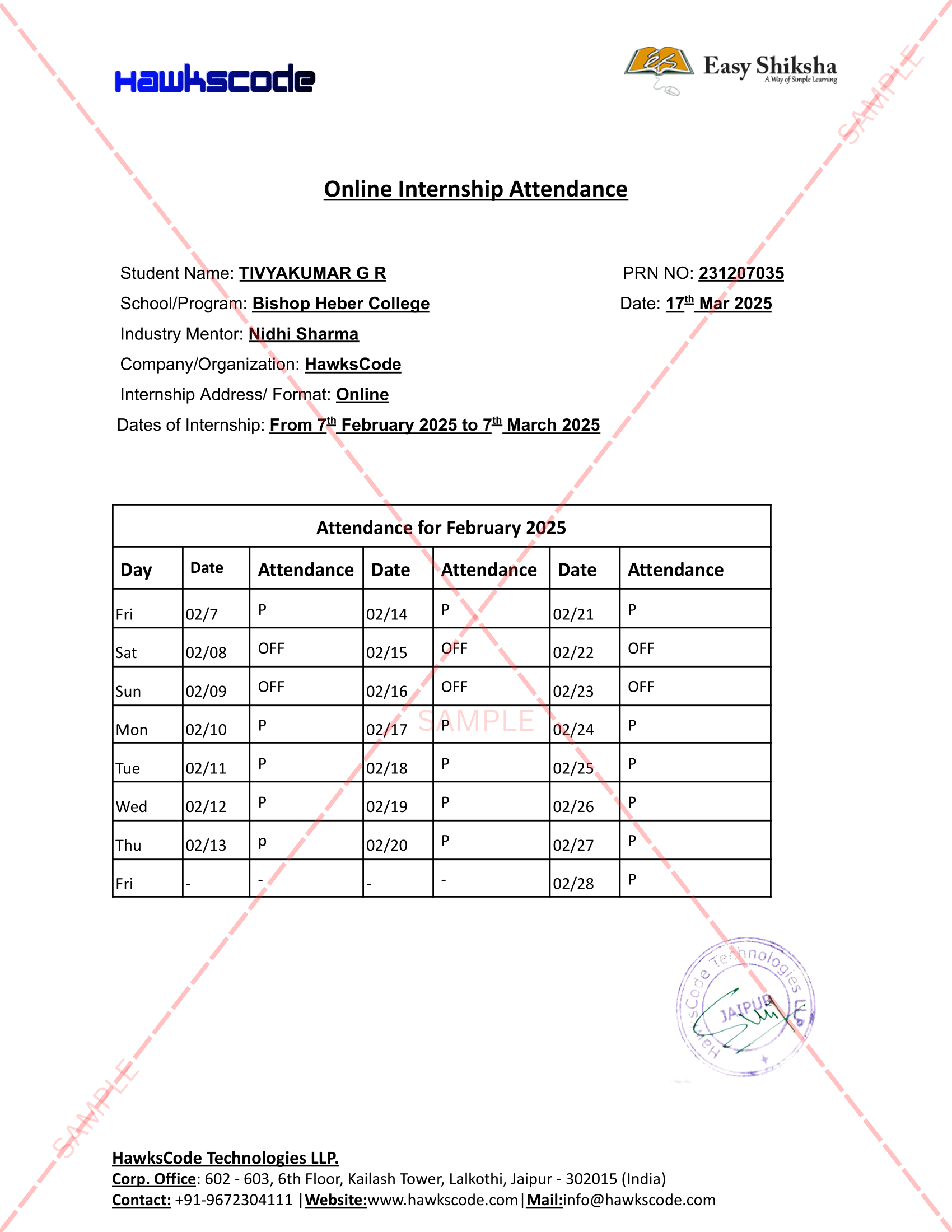
How EasyShiksha Internship/Training Program Works
The Psychology of a Daily Learning Habit
One of the biggest advantages of a one-quiz-a-day strategy is that it reduces the psychological barrier to starting. “I need to study for three hours” can feel like a major commitment, particularly when a student is tired or has other responsibilities. “I will attempt today's quiz” feels much more manageable.
This difference matters because consistency is often built through repeated actions rather than occasional bursts of motivation. Students may feel highly motivated before an examination and study intensively for several days, but preparation becomes more sustainable when learning becomes part of their normal routine.
A daily quiz can become a small academic ritual. The student might attempt it after breakfast, during a study break, after completing an online course lesson, or before going to bed. The specific time is less important than creating a reliable pattern.
Over time, the activity can also become a psychological signal that it is time to focus. Similar to how athletes train regularly rather than waiting for competition day, students can use small practice sessions to keep their academic skills active between larger study sessions.
One Quiz a Day and the Power of Retrieval Practice
Effective exam preparation is not only about how much information a student reads. It is also about how successfully that information can be retrieved when required. Retrieval practice focuses on actively recalling previously learned information rather than repeatedly reviewing it passively.
A quiz naturally creates a retrieval situation. The student sees a question and must search memory for the relevant concept, definition, formula, fact, or relationship. Even when the answer is not recalled correctly, the attempt itself can highlight what needs additional attention.
For example, a student studying computer science might complete an online lesson about databases and then answer a short quiz about primary keys, tables, queries, and relationships. If the student repeatedly struggles with one concept, that pattern becomes useful information. The student knows where to concentrate during the next study session instead of spending the same amount of time on concepts that are already well understood.
This transforms the quiz from a simple score-generating activity into a diagnostic tool. The value of a quiz is not only the number of questions answered correctly but also the information it provides about the learner's current understanding.
Small Practice Can Make Revision More Active
Revision often becomes repetitive. Students may read the same notes multiple times, underline important sentences, watch the same explanation again, or reread textbook chapters. These activities can have value, but they do not always reveal whether information can actually be retrieved independently.
A quiz makes revision active. Instead of asking, “Do I understand this chapter?” the student faces specific questions that require a response. This creates a more concrete measure of learning.
Suppose a student is preparing for a government examination and has recently studied Indian history. Rather than simply rereading historical notes every evening, the student can use a short quiz to test important events, personalities, concepts, and chronology. If the result reveals repeated mistakes in one area, the student can revisit that section before moving forward.
The same principle can apply to mathematics, science, commerce, computer applications, English, general knowledge, reasoning, and other subjects. The questions change according to the subject, but the underlying learning cycle remains similar: study, recall, test, review, and repeat.
Turning One Quiz Into a Learning Cycle
The real value of the one-quiz-a-day strategy comes from what students do after completing the quiz. If they answer the questions and immediately move on without reviewing mistakes, the learning opportunity is limited. A stronger approach is to treat each quiz as the beginning of a short learning cycle.
First, the student attempts the questions independently. Next, the student reviews the result and identifies questions that were answered incorrectly or uncertainly. The student then revisits the relevant concept and tries to understand why the correct answer works. Finally, the student keeps that concept in mind for future revision and testing.
This process creates a feedback loop. The student is not simply collecting quiz scores but using those scores to make future learning more targeted.
EasyShiksha's broader learning approach can fit naturally into this cycle. A student can combine online course content with quizzes and practical learning activities so that theoretical knowledge is not separated from practice. The quiz becomes one component of a larger learning journey rather than an isolated activity.
One Quiz a Day Can Help Identify Weak Areas
One of the most practical benefits of regular quizzes is that they expose weaknesses early. Students sometimes discover their weak areas only when a major examination is approaching. By then, there may be little time to rebuild understanding.
Daily practice provides smaller and more frequent signals. If a student consistently performs well in one subject but struggles with another, the difference becomes visible. If errors repeatedly occur around a particular concept, that concept can become a priority for revision.
This is particularly useful for competitive examinations, where the syllabus may contain many topics. Students do not necessarily need to spend equal time on every subject. Their preparation can become more efficient when they understand where additional practice is required.
A learning profile can make this process even more meaningful. Instead of looking only at a final score, students can gradually develop a record of their learning activities, quiz performance, completed courses, skills, projects, and practical exposure. Such a profile can provide a broader picture of progress.
The Connection Between Quizzes and Learning Profiles
Traditional academic evaluation often focuses on marks obtained in major examinations. While marks remain important in many educational situations, they represent only one part of a student's development.
A learning profile can provide a more continuous view of learning. Daily quiz activity can demonstrate consistency, while completed courses can show areas of interest and knowledge development. Projects can demonstrate practical application, and internships can provide evidence of exposure to real-world work.
For students using EasyShiksha, this broader perspective can make daily learning more purposeful. A quiz is not necessarily just another test. It can become part of a continuous record of engagement with learning.
Imagine a student who spends several months developing knowledge in digital marketing. The student completes online lessons, takes regular quizzes, works on a practical project, and eventually participates in an internship. The learning journey becomes much broader than a certificate or a single examination score. It represents a combination of knowledge, practice, consistency, and experience.
Why Immediate Feedback Matters
Feedback is one of the most important parts of effective practice. If students do not know whether their understanding is accurate, they may continue repeating the same mistakes.
A short quiz can provide a quick indication of what has been understood and what needs more attention. This is particularly useful when feedback is connected to the underlying concept rather than simply showing a score.
For example, getting four out of five questions correct tells the student something about overall performance, but knowing why the fifth answer was wrong provides more useful learning information. The student can then correct the misunderstanding before it becomes deeply established.
This is one reason digital quizzes can be valuable in modern education. They can make the feedback process faster and easier to integrate into everyday learning.
One Quiz a Day Can Build Exam Confidence
Confidence in examinations does not come only from knowing the syllabus. Students also need familiarity with answering questions, dealing with uncertainty, recognizing patterns, and recovering from mistakes.
Regular quizzes provide repeated exposure to these experiences. A student who answers questions every day becomes more accustomed to making decisions under limited time and dealing with questions that may not look exactly like the examples studied in class.
This does not mean that short quizzes can completely reproduce the pressure of a full examination. Full-length mock tests remain valuable, particularly as the exam approaches. However, daily quizzes can serve as regular low-pressure practice that prepares students for more demanding assessments later.
The psychological benefit can be significant. Instead of approaching an examination after weeks of passive studying, students who regularly practice questions may feel more familiar with the process of retrieving and applying information.
Small Sessions Can Reduce Procrastination
Procrastination is often connected to the feeling that a task is too large. A student may postpone studying because the syllabus appears enormous. The problem is not necessarily a lack of ambition; sometimes the starting point simply feels unclear.
A daily quiz provides a clearly defined starting point. The student does not need to decide what to study for several hours before beginning. The immediate task is straightforward: attempt today's questions.
Once the student starts, the quiz may reveal a topic that deserves additional study. This can naturally lead to a longer learning session. In this way, a small activity can sometimes become the gateway to deeper study.
The important idea is that the daily quiz should not become an excuse to avoid serious preparation. It should act as a bridge between minimal daily practice and broader academic work.
From One Question to a Larger Study Habit
The one-quiz-a-day approach can gradually expand. A student might begin with a few minutes of practice and eventually develop a more structured routine around it.
After completing a quiz, the student may spend additional time reviewing incorrect answers. On another day, the student may watch an online lesson related to a difficult concept. Later, the student may solve a longer practice set or work on a project connected to the subject.
This creates a flexible learning structure. The quiz is the consistent foundation, while the depth of study can change according to the student's schedule and academic needs.
For busy students, this flexibility can be especially useful. On a demanding day, completing the daily quiz may maintain continuity. On a free day, the same student can combine the quiz with a longer study session.
Competitive examinations often require students to cover broad syllabi while maintaining accuracy and speed. Preparation can therefore benefit from frequent practice.
For government examination aspirants, entrance-test candidates, and other competitive-exam learners, short daily quizzes can help maintain contact with subjects such as reasoning, quantitative aptitude, general awareness, language, science, history, geography, economics, and other relevant areas.
The key is consistency. A single quiz will not transform exam preparation, but hundreds of small practice sessions accumulated over time can create a very different preparation experience.
Students can also use daily quizzes to rotate subjects. One day might focus on reasoning, another on general awareness, and another on quantitative concepts. This can prevent a single subject from dominating the preparation routine while ensuring that multiple areas receive regular attention.
Combining Quizzes With Online Courses
Quizzes become even more useful when they are connected to structured learning. An online course can introduce concepts in a logical sequence, while quizzes can provide opportunities to check understanding.
For example, a student learning artificial intelligence might complete a lesson explaining machine learning concepts and then use a quiz to test basic understanding. If the quiz reveals uncertainty, the student can revisit the lesson before moving to the next topic.
This combination can help prevent a common problem in online education: completing lessons without knowing whether the material has actually been understood.
EasyShiksha's online learning environment can be positioned around this broader combination of learning and practice. Courses provide structured knowledge, quizzes encourage active recall, and practical activities can help students apply what they have learned. Internships can then provide an opportunity to connect those skills with real-world experiences.
Quizzes Should Support Understanding, Not Memorization Alone
A poorly designed quiz can encourage students to memorize isolated facts simply to increase their scores. Effective learning, however, requires more than memorization.
Questions can be designed to test concepts, relationships, applications, reasoning, and understanding. Even simple beginner-level questions can encourage meaningful recall when they are connected to the material students are expected to learn.
This distinction is important for EasyShiksha because the goal of skill-oriented education should extend beyond obtaining correct answers. Students should gradually understand how knowledge can be used.
A quiz can therefore be the starting point for deeper questions: Why is this answer correct? How does this concept work? Where could it be applied? What would change if the situation were different?
When students approach quizzes with curiosity rather than fear, assessment becomes part of learning.
Making the Daily Quiz a Personal Challenge
Students can also turn daily quizzes into personal learning challenges. Instead of comparing their scores with everyone else, they can compare today's performance with their own previous performance.
A student who scores 60 percent one week and 75 percent later has evidence of improvement. Another student may maintain the same score but reduce the number of careless mistakes. Someone else may discover that one particular subject is becoming easier after repeated practice.
This approach changes the meaning of competition. The objective becomes continuous improvement rather than simply defeating another learner.
A learning profile can support this mindset by showing development over time. Progress becomes a story rather than a single number.
The Role of Consistency in Long-Term Preparation
Exam preparation is a long process, and long processes are easier to manage when they are divided into smaller actions. One quiz a day provides such a division.
If a student completes one quiz every day for a month, the student has created a month of continuous practice. Over several months, the accumulated practice becomes much more substantial.
The benefit is not simply the number of questions completed. It is the repeated habit of recalling information, identifying weaknesses, reviewing concepts, and returning to learning.
This is why small sessions should not be dismissed as insignificant. Their value comes from repetition and accumulation.
Avoiding the Trap of Studying Only Through Quizzes
Despite their benefits, quizzes should not become the entire preparation strategy. A student cannot learn every subject simply by answering questions. Strong preparation still requires conceptual study, reading, problem-solving, revision, writing practice, practical application, and full-length examination practice where relevant.
The daily quiz should therefore be considered a supplement to a broader preparation plan.
A student preparing for an important examination might combine structured study with daily quizzes, weekly revision, topic-based practice, and periodic mock examinations. This creates a balance between learning new information and testing previously learned information.
EasyShiksha can fit into such a model by bringing together multiple forms of learning. Courses can support knowledge development, quizzes can support practice, projects can support application, and internships can support practical exposure.
From Marks to Mastery
The deeper lesson behind one quiz a day is that exam preparation does not have to be defined entirely by marks. Scores are useful because they provide measurable feedback, but the larger objective is mastery.
Mastery means understanding concepts well enough to remember them, explain them, apply them, and use them when faced with unfamiliar questions.
A student who consistently practices small amounts can gradually move from simply recognizing answers to understanding why those answers are correct. This transition is important for both examinations and future careers.
Education today increasingly requires students to develop skills alongside academic knowledge. Employers and institutions value problem-solving, communication, digital skills, adaptability, and practical experience. A learning routine that combines courses, quizzes, projects, and internships can therefore support development beyond examination preparation.
How EasyShiksha Can Fit Into a Daily Practice Routine
EasyShiksha's focus on online learning, skill development, quizzes, internships, certificates, and career readiness creates an environment in which short daily practice can become part of a broader learning journey. A student does not have to view each activity as separate. Learning a topic, testing it through a quiz, applying it in a project, and gaining practical exposure through an internship can all contribute to the same development process.
For exam-oriented learners, quizzes can encourage regular practice. For students focused on professional skills, quizzes can reinforce concepts learned through online courses. For students building their future career profile, completed learning activities can become part of a broader record of development.
This approach reflects a changing understanding of education. Learning does not need to happen only inside a classroom or only before an examination. It can happen through small, frequent interactions supported by digital platforms.
A Simple Daily Quiz Mindset for Students
The most useful way to approach the one-quiz-a-day idea is not to treat it as a shortcut. It is a habit-building strategy.
A student can begin the day by identifying one small learning objective. After studying or revising the relevant material, the student can attempt a short quiz without referring to notes. The result can then be reviewed carefully. Incorrect or uncertain answers can identify concepts for additional study. Over the following days, the student can continue testing different areas while occasionally returning to older topics.
The process does not require every session to be long. What matters is that each quiz has a purpose. Some quizzes can introduce practice, some can reinforce recent learning, and others can revisit older concepts.
As the examination approaches, these short sessions can be combined with longer revision periods and full-length mock tests.
What Students Can Learn Beyond the Questions
Perhaps the most interesting benefit of daily quizzes is that students learn more than the subject itself. They can learn how they learn.
They may discover that they remember visual information more easily, that certain topics require repeated practice, that careless errors occur when they rush, or that they perform better after reviewing concepts before testing themselves.
These observations can improve study strategy. The student becomes more aware of strengths, weaknesses, habits, and progress.
This self-awareness is valuable beyond examinations. Modern careers require people to continually learn new technologies, tools, concepts, and processes. The ability to identify what you know, what you do not know, and what you need to learn next is an important lifelong learning skill.
Conclusion: Small Practice Can Create Big Learning Momentum
One quiz a day may sound like a very small commitment compared with the enormous amount of preparation required for an important examination. Yet its value lies precisely in its simplicity. A short daily quiz can encourage students to recall information, identify weaknesses, receive feedback, maintain consistency, and remain connected with their learning goals.
It should not replace textbooks, lectures, detailed revision, problem-solving, projects, or full-length mock examinations. Instead, it can strengthen these activities by adding a regular layer of active practice.
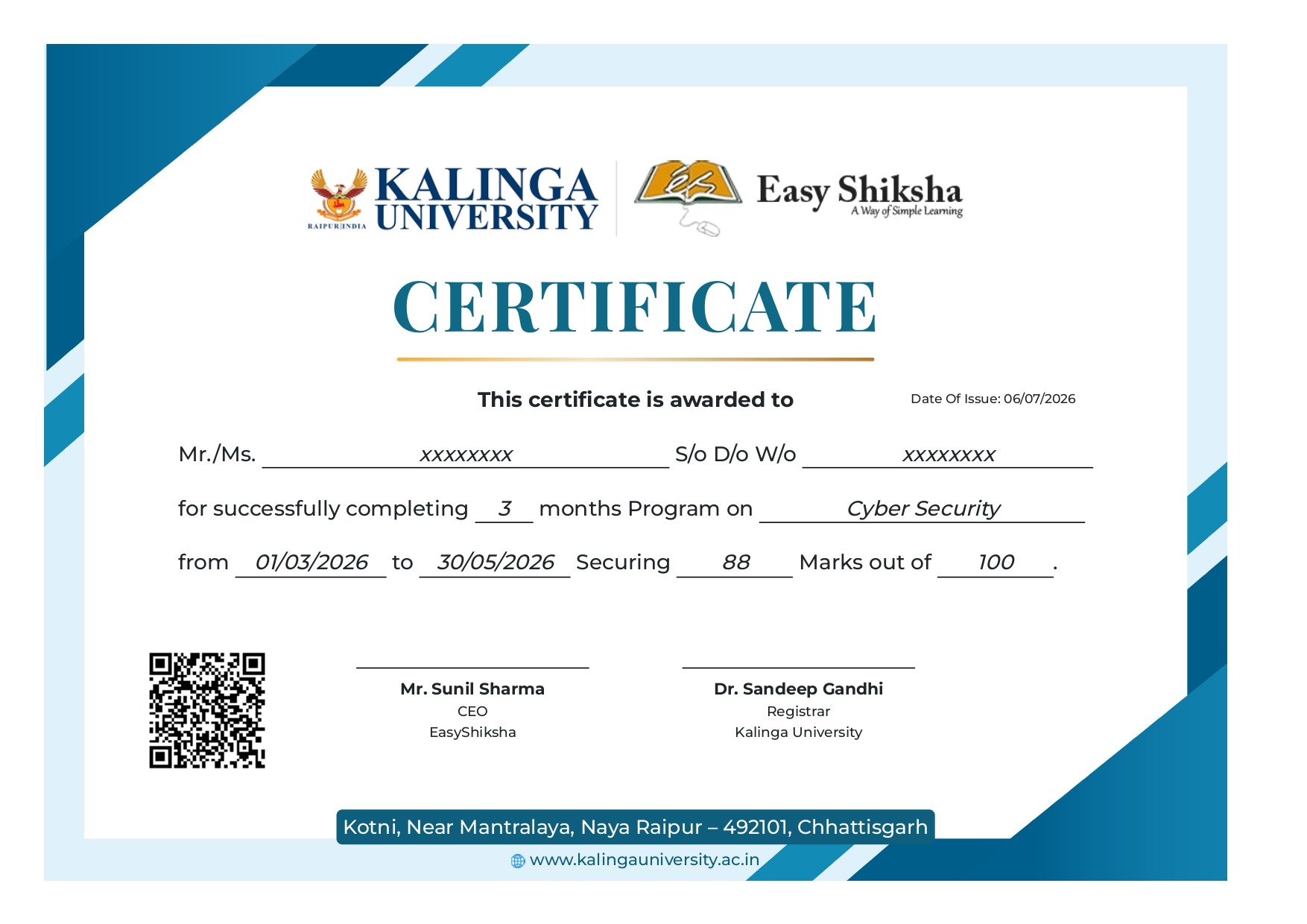
For students using digital education platforms such as EasyShiksha, the idea becomes even broader. A daily quiz can sit alongside online courses, skills, projects, learning profiles, certificates, and internships, creating a learning journey that goes beyond the traditional idea of studying only for marks.
The most important lesson is that progress does not always begin with a massive study plan. Sometimes it begins with one small action that can be repeated tomorrow. One quiz today becomes another tomorrow, and another the day after that. Over time, those small sessions can create a habit of practice, a clearer understanding of strengths and weaknesses, and greater confidence in facing larger academic challenges.
Anshika Jain is an Engineer, Developer, and Educational Content Author known for her dedication to technology and knowledge sharing. With a strong analytical mindset and a passion for innovation, she has consistently contributed to creating meaningful digital solutions and insightful educational articles.
Her ability to simplify complex technical concepts into engaging and easy-to-understand content makes her work valuable for students and learners across various platforms. Along with her technical expertise, Anshika is admired for her creativity, professionalism, and commitment to continuous learning.
She represents a perfect blend of technical excellence and impactful communication, inspiring others through both her development work and educational contributions.