For decades, education has largely followed a standardised approach in which students of the same age or academic level are expected to learn similar subjects, follow the same curriculum, complete comparable assignments, and appear for examinations within a fixed schedule. This traditional model has played an important role in expanding access to education, creating structured learning environments, and establishing common academic standards. However, it does not always address the individual needs, interests, learning speeds, and career goals of every student.
Every learner is different. Some students understand concepts quickly through visual examples, while others need repeated explanations, practical demonstrations, or additional time. Some prefer reading, whereas others learn more effectively through videos, quizzes, projects, and hands-on activities. A student preparing for a government examination may have different learning requirements from a computer science student building programming skills or a professional trying to improve digital marketing knowledge. When education follows a single learning path for everyone, these differences can easily be overlooked.
The growth of artificial intelligence is introducing new possibilities in the education sector. AI-powered learning tools can analyse learning behaviour, identify knowledge gaps, recommend relevant content, provide instant feedback, and support students according to their individual progress. This shift is gradually moving education from a one-size-fits-all model towards a more personalised and flexible learning experience.
Personalised learning does not mean that technology will replace teachers or that every student must follow a completely separate educational system. Instead, it involves using technology, data, instructional design, and human guidance to create learning experiences that respond more effectively to individual needs. Platforms such as EasyShiksha, which focus on online courses, certificates, quizzes, practical learning, and internships, represent the broader movement towards accessible and career-oriented digital education.
The combination of AI and online learning can help students move beyond simply completing lessons. It can encourage them to understand their strengths, recognise areas for improvement, practise relevant skills, and develop a learning journey that reflects their personal goals. As education becomes more digitally connected, personalised learning may become an important part of how students prepare for academic achievement, professional opportunities, and lifelong learning.
Understanding the Limitations of One-Size-Fits-All Education
The one-size-fits-all education model is based on the assumption that students can progress through the same material at approximately the same pace. In a conventional classroom, teachers often need to manage large groups of students while following a prescribed syllabus and examination schedule. Although educators may try to provide individual support, limited time and resources can make it difficult to address every learner’s specific requirements.
A student who already understands a topic may feel that the lesson is repetitive, while another student who is struggling with the same concept may need further explanation. When both students are expected to complete the same task within the same timeframe, the first learner may lose interest and the second may develop confusion or anxiety. Over time, these differences can influence motivation, confidence, and academic performance.
Traditional assessment methods can also provide an incomplete picture of a student’s abilities. Marks and examination scores are useful indicators of academic performance, but they may not fully demonstrate practical knowledge, creativity, communication skills, problem-solving ability, or consistency. Two students can receive similar marks while having very different strengths and learning needs.
The problem is not necessarily the existence of a common curriculum. Shared academic foundations are important because they help maintain educational standards and ensure that learners develop essential knowledge. The challenge arises when a common curriculum is delivered without enough flexibility to accommodate different learning styles, speeds, interests, and goals.
Digital learning platforms create opportunities to address some of these limitations. Students can access educational resources outside traditional classroom hours, revisit difficult lessons, practise through quizzes, and select courses based on their interests. AI can further support this flexibility by helping organise content and recommendations according to the learner’s progress.
What Is Personalised Learning?
Personalised learning is an educational approach in which the learning experience is adapted to a student’s individual requirements, abilities, interests, and objectives. It may involve changes in the pace of instruction, the type of learning material, the difficulty level of questions, the sequence of topics, and the form of feedback provided to the learner.
In a personalised learning environment, students are not treated as identical participants who must follow exactly the same path. Instead, their learning journey can evolve according to their performance and engagement. A student who demonstrates strong knowledge of a particular topic may be encouraged to explore advanced material, while a learner who is facing difficulties may receive additional practice and simpler explanations.
Personalisation can take different forms. It may be as simple as allowing students to choose between videos, reading materials, and practical activities. It can also involve more advanced systems that analyse quiz performance, recommend revision topics, adjust question difficulty, or identify patterns in a student’s learning behaviour.
Personalised learning should not be confused with completely independent learning. Students still benefit from structured content, expert instruction, clear learning objectives, and regular evaluation. Personalisation works most effectively when flexibility is combined with guidance and accountability. AI can support this process, but teachers, mentors, and educational designers continue to play important roles in ensuring that learning remains meaningful and responsible.
How Artificial Intelligence Is Transforming Education
Artificial intelligence refers to technologies that enable computer systems to perform tasks associated with human intelligence, such as recognising patterns, processing language, making predictions, and generating responses. In education, AI can be used to support teaching, assessment, content creation, student engagement, and learning management.
One of the most important contributions of AI is its ability to process large amounts of learning-related information. A digital platform may record how frequently a student accesses a lesson, which questions they answer incorrectly, how much time they spend on a topic, and which activities they complete. When handled responsibly, this information can help identify areas where additional support may be useful.
AI-powered systems can also provide immediate feedback. In a traditional learning environment, a student may need to wait until an assignment is reviewed or an examination is conducted to understand their mistakes. Digital tools can offer feedback during practice, allowing learners to recognise errors and correct their understanding earlier.
Another important development is the use of natural language processing in AI tutors and educational assistants. These systems can respond to questions, explain concepts in simpler language, generate examples, and support revision. Their usefulness depends on the quality of the underlying information and the ability of students to verify responses, particularly when learning complex or specialised subjects.
AI can also assist educators by identifying common areas of difficulty across a group of students. This information may help teachers plan additional explanations, design targeted practice exercises, or modify instructional approaches. In this way, AI can support both individual learning and classroom-level decision-making.
The objective should not be to automate education without human involvement. Instead, AI can be used as a supporting layer that makes learning resources more responsive, accessible, and relevant to individual learners.
Adaptive Learning: Allowing Students to Progress at Their Own Pace
Adaptive learning is one of the most visible applications of AI in education. It involves adjusting learning content or activities according to a student’s demonstrated knowledge and performance. Instead of presenting exactly the same questions or lessons to every learner, an adaptive system may recommend different levels of practice.
For example, a student learning basic programming may begin with questions about variables, data types, and conditional statements. If the student performs consistently well, the platform may introduce more complex exercises. If the student repeatedly makes mistakes in a particular area, the system may recommend a revision lesson or additional beginner-level questions.
This approach can reduce unnecessary repetition while ensuring that difficult concepts receive sufficient attention. It may also help students feel more comfortable with learning because mistakes become part of the process rather than being treated only as evidence of failure.
Adaptive learning can be especially useful in online courses where students study at different times and have varying levels of prior knowledge. A college student with basic familiarity with a subject may want to progress more quickly, while a beginner may need a slower and more detailed introduction. Personalised recommendations can help both learners use the same educational platform in different ways.
However, adaptive systems must be designed carefully. A student’s performance in a short quiz may not always represent their complete understanding. Technical problems, distractions, language barriers, or unfamiliar question formats can affect results. Therefore, AI recommendations should be treated as supportive indicators rather than final judgments about a learner’s ability.
AI-Powered Quizzes and Intelligent Practice
Quizzes have long been used to assess understanding, reinforce concepts, and prepare students for examinations. With AI, digital quizzes can become more responsive and personalised. Instead of functioning only as final assessments, they can become regular learning tools that help students identify gaps and practise important concepts.
An AI-enabled quiz system may analyse the types of questions a student answers incorrectly and recommend similar questions for further practice. It can also vary question difficulty, introduce revision exercises, and provide explanations after an answer is submitted. This allows learners to understand not only whether an answer is correct but also why a particular response is appropriate.
For students preparing for competitive or government examinations, regular practice can be particularly valuable. A personalised quiz system may help learners revise subjects in smaller sessions, identify frequently misunderstood concepts, and track their progress over time. Students can use these insights to organise their study routines more effectively.
EasyShiksha’s focus on online courses and quizzes fits into this broader educational shift. Quizzes can make learning more interactive while giving students opportunities to check their understanding. When combined with AI-based recommendations, practice activities may become more relevant to the learner’s current level rather than remaining identical for every participant.
The educational value of quizzes depends on their quality. Questions should be accurate, clearly written, and aligned with the learning objectives. AI-generated questions also require appropriate review because automated systems may produce incorrect information, ambiguous wording, or questions that do not match the intended difficulty level. Human oversight remains essential for maintaining educational reliability.
Personalised Learning and Different Learning Styles
Students often have different preferences regarding how they consume and practise information. Some learners prefer reading detailed explanations, while others understand concepts more effectively through diagrams, videos, demonstrations, or interactive exercises. Although learning-style theories should not be treated as rigid scientific categories, it is reasonable to recognise that learners benefit from varied instructional methods and accessible content formats.
AI can help educational platforms recommend different types of resources based on students’ engagement and performance. If a learner struggles with a text-heavy explanation, the system may suggest a video or visual example. If a student needs more practice after watching a lesson, the platform may recommend a quiz or practical task.
For example, a student studying digital marketing may begin with a conceptual lesson about search engine optimisation. The platform can then provide examples of keywords, a practical activity involving content optimisation, and a quiz to check understanding. A student learning electronics may benefit from diagrams, circuit explanations, simulations, and project-based exercises.
Personalisation becomes more effective when students are also given some control over their learning experience. They should be able to select preferred resources, revisit earlier lessons, adjust their study schedule, and request explanations when they face difficulties.
At the same time, educational platforms should avoid placing learners into narrow categories. A student who prefers videos may still benefit from reading, writing, and hands-on activities. Effective learning often requires multiple forms of engagement. AI should expand learning opportunities rather than restrict students to a fixed profile based on limited data.
AI as a Learning Assistant, Not a Replacement for Teachers
The increasing use of AI in education has raised questions about the future role of teachers. If AI systems can answer questions, generate explanations, and evaluate certain types of assignments, some people may assume that human educators will become less important. In practice, education involves many responsibilities that cannot be fully addressed through automated tools.
Teachers provide encouragement, context, mentorship, ethical guidance, and emotional support. They can recognise when a student is confused, disengaged, or facing challenges outside the classroom. They also help learners develop communication, collaboration, critical thinking, and social skills.
AI can support teachers by reducing repetitive tasks and offering information about student progress. For example, an educator may use learning data to identify which topics require further classroom discussion. AI can also assist in preparing practice questions, adapting explanations, or organising educational resources.
The relationship between teachers and AI should therefore be understood as collaborative. AI may provide rapid information and personalised practice, while teachers help students interpret knowledge, apply it responsibly, and develop broader capabilities.
For online learning platforms, mentorship and guidance can make digital education more effective. Students may begin a course with enthusiasm but struggle to maintain consistency. Clear learning pathways, supportive instructions, practical assignments, and opportunities for feedback can help learners remain engaged. AI can assist with reminders and recommendations, but human-centred educational design remains essential.
Personalised Learning for Students With Different Career Goals
One of the major advantages of digital education is that students can explore learning opportunities beyond their formal academic programmes. A student pursuing commerce may develop an interest in data analytics, a science student may explore artificial intelligence, and an engineering student may want to learn communication, entrepreneurship, or digital marketing.
A one-size-fits-all curriculum may not provide enough flexibility for these changing interests. Personalised digital learning can help students explore subjects based on their career aspirations and existing knowledge. AI systems may recommend introductory courses, practical activities, or related topics that support a learner’s chosen direction.
For instance, a student interested in cybersecurity may begin with computer fundamentals, continue with networking concepts, and later explore ethical hacking, security tools, and practical projects. A personalised system can help present these topics in a logical sequence while suggesting revision when necessary.
Similarly, a student interested in content creation may combine courses in writing, graphic design, social media marketing, and video editing. The learner’s educational path can be shaped by personal interests rather than being limited to a single academic discipline.
EasyShiksha’s combination of online courses, certificates, quizzes, and internship-oriented learning can support this broader idea of career exploration. Students can use digital education to build foundational knowledge and seek opportunities to apply what they have learned. The exact value of a course depends on the quality of instruction, the learner’s effort, and the relevance of the skills developed to future opportunities.
Personalisation can make career preparation more intentional by helping students consider what they want to learn, why they want to learn it, and how they can demonstrate their progress.
Empower your team. Lead the industry
Get a subscription to a library of online courses and digital learning tools for your organization with
EasyShiksha
From Course Completion to Continuous Learning Progress
In many educational systems, success is measured through course completion, examination marks, or the number of certificates earned. These indicators can be useful, but they do not always explain whether a student can apply knowledge independently. Personalised learning encourages a more continuous understanding of progress.
A student may complete a course on programming, but practical competence develops through writing code, solving problems, correcting errors, and building projects. Similarly, completing a communication course does not automatically guarantee confidence in public speaking. Learners need opportunities to practise, receive feedback, and improve.
AI can help students track progress across different learning activities. Instead of focusing only on whether a lesson has been completed, a platform may consider quiz performance, revision consistency, practice tasks, and project participation. This can provide a more detailed picture of the learning journey.
The concept of a digital learning profile becomes relevant in this context. A learning profile can bring together a student’s completed courses, skills explored, achievements, practical work, and internship experiences. When developed responsibly, it may help students reflect on their strengths and identify areas requiring further development.
For EasyShiksha learners, the combination of learning content, assessments, certificates, and practical exposure can encourage a more complete approach to skill development. The objective is not simply to collect credentials but to build knowledge and evidence of application over time.
The Role of AI in Supporting Students With Learning Gaps
Learning gaps can emerge for many reasons. A student may have missed foundational concepts, changed academic streams, experienced limited access to educational resources, or struggled with a particular teaching method. If these gaps remain unaddressed, advanced topics can become increasingly difficult.
AI-supported learning systems can help identify possible gaps by analysing performance across related questions and activities. For example, a student struggling with advanced mathematics may first need additional practice with basic arithmetic or algebraic concepts. A system that identifies this pattern can recommend foundational resources before introducing more complex material.
This approach may help students learn without feeling that they must immediately match the pace of their peers. Digital resources allow learners to revisit lessons privately and practise repeatedly, which can be particularly useful for students who are hesitant to ask questions in a classroom.
However, learning gaps should not be interpreted solely through numerical performance. Students may face language difficulties, accessibility challenges, unreliable internet connections, or limited study time. An AI system that does not consider these factors may produce incomplete or inaccurate conclusions.
Personalised education must therefore combine technology with inclusive design. Content should be available in understandable language, interfaces should be accessible, and students should have opportunities to seek human assistance when automated recommendations are insufficient.
Accessibility and the Expansion of Educational Opportunities
Personalised digital learning can contribute to greater educational accessibility by allowing students to study across different locations, schedules, and circumstances. Learners who cannot attend traditional classes regularly may benefit from recorded lessons, online practice, and flexible course structures.
For students in India, digital learning platforms can create opportunities to explore skills beyond the limitations of local educational institutions. Learners from different academic backgrounds may access courses in technology, finance, communication, digital marketing, artificial intelligence, and other fields according to their interests.
AI tools may also support language assistance, automated captions, simplified explanations, and conversational learning experiences. These features can help some students engage with educational material more comfortably. Nevertheless, technology alone cannot resolve every barrier. Access to affordable devices, reliable internet, digital literacy, and quality educational content remains important.
EasyShiksha’s emphasis on accessible online courses and internship-related learning aligns with the need for flexible education that supports students at different stages. Online education can be particularly useful for learners who want to build skills alongside college studies, employment, or other responsibilities.
The goal of accessibility should be more than providing digital content. Students should be able to understand the material, practise the relevant skills, receive guidance, and make meaningful progress regardless of their starting point.
Data Privacy and Responsible Use of AI in Education
Although AI offers educational benefits, its use also raises important concerns about privacy, fairness, transparency, and security. Personalised learning systems may collect information about students’ performance, activity patterns, preferences, and progress. This information must be handled carefully.
Students and educators should understand what data is being collected, why it is needed, and how it may be used. Platforms should avoid collecting unnecessary information and should apply appropriate security measures. Learners should not be unfairly labelled or restricted because of limited or inaccurate data.
Algorithmic bias is another concern. If an AI system is trained on incomplete or unrepresentative information, its recommendations may not work equally well for all students. Language, socioeconomic background, disability, and access to technology can influence how students interact with digital systems.
Transparency is important when AI is used to recommend learning content or evaluate performance. Students should have opportunities to question recommendations, correct inaccurate information, and seek human review where appropriate.
Educational institutions and platforms must also ensure that AI does not encourage excessive surveillance or create unnecessary pressure. Learning data should support student development rather than reduce education to constant measurement. Responsible personalisation requires a balance between useful feedback and respect for student autonomy.
The Importance of Critical Thinking in an AI-Enabled Learning Environment
AI can provide quick explanations and generate educational content, but students must still develop the ability to think independently. If learners accept every AI-generated response without verification, they may absorb inaccurate information or fail to understand the reasoning behind an answer.
Personalised learning should therefore include activities that encourage analysis, problem-solving, discussion, and independent judgement. Students should be guided to compare sources, ask questions, examine evidence, and recognise uncertainty.
For example, an AI tool may provide an explanation of a scientific concept, but the student should be encouraged to verify it through reliable educational resources. In a programming course, learners should not only copy AI-generated code but also understand how the code works, test it, identify errors, and modify it according to the problem.
EasyShiksha-oriented learning can incorporate this approach by connecting lessons with quizzes, practical exercises, and internship preparation. Students can be encouraged to apply knowledge instead of depending entirely on automated answers.
The future of education will require both technological awareness and human judgement. AI literacy should become a part of modern learning so that students understand the strengths and limitations of intelligent tools and use them ethically.
How EasyShiksha Can Support the Personalised Learning Movement
EasyShiksha operates within an educational environment where students increasingly seek flexible learning options, practical exposure, and career-oriented development. Its focus on online courses, certificates, quizzes, and internships reflects the changing expectations of learners who want more than traditional classroom instruction.
Personalised learning can strengthen this approach by helping students connect educational content with their individual goals. A learner may begin with a beginner-level course, evaluate their understanding through quizzes, explore related subjects, and seek internship opportunities to gain practical exposure. AI-powered recommendations could potentially support this process by helping students identify relevant next steps.
The integration of personalisation should focus on meaningful learning rather than simply increasing platform activity. Students should be encouraged to understand concepts, practise skills, complete relevant projects, and reflect on their progress. A learning platform can become more valuable when it helps students make informed decisions about what to study and how to apply their knowledge.
For example, a student interested in data science may need a combination of mathematics, programming, data visualisation, and analytical thinking. Instead of treating these as disconnected courses, a personalised learning journey could help the student understand how the skills relate to one another. Similarly, a learner preparing for an internship may benefit from a combination of subject knowledge, practical assignments, resume preparation, and communication development.
EasyShiksha’s broader “Learn, Practise, and Intern” orientation can be connected to this model. Personalised learning can help students progress through these stages according to their readiness while encouraging them to build evidence of their abilities. The platform’s educational value will depend on how effectively content, assessments, practical learning, and guidance are integrated into the student experience.
Frequently Asked Questions
Q. How can I apply for an internship with EasyShiksha?
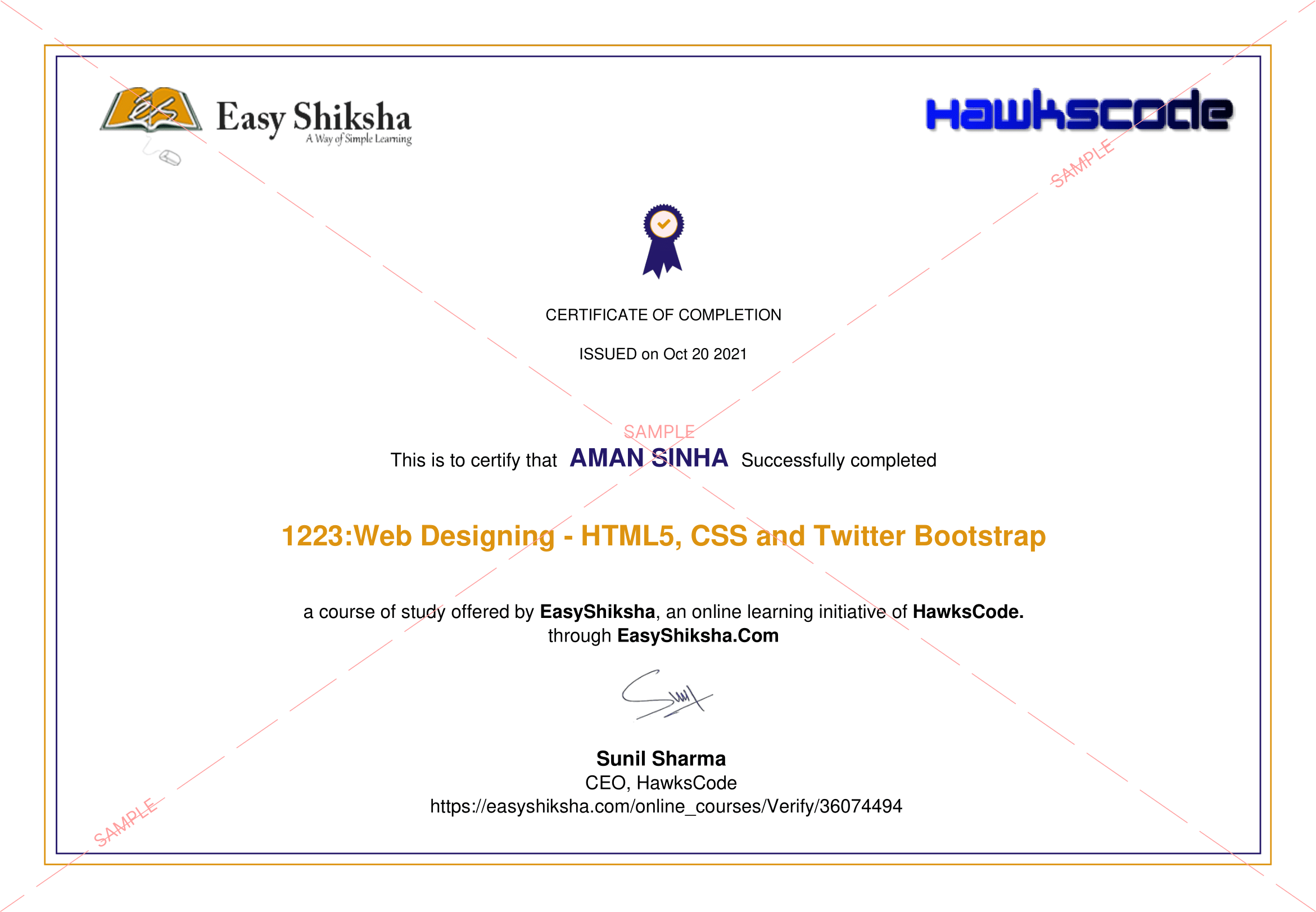
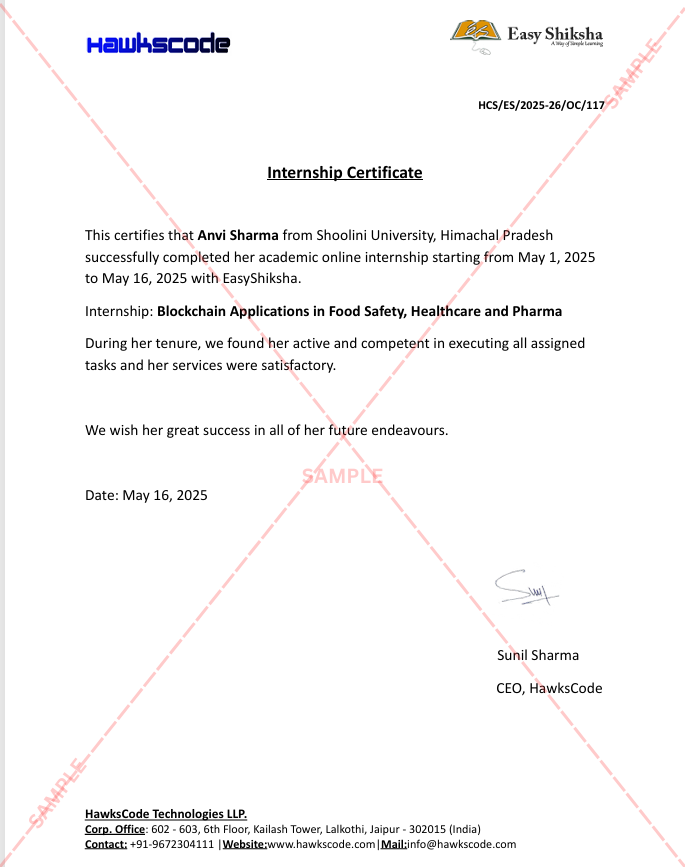
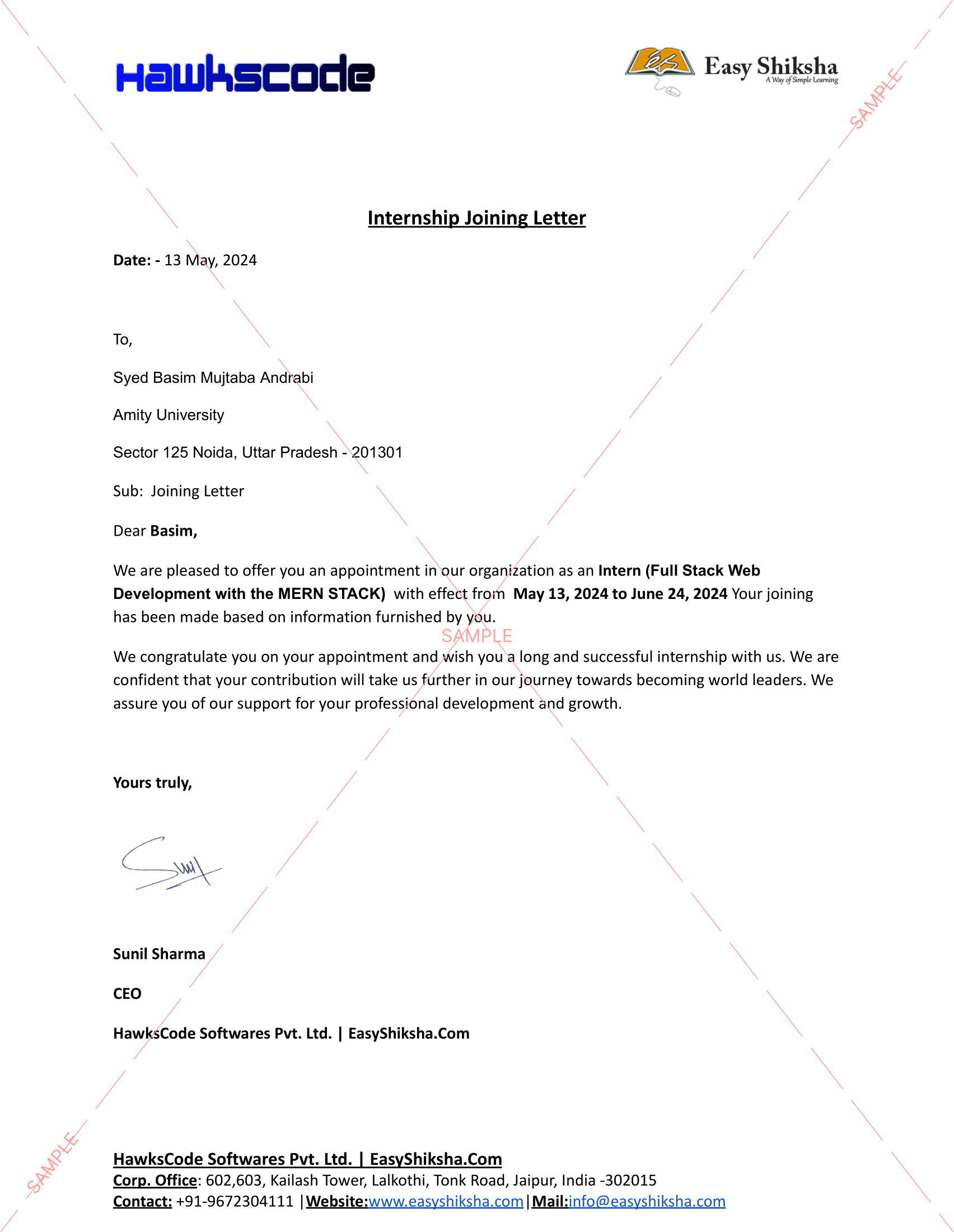
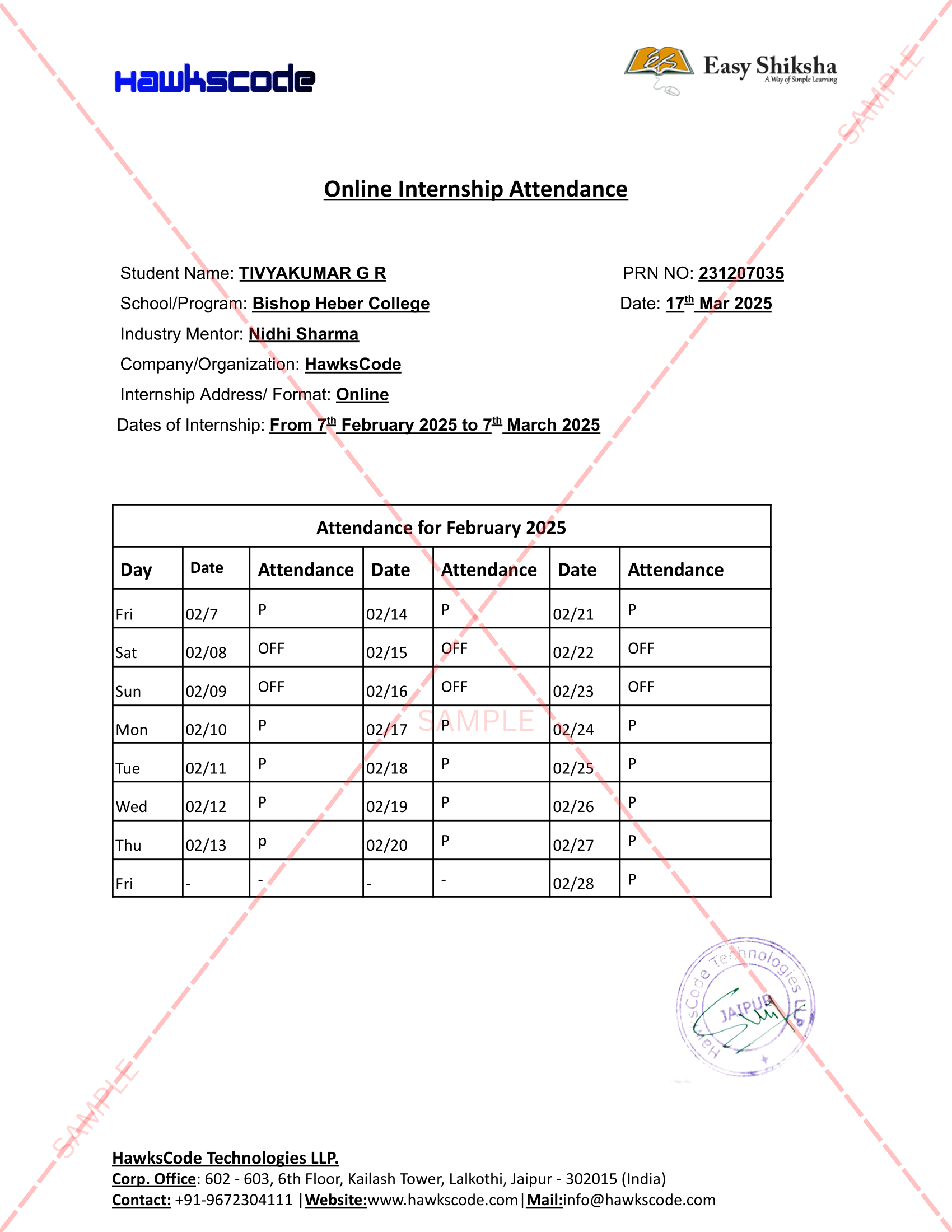
You can apply by visiting our website, browsing available internships, and following the application instructions provided.
Q. What types of internships are available through EasyShiksha?
EasyShiksha offers a wide range of internships across technology, business, marketing, healthcare, and more.
Q. Will I receive a certificate upon completing an internship?
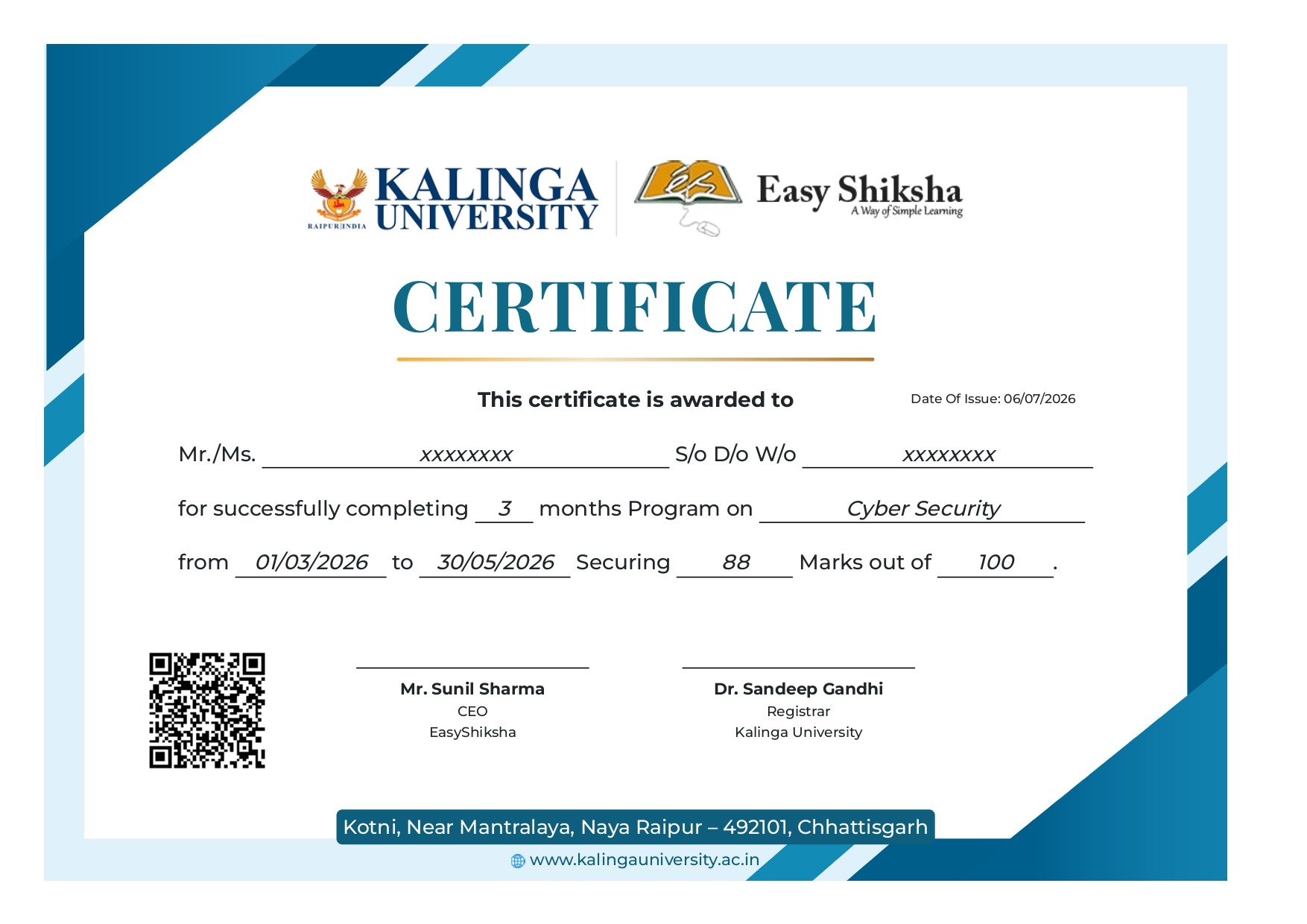
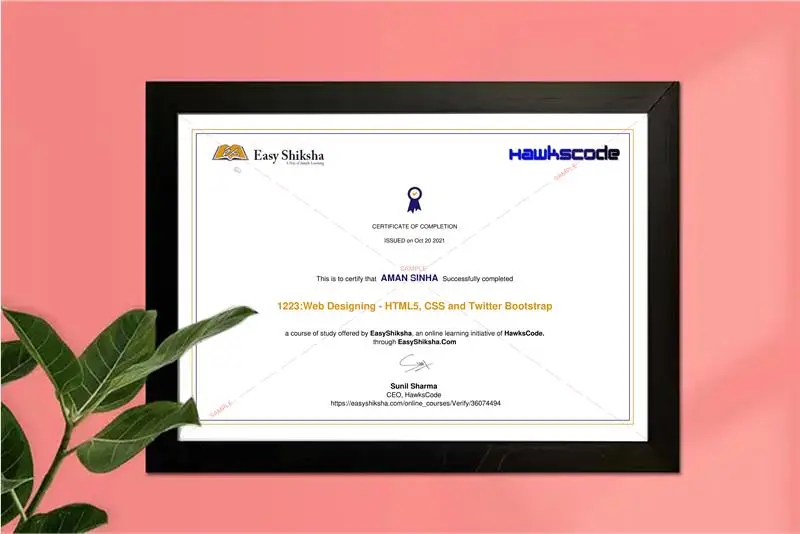
Yes, upon successful completion, you will receive a certificate recognizing your participation and achievements.
Q. Are EasyShiksha's certificates recognized?
Yes, the certificates are recognized by universities, colleges, and employers worldwide.
Q. When can I start the course?
You can choose any course and start immediately without delay.
Q. What are the course and session timings?
These are fully online courses. You can learn at any time and pace that fits your schedule.
Q. What will happen when my course is over?
After completion, you will have lifetime access to the course for future reference.
Q. Can I download the notes and study material?
Yes, you can access and download course materials and have lifetime access for future reference.
Q. What software/tools would be needed?
All necessary software/tools will be shared during the training as needed.
Q. I’m unable to make a payment. What should I do?
Try using a different card. If the problem persists, email us at info@easyshiksha.com.
Q. Do I get the certificate in hard copy?
No, only a soft copy is provided, which can be downloaded and printed if required.
Q. The payment got deducted but shows “failed”?
The deducted amount will be returned to your account in 7-10 working days automatically.
Q. Payment successful but dashboard shows ‘Buy Now’?
Reflection may take 30 mins. If longer, email info@easyshiksha.com with your screenshot.
Q. What is the refund policy?
Refunds are available for technical issues. No refunds once a certificate is generated.
Q. Can I enroll in a single course?
Yes, select any course, complete the details, and start learning immediately.
Q. Need further help?
Contact us at info@easyshiksha.com for any other questions.
Challenges in Implementing Personalised Learning
Despite its potential, personalised learning is not free from challenges. Developing effective AI-based educational systems requires reliable data, high-quality content, technical infrastructure, and careful instructional planning. A system may provide personalised recommendations, but those recommendations will have limited value if the underlying courses are inaccurate, outdated, or poorly structured.
Another challenge is the digital divide. Not every student has access to high-speed internet, modern devices, or a quiet environment for learning. AI-based education should not increase inequality by making advanced learning opportunities available only to students with better technology.
Teachers and educational institutions may also require training to use AI tools effectively. Without proper guidance, educators may struggle to interpret AI-generated insights or may rely too heavily on automated assessments. Professional development and clear policies are necessary to ensure that technology is used appropriately.
Student motivation is another important factor. Personalised recommendations do not automatically create discipline or consistency. Learners still need realistic goals, time management skills, encouragement, and opportunities to experience meaningful progress.
Finally, personalisation must avoid becoming excessive. If students receive only content that matches their existing interests, they may miss important subjects and alternative perspectives. A balanced system should support individual preferences while also encouraging exploration and intellectual growth.
The Future of Education: A Partnership Between Humans and Technology
The future of education is unlikely to be defined by a complete replacement of traditional learning with AI. Instead, it may involve a closer partnership between teachers, digital platforms, intelligent tools, and students. AI can help personalise content, automate repetitive tasks, and provide timely feedback, while human educators remain responsible for mentorship, interpretation, ethics, and deeper learning experiences.
Students may increasingly use digital learning profiles to track their progress across courses, projects, assessments, and internships. Learning platforms may offer more flexible pathways that adapt to changing career interests and skill requirements. Educational experiences could become more interactive, combining videos, simulations, quizzes, practical tasks, and collaborative activities.
The role of the student may also change. Rather than passively receiving information, learners may become more active participants in designing their educational journeys. They may choose learning goals, monitor progress, seek feedback, and decide how to apply acquired skills.
For this transformation to be successful, education must remain focused on learning outcomes rather than technology itself. AI should be used when it improves understanding, accessibility, practice, or guidance. The presence of an intelligent tool does not automatically make an educational experience effective.
The most valuable learning environments will likely combine personalisation with structure, flexibility with accountability, and automation with human support.
Conclusion: Making Education More Responsive to Every Learner
The movement from one-size-fits-all education to personalised learning represents a significant change in how students may access knowledge and develop skills. Traditional education continues to provide essential structure and shared academic foundations, but AI and digital platforms are creating new ways to address individual learning needs.
Artificial intelligence can support adaptive learning, personalised quizzes, instant feedback, content recommendations, and progress tracking. These capabilities may help students learn at different speeds, revisit difficult concepts, explore career-related subjects, and connect education with practical experience. However, AI must be implemented responsibly, with attention to privacy, accessibility, fairness, and the continuing importance of teachers.
Personalised learning should not be understood as a shortcut or a guarantee of success. It is a framework that can help students make better use of educational resources while taking greater ownership of their progress. Consistent practice, critical thinking, human guidance, and practical application remain essential.
Anshika Jain is an Engineer, Developer, and Educational Content Author known for her dedication to technology and knowledge sharing. With a strong analytical mindset and a passion for innovation, she has consistently contributed to creating meaningful digital solutions and insightful educational articles.
Her ability to simplify complex technical concepts into engaging and easy-to-understand content makes her work valuable for students and learners across various platforms. Along with her technical expertise, Anshika is admired for her creativity, professionalism, and commitment to continuous learning.
She represents a perfect blend of technical excellence and impactful communication, inspiring others through both her development work and educational contributions.