Entering the professional world after graduation is an exciting yet challenging stage in a student’s life. After years of attending classes, preparing for examinations, completing assignments, and earning academic qualifications, many students expect their degrees to help them move smoothly into employment. However, when they begin applying for internships and entry-level jobs, they often encounter a familiar requirement: experience. This is where one of the most common challenges for freshers emerges. Students frequently find themselves saying, “I have no experience,” while employers look for candidates who can demonstrate practical knowledge, workplace awareness, and relevant skills.
The experience gap is not simply a problem of qualification. A student may have a degree, strong academic marks, and several certificates but still feel uncertain about applying knowledge in a professional environment. This situation can create frustration, reduce confidence, and make the transition from education to employment more difficult. However, students do not necessarily need to wait until graduation to begin developing relevant experience. By starting earlier with online courses, practical projects, skill development, and internship opportunities, they can gradually build a foundation for professional growth.
Platforms such as EasyShiksha can support this early preparation by connecting students with online courses, quizzes, practical learning opportunities, and internships. The purpose is not to promise immediate employment or suggest that every student must have extensive experience before graduation. Instead, it is to encourage learners to begin exploring their professional interests while they are still studying. When students start early, they have more opportunities to practise, make mistakes, improve their abilities, and understand the expectations of the workplace.
This article explores why freshers struggle with the experience requirement, how students can begin preparing earlier, and how EasyShiksha can become part of a learning journey that connects education with practical exposure and career development.
The Experience Gap: Why Freshers Often Struggle After Graduation
The transition from college to employment can reveal a significant difference between academic learning and workplace expectations. Educational institutions generally focus on subject knowledge, examinations, assignments, and academic progression. These elements are important for building foundational understanding, but professional environments may also require students to apply their knowledge to specific tasks, collaborate with others, meet deadlines, and communicate their work effectively.
A student studying computer science may understand programming concepts but have limited experience developing an independent application. A commerce graduate may know accounting principles but lack familiarity with practical accounting software or business documentation. Similarly, a student studying digital marketing may understand search engine optimization and social media strategies but have little experience creating a campaign plan or analyzing sample performance data.
These gaps do not automatically indicate that a student lacks ability. They may simply reflect limited opportunities to apply academic knowledge in realistic situations. Many learners spend most of their time preparing for examinations and completing mandatory coursework, leaving little time for exploring practical activities related to their career interests.
The problem becomes more visible when students begin applying for entry-level jobs. A job description may mention skills such as communication, teamwork, software knowledge, project experience, or familiarity with industry tools. Freshers may find that they meet the educational eligibility criteria but struggle to demonstrate how their knowledge relates to the responsibilities of the role.
This is where early preparation can make a difference. Students can gradually build relevant exposure through learning activities that complement their formal education. They can start with beginner-friendly courses, practise basic skills, and explore small projects before attempting more advanced professional tasks.
EasyShiksha can support this process by helping students access structured learning and internship opportunities. When learners begin exploring practical development before graduation, they may gain a clearer understanding of their career interests and the skills they want to strengthen.
Why the Statement “I Have No Experience” Is So Common Among Freshers
The phrase “I have no experience” often reflects a genuine concern among students entering the job market for the first time. Many freshers believe that professional experience means only having worked for a company in a formal, paid position. As a result, they may overlook other forms of relevant learning and practical exposure that they have already gained.
A student who has completed a college project, contributed to a student organization, participated in a technology competition, or developed a personal website may have relevant experiences to discuss. These activities do not necessarily replace formal employment experience, and their relevance depends on the job being pursued. However, they can help demonstrate initiative, technical practice, teamwork, or problem-solving.
For example, a student who creates a basic website while learning web development may have an opportunity to explain the tools used, the design decisions made, and the challenges encountered. A student who organizes a college event may have developed experience in coordination, communication, and time management. A learner who completes a supervised internship may gain exposure to workplace tasks and professional expectations.
The challenge is often not the complete absence of activity but the lack of awareness about how to recognize, document, and communicate learning experiences. Students may not know how to describe their work on a resume or explain it during an interview. They might also underestimate beginner-level projects because they compare themselves with candidates who already have professional exposure.
Early career preparation can help students develop a more accurate understanding of experience. Instead of waiting for a job to provide the first opportunity to practise, learners can begin developing relevant skills and documenting their progress during their studies.
EasyShiksha’s learning ecosystem can encourage students to consider courses, quizzes, projects, and internships as connected parts of their preparation. The objective is to help learners identify opportunities for development while remaining honest about the level and nature of their experience.
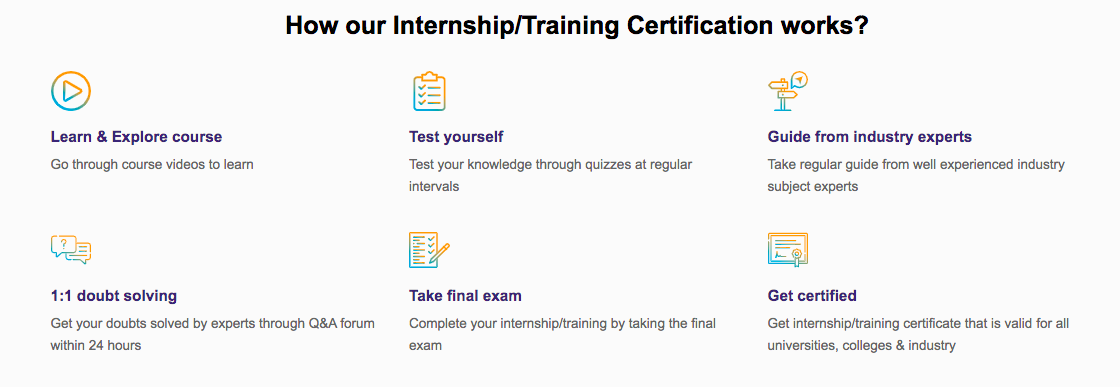
How EasyShiksha Internship/Training Program Works
The Difference Between a Certificate and Practical Experience
Certificates have an important role in education and professional development. They can document course completion, demonstrate participation in structured learning, and help students organize their educational achievements. Online certificates can be particularly useful for learners who want to explore subjects beyond their formal degree programs.
However, a certificate does not automatically demonstrate that a student has applied the knowledge gained in a practical setting. The value of a certificate depends on the course content, assessment methods, learning outcomes, and the way the student uses the acquired knowledge.
Consider a student who completes a digital marketing course. The learner may understand SEO, content marketing, social media, and basic analytics. These concepts can provide a useful foundation. However, when applying for an internship, the student may also need to demonstrate the ability to perform tasks such as researching keywords, preparing content ideas, or interpreting basic campaign information.
Practical learning can help bridge this gap. A student may create a sample content calendar, develop a mock marketing strategy, or conduct keyword research for an appropriate practice project. These activities do not constitute professional employment by themselves, but they can help the learner understand the practical application of course concepts.
Similarly, a student completing a programming course can practise writing code, solving problems, and developing a small application. A finance student can work with sample financial data or learn to use relevant accounting tools in a suitable educational environment.
EasyShiksha can help students connect learning with practical exploration through its online courses, quizzes, and internship opportunities. The learning journey becomes more meaningful when students use their course knowledge to develop skills and understand how those skills may relate to their career interests.
The important distinction is that students should not present course completion as professional experience if they have not worked in a professional role. Instead, they can accurately describe their coursework, projects, practical training, and internship exposure according to what they have actually completed.
Why Students Should Begin Career Preparation Before Graduation
Many students begin thinking seriously about employment during their final semester. They start preparing resumes, searching for job openings, and learning interview questions when campus recruitment or graduation approaches. Although this preparation can be useful, beginning earlier gives students more time to develop relevant skills.
Starting early does not mean that students must decide on a permanent career path during their first year of college. Career interests can change as learners discover new subjects and professional opportunities. Early preparation should therefore focus on exploration, foundational knowledge, and gradual skill development rather than immediate specialization.
A student studying engineering might explore programming, data analysis, design tools, or project management to understand which areas interest them. A student pursuing a humanities degree could explore content writing, communication, research, or digital tools. A commerce student might investigate accounting software, business analytics, or financial reporting.
Online learning can provide a flexible way to explore these areas alongside formal education. Students can select introductory courses based on their interests and available time. Quizzes can help them review concepts, while practical exercises can show whether they enjoy applying the knowledge.
Starting early also gives learners the opportunity to improve gradually. A beginner may initially struggle with coding, writing, presentation, or analytical tasks. With regular practice and feedback, they can build familiarity and confidence. The learning process may be more manageable when students have several semesters to develop their abilities rather than trying to acquire everything immediately before graduation.
EasyShiksha’s combination of courses and internship opportunities aligns with this approach. Students can begin by exploring foundational subjects, practise relevant skills, and consider internship exposure when they are ready. This creates a more continuous relationship between education and career preparation.
The aim is not to turn every student into an experienced professional before graduation. It is to encourage learners to make practical development a part of their education instead of treating it as something that begins only after completing a degree.
Online Courses as a Starting Point for Skill Development
Online courses can offer students a convenient way to learn new subjects and strengthen existing knowledge. They may be especially useful for learners who want to explore career-related topics outside their academic curriculum or develop familiarity with tools used in different industries.
A well-structured course can introduce concepts in a progressive manner, allowing beginners to understand the fundamentals before attempting more complex activities. Students can use these learning opportunities to explore areas such as artificial intelligence, programming, digital marketing, finance, cybersecurity, communication, and other professional fields.
For example, a student interested in artificial intelligence may begin with an introductory course covering basic concepts and applications. After developing foundational knowledge, the learner may explore data preparation, simple programming exercises, or supervised projects appropriate to their level. A student interested in digital marketing may study SEO fundamentals, content strategy, and social media principles before practising through sample assignments.
The benefit of online learning depends on how actively students engage with the material. Watching lessons without revision or practice may provide limited opportunities to develop applied skills. Learners can strengthen their understanding by taking notes, completing quizzes, revisiting challenging concepts, and working on suitable tasks.
EasyShiksha provides access to online courses and learning opportunities that students can explore according to their interests. Its course and internship ecosystem can support learners who want to begin developing skills before they enter the professional world.
Students should choose courses thoughtfully rather than focusing only on the number of certificates they can earn. A smaller number of relevant courses completed with genuine understanding and practice may provide a more meaningful learning experience than collecting certificates without applying the knowledge.
Online education can serve as a starting point, but students should also look for opportunities to practise what they learn. This connection between learning and application is important when preparing for internships and entry-level professional roles.
Practical Projects: Turning Knowledge into Something Students Can Show
One of the most effective ways for students to explore practical learning is through projects. A project gives learners an opportunity to apply concepts to a defined task and produce an outcome that they can review and improve. Projects can be adapted to different skill levels, making them suitable for beginners as well as more advanced learners.
A student learning web development might create a simple personal webpage. The project could involve understanding HTML, CSS, basic design principles, and responsive layouts. The learner can document the tools used and explain the decisions made during development.
A student studying data analytics might work with a sample dataset to create a spreadsheet report or basic visualization. The project can introduce the learner to data organization, calculations, and interpretation. A finance student could practise preparing a basic budget or reviewing sample transactions using appropriate educational tools.
These projects do not need to be complex or presented as professional client work. Their primary purpose is to support learning and help students understand the application of concepts. As learners gain experience, they can gradually increase the complexity of their projects.
Projects can also help students identify areas that require improvement. A learner may discover that they understand a programming concept in theory but struggle to use it independently. Another student may find that organizing information or explaining a project is more difficult than expected. These challenges provide opportunities for further study and practice.
When students document their projects, they can record the purpose, tools, learning outcomes, and their individual contributions. This information may help them prepare a resume or discuss their work during an interview, provided they describe it accurately.
EasyShiksha can encourage this approach by connecting course learning with practical activities. Students who complete a course can look for suitable ways to apply their knowledge rather than stopping at the certificate stage. The resulting experience may help them develop confidence and understand the kinds of tasks associated with their chosen field.
Internships: A Structured Opportunity to Gain Professional Exposure
Internships are often considered an important step for students seeking their first professional experience. They can provide exposure to workplace practices, task assignments, communication, and industry-related activities. Depending on the organization and internship structure, students may work under supervision and receive guidance while developing relevant skills.
An internship can be especially valuable when the learner has clear responsibilities and understands what they are expected to learn. Students should look for opportunities that align with their interests and current abilities, while considering the legitimacy, transparency, and terms of the program.
For example, a student interested in content writing may participate in an internship involving research, drafting, editing, and following content guidelines. Through these activities, the learner may develop a better understanding of professional writing workflows. A student pursuing software development might work on appropriate coding tasks, testing, documentation, or supervised project activities.
The experience gained through an internship varies significantly. Some programs offer structured mentoring and practical responsibilities, while others may provide limited exposure. Therefore, students should evaluate the learning opportunities rather than assuming that every internship will deliver the same outcomes.
EasyShiksha’s internship ecosystem can support students who want to explore professional exposure alongside online learning. Courses may help learners develop foundational knowledge, while internships can provide opportunities to apply selected skills in a structured environment.
Students should remember that an internship certificate is not the same as a guarantee of employment or proof of advanced expertise. The value of the experience lies in the actual work completed, the learning gained, and the ability to explain those activities honestly.
Starting internship preparation early can help students understand professional expectations before graduation. Even when an initial experience reveals areas for improvement, the learner may gain useful insights into the skills they want to develop further.
How Students Can Use Quizzes and Revision to Build Stronger Foundations
Quizzes are an important part of effective online learning because they encourage students to recall information and check their understanding. For beginners, regular quizzes can help reinforce foundational concepts before they move toward more advanced topics or practical tasks.
A student studying programming may complete questions on variables, loops, data types, and basic logic. A learner exploring finance might revise accounting terminology, financial concepts, or calculation principles. A digital marketing student could test their understanding of SEO, audience targeting, and content strategy.
Quizzes are not a complete substitute for practical learning, but they can complement it. When students identify questions they answer incorrectly, they can revisit the relevant material and strengthen their understanding. This process encourages active participation instead of relying entirely on passive reading or video consumption.
EasyShiksha’s online learning approach can incorporate quizzes as a way for students to monitor their progress. Learners can use quiz performance as an indication of which concepts may require additional attention, while recognizing that quiz results do not measure every skill needed for professional work.
For example, a student who performs well on a programming quiz may still need practice writing independent code. A learner who understands marketing terminology may require additional experience creating and evaluating a campaign plan. Combining knowledge checks with practical tasks can provide a more complete learning experience.
Students who begin this process earlier may have more time to revisit challenging subjects. Instead of rushing through learning material before applying for jobs, they can develop a steady habit of revision and practice throughout their academic journey.
The focus should remain on understanding concepts rather than attempting to maximize scores alone. Quizzes are most useful when they help students recognize their learning needs and make informed decisions about further practice.
Developing Communication Skills Alongside Technical Knowledge
Technical skills are important in many professional fields, but communication also plays a significant role in how students present their knowledge and work. Freshers may possess relevant abilities but struggle to explain their projects, describe their responsibilities, or respond confidently during interviews.
Communication development can begin during college through presentations, group projects, written assignments, and practical learning activities. Students can practise explaining concepts in simple language, organizing their thoughts, and responding to questions about their work.
For example, a student who completes a coding project can prepare a short explanation of its purpose, the tools used, and the challenges encountered. A learner who develops a marketing assignment can practise describing the target audience, the strategy selected, and the reasoning behind the approach.
These activities help students become more familiar with discussing their learning. They do not require learners to claim expertise or present beginner-level projects as professional achievements. Instead, the emphasis is on clarity, honesty, and the ability to reflect on personal development.
Online courses can support communication-related learning through subjects such as public speaking, professional communication, interview preparation, and business writing. Students can combine this knowledge with practical opportunities to present their work and receive feedback.
EasyShiksha’s course ecosystem includes learning opportunities that can help students explore professional skills alongside technical subjects. By developing both knowledge and communication abilities, learners can prepare to discuss their experiences more effectively.
Communication also involves listening, asking questions, and responding to feedback. These abilities can become important during internships and collaborative projects, where students may need to understand instructions and work with others.
Early development of communication skills can help students become more comfortable describing their learning journey. This may be particularly useful when they begin applying for internships or entry-level roles.
Building a Learning Profile That Reflects Genuine Progress
Students often complete different learning activities throughout their education, including courses, quizzes, projects, and internships. Keeping track of these experiences can help them understand their development and organize relevant information for future opportunities.
A learning profile can serve as a structured record of educational activities and practical achievements. It may include completed courses, relevant skills, project descriptions, internship responsibilities, and areas of interest. The information should be accurate and updated as the student gains additional experience.
For example, a student interested in data science might document introductory courses, completed practice tasks, and projects involving data analysis. A student preparing for a marketing career could record relevant course achievements, sample content work, and internship assignments. A learner exploring finance might maintain a record of software practice and coursework related to financial concepts.
This type of record can help students recognize their progress over time. It may also make it easier to prepare resumes and discuss experiences during interviews. However, a learning profile should not be treated as a guarantee of professional competence. The quality and relevance of the activities matter more than the number of entries.
EasyShiksha’s focus on online courses, quizzes, and internships can be connected to the development of a student-centered learning profile. By bringing different educational experiences together, learners may gain a clearer picture of their interests and achievements.
A learning profile can also help students identify gaps. If a learner has completed several theory-based courses but has limited practical work, they may decide to explore a project or suitable internship. If a student has technical experience but struggles to explain it, communication practice may become a useful next step.
The goal is to encourage intentional development. Students can use their learning records to reflect on what they have learned and determine which opportunities align with their next stage of growth.
How EasyShiksha Can Support Students in Starting Earlier
The challenge of limited experience creates an opportunity for digital learning platforms to help students prepare before graduation. EasyShiksha’s positioning around online courses and internships can be relevant to learners who want to develop knowledge, explore practical skills, and gain exposure to professional activities.
A student may begin with an introductory course to understand a subject. Quizzes can help reinforce the concepts covered, while practical activities can provide opportunities to apply the knowledge. When the learner is ready, an appropriate internship can offer exposure to structured professional tasks.
This learning journey can be adapted to different academic backgrounds. A student pursuing computer science may explore programming and software-related subjects. A commerce learner might investigate accounting, finance, or business tools. A student interested in creative work could explore design, writing, or digital media.
The platform’s role is to provide learning opportunities and support student engagement. The outcomes will depend on factors such as course quality, learner effort, the relevance of practical activities, and the structure of internship experiences. Students should approach each opportunity with realistic expectations and a willingness to practise.
EasyShiksha can communicate the value of early preparation by encouraging learners to think beyond certificates. Course completion can represent progress, while practical learning and internship exposure can help students develop a more detailed understanding of their abilities.
The broader message is that students do not have to wait until they graduate to begin exploring their career interests. They can start with manageable learning activities, build their knowledge gradually, and seek relevant opportunities as their confidence and skills develop.
This approach can also help students become more aware of the differences between academic achievement and workplace expectations. With greater awareness, learners may make more informed decisions about the courses and internships they pursue.
The Importance of Setting Realistic Expectations About Experience
Although starting early can be beneficial, students should not feel that they must become fully experienced professionals before graduating. The purpose of early preparation is to support development, not create unrealistic pressure.
Every learner begins from a different starting point. Some students may have access to mentors, professional networks, or practical resources, while others may need to explore opportunities independently. Academic responsibilities, financial circumstances, and personal commitments can also influence the time available for additional learning.
A student who completes one relevant project may be making meaningful progress, even if another learner has completed several projects. Comparisons based only on the number of certificates, internships, or achievements may not accurately reflect the quality of learning.
Students should focus on selecting activities that match their current level and goals. A beginner can start with a small project, while a more experienced learner may be ready for a larger assignment or internship. Both stages can contribute to development.
It is also important to understand that internships and courses do not guarantee employment. Hiring decisions depend on many factors, including qualifications, role requirements, practical ability, communication, competition, and employer-specific criteria.
EasyShiksha can support a realistic approach by helping students explore educational and internship opportunities while encouraging continuous learning. The objective should be to make students more prepared and informed, not to promise that completing a particular course will automatically result in a job.
Starting earlier provides additional time for learning and exploration, but it does not eliminate every challenge associated with entering the professional world. Students can benefit from recognizing this reality and approaching career development with patience and consistency.
Empower your team. Lead the industry
Get a subscription to a library of online courses and digital learning tools for your organization with
EasyShiksha
From “No Experience” to “I Am Still Building My Skills”
One of the most valuable changes students can make is to shift the way they understand their early career stage. Instead of viewing themselves only through the statement “I have no experience,” learners can recognize that they are developing knowledge and seeking opportunities to apply it.
This does not mean exaggerating qualifications or presenting coursework as employment. It means acknowledging that learning can take place through multiple activities, including academic projects, online courses, practical assignments, and internships.
A student who has completed a beginner-level course and developed a small project can describe that experience accurately. A learner who has participated in an internship can explain the tasks performed and skills practised. Someone who is still exploring a career field can identify the courses and activities they are using to develop foundational knowledge.
This shift can help students approach career preparation with greater awareness. They can identify areas for improvement rather than assuming that a lack of formal experience means they have nothing to offer.
For EasyShiksha learners, the journey may begin with a single course or quiz. Over time, they can explore additional subjects, practise relevant skills, and seek internship exposure when appropriate. Each activity can contribute to their understanding of the field and their personal learning progress.
The process requires genuine effort. Students should be prepared to learn from mistakes, revise concepts, and ask questions when they encounter difficulties. Professional development is not achieved through certificates alone, and practical confidence generally requires repeated engagement with relevant tasks.
By starting earlier, learners can give themselves more opportunities to explore, practise, and improve before they begin applying for professional roles.
Conclusion: Experience Begins with the Decision to Start Learning Earlier
The statement “I have no experience” is a common concern among freshers entering the job market. Many students complete their degrees with theoretical knowledge but limited opportunities to apply what they have learned in practical settings. This can make the transition from education to employment challenging, particularly when entry-level roles ask candidates to demonstrate relevant skills and professional awareness.
Students do not necessarily need to wait until graduation to begin developing their capabilities. They can explore online courses, practise through quizzes and projects, improve communication skills, and seek suitable internship opportunities. These activities can help them understand their interests, develop foundational skills, and document genuine learning experiences.
EasyShiksha provides an opportunity to connect online learning with practical exploration and internship exposure. Through its educational ecosystem, students can begin preparing earlier and view career development as a continuous process rather than a task reserved for the final semester.
The goal is not to promise that every student will secure employment simply by completing courses or internships. Instead, it is to encourage learners to take purposeful steps toward developing knowledge and practical understanding. A certificate can recognize course completion, while projects and internships can provide additional context about what a student has learned and applied.
For students, the most important step may be to begin with what is accessible and relevant to their current level. A beginner-friendly course, a small project, or a structured learning activity can serve as an initial opportunity to develop skills. With consistent practice and reflection, learners can gradually build a stronger foundation for their professional journey.
The fresher experience gap cannot be eliminated through one course or one internship. However, students can work toward reducing the gap between what they study and what they practise. Starting earlier gives them time to explore possibilities, recognize challenges, and develop a clearer understanding of their career interests.
Anshika Jain is an Engineer, Developer, and Educational Content Author known for her dedication to technology and knowledge sharing. With a strong analytical mindset and a passion for innovation, she has consistently contributed to creating meaningful digital solutions and insightful educational articles.
Her ability to simplify complex technical concepts into engaging and easy-to-understand content makes her work valuable for students and learners across various platforms. Along with her technical expertise, Anshika is admired for her creativity, professionalism, and commitment to continuous learning.
She represents a perfect blend of technical excellence and impactful communication, inspiring others through both her development work and educational contributions.