

















M.Voc (Degree) in Multimedia And Animation
Program Overview
The M.Voc in Multimedia And Animation at Mangalayatan University is a postgraduate vocational program focused on advanced skills in animation, visual design, multimedia production, 3D modeling, digital media, compositing, character animation and related creative technologies. The curriculum progresses from foundational animation, drawing, photography, videography and graphic design concepts to advanced areas such as 3D animation, dynamic simulations, digital marketing, gaming and app designing, web designing, video editing, rendering and compositing.
The first semester establishes a foundation in Principles Animation and Story Development, Animation Drawing, Claymodelling and Stop Motion, Advanced Graphic Design, Photography, Videography, Communication and Creative Writing, along with Presentation and Viva Voce - I. Students work with animation principles, story development, character design, drawing techniques, stop-motion workflows, advanced visual design, photography, video production and creative communication.
The second and third semesters develop more specialized technical capabilities through subjects including 2D Animation, Storyboarding, 3D Modeling and Texturing, Digital Matte Painting, Character Designing, Layout Designing, Scriptwriting, Advanced 3D Modeling, 3D Animation, Dynamic Simulations, Digital Marketing, Gaming and Apps Designing, Web Designing and Video Editing. The curriculum includes practical projects across these subjects, covering areas such as 3D assets, digital environments, character designs, animation sequences, simulations, websites and multimedia campaigns.
The final semester focuses on advanced production and professional readiness through Lighting and Rendering, Advanced Compositing, Sound Editing, 2D Character Animation, 3D Character Animation, Professional Skills for Media, and Project and Internship. The curriculum also includes practical work throughout the program, while the final semester provides an explicit project and internship component.
Eligibility Criteria
The minimum eligibility for admission to the M.Voc program is a relevant undergraduate degree or equivalent qualification from a recognized institution, subject to the university's admission requirements.
Approval Details
MHRD, Government of India and UGC
Curriculum
Semester I carries 28 credits and builds foundational and intermediate capabilities across animation, visual communication, graphic design, photography and videography. It also introduces professional communication and presentation through practical coursework and viva voce.
1. Principles Animation and Story Development
Course Code: MVOCAM-101
Credits: 4
This subject introduces animation concepts, animation principles, story development and character design. Students learn how stories are structured and translated into visual sequences, while also exploring animation workflows and software.
Key Topics:
- History and evolution of animation
- 2D, 3D, stop-motion, motion graphics and experimental animation
- 12 basic principles of animation
- Timing, spacing, motion, weight, balance and momentum
- Keyframing, in-betweens and ease-in/ease-out
- Story structure, character development and visual storytelling
- Storyboards and animatics
- Character anatomy, expressions, poses and gestures
- Animation software including Toon Boom, Adobe Animate, Blender and Maya
- Practical mini-animation project
2. Animation Drawing
Course Code: MVOCAM-102
Credits: 4
Animation Drawing develops drawing skills required for character animation and sequential visual storytelling. The subject combines traditional and digital drawing approaches with practical animation drawing exercises.
Key Topics:
- Line, shape, form and texture
- One-point, two-point and three-point perspective
- Human proportions and anatomy
- Observation and gesture drawing
- Dynamic poses and character movement
- Facial expressions and emotions
- Character model sheets and turnarounds
- Character design and stylization
- Sequential art and storyboarding
- Traditional and digital drawing tools
- Practical animation drawing project
3. Claymodelling and Stop Motion
Course Code: MVOCAM-103
Credits: 4
This subject introduces 3D clay modeling and stop-motion production. Students explore character and set creation, frame-by-frame animation, camera techniques and post-production workflows.
Key Topics:
- 3D modeling for animation
- Clay and modeling materials
- Modeling tools and workspace setup
- Character and set design
- Sculpting proportions, expressions and gestures
- Props, miniature sets and armatures
- Stop-motion principles
- Frame-by-frame capture
- Storyboarding and animatics
- Stop-motion software such as Dragonframe and Stop Motion Studio
- Green screen and compositing
- Practical short stop-motion film
4. Advanced Graphic Design
Course Code: MVOCAM-104
Credits: 4
Advanced Graphic Design develops higher-level visual communication and digital design skills for print, digital media, animation and multimedia projects.
Key Topics:
- Advanced design principles
- Balance, contrast, hierarchy and composition
- Grids, guides and layout strategies
- Advanced color theory
- Color psychology, branding and storytelling
- Typography and visual language
- Font pairing, kerning and leading
- Digital imaging and composition
- Layering, masking and blending
- Adobe Illustrator and Adobe Photoshop
- After Effects and motion graphics integration
- Practical multimedia and portfolio project
5. Photography
Course Code: MVOCAM-105
Credits: 4
Photography introduces camera operation, lighting, composition, visual storytelling and digital post-processing, with applications to animation and multimedia production.
Key Topics:
- History and types of photography
- DSLR, mirrorless and digital cameras
- ISO, aperture, shutter speed and white balance
- Natural and artificial lighting
- Three-point lighting
- Composition and visual storytelling
- Lenses and depth of field
- Motion capture, panning and time-lapse
- Adobe Photoshop and Lightroom
- Color correction and retouching
- Photography for animation references
- Practical photography project and portfolio
6. Videography
Course Code: MVOCAM-106
Credits: 4
Videography develops skills in camera handling, visual composition, lighting, sound recording and video post-production for multimedia applications.
Key Topics:
- Video production workflow
- Documentary, narrative and commercial video
- Camera types and basic shot types
- Framing, angles and perspectives
- Camera movements
- Lighting for video
- Three-point lighting
- Sound recording and microphones
- Audio-video synchronization
- Video editing and post-production
- Adobe Premiere Pro, Final Cut Pro and DaVinci Resolve
- Practical short-video project
7. Communication and Creative Writing
Course Code: MVOCAM-107
Credits: 2
This subject develops communication and creative writing skills relevant to multimedia and animation production. It covers storytelling, script development, visual writing and content refinement.
Key Topics:
- Verbal and non-verbal communication
- Audience analysis and message adaptation
- Listening and feedback
- Story elements and narrative structures
- Creative writing techniques
- Character development and voice
- Imagery, metaphors and symbolism
- Writing for animation, comics and games
- Multimedia scriptwriting
- Editing and proofreading
- Practical creative writing project
8. Presentation and Viva Voce - I
Course Code: MVOCAM-108
Credits: 2
Type: Practical
This practical component is designed around presentation and viva voce assessment as specified in the curriculum.
Download Syllabus
Semester II carries 30 credits and advances students into 2D animation, storyboarding, 3D modeling, digital environments, character development, layout design and scriptwriting.
1. 2D Animation
Course Code: MVOCAM-201
Credits: 4
This subject develops practical skills in traditional and digital 2D animation, character movement, backgrounds, timing and software-based animation production.
Key Topics:
- Traditional and digital 2D animation
- Animation principles and frame rates
- Keyframes and in-betweens
- 2D character animation
- Walk cycles, run cycles and actions
- Lip-syncing and dialogue animation
- Background and layout design
- Timing charts and exposure sheets
- Motion arcs and secondary actions
- Toon Boom and Adobe Animate
- Practical 2D animation project
2. Storyboarding
Course Code: MVOCAM-202
Credits: 4
Storyboarding focuses on converting narratives and scripts into visual sequences. Students learn framing, camera direction, pacing, continuity and digital storyboard production.
Key Topics:
- Purpose and importance of storyboarding
- Storyboard formats and software
- Scenes, shots and frames
- Camera angles and movement
- Character positioning and staging
- Timing, pacing and continuity
- Sketching gestures and motion
- Composition, perspective and depth
- Script-to-storyboard translation
- Digital storyboarding using Storyboard Pro, Photoshop and Toon Boom
- Animatics and practical storyboard project
3. 3D Modeling and Texturing
Course Code: MVOCAM-203
Credits: 4
This subject introduces 3D modeling workflows and texturing techniques for characters, props and environments. It covers modeling methods, UV mapping, materials and basic rendering.
Key Topics:
- 3D space, axes, grids and coordinates
- Blender, Maya and 3ds Max
- Polygonal modeling
- NURBS and subdivision surfaces
- Organic and hard-surface modeling
- UV mapping and unwrapping
- Diffuse, specular, bump, normal and displacement maps
- Sculpting and retopology
- Mesh optimization
- Materials and shaders
- Basic lighting and rendering
- Practical 3D modeling project
4. Digital Matte Painting
Course Code: MVOCAM-204
Credits: 4
Digital Matte Painting develops skills in creating digital environments and integrating painted assets into animation and film scenes.
Key Topics:
- History and role of matte painting
- Traditional and digital matte painting
- Perspective, scale and composition
- Digital painting tools and software
- Brush types, layers and blending modes
- Environment design
- Landscape, cityscape and interior environments
- Texture, detailing and atmospheric effects
- Integration of photographic elements
- 2D and 3D scene integration
- Camera matching and perspective alignment
- Practical digital matte painting project
5. Character Designing
Course Code: MVOCAM-205
Credits: 4
Character Designing focuses on developing original characters for animation and storytelling. Students explore character concepts, anatomy, costumes, expressions and production-ready model sheets.
Key Topics:
- Character design fundamentals
- Human, animal, fantasy and stylized characters
- Character backstories and personalities
- Concept development and silhouettes
- Human, animal and creature anatomy
- Dynamic poses and gestures
- Costume and accessory design
- Color, texture and pattern
- Stylization versus realism
- Model sheets and turnarounds
- Practical character design portfolio project
6. Layout Designing
Course Code: MVOCAM-206
Credits: 4
Layout Designing develops the ability to plan and construct scenes for animation and multimedia, with emphasis on composition, perspective, camera techniques and character-object integration.
Key Topics:
- Role of layout in animation and multimedia
- Composition and hierarchy
- Foreground, midground and background
- Framing, perspective and depth
- Mood and atmosphere
- One-point, two-point and three-point perspective
- Horizon lines and vanishing points
- Camera angles, shot types and movement
- Character and object integration
- Photoshop, Illustrator and Toon Boom
- Practical production-ready layout project
7. Scriptwriting
Course Code: MVOCAM-207
Credits: 4
Scriptwriting introduces the development, formatting and refinement of scripts for animation and multimedia projects.
Key Topics:
- Script purpose and formats
- Narrative, dialogue-driven and episodic scripts
- Story concepts and idea generation
- Three-act structure and plot points
- Character arcs and conflict
- Dialogue writing
- Voice, tone, subtext and rhythm
- Scene writing and breakdown
- Scene transitions and continuity
- Script editing and refinement
- Practical short scriptwriting project
8. Presentation and Viva Voce - II
Course Code: MVOCAM-208
Credits: 2
Type: Practical
This practical component provides for presentation and viva voce work as part of Semester II.
Semester III carries 28 credits and emphasizes advanced 3D modeling and animation, dynamic simulations, digital marketing, gaming and app design, web design and video editing.
1. Advanced 3D Modeling
Course Code: MVOCAM-301
Credits: 4
Advanced 3D Modeling develops higher-level modeling and asset creation capabilities, including advanced topology, sculpting, procedural modeling, texturing and material integration.
Key Topics:
- Advanced 3D modeling principles
- Maya, Blender and 3ds Max
- Complex polygonal modeling
- Hard-surface and organic modeling
- Advanced topology for deformation
- Digital sculpting with ZBrush and Mudbox
- Retopology and mesh optimization
- Procedural and parametric modeling
- Advanced UV mapping
- PBR materials
- Practical advanced 3D modeling project
2. 3D Animation
Course Code: MVOCAM-302
Credits: 4
3D Animation develops advanced animation skills covering character rigging, keyframe animation, facial animation, lip-syncing, camera work and scene integration.
Key Topics:
- 3D animation workflow
- Maya, Blender and 3ds Max
- Timelines, keyframes and graph editors
- Skeleton and joint creation
- IK and FK
- Skinning and weight painting
- Keyframe animation
- Walk and run cycles
- Facial animation and lip-sync
- Camera and lighting integration
- Practical 3D animation project
3. Dynamic Simulations
Course Code: MVOCAM-303
Credits: 4
Dynamic Simulations introduces physics-based simulation techniques used in animation and VFX, including particle, fluid, rigid-body, soft-body, cloth and hair simulations.
Key Topics:
- Dynamic simulation concepts
- Particle, fluid, cloth and rigid/soft body simulations
- Maya, Blender and Houdini
- Physics principles in simulation
- Particle emitters, forces and collisions
- Smoke, fire, sparks and rain
- Fluid and gaseous simulations
- Rigid and soft body dynamics
- Cloth, hair and fur dynamics
- Simulation optimization
- Practical dynamic simulation project
4. Digital Marketing
Course Code: MVOCAM-304
Credits: 2
Digital Marketing introduces marketing strategies and digital communication techniques relevant to multimedia projects, creative content and online campaigns.
Key Topics:
- Digital versus traditional marketing
- Websites, social media, email and mobile channels
- Target audiences and market segmentation
- Content marketing and branding
- Storytelling and visual communication
- Social media marketing
- SEO and paid marketing
- Google Ads and PPC campaigns
- Analytics and performance evaluation
- Digital marketing campaign planning
- Practical digital marketing project
5. Gaming and Apps Designing
Course Code: MVOCAM-305
Credits: 4
Gaming and Apps Designing introduces game and app design principles, UI/UX, multimedia asset integration and development tools used for interactive experiences.
Key Topics:
- Gaming and mobile app industry
- Casual, educational, AR/VR and interactive multimedia
- Game and app design workflows
- UI design principles
- Wireframing and prototyping
- UX, usability and user behavior
- Gamification and interaction design
- 2D/3D graphics, animation, sound and video integration
- Unity and Unreal Engine
- Testing and debugging
- Practical gaming/app design project
6. Web Designing
Course Code: MVOCAM-306
Credits: 4
Web Designing introduces website development, responsive layouts, multimedia integration and basic web interactivity.
Key Topics:
- Web design and development fundamentals
- Websites, web pages and browsers
- UI/UX principles
- HTML and CSS
- CSS layouts using Flexbox and Grid
- Responsive web design
- Multimedia integration
- Interactive elements
- Usability and accessibility
- Basic JavaScript for interactivity
- Practical website development project
7. Video Editing
Course Code: MVOCAM-307
Credits: 4
Video Editing develops practical post-production skills for organizing, editing and enhancing video content for multimedia and animation applications.
Key Topics:
- Video editing workflow
- Adobe Premiere Pro, Final Cut Pro and DaVinci Resolve
- Footage organization
- Timeline editing
- Cutting, trimming and sequencing
- Transitions and visual effects
- Masks and adjustment layers
- Audio editing and synchronization
- Color correction and grading
- LUTs and presets
- Practical video editing project
8. Presentation and Viva Voce - III
Course Code: MVOCAM-308
Type: Practical
This practical component covers presentation and viva voce work for Semester III.
Semester IV carries 26 credits and focuses on advanced lighting, rendering, compositing, sound editing, 2D and 3D character animation, professional media skills and the Project and Internship component.
1. Lighting and Rendering
Course Code: MVOCAM-401
Credits: 4
Lighting and Rendering develops advanced understanding of lighting, rendering methods and production-oriented scene preparation for 3D animation and multimedia.
Key Topics:
- Principles of light and color
- Directional, point, spot and area lights
- Three-point lighting
- Light intensity, color, shadows and falloff
- Mood and atmospheric lighting
- Key, fill and rim lighting
- Global illumination and ambient occlusion
- HDRI lighting
- Rasterization, ray tracing and path tracing
- Render settings and optimization
- Render passes and layers
- Practical lighting and rendering project
2. Advanced Compositing
Course Code: MVOCAM-402
Credits: 4
Advanced Compositing covers the integration of multiple visual elements, animation assets, simulations and visual effects into production-ready compositions.
Key Topics:
- Compositing principles and workflows
- After Effects, Nuke and Fusion
- Layers, channels and render passes
- Alpha channels, mattes and masks
- Rotomation and moving-object masking
- 2D and 3D integration
- Color correction and grading
- Keying and green-screen compositing
- Particle effects, simulations and CGI integration
- Tracking and stabilization
- Node-based compositing
- Practical compositing project
3. Sound Editing
Course Code: MVOCAM-403
Credits: 2
Sound Editing develops audio production and post-production skills for multimedia and animation, including dialogue, effects, Foley, mixing and mastering.
Key Topics:
- Sound in multimedia and animation
- Dialogue, effects, ambiance and music
- Pro Tools, Audition and Logic Pro
- Microphone selection and audio recording
- Dialogue and environmental sound capture
- Audio editing and noise reduction
- Audio-video synchronization
- Foley and sound effects
- Mixing and mastering
- Equalization, compression and reverb
- Practical sound editing project
4. 2D Character Animation
Course Code: MVOCAM-404
Credits: 4
2D Character Animation develops advanced character movement and acting skills, including body animation, facial expressions, lip-sync and character interaction.
Key Topics:
- 2D character animation workflow
- Keyframes, in-betweens and timing
- Toon Boom and Adobe Animate
- Walks, runs, jumps and actions
- Body language and emotional expression
- Timing, spacing and follow-through
- Facial animation and lip-sync
- Character interaction
- 2D character rigging
- Reusable symbols, layers and assets
- Practical 2D character animation project
5. 3D Character Animation
Course Code: MVOCAM-405
Credits: 4
3D Character Animation focuses on advanced character performance, body mechanics, facial animation, lip-sync, interaction and animation controls.
Key Topics:
- 3D character animation workflow
- Maya, Blender and 3ds Max
- Body mechanics and motion
- Walk, run, jump and action sequences
- Weight, balance and momentum
- Secondary actions and follow-through
- Facial rigging and blend shapes
- Facial expressions and dialogue synchronization
- Character interactions
- IK/FK, constraints and deformers
- Animation layers and reusable assets
- Practical 3D character animation project
6. Professional Skills for Media
Course Code: MVOCAM-406
Credits: 4
Professional Skills for Media prepares students for professional workflows in media and animation by developing communication, project management, workplace, portfolio and career-planning skills.
Key Topics:
- Professional skills in media and animation
- Roles and responsibilities in media production
- Ethics and professional conduct
- Verbal and non-verbal communication
- Presentation and storytelling
- Professional emails, proposals and reports
- Teamwork and interpersonal communication
- Time and project management
- Scheduling, deadlines and resource allocation
- Workplace etiquette and client communication
- Portfolio and CV preparation
- Interview preparation and networking
- Practical professional skills project
7. Project and Internship
Course Code: MVOCAM-407
Credits: 4
Type: Practical
Project and Internship is an explicitly listed practical component in Semester IV. The curriculum identifies the component but does not provide further details about its duration, internship organization, project format or assessment structure in the supplied syllabus.
Fee Structure
Admission Process
Students can apply for the M.Voc Multimedia And Animation programme through EasyShiksha. The complete application process is designed to make admission simple and convenient for eligible students.
Step 1: Click on Apply Now
Click the Apply Now button on the M.Voc Multimedia And Animation programme page and begin your application through EasyShiksha.
Step 2: Complete Personal Information
Fill in the required personal, contact and academic details accurately in the application form.
Step 3: Upload Required Documents
Upload the required documents for eligibility and admission verification as specified during the application process.
Step 4: Pay Application Fee
Pay the applicable application fee through the available online payment options to submit your application and initiate the admission process.
Step 5: Application Review
The EasyShiksha team reviews your application and submitted documents to verify your eligibility and ensure that the required information and documents have been provided.
Step 6: University Enrollment
Once the application is successfully reviewed and the student is found eligible, EasyShiksha facilitates the enrollment process with Mangalyatan University.
Step 7: LMS Access
After successful enrollment, the student is provided access to the Learning Management System (LMS) to begin their academic journey and access the available learning resources.
Start Your Application
Ready to begin your journey in Software Development? Click Apply Now to submit your application through EasyShiksha.
Career & Placements
The M.Voc in Multimedia And Animation curriculum combines animation production, 2D and 3D design, digital art, video production, compositing, sound, interactive media, web design and digital marketing. Based on these curriculum areas, graduates can explore opportunities across creative media, animation, visual content and digital production environments.
Animation & Character Production
- 2D Animation Artist – Work on 2D animation sequences using animation principles, character movement and digital animation workflows.
- 3D Animation Artist – Apply 3D animation, rigging, keyframe animation, facial animation and scene integration skills.
- 2D Character Animator – Create character performances involving movement, expressions, interaction and lip-sync.
- 3D Character Animator – Work with body mechanics, facial animation, rigging controls and character performance.
- Character Designer – Develop character concepts, model sheets, expressions, turnarounds and visual styles.
3D Modeling & Visual Effects
- 3D Modeler – Create characters, props, environments and other 3D assets using modeling and texturing techniques.
- Advanced 3D Modeling Artist – Apply advanced polygonal modeling, sculpting, topology and PBR material techniques.
- 3D Asset Artist – Develop production-oriented characters, environments and vehicles for animation or multimedia applications.
- Compositing Artist – Combine 2D, 3D, CGI, simulations, effects and live-action elements using compositing techniques.
- Lighting and Rendering Artist – Work with lighting setups, rendering methods, render passes and production-oriented scene output.
- Digital Matte Painting Artist – Create digital environments and integrate matte paintings into animation and film scenes.
- Simulation Artist – Apply particle, fluid, cloth, rigid-body and soft-body simulation techniques in animation and VFX workflows.
Multimedia & Video Production
- Video Editor – Edit and organize video footage using cutting, transitions, effects, audio synchronization and color grading.
- Videography Professional – Apply camera, lighting, composition and sound-recording skills to multimedia video projects.
- Sound Editing Professional – Work with dialogue, Foley, sound effects, audio editing, mixing and mastering for multimedia projects.
- Multimedia Content Creator – Develop visual and multimedia content using animation, photography, video, graphic design and digital media skills.
Graphic, Digital & Interactive Media
- Graphic Designer – Apply advanced graphic design, typography, color theory, digital imaging and composition techniques.
- Digital Design Professional – Create visual assets for digital media, animation and multimedia projects.
- UI/UX Design Professional – Apply user-interface, usability, wireframing, prototyping and interaction-design concepts.
- Game/App Design Professional – Develop prototypes and interactive projects using UI, UX and multimedia asset integration concepts.
- Web Designer – Create responsive websites using HTML, CSS, multimedia integration and basic web interactivity.
Digital Marketing & Online Content
- Digital Marketing Professional – Apply digital marketing, content marketing, branding, social media, SEO and paid-marketing concepts.
- Social Media Content Professional – Work with visual communication, content planning, social media campaigns and audience engagement.
- Digital Content Professional – Develop multimedia-based content and campaigns using storytelling and visual communication skills.
Creative Communication & Professional Media
- Scriptwriter – Develop scripts for animation and multimedia projects using story structure, dialogue, scene writing and script refinement.
- Storyboard Artist – Translate scripts and narratives into visual sequences, camera directions and animatics.
- Layout Artist – Design animation layouts using perspective, composition, camera techniques and scene planning.
- Creative Content Professional – Use creative writing, visual storytelling and multimedia communication skills in content development.
- Media Production Professional – Explore roles involving communication, teamwork, project management, portfolio development and professional media workflows.
The curriculum also includes Professional Skills for Media, portfolio development, CV preparation, interview preparation and networking strategies, which can support students in presenting their skills for relevant creative and media opportunities.
Mangalayatan University, Aligarh
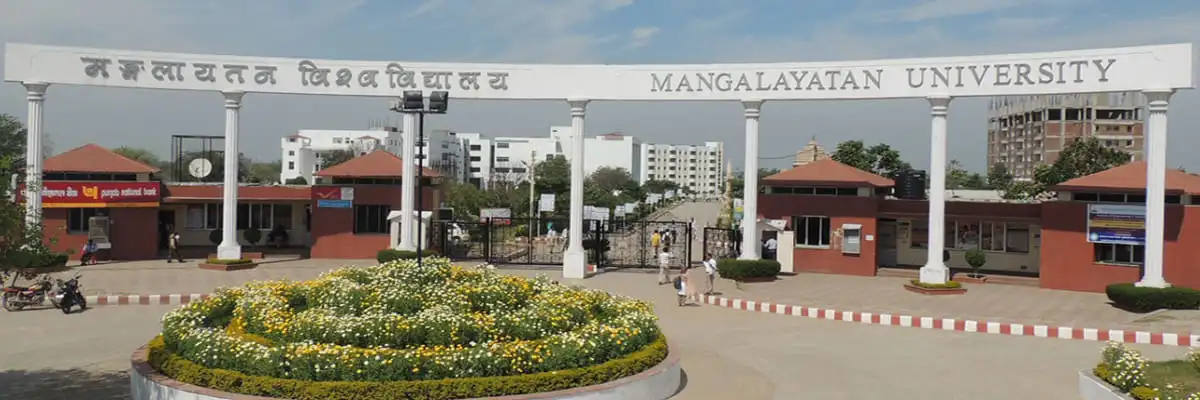
Mangalayatan University is a UGC-recognized private university located in Aligarh, Uttar Pradesh, India. Known for its strong industry connections, cutting-edge curriculum, and commitment to technology-driven education, Mangalayatan University has established itself as one of central India's premier higher education institutions.
The university's vision is to foster academic excellence, industry readiness, and global competitiveness among its graduates — making it an ideal partner for EasyShiksha's mission of accessible, quality online education.
EasyShiksha has signed an MoU with Mangalayatan University to facilitate applications for various university programs and jointly offer B.Voc programs. All degrees and certifications under these programs will be awarded by Mangalayatan University. The EasyShiksha team will provide complete assistance and support throughout the admission and program process.
Mangalayatan University, Uttar Pradesh
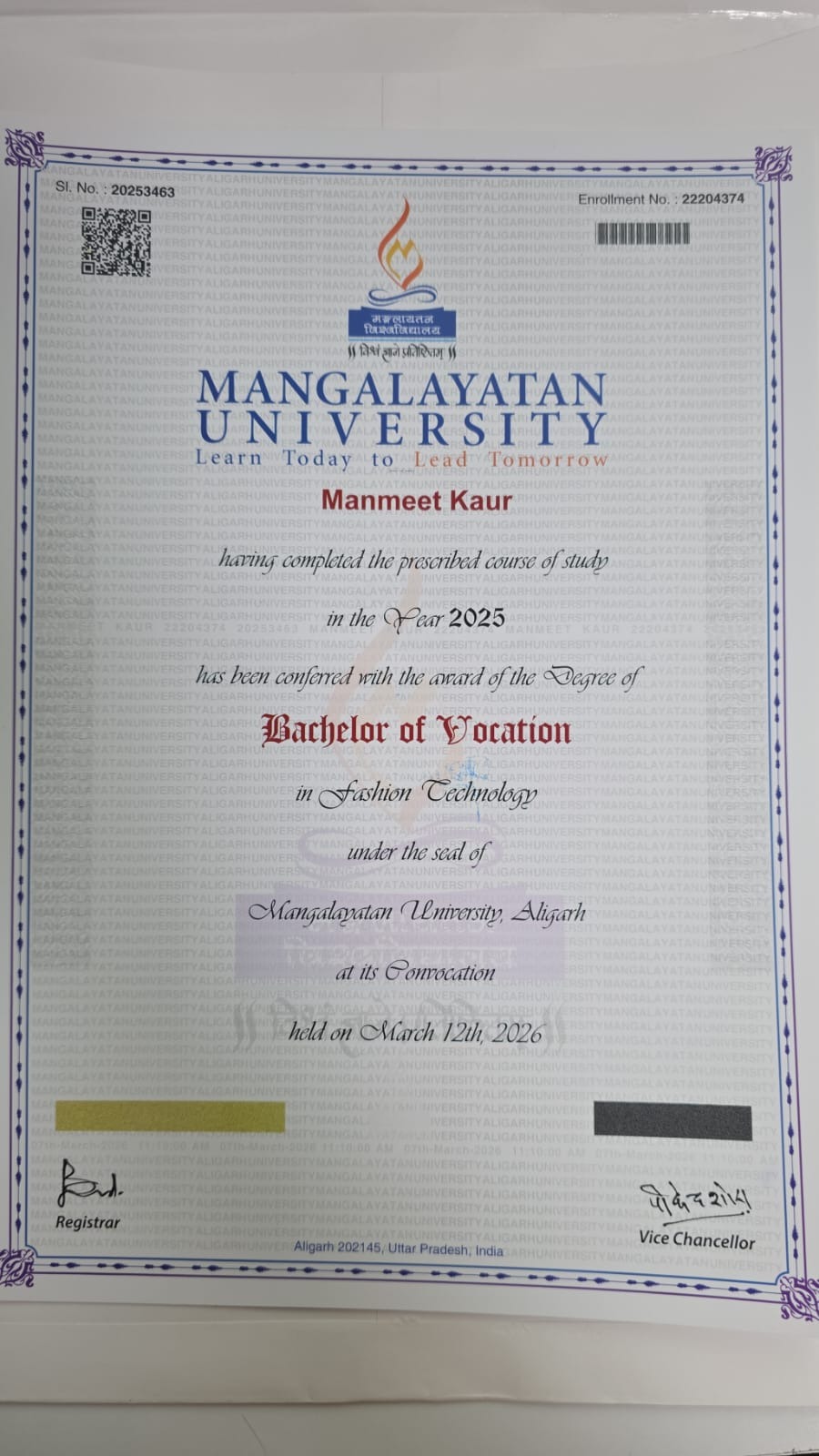
Sample Degree
Documents
Media Gallery
Frequently Asked Questions
Mangalayatan University is located at 33rd Milestone, Aligarh-Mathura Highway, Beswan, Aligarh, Uttar Pradesh, India. The campus is situated in close proximity to the Yamuna Expressway and the cities of Aligarh and Mathura.
Mangalayatan University was established in 2006 under the Mangalayatan University, Uttar Pradesh Act, 2006. The University states that it has the right to confer degrees under Sections 2(f) and 22(1) of the UGC Act.
Yes. Mangalayatan University states that it is recognized by the University Grants Commission (UGC) and was established through an Act of the Uttar Pradesh State Legislature. The University also lists NAAC A+ accreditation among its recognitions.
Yes. The University states that it is recognized by UGC-DEB for Open and Distance Learning (ODL) and is entitled by the UGC to offer online degree programmes. It also states that its online programmes are approved by AICTE.
Mangalayatan University offers programmes across multiple academic levels, including UG, PG, Diploma, PG Diploma and PhD. Its programme portfolio covers areas such as Engineering & Technology, Computer Applications, Management, Agriculture, Biotechnology, Pharmacy, Physiotherapy, Nursing, Journalism & Mass Communication and other disciplines.
Depending on the programme, applicants may be required to provide Class 10 and Class 12 certificates and marksheets, graduation/post-graduation marksheets where applicable, competitive examination rank card where applicable, migration/transfer certificate and recent passport-size photographs. Original documents may be required for verification.
Yes. The University states that students can apply for an education loan through banks, subject to the bank's eligibility criteria.
The M.Voc in Multimedia And Animation is a postgraduate vocational program at Mangalayatan University focused on animation, multimedia production and related digital creative skills. The curriculum covers areas such as 2D and 3D animation, 3D modeling, graphic design, photography, videography, compositing, digital media, gaming and apps designing, web designing and professional media skills. The program consists of four semesters and carries 112 total credits.
The program includes subjects such as Principles Animation and Story Development, Animation Drawing, Advanced Graphic Design, Photography, Videography, 2D Animation, Storyboarding, 3D Modeling and Texturing, Digital Matte Painting, Character Designing, Advanced 3D Modeling, 3D Animation, Dynamic Simulations, Gaming and Apps Designing, Web Designing, Video Editing, Lighting and Rendering, Advanced Compositing, Sound Editing, 2D Character Animation, 3D Character Animation and Professional Skills for Media.
Yes. The syllabus includes practical project work across many subjects, Presentation and Viva Voce components in Semesters I, II and III, and a Project and Internship component in Semester IV. The supplied curriculum does not list a separate dissertation or research-work component.
Depending on the subjects and practical work undertaken, students can develop skills in animation drawing, story development, 2D and 3D animation, character design, 3D modeling and texturing, digital matte painting, graphic design, photography, videography, video editing, dynamic simulations, compositing, lighting and rendering, sound editing, web design, gaming and app design, digital marketing and professional media communication.
Graduates can explore career areas related to animation, multimedia and digital production, including roles such as 2D/3D Animation Artist, Character Designer, 3D Modeler, Digital Matte Painting Artist, Compositing Artist, Lighting and Rendering Artist, Video Editor, Graphic Designer, Storyboard Artist, Layout Artist, Game/App Design Professional, Web Designer, Digital Marketing Professional and Sound Editing Professional, depending on their skills and portfolio.