

















M.Voc (Degree) in M.B.A in Fashion Technology

Program Overview
The M.B.A in Fashion Technology at Mangalayatan University is a postgraduate management program that combines core business management education with specialized knowledge of the fashion, apparel, textile, retail and lifestyle industries. The curriculum covers management functions, marketing, economics, accounting, quantitative analysis, information technology, business communication, entrepreneurship, business environment, research methodology, finance, human resource management and legal frameworks, while progressively introducing specialized fashion-industry subjects. The program carries a total of 112 credits across four semesters.
The curriculum develops an understanding of how management principles can be applied to fashion and apparel businesses. Students study areas such as Introduction to Fashion Industry, Apparel Production Planning and Control, Customer Relationship Management (CRM), Consumer Behaviour in Fashion Industry, Design Basics and Garment Construction – I, Elements of Textiles, Total Quality Management, Fashion Event Management, and Apparel Export Management and Merchandising. These subjects connect management concepts with fashion production, merchandising, consumer engagement, textiles, quality and international business.
The program also includes advanced management subjects such as Strategic Management, Global Business Management, Business Ethics and Corporate Governance, and Operations and Project Management. The curriculum incorporates research and project-based learning through Project/Dissertation courses in Semesters III and IV. These components cover project selection, research methodology, data analysis, report writing, presentation and evaluation, with projects potentially relating to fashion, retail, lifestyle or related business contexts.
Overall, the curriculum is designed to develop management, analytical, communication, marketing, financial, operational, research and industry-specific capabilities relevant to fashion and apparel businesses. Students gain exposure to areas including production planning, merchandising, fashion marketing, consumer behaviour, textile materials, quality management, event management, export operations, entrepreneurship, technology-enabled business and strategic management.
Eligibility Criteria
The minimum eligibility for admission to the M.Voc program is a relevant undergraduate degree or equivalent qualification from a recognized institution, subject to the university's admission requirements.
Approval Details
MHRD, Government of India and UGC
Curriculum
Semester I establishes the core management foundation of the program. It covers management functions, marketing, managerial economics, accounting, quantitative analysis, information technology and business communication. The curriculum also applies several management concepts to fashion, apparel, retail and textile contexts. The semester carries 28 credits.
1. MGL-6101 – Management Functions & Behaviour
This subject introduces the fundamental functions of management and organizational behaviour. Students learn about management theories, planning, organizing, staffing, leadership, motivation, communication, managerial control and individual and group behaviour, with applications to fashion and textile organizations.
Key Topics:
- Nature, scope and importance of management
- Classical, neo-classical and modern management theories
- Planning, organizing, leading and controlling
- Managerial skills and decision-making
- Organizational structures and staffing
- Leadership styles and motivation theories
- Communication and managerial control
- Organizational behaviour and team dynamics
- Conflict, negotiation, change and workplace stress
- Management practices in fashion and textile organizations
2. MGL-6102 – Marketing Management
Marketing Management focuses on marketing principles and their application to the fashion and apparel industry. Students study consumer behaviour, segmentation, targeting, positioning, marketing mix, branding, retailing, digital marketing and emerging marketing practices.
Key Topics:
- Marketing concepts and marketing environment
- Consumer behaviour and buyer decision-making
- Market segmentation, targeting and positioning
- Marketing mix and the 4Ps/7Ps
- Fashion product, pricing, distribution and promotion
- Branding and brand equity
- New product development
- Marketing research and strategic marketing
- Retail and experiential marketing
- Social media, influencer and digital marketing
- CRM, SEO, SEM, email and mobile marketing
- Sustainable and green marketing
3. MGL-6103 – Managerial Economics
Managerial Economics develops an understanding of economic concepts used in business decision-making. The curriculum covers demand, forecasting, production, cost analysis, market structures, pricing, investment decisions and the macroeconomic environment, with examples from fashion businesses.
Key Topics:
- Nature and scope of managerial economics
- Scarcity, choice and opportunity cost
- Demand analysis and elasticity
- Demand estimation and forecasting
- Production functions and cost analysis
- Market structures and pricing
- Capital budgeting and investment decisions
- Risk analysis
- Inflation and business cycles
- Monetary and fiscal policies
- International trade and exchange rates
- Economics of fashion and retail businesses
4. MGL-6104 – Accounting for Managers
This subject introduces accounting concepts and financial analysis for managerial decision-making. Students learn financial statements, cost accounting, budgeting, standard costing and contemporary accounting practices relevant to apparel, fashion and retail businesses.
Key Topics:
- Accounting concepts and principles
- Double-entry bookkeeping
- Financial statements
- Profit and Loss Account and Balance Sheet
- Financial statement analysis
- Ratio analysis
- Cost accounting and cost classification
- Marginal costing and break-even analysis
- Budgeting and budgetary control
- Standard costing and variance analysis
- Management accounting
- Computerized accounting systems and ERP
5. MGL-6105 – Quantitative Analysis for Managerial Applications
Quantitative Analysis for Managerial Applications develops mathematical, statistical and analytical abilities for managerial decision-making. Students study quantitative techniques and their application to production planning, demand forecasting, retail operations and fashion business analysis.
Key Topics:
- Quantitative techniques in management
- Sets, functions, logarithms and linear equations
- Matrices and determinants
- Linear programming
- Probability and probability distributions
- Measures of central tendency and dispersion
- Correlation and regression
- Time series analysis
- Index numbers
- Decision theory and decision trees
- Game theory
- Queuing models
- Applications in fashion forecasting and retail management
6. MGL-6106 – Information Technology for Managers
This subject introduces information technology and information systems used in business management. Students learn about MIS, e-commerce, enterprise systems, databases, analytics, artificial intelligence and digital transformation, including applications within the fashion and apparel industry.
Key Topics:
- Information technology in business
- TPS, MIS, DSS and ESS
- Computer hardware and software
- MS Office and business applications
- Excel for business analysis
- Management Information Systems
- E-business and e-commerce
- ERP, CRM and SCM systems
- Database management systems
- Artificial Intelligence and Machine Learning
- Business analytics and data visualization
- Cybersecurity
- Digital transformation in fashion
- Virtual try-on and AR/VR applications
7. MGL-6107 – Business Communication
Business Communication develops professional communication skills required in management and fashion-industry environments. Students study written, oral and non-verbal communication, business correspondence, presentations, digital communication and cross-cultural communication.
Key Topics:
- Communication concepts and processes
- Verbal, non-verbal, written, oral and visual communication
- Barriers to effective communication
- Business letters and emails
- Reports, notices and memorandums
- Fashion-industry press releases and product descriptions
- Public speaking and presentations
- Group discussions, meetings and interviews
- Negotiation and persuasive communication
- Digital communication and social media
- Virtual collaboration
- Cross-cultural communication
- Crisis communication and media relations
Download Syllabus
Semester II strengthens the management foundation through entrepreneurship, business environment, research, finance, legal frameworks and human resource management. It also introduces students to the structure and functioning of the fashion industry through Introduction to Fashion Industry. The semester carries 28 credits.
1. MGL-6201 – Entrepreneurship & SMEs Management
This subject introduces entrepreneurship and the management of small and medium enterprises. Students study business idea generation, feasibility analysis, business planning, SME management, financing, growth and globalization, with particular attention to fashion and apparel entrepreneurship.
Key Topics:
- Concept and importance of entrepreneurship
- Types of entrepreneurs
- Fashion entrepreneurship
- Entrepreneurial process
- Creativity and business idea generation
- Feasibility analysis
- Small and Medium Enterprises
- Business planning and project management
- Sources of entrepreneurial finance
- Management of SMEs
- Fashion start-ups
- Business growth and expansion
- Sustainability and CSR in SMEs
- Internationalization and exports
2. MGL-6202 – Business Environment
Business Environment examines the internal, economic, political, legal, social, technological and global factors that influence organizations. Students learn how environmental changes affect fashion, retail, apparel and SME businesses.
Key Topics:
- Nature and significance of business environment
- Internal, micro and macro environments
- Environmental scanning
- Economic policies and reforms
- Liberalization, privatization and globalization
- Political and legal environment
- Companies Act and labour laws
- Intellectual Property Rights
- Consumer protection and competition
- Social and cultural influences on business
- Technology and digital transformation
- AI, AR/VR and sustainable technologies
- Globalization and international regulations
- Porter’s Five Forces
3. MGL-6203 – Research Methodology
Research Methodology introduces systematic research processes used in management, fashion, retail and textile business studies. Students learn research design, problem formulation, data collection, measurement, analysis and research report preparation.
Key Topics:
- Meaning and importance of research
- Types of management research
- Research process
- Research problems and research gaps
- Literature review
- Variables and hypotheses
- Research design
- Sampling and sample-size determination
- Primary and secondary data
- Surveys, interviews and observation
- Measurement and scaling
- Data processing and analysis
- Correlation, regression and hypothesis testing
- Research report writing
- Referencing and citation
- Research-based decision-making
4. MGL-6204 – Financial Management
Financial Management focuses on financial decision-making in business organizations. The subject covers financial planning, capital structure, investment decisions, working capital, financing, cost of capital and financial analysis, including applications to fashion and retail businesses.
Key Topics:
- Objectives and functions of financial management
- Investment, financing and dividend decisions
- Financial planning
- Capital structure
- Leverage
- Capital budgeting
- Payback Period, NPV and IRR
- Profitability Index
- Risk and uncertainty
- Working capital management
- Cash, inventory and receivables management
- Sources of finance
- Cost of capital and WACC
- Dividend policy
- Financial statement analysis
- Cash flow and fund flow analysis
5. MGL-6205 – Legal Regulatory Framework
This subject provides an understanding of the legal environment in which businesses operate. Students study contracts, company law, consumer protection, intellectual property, labour laws, environmental regulations and other legal considerations relevant to fashion, retail and lifestyle businesses.
Key Topics:
- Introduction to business laws
- Sources of law
- Contract Act, 1872
- Types and essentials of contracts
- Breach of contract and remedies
- Companies Act, 2013
- Corporate governance
- Consumer Protection Act, 2019
- Consumer rights and dispute resolution
- Intellectual Property Rights
- Patents, copyrights, trademarks and designs
- Labour laws
- Environmental laws
- Competition Act, 2002
- E-commerce and franchising compliance
6. MGL-6206 – Human Resource Management
Human Resource Management examines how organizations plan, recruit, develop and manage employees. The curriculum applies HR concepts to fashion houses, retail organizations, apparel businesses and creative teams.
Key Topics:
- HRM concepts, objectives and functions
- Strategic human resource management
- Human resource planning
- Job analysis and job descriptions
- Recruitment and selection
- Placement and induction
- Training and development
- Career planning
- Performance management
- Performance appraisal
- Compensation and employee benefits
- Industrial relations
- Grievance handling
- Labour laws
- Employee engagement and retention
- Organizational culture
7. MBFT-2001 – Introduction to Fashion Industry
Introduction to Fashion Industry provides a foundation in the structure and functioning of the fashion sector. Students explore fashion design, product development, production, merchandising, marketing, retailing, operations, technology and emerging industry trends.
Key Topics:
- Evolution and structure of the fashion industry
- Global and Indian fashion industries
- Fashion design and product development
- Apparel product lifecycle
- Fabrics and fashion materials
- Garment production
- Fashion merchandising
- Supply chain management
- Fashion marketing and retailing
- Visual merchandising
- Social media and digital marketing
- Fashion operations and management
- CAD, ERP and production software
- Sustainable and ethical fashion
- Fashion forecasting and trend analysis
- AI, AR/VR and other emerging technologies
Semester III moves into specialized fashion-business subjects while continuing advanced management education. It covers apparel production planning, customer relationship management, consumer behaviour, garment construction, strategic management and global business. The curriculum also includes Project/Dissertation. The semester carries 28 credits.
1. MBFT-3001 – APPAREL PRODUCTION PLANNING AND CONTROL
This subject develops an understanding of planning, organizing and controlling apparel production activities. Students study production systems, workflow, material planning, capacity planning, production control, quality management and emerging production technologies.
Key Topics:
- Apparel production planning
- Batch, mass and customized production systems
- Production workflow
- Pre-production, production and post-production
- Work study and time-motion study
- Line layout and workstation planning
- Material Requirement Planning
- Inventory management
- Capacity planning and scheduling
- Resource allocation
- ERP in production planning
- Production control techniques
- Quality inspection and process control
- Lean manufacturing and JIT
- CAD, CAM and production automation
- Sustainable apparel production
2. MBFT-3002 – Customer Relationship Management (CRM)
Customer Relationship Management focuses on developing and maintaining customer relationships in fashion and retail businesses. Students study customer segmentation, CRM strategies, technology, analytics, performance measurement and emerging CRM practices.
Key Topics:
- CRM concepts and objectives
- Operational, analytical and collaborative CRM
- Customer needs and expectations
- Customer segmentation and targeting
- Customer lifecycle and touchpoints
- Customer profiling and databases
- Customer acquisition and retention
- Loyalty programs
- Personalization and customization
- CRM software and tools
- Data analytics in CRM
- Social media and digital customer engagement
- AI, chatbots and predictive analytics
- CRM performance measurement
- Omnichannel and mobile CRM
- Ethical and privacy issues
3. MBFT-3003 – CONSUMER BEHAVIOUR IN FASHION INDUSTRY
This subject examines how consumers think, perceive, learn and make purchasing decisions in fashion markets. Students explore cultural, social, psychological and personal influences on fashion consumption and the effect of digital platforms on consumer behaviour.
Key Topics:
- Consumer behaviour concepts
- Consumer decision-making process
- Cultural, social, personal and psychological factors
- Consumer motivation
- Maslow’s hierarchy of needs
- Consumer perception
- Attitudes, beliefs and values
- Consumer learning
- Personality and self-concept
- Lifestyle and psychographics
- Reference groups and opinion leaders
- Social class and culture
- Influencers and celebrity endorsements
- Brand choice and loyalty
- Digital consumer behaviour
- Sustainable and ethical consumption
- Consumer analytics
4. MBFT-3004 – DESIGN BASICS AND GARMENT CONSTRUCTION – I
Design Basics and Garment Construction – I introduces fundamental principles of fashion design and garment construction. Students study design elements, colour theory, fabrics, patterns, cutting, stitching, garment components, drafting and draping.
Key Topics:
- Elements of design
- Principles of design
- Fashion sketching and illustration
- Colour wheel and colour schemes
- Colour psychology
- Fabric properties and material selection
- Basic garment construction
- Patterns and basic blocks
- Cutting, marking and stitching
- Seams, darts, pleats, gathers and tucks
- Collars, sleeves, necklines and hemlines
- Buttons, zippers, hooks and Velcro
- Garment drafting
- Draping techniques
- Sizing and fitting
- Current garment design trends
5. MBFT-3005 – Project/Dissertation
Project/Dissertation develops students’ ability to undertake structured project or research work in fashion and lifestyle business contexts. The syllabus covers project selection, research methodology, planning, execution, data analysis, documentation, presentation and evaluation.
Key Topics:
- Purpose and importance of project/dissertation
- Research-based, industry-based and practical projects
- Project topic selection
- Objectives, scope and expected outcomes
- Research design
- Literature review
- Research questions and hypotheses
- Primary and secondary data collection
- Project proposal preparation
- Project scheduling and resource allocation
- Project execution and monitoring
- Data analysis and interpretation
- Project report writing
- APA/MLA referencing
- Presentation and project defense
- Project evaluation
6. MGL-7101 – Strategic Management
Strategic Management develops an understanding of how organizations formulate, implement and evaluate strategies. The subject applies strategic concepts to fashion, retail, apparel and lifestyle businesses.
Key Topics:
- Strategic management concepts
- Vision, mission, goals and objectives
- Corporate, business and functional strategies
- PESTEL analysis
- Porter’s Five Forces
- SWOT analysis
- Resources and core competencies
- Value chain analysis
- Business-level strategies
- Corporate-level strategies
- Mergers, acquisitions and alliances
- Strategy implementation
- Strategic control
- Balanced Scorecard and KPIs
- Risk management
- Sustainability and CSR
- Digital transformation and strategic innovation
7. MGL-7102 – Global Business Management
Global Business Management introduces international business concepts and their application to fashion, textile and lifestyle industries. Students study international trade, investment, global environments, entry strategies, cross-cultural management and emerging global trends.
Key Topics:
- Global business concepts
- Globalization and its drivers
- International trade theories
- International trade and investment
- FDI and FII
- WTO, GATT and regional trade blocs
- Global business environment
- Country risk
- International market opportunities
- Exporting and franchising
- Joint ventures and wholly owned subsidiaries
- Global marketing
- Global supply chains
- Cross-cultural management
- International fashion organizations
- Digital globalization and e-commerce
Semester IV completes the specialized curriculum with subjects covering textiles, quality management, fashion events, apparel exports and merchandising. It also includes a second Project/Dissertation along with business ethics, corporate governance, operations and project management. The semester carries 28 credits, bringing the program total to 112 credits.
1. MBFT-4001 – ELEMENTS OF TEXTILES
Elements of Textiles introduces textile materials, fibers, yarns, fabric construction, finishing and contemporary textile innovations. The subject covers natural and synthetic fibers and their applications in fashion and lifestyle products.
Key Topics:
- Classification of textiles
- Global and Indian textile industry
- Natural textile fibers
- Cotton, wool, silk and flax
- Man-made and synthetic fibers
- Polyester, nylon, acrylic and rayon
- Fiber properties and applications
- Yarn formation
- Fabric construction
- Weaving, knitting, non-woven and felting
- Textile finishing
- Dyeing, printing and functional finishes
- Performance textiles
- Smart textiles and wearable technology
- Sustainable textile innovations
- Textile testing and quality standards
2. MBFT-4002 – Total Quality Management (TQM)
Total Quality Management focuses on quality principles, systems and improvement practices in fashion and textile businesses. Students learn quality tools, quality systems, process control, supplier quality, risk analysis and advanced quality-management practices.
Key Topics:
- Fundamentals of Total Quality Management
- Quality principles and quality gurus
- Quality and productivity
- Customer focus and satisfaction
- Cost of quality
- Seven QC tools
- Statistical Process Control
- Process capability
- Six Sigma and DMAIC
- Quality Management Systems
- ISO 9001
- Total Productive Maintenance
- Lean manufacturing
- Kaizen and continuous improvement
- Fabric and garment quality inspection
- Supplier quality management
- Failure Mode and Effects Analysis
- Digital quality-management tools
3. MBFT-4003 – Fashion Event Management
Fashion Event Management covers the planning, design, promotion, execution and evaluation of fashion events. Students study fashion shows, exhibitions, trade fairs, product launches, event logistics, sponsorship, media management and post-event evaluation.
Key Topics:
- Fashion event concepts and types
- Fashion shows and exhibitions
- Trade fairs and launch events
- Event stakeholders
- Theme and concept development
- Target audience analysis
- Event budgeting
- Resource allocation
- Event scheduling
- Venue and layout planning
- Stage, lighting and audio-visual arrangements
- Model and wardrobe coordination
- Guest and seating management
- Event marketing and promotion
- PR and media management
- Sponsorship and partnerships
- Event-day coordination
- Crisis and contingency management
- Post-event evaluation and reporting
- Sustainability in fashion events
4. MBFT-4004 – APPAREL EXPORT MANAGEMENT AND MERCHANDISING
This subject focuses on international apparel exports and merchandising operations. Students learn export procedures, documentation, sourcing, costing, production planning, buyer communication, export finance and international market strategies.
Key Topics:
- Apparel export concepts and scope
- Global apparel markets
- Export and domestic markets
- International trade regulations
- Export documentation
- Invoice, packing list and bill of lading
- Certificate of origin
- Licensing and registration
- Foreign trade policies
- Merchandising functions
- Sourcing and costing
- Order execution
- Buyer and supplier communication
- Production planning for export orders
- Inventory and quality control
- ERP in export production
- FOB, CIF, C&F and landed cost
- International pricing
- Export finance and risk management
- International market-entry strategies
- Trade fairs and buyer-seller meets
5. MBFT-4005 – Project/Dissertation
The Semester IV Project/Dissertation provides another structured opportunity for research-based, industry-based or practical project work relating to fashion, retail or lifestyle business. Students work through project planning, execution, analysis, documentation, presentation and evaluation.
Key Topics:
- Project/dissertation purpose and significance
- Research-based and industry-based projects
- Topic selection and project objectives
- Research design and literature review
- Research questions and hypotheses
- Primary and secondary data
- Project proposal and approval
- Time and resource planning
- Project execution
- Designing, prototyping, testing or analysis
- Data analysis and interpretation
- Project report preparation
- APA/MLA referencing
- Visual presentation of findings
- Project presentation and defense
- Evaluation and final submission
6. MGL-7201 – Business Ethics and Corporate Governance
Business Ethics and Corporate Governance introduces ethical principles, governance mechanisms, corporate responsibility and compliance. Students explore ethical decision-making and governance practices in fashion, retail and lifestyle organizations.
Key Topics:
- Business ethics and moral philosophy
- Ethical decision-making
- Ethical issues in corporate decisions
- Corporate governance principles
- Board of directors and committees
- Shareholder and stakeholder perspectives
- Codes of conduct
- Whistleblowing and ethical reporting
- Ethical corporate culture
- Companies Act and SEBI regulations
- Compliance management
- Corporate Social Responsibility
- Ethical sourcing
- Sustainability
- Social impact and CSR reporting
- Ethical issues in digital business
- Risk management and accountability
7. MGL-7202 – Operations and Project Management
Operations and Project Management covers the management of production systems, processes, inventory, supply chains, quality and projects. The curriculum applies these concepts to fashion, textile and retail businesses.
Key Topics:
- Operations management concepts
- Operations strategy
- Production systems
- Operations KPIs
- Process design and workflow planning
- Capacity planning
- Facility layout and location
- Technology integration
- Inventory management
- EOQ and JIT
- Supply chain management
- Logistics and vendor management
- Demand forecasting
- Quality management
- Lean operations and waste reduction
- Project life cycle
- Project planning and scheduling
- Resource allocation
- Project execution and control
- Risk management
- CPM, PERT and Gantt charts
- Agile project management
- ERP and digital project-management tools
Fee Structure
Admission Process
Students can apply for the M.B.A in Fashion Technology programme through EasyShiksha. The complete application process is designed to make admission simple and convenient for eligible students.
Step 1: Click on Apply Now
Click the Apply Now button on the M.B.A in Fashion Technology programme page and begin your application through EasyShiksha.
Step 2: Complete Personal Information
Fill in the required personal, contact and academic details accurately in the application form.
Step 3: Upload Required Documents
Upload the required documents for eligibility and admission verification as specified during the application process.
Step 4: Pay Application Fee
Pay the applicable application fee through the available online payment options to submit your application and initiate the admission process.
Step 5: Application Review
The EasyShiksha team reviews your application and submitted documents to verify your eligibility and ensure that the required information and documents have been provided.
Step 6: University Enrollment
Once the application is successfully reviewed and the student is found eligible, EasyShiksha facilitates the enrollment process with Mangalyatan University.
Step 7: LMS Access
After successful enrollment, the student is provided access to the Learning Management System (LMS) to begin their academic journey and access the available learning resources.
Start Your Application
Ready to begin your journey in Software Development? Click Apply Now to submit your application through EasyShiksha.
Career & Placements
The M.B.A in Fashion Technology curriculum combines management education with specialized knowledge of fashion, apparel, textiles, merchandising, retail, production, exports, quality and fashion events. Based on the areas covered in the syllabus, graduates can explore career opportunities across management, fashion business, production, merchandising, marketing, retail, exports, events and entrepreneurship.
Fashion Business and Management Roles
- Fashion Business Manager – Apply management principles to fashion and lifestyle business operations.
- Fashion Management Professional – Work across business functions within fashion and apparel organizations.
- Business Development Professional – Explore business growth, market opportunities and strategic initiatives.
- Strategy Professional – Apply strategic planning, competitive analysis and business evaluation concepts.
- Operations Manager – Work with production, operations, inventory and process-management activities.
Marketing and Brand Roles
- Fashion Marketing Professional – Apply marketing concepts to fashion products, brands and retail businesses.
- Brand Management Professional – Work on brand positioning, brand equity and product development.
- Digital Marketing Professional – Apply digital marketing, social media, SEO, SEM and content-marketing concepts.
- Customer Relationship Management Professional – Work on customer acquisition, retention, engagement and CRM initiatives.
- Consumer Insights Professional – Apply consumer behaviour and market research knowledge to understand fashion consumers.
Apparel Production and Quality Roles
- Apparel Production Planning Professional – Work with production planning, scheduling, capacity and resource management.
- Production Control Professional – Support production monitoring, workflow and delivery-schedule management.
- Quality Management Professional – Apply quality-management tools and practices in apparel and textile operations.
- Quality Control Professional – Work with inspection, testing and quality-control processes.
- Supply Chain Professional – Explore inventory, sourcing, logistics and supply-chain activities.
Merchandising and Export Roles
- Apparel Merchandising Professional – Work with sourcing, costing, order execution and buyer coordination.
- Export Merchandising Professional – Support international apparel orders and export-related merchandising activities.
- Export Management Professional – Work with export procedures, documentation, compliance and international markets.
- International Business Professional – Apply global business and international market-entry concepts.
- Buyer-Supplier Coordination Professional – Work with communication and coordination between fashion businesses, buyers and suppliers.
Fashion Events and Retail Roles
- Fashion Event Management Professional – Work in planning, promotion and execution of fashion events.
- Event Coordination Professional – Support fashion shows, exhibitions, trade fairs and product launches.
- Fashion Retail Management Professional – Explore retail operations, customer engagement and store-management activities.
- Visual Merchandising Professional – Apply fashion retail and visual communication concepts.
- E-Commerce Professional – Explore online fashion retail and digital commerce operations.
Entrepreneurship and Business Roles
- Fashion Entrepreneur – Develop and manage business ideas within fashion, textile, apparel and lifestyle sectors.
- Fashion Start-up Professional – Apply entrepreneurship, business planning and feasibility-analysis knowledge.
- SME Management Professional – Work with management functions in small and medium fashion businesses.
- Business Consultant/Analyst – Apply management, research and analytical skills to business problems, subject to role requirements.
- Business Research Professional – Work on research, data analysis and market-related studies in fashion and retail contexts.
Career outcomes depend on individual skills, experience, role requirements and the organization or business context. The curriculum itself does not guarantee employment or a particular job designation.
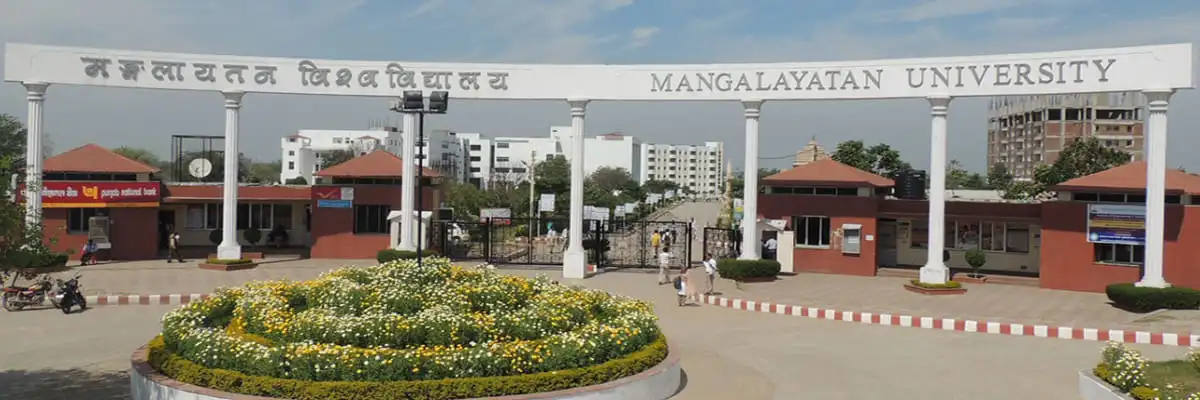
Mangalayatan University, Aligarh
Mangalayatan University is a UGC-recognized private university located in Aligarh, Uttar Pradesh, India. Known for its strong industry connections, cutting-edge curriculum, and commitment to technology-driven education, Mangalayatan University has established itself as one of central India's premier higher education institutions.
The university's vision is to foster academic excellence, industry readiness, and global competitiveness among its graduates — making it an ideal partner for EasyShiksha's mission of accessible, quality online education.
EasyShiksha has signed an MoU with Mangalayatan University to facilitate applications for various university programs and jointly offer B.Voc programs. All degrees and certifications under these programs will be awarded by Mangalayatan University. The EasyShiksha team will provide complete assistance and support throughout the admission and program process.
Mangalayatan University, Uttar Pradesh
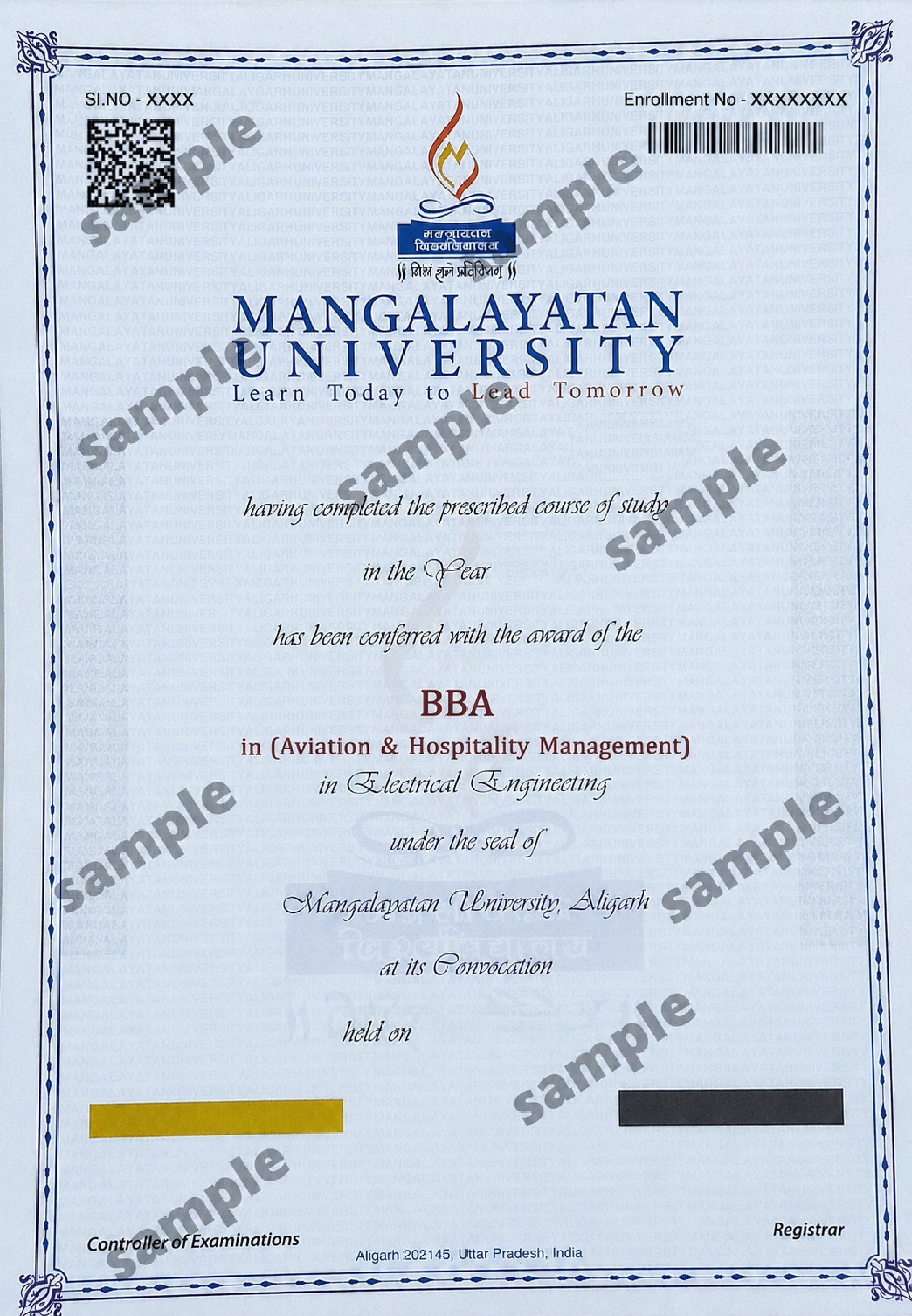
Sample Degree
Documents
Media Gallery
Frequently Asked Questions
Mangalayatan University is located at 33rd Milestone, Aligarh-Mathura Highway, Beswan, Aligarh, Uttar Pradesh, India. The campus is situated in close proximity to the Yamuna Expressway and the cities of Aligarh and Mathura.
Mangalayatan University was established in 2006 under the Mangalayatan University, Uttar Pradesh Act, 2006. The University states that it has the right to confer degrees under Sections 2(f) and 22(1) of the UGC Act.
Yes. Mangalayatan University states that it is recognized by the University Grants Commission (UGC) and was established through an Act of the Uttar Pradesh State Legislature. The University also lists NAAC A+ accreditation among its recognitions.
Yes. The University states that it is recognized by UGC-DEB for Open and Distance Learning (ODL) and is entitled by the UGC to offer online degree programmes. It also states that its online programmes are approved by AICTE.
Mangalayatan University offers programmes across multiple academic levels, including UG, PG, Diploma, PG Diploma and PhD. Its programme portfolio covers areas such as Engineering & Technology, Computer Applications, Management, Agriculture, Biotechnology, Pharmacy, Physiotherapy, Nursing, Journalism & Mass Communication and other disciplines.
Depending on the programme, applicants may be required to provide Class 10 and Class 12 certificates and marksheets, graduation/post-graduation marksheets where applicable, competitive examination rank card where applicable, migration/transfer certificate and recent passport-size photographs. Original documents may be required for verification.
Yes. The University states that students can apply for an education loan through banks, subject to the bank's eligibility criteria.
The M.B.A in Fashion Technology is a postgraduate management program offered by Mangalayatan University that combines core management education with specialized subjects related to the fashion, apparel, textile, retail and lifestyle industries. The curriculum covers management, marketing, finance, HR, technology, production, merchandising, consumer behaviour, textiles, quality, exports and strategic management.
The program includes management subjects such as Management Functions & Behaviour, Marketing Management, Managerial Economics, Accounting for Managers, Financial Management, Human Resource Management, Strategic Management and Global Business Management. Specialized subjects include Introduction to Fashion Industry, Apparel Production Planning and Control, Customer Relationship Management (CRM), Consumer Behaviour in Fashion Industry, Design Basics and Garment Construction – I, Elements of Textiles, Total Quality Management, Fashion Event Management, and Apparel Export Management and Merchandising.
The syllabus explicitly includes Project/Dissertation in Semester III and another Project/Dissertation in Semester IV. These courses cover project selection, research methodology, project planning and execution, data analysis, report writing, presentation and evaluation. The syllabus does not explicitly list a separate internship or industrial-training subject, so no such component has been added here.
The curriculum supports development of management, marketing, financial, analytical, communication, research, production-planning, merchandising, consumer-behaviour, quality-management, textile, export-management, event-management and strategic-management skills. Students also study technology applications such as ERP, CRM, e-commerce, business analytics, AI, AR/VR and digital transformation in relevant business contexts.
Depending on their skills and interests, graduates can explore areas such as fashion business management, fashion marketing, brand management, CRM, apparel production planning, quality management, merchandising, apparel exports, fashion retail, event management, international business, entrepreneurship and business research. The specific career path depends on individual qualifications, skills, experience and employer requirements.