

















M.Voc in Interior Design
Program Overview
The M.Voc in Interior Design is a postgraduate vocational programme focused on developing advanced knowledge and practical skills in interior design, construction, furniture, visual presentation, landscape, materials, sustainability and computer-aided design. The curriculum combines General Academic Components with Skill Development Components, providing students with a progression from design fundamentals and construction knowledge to specialized professional applications.
The programme is divided into four semesters with 102 total credits. The first year introduces areas such as Organisational Behaviour, Fundamentals of Interior Graphics, History of Interior Furniture, Interior Construction & Structures, Interior Graphics, Furniture Design and SEM projects. The second semester expands into Design & Innovation, Principles of Management, Interior Design & Landscape, Furniture Design, Quantity & Estimation and Interior Construction Technology.
The third semester develops competencies in Business Economics, Interior Design & Landscape, Interior Construction Technology, Visual Merchandising, Sustainable Interior Design, Display Design and Auto CAD-I. The final semester covers Entrepreneurship & Project Management, Sustainable Interior Design, Visual Merchandising-II, Auto CAD-II, Advance Building / Interior Materials, Computer Presentation Techniques and a 6-credit Dissertation.
The curriculum provides exposure to drawing and drafting, perspective representation, furniture materials and design, quantity and estimation, construction systems, landscape design, visual merchandising, sustainable materials, AutoCAD, digital presentation and portfolio development. The programme also includes SEM Project-I, SEM Project-II and Dissertation, making project-based and applied learning important components of the curriculum.
Eligibility Criteria
The minimum eligibility for admission to the M.Voc program is a relevant undergraduate degree or equivalent qualification from a recognized institution, subject to the university's admission requirements.
Approval Details
MHRD, Government of India and UGC
Curriculum
Semester I carries 22 credits and establishes foundational knowledge in organisational behaviour, interior graphics, furniture history, construction and furniture design. It also includes SEM Project-I as a Skill Development Component.
1. Organisational Behaviour
This subject introduces organisational behaviour and examines how individuals, groups and organisational systems function in professional environments.
Key Topics:
- Nature, scope and importance of organisational behaviour
- Organisational behaviour models and organisational theory
- Personality, learning, attitudes and perceptions
- Group behaviour, team building and interpersonal communication
- Leadership, power, motivation and organisational politics
- Organisational culture, climate and change
- Workplace stress, organisational development and effectiveness
- Overview of TQM and Six Sigma
2. Fundamentals of Interior Graphics
This subject develops fundamental drawing and graphic presentation skills required for interior design communication.
Key Topics:
- Drawing instruments, papers and graphic presentation
- Free-hand lines, curves, lettering and geometric forms
- Sketching furniture, accessories, human forms and interior views
- Scaled drawing and engineering scales
- Physical measurement and drafting
- Two-dimensional and three-dimensional geometry
- Plans, elevations and sections
- Orthographic, isometric and axonometric projections
- Furniture drafting and measured lettering
- Architectural graphic symbols and room layouts
3. History of Interior Furniture
This subject explores the historical development of Indian interiors, furniture, decorative features, materials and architectural influences.
Key Topics:
- Prehistoric interiors
- Indus Valley Civilization
- Indian handicrafts and handlooms
- Hindu, Buddhist and Indo-Islamic interiors
- Decoration, ornamentation and motifs
- Interior construction techniques and materials
- Doors, windows, pillars, columns and panelling
- Ceilings, cornices, friezes, dado and stone inlay
- Indian schools of painting
- British architectural influence on Indian interiors
- Reports, assignments and visits to museums, stores, workshops, exhibitions and trade fairs
4. Interior Construction & Structures
This subject introduces building components and structural systems relevant to interior design.
Key Topics:
- Basic building components from foundation to superstructure
- Stone and brick masonry
- Types of masonry bonds
- Arches and lintels
- Doors and windows
- Roof types
- RCC structural elements
- RCC and reinforced beams
- Slabs and columns
- Steel structural elements
- Steel versus RCC structures
- Seismic zone considerations for high-rise structures
- Disaster-related design implications
5. Interior Graphics
This Skill Development Component develops measured drawing, perspective and presentation skills for interior spaces.
Key Topics:
- Measured drawings and skilled drafting
- Standardized drawings and architectural symbols
- Room layout plans, elevations and sections
- Dimensions, levels and specification writing
- Axonometric views
- Perspective terminology and techniques
- One-point and two-point perspective
- Colour and pencil rendering
- Tones, textures and medium selection
- Sciography in plans and elevations
- Orthographic projection
- Drawing charts and written assignments
6. Furniture Design-I
This subject examines furniture in relation to interior spaces, materials, finishes, ergonomics and user requirements.
Key Topics:
- Role of furniture in interiors
- Shapes, forms and finishes
- Climatic, social and economic influences
- Furniture materials and construction techniques
- Wood, metals and wood-based products
- Furniture care and maintenance
- Durability and usability
- Paints, polishes and varnishes
- Surface finishing techniques
- Anthropometric and ergonomic data
- Measurement-based furniture exercises
7. SEM Project-I
SEM Project-I is included as a 4-credit Skill Development Component in Semester I. The curriculum identifies the project as part of the semester structure.
Download Syllabus
Semester II carries 26 credits and expands the programme into design innovation, management, interior and landscape applications, furniture, estimation and construction technology. It also includes SEM Project-II.
1. Design & Innovation
This subject introduces design concepts, design fundamentals and creative drawing techniques.
Key Topics:
- Definition and concept of design
- Design versus art
- Design and environment
- Design process
- Principles and elements of design
- Colour theory and colour wheel
- Form, texture, shape and colour relationships
- Drawing techniques and media exploration
- Composition and perspective
- Tonal techniques
- Texture and frottage
- Contour line drawing
- Occupational health and safety, hazard identification and risk control
2. Principles of Management
This subject provides knowledge of management theories, functions, organisational structures and business ethics.
Key Topics:
- Development of management thought
- Scientific Management and Taylor
- Fayol's principles of management
- Human relations and behavioural science
- Planning, organising and staffing
- Decision-making, direction and control
- Management by Objectives
- Functional, matrix, network and divisional structures
- Delegation of authority and responsibility
- Japanese management style
- Quality of work life and work ethics
- Corporate governance and business ethics
- Corporate Social Responsibility
3. Interior Design & Landscape-I
This subject applies interior design principles to residential, commercial and landscape environments.
Key Topics:
- 2 BHK and 3 BHK apartment design
- Furniture layouts
- Plans, elevations and 3D/perspective views
- Furniture detailing
- Colour schemes and accessories
- Electrical layout planning
- Small commercial spaces
- Relationship between indoor and outdoor spaces
- Hard and soft landscape
- Landscape materials and ground modelling
- Grass, stone pathways and ground covers
- Plants, shrubs, creepers and hedges
- Water bodies, fountains and sculptures
- Exterior lighting
- Balcony and private garden projects
4. Furniture Design-II
This subject advances furniture knowledge through materials, construction, measured drawings, joinery and upholstery.
Key Topics:
- Wood, metal and glass
- Wood and wood-based products
- Softwood and hardwood
- Properties, defects and structures of wood
- Plywood, board, particle board and veneer
- Mild steel, aluminium, brass, copper and wrought iron
- Glass types, thickness, treatments and properties
- Measured furniture drawings
- Plans, elevations, sections and details
- Furniture joinery
- Furniture redesign based on market and user needs
- Upholstery materials and techniques
5. Quantity & Estimation
This subject develops knowledge of construction estimation, measurement, rate analysis and specifications.
Key Topics:
- Estimating and costing
- Approximate and detailed estimates
- Service Unit, Plinth Area, Cubical Content and Typical Bay methods
- Detailed estimation methods
- Long wall-short wall method
- Centre line method
- Modes of measurement as per SP:27
- Rate analysis
- Task work and labour considerations
- Schedule of rates and market survey
- Construction-item rate analysis
- Specifications and specification writing
- Detailed estimates of residential and RCC components
6. Interior Construction Technology-I
This subject examines structural components and construction systems used in interior applications.
Key Topics:
- Structural components and elements
- Brick wall systems
- Half-brick and one-brick walls
- Lightweight concrete blocks
- Hollow blocks
- Aerated concrete blocks
- Joinery and joints
- Doors, windows and ventilators
- Jamb linings
- Lintels and arches
- Structural glazing
- Doors and windows based on operation, material and positioning
7. SEM Project-II
SEM Project-II is a 4-credit Skill Development Component included in Semester II.
Semester III carries 26 credits and introduces more specialized applications in interior design, landscape, construction technology, visual merchandising, sustainable design, display design and AutoCAD.
1. Business Economics
This subject introduces economic concepts relevant to business decision-making and management.
Key Topics:
- Basic economic concepts and principles
- Managerial economics
- Nature, scope and significance
- Role of the managerial economist
- Demand and supply
- Consumer preferences and choices
- Demand elasticity and forecasting
- Revenue analysis
- Production functions and cost analysis
- Market structures and pricing
- Break-even analysis and profit planning
- National income
- Inflation
- Business cycles
2. Interior Design & Landscape-II
This subject develops interior and landscape design applications for offices, restaurants and public outdoor spaces.
Key Topics:
- Office interior schemes
- Private individual offices
- Reception areas and chairman's chambers
- Directors' rooms and staff areas
- Pantry, washroom and conference hall layouts
- Accessories, plants and flower arrangements
- Fast food restaurant planning
- Public park design
- Public function stages and gazebos
- Terrace gardens
- Grass, potted plants and hanging baskets
- Outdoor lighting and seating areas
- Layout, elevation and coloured perspective views
- Visits to commercial areas and nurseries for design-related learning
3. Interior Construction Technology
This subject focuses on interior partitioning, wall treatments and modular furniture.
Key Topics:
- Wooden framed partitions
- Single and double-skin partitions
- Aluminium framed partitions
- Dry wall partition systems
- Full glass partitions
- Architectural hardware
- Wet and dry wall cladding
- Wall paneling
- Modular furniture
- Selection criteria and material considerations
- Modular furniture construction details
4. Visual Merchandising-I
This subject introduces display planning and presentation for commercial and promotional environments.
Key Topics:
- Atrium and foyer displays
- Importance and scope of display
- Planning and coloured display views
- Automobile and two-wheeler displays
- Cold drink and new juice introduction displays
- Mobile displays
- Publicity materials such as placards, hoardings and flyers
- Cosmetic displays
- Landscape and plant displays
- Visits to malls, shopping areas and exhibitions
5. Sustainable Interior Design
This subject introduces sustainability concepts and environmentally conscious interior design practices.
Key Topics:
- Concept and principles of sustainable interiors
- Green interiors
- Indoor Environment Quality (IEQ)
- Eco-friendly interior finishes
- Eco-furniture
- Reclaimed timber
- Bamboo, cork and other sustainable materials
- Fibreboards and alternative boards
- Indoor plants
- Human health-friendly materials
6. Display Design
This subject introduces Computer-Aided Design (CAD) and AutoCAD applications for interior design.
Key Topics:
- CAD concepts and AutoCAD interface
- Interior design applications of AutoCAD
- Coordinate systems and file management
- Basic drawing and editing commands
- Layers and object properties
- Advanced editing tools
- Precision drawing
- Annotation and dimensioning
- Text, leaders, hatching and gradients
- Interior floor plans
- Walls, doors, windows and furniture layouts
- Blocks and reusable components
- Model space and paper space
- Plotting and file formats including DWG and PDF
7. Auto CAD-I
The curriculum lists Auto CAD-I as a 4-credit Skill Development Component in Semester III. The detailed AutoCAD-related content in the curriculum covers CAD concepts, the AutoCAD interface, drawing and editing commands, layers, annotation, interior layouts and plotting.
Semester IV is the highest-credit semester with 28 credits. It combines entrepreneurship and project management with advanced sustainability, visual merchandising, AutoCAD, building/interior materials, computer presentation and a 6-credit Dissertation.
1. Entrepreneurship & Project Management
This subject introduces entrepreneurship, new venture planning, business development and institutional support mechanisms.
Key Topics:
- Concept and role of entrepreneurship
- Entrepreneurship and economic development
- Managerial versus entrepreneurial approaches
- Intrapreneurship
- Types and characteristics of entrepreneurs
- Entrepreneurship process
- Women and social entrepreneurship
- Entrepreneurial challenges
- Entrepreneurial growth
- New product development
- Ownership structures and franchising
- Marketing research and marketing mix
- Business plan preparation
- MSME registration and promotion
- MUDRA Loan and Start-up India
- Institutional finance
- Intellectual property protection
- Patents, trademarks and copyrights
- Export business registration and documentation
2. Sustainable Interior Design
This subject provides an expanded treatment of sustainability and its application to interior design practice.
Key Topics:
- Sustainability in interior design
- Built environment and ecology
- Green building concepts and certifications such as LEED, GRIHA and IGBC
- Eco-friendly and renewable materials
- Low-VOC paints, adhesives and finishes
- Life Cycle Assessment of materials
- Indoor air quality
- Energy-efficient interior design
- Daylighting and artificial lighting control
- Passive design strategies
- Water conservation
- Waste segregation, recycling and reuse
- Zero-waste design approaches
- Furniture reuse and adaptive reuse
- Sustainable project management and documentation
- Sustainable design briefs and client communication
- Cost-benefit analysis
- Smart interiors, biophilic design and circular design economy
3. Visual Merchandising-II
This subject advances display and exhibition design through larger-scale events and presentation projects.
Key Topics:
- Mela and carnival design
- Differences between mela and carnival
- Exhibition planning
- Mela projects
- Carnival projects
- Accessories and props
- Project planning and 3D views
- Individual and group exhibitions
- Interior, furniture, accessories and lighting displays
- New material introduction
- Trade fairs and one-day shows
- Studio projects with planning and coloured views
4. Auto CAD-II
This subject develops advanced AutoCAD capabilities for professional interior drawing and visualization.
Key Topics:
- Advanced 2D drafting
- Advanced coordinate systems
- Workspace customization
- Tool palettes and shortcuts
- External references and templates
- Blocks, attributes and dynamic blocks
- Furniture symbols and reusable interior elements
- Advanced annotation and tables
- Fields and annotative objects
- Professional presentation drawings
- 3D modelling and visualization basics
- UCS and 3D coordinate systems
- Extrude, Revolve, Sweep and Loft
- Solid editing and visual styles
- Basic rendering and material application
- Layout management and multiple viewports
- Plotting and printing
- Professional file management and collaboration
- Final interior layout with 2D drafting and basic 3D visualization
5. Advance Building / Interior Materials
This subject introduces building and interior materials and their applications.
Key Topics:
- Natural stones
- Bricks
- Lightweight concrete blocks
- Cement
- Concrete
- Ceramics
- Commercial forms of wood
- Timber
- Glass
- Bamboo
6. Computer Presentation Techniques
This subject develops digital presentation and portfolio skills for interior design projects.
Key Topics:
- Importance of computer-based presentation
- PowerPoint, Canva, Photoshop and Illustrator
- Digital, print and on-screen presentation formats
- Design-board layout and composition
- Image editing and enhancement
- Photoshop or similar software
- Layers, cropping, retouching and colour correction
- Importing AutoCAD and 3D software images
- Visual hierarchy and alignment
- Poster and portfolio layouts
- Typography and colour theory
- Animated presentations
- Videos, transitions and hyperlinks
- Visualization and rendering software such as SketchUp, Lumion and Enscape
- Digital portfolio compilation
- Professional portfolio presentation
- PDF presentations and virtual walkthroughs
7. Dissertation
Dissertation is included as a 6-credit Skill Development Component in Semester IV.
Fee Structure
Admission Process
Students can apply for the M.Voc Interior Design programme through EasyShiksha. The complete application process is designed to make admission simple and convenient for eligible students.
Step 1: Click on Apply Now
Click the Apply Now button on the M.Voc Interior Design programme page and begin your application through EasyShiksha.
Step 2: Complete Personal Information
Fill in the required personal, contact and academic details accurately in the application form.
Step 3: Upload Required Documents
Upload the required documents for eligibility and admission verification as specified during the application process.
Step 4: Pay Application Fee
Pay the applicable application fee through the available online payment options to submit your application and initiate the admission process.
Step 5: Application Review
The EasyShiksha team reviews your application and submitted documents to verify your eligibility and ensure that the required information and documents have been provided.
Step 6: University Enrollment
Once the application is successfully reviewed and the student is found eligible, EasyShiksha facilitates the enrollment process with Mangalyatan University.
Step 7: LMS Access
After successful enrollment, the student is provided access to the Learning Management System (LMS) to begin their academic journey and access the available learning resources.
Start Your Application
Ready to begin your journey in Software Development? Click Apply Now to submit your application through EasyShiksha.
Career & Placements
The M.Voc in Interior Design curriculum combines interior design, construction, furniture, landscape, visual merchandising, sustainability, AutoCAD, digital presentation, business and entrepreneurship. Graduates can therefore explore career areas that align with the skills and knowledge developed through these curriculum components.
Interior Design & Space Planning
- Interior Designer – Explore the planning and development of residential, commercial and other interior spaces.
- Interior Design Consultant – Apply design, materials, layouts and presentation skills to interior design assignments.
- Space Planning Professional – Work with layouts, furniture arrangements, circulation and functional space planning.
Furniture & Design
- Furniture Designer – Apply knowledge of furniture materials, ergonomics, joinery, construction and redesign.
- Furniture Design Professional – Work on furniture concepts, detailing and material selection.
- Furniture Presentation Specialist – Prepare drawings and visual representations of furniture concepts.
CAD & Digital Design
- CAD Designer – Use AutoCAD skills for interior floor plans, layouts, drafting and documentation.
- Interior CAD Drafting Professional – Prepare 2D drawings and basic 3D interior models.
- Digital Presentation Designer – Develop digital presentation boards, renderings and portfolios using the software and techniques covered in the curriculum.
Visual Merchandising & Display
- Visual Merchandising Professional – Explore display planning for commercial and promotional environments.
- Display Designer – Work on atrium, foyer, exhibition and promotional display concepts.
- Exhibition Display Professional – Apply planning, 3D views, accessories and props to exhibition environments.
Sustainable Interior Design
- Sustainable Interior Design Professional – Apply principles of sustainable materials, energy efficiency, water conservation and resource-conscious design.
- Green Interior Design Consultant – Explore environmentally conscious material and interior strategies.
- Sustainable Design Support Professional – Work with documentation, sustainable design briefs and material selection.
Construction & Materials
- Interior Construction Professional – Apply knowledge of partitions, wall cladding, modular furniture and construction systems.
- Materials & Interior Design Professional – Work with building and interior materials including wood, glass, bamboo, ceramics, concrete and natural stone.
- Quantity & Estimation Professional – Apply estimating, costing, measurement and rate-analysis knowledge to relevant projects.
Entrepreneurship
- Interior Design Entrepreneur – Explore independent business opportunities using the programme's entrepreneurship and project-management knowledge.
- Design Business Professional – Apply business planning, marketing and venture-development concepts.
- Entrepreneurial Venture Support Roles – Explore opportunities involving business planning, MSME-related processes and new venture development.
Mangalayatan University, Aligarh
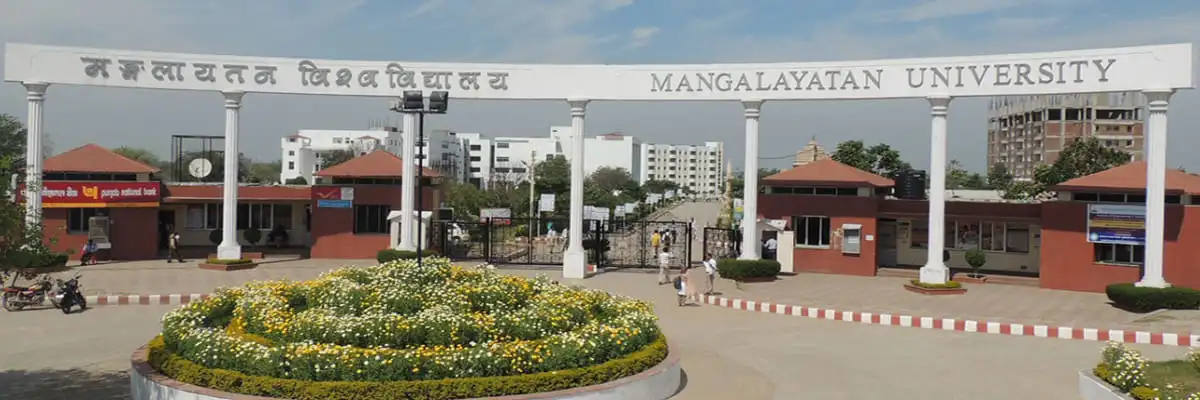
Mangalayatan University is a UGC-recognized private university located in Aligarh, Uttar Pradesh, India. Known for its strong industry connections, cutting-edge curriculum, and commitment to technology-driven education, Mangalayatan University has established itself as one of central India's premier higher education institutions.
The university's vision is to foster academic excellence, industry readiness, and global competitiveness among its graduates — making it an ideal partner for EasyShiksha's mission of accessible, quality online education.
EasyShiksha has signed an MoU with Mangalayatan University to facilitate applications for various university programs and jointly offer B.Voc programs. All degrees and certifications under these programs will be awarded by Mangalayatan University. The EasyShiksha team will provide complete assistance and support throughout the admission and program process.
Mangalayatan University, Uttar Pradesh
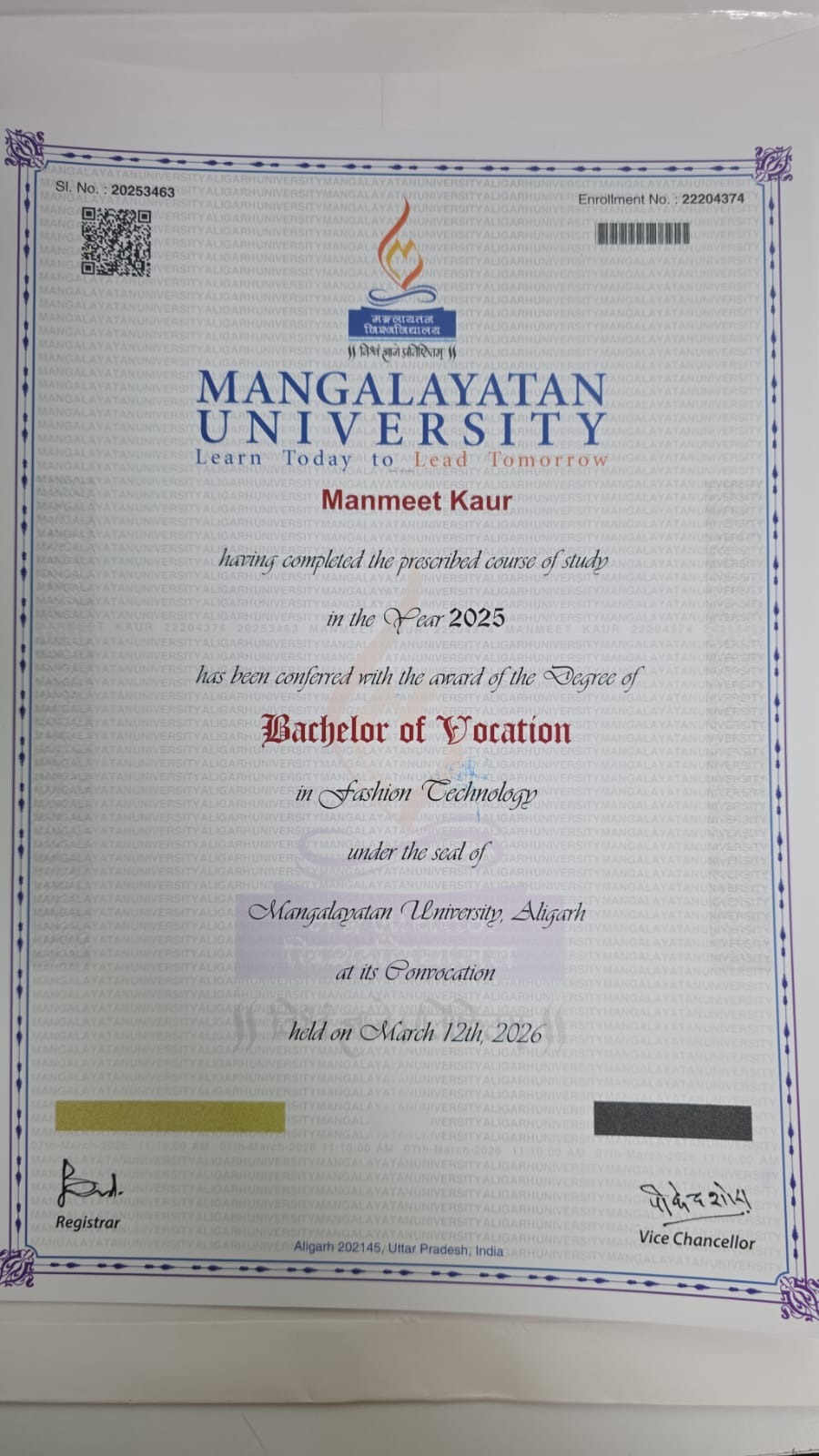
Sample Degree
Documents
Media Gallery
Frequently Asked Questions
Mangalayatan University is located at 33rd Milestone, Aligarh-Mathura Highway, Beswan, Aligarh, Uttar Pradesh, India. The campus is situated in close proximity to the Yamuna Expressway and the cities of Aligarh and Mathura.
Mangalayatan University was established in 2006 under the Mangalayatan University, Uttar Pradesh Act, 2006. The University states that it has the right to confer degrees under Sections 2(f) and 22(1) of the UGC Act.
Yes. Mangalayatan University states that it is recognized by the University Grants Commission (UGC) and was established through an Act of the Uttar Pradesh State Legislature. The University also lists NAAC A+ accreditation among its recognitions.
Yes. The University states that it is recognized by UGC-DEB for Open and Distance Learning (ODL) and is entitled by the UGC to offer online degree programmes. It also states that its online programmes are approved by AICTE.
Mangalayatan University offers programmes across multiple academic levels, including UG, PG, Diploma, PG Diploma and PhD. Its programme portfolio covers areas such as Engineering & Technology, Computer Applications, Management, Agriculture, Biotechnology, Pharmacy, Physiotherapy, Nursing, Journalism & Mass Communication and other disciplines.
Depending on the programme, applicants may be required to provide Class 10 and Class 12 certificates and marksheets, graduation/post-graduation marksheets where applicable, competitive examination rank card where applicable, migration/transfer certificate and recent passport-size photographs. Original documents may be required for verification.
Yes. The University states that students can apply for an education loan through banks, subject to the bank's eligibility criteria.
Mangalayatan University has a 70+ acre campus in Aligarh, Uttar Pradesh.
Mangalayatan University holds an A+ accreditation grade from the National Assessment and Accreditation Council (NAAC).
Yes. Mangalayatan University carries AICTE approval for its technical programmes.
The degree certificate is issued and signed directly by Mangalayatan University, rather than by EasyShiksha or another third-party platform.
The degree certificate is personalised with the student's name, programme, and completion date and carries the university's official signature and seal.
Yes. The university's campus hosts optional immersion sessions associated with select Executive and Hybrid-mode programmes.
Students can select a Mangalayatan University programme, submit their personal details and required documents, pay the application fee, and proceed through the university's application review process.
Yes. Applications submitted through EasyShiksha can be monitored through the dashboard, where applicants can view status updates such as Under Review and Accepted along with their reference ID.
The M.Voc in Interior Design is a postgraduate vocational programme at Mangalayatan University that combines academic and skill-development components in interior design. Its curriculum covers interior graphics, construction, furniture design, landscape, visual merchandising, sustainability, AutoCAD, computer presentation, entrepreneurship and related areas.
The programme covers subjects such as Fundamentals of Interior Graphics, Interior Construction & Structures, Interior Graphics, Furniture Design, Design & Innovation, Interior Design & Landscape, Quantity & Estimation, Interior Construction Technology, Visual Merchandising, Sustainable Interior Design, Display Design, Auto CAD, Advance Building / Interior Materials and Computer Presentation Techniques, along with management, economics, projects and dissertation work.
The curriculum explicitly includes SEM Project-I, SEM Project-II and a 6-credit Dissertation. It also incorporates drawing, drafting, design exercises, site-related visits and project work within several subjects. The uploaded curriculum does not list a separate internship or industrial training component.
Students can develop skills in interior graphics and drafting, perspective drawing, furniture design, construction systems, quantity and estimation, landscape design, visual merchandising, sustainable interior practices, AutoCAD-based 2D and basic 3D visualization, digital presentation and portfolio development. The curriculum also includes management, entrepreneurship and project-management concepts.
Depending on their skills and interests, graduates can explore career areas such as interior design, space planning, furniture design, CAD drafting, visual merchandising, display design, sustainable interior design, construction and materials, digital presentation and entrepreneurship. The curriculum provides academic and skill-development coverage across these areas but does not guarantee any specific employment outcome.