
B.Voc (Degree) in Hardware and Networking
Program Overview
The B.Voc in Hardware and Networking is a vocational undergraduate program offered by the Institute of Vocational Studies, Mangalayatan University. The official 2025 curriculum focuses on computer hardware, operating systems, computer networking, server administration, cloud computing, cybersecurity, programming, artificial intelligence, Internet of Things, data science and blockchain, along with professional and entrepreneurial skills. The curriculum is structured across six semesters with a total of 142 credits.
The first year establishes the fundamentals of computer systems and networking through subjects such as PC Fundamentals and Support, Troubleshooting Hardware Devices and Components, Introduction to Desktop Operating Systems, Computer Networks and Computer Networks and Internet Lab. Students also develop communication abilities through Functional English and Professional Communication. The second semester introduces Server Operating System Administration-I, Advanced Computer Networking, Introduction to Cloud Computing, Desktop and Network Security and Customer Service Essentials, along with a Minor Project.
The second year expands the technical curriculum into programming, cloud administration, server management, enterprise security and practical labs. Students study Introduction to Computer Programming, Programming in C/C++ Lab, Advanced Cloud Computing-I, AWS Administration Lab, Advanced Cloud Computing-II, Azure Administration Lab, Server Operating Systems-II, Object Oriented Programming, Java Programming Lab, Computer Programming-II, Python Programming Lab, Shell Programming, Shell Programming on Kali Lab and Enterprise Security. A Major Project is also included.
Eligibility Criteria
The minimum eligibility for admission in B.Voc is 10+2 (in any stream) or equivalent or a two-year ITI Diploma after Class 10th or a three-year Polytechnic Diploma after Class 10th.
Approval Details
MHRD, Government of India and UGC
Curriculum
Semester I introduces the fundamental technical and communication skills required for hardware and networking work. Students learn computer fundamentals, hardware support and troubleshooting, desktop operating systems, basic networking and hands-on internet/network configuration. The semester carries 22 credits.
1. Functional English — 2 Credits
This subject develops English communication skills relevant to professional and technical environments. It covers communication fundamentals, grammar, reading, technical writing, speaking, listening and communication used specifically in hardware and networking contexts.
Key Topics:
- Basics of professional and technical communication
- Grammar, sentence construction and technical vocabulary
- Reading IT manuals and technical documentation
- Technical reports, emails, resumes and cover letters
- Presentation, interview, speaking and listening skills
- Customer interaction and service documentation
2. PC-Fundamentals and Support — 5 Credits
This subject introduces computer systems and the components required to assemble, maintain and support PCs. Students study hardware components, operating systems, PC assembly, preventive maintenance and customer support.
Key Topics:
- Computer evolution, types and number systems
- Motherboard, processor, RAM, storage and peripherals
- Operating system basics and installation
- PC assembly and disassembly
- BIOS/UEFI, device drivers and configuration
- Preventive maintenance, troubleshooting and backup
- Help desk support and service documentation
3. Troubleshooting Hardware Devices and components — 5 Credits
This subject focuses on systematic identification and resolution of hardware problems. Students learn troubleshooting methodologies and common issues affecting motherboards, processors, memory, storage, power supplies, peripherals and networking hardware.
Key Topics:
- Hardware troubleshooting principles and methodology
- Motherboard, processor and BIOS issues
- RAM, HDD and SSD troubleshooting
- SMPS, UPS, monitor, printer and peripheral problems
- NIC, LAN cable, USB and Wi-Fi troubleshooting
- Preventive maintenance and ESD protection
- Maintenance reports and customer support
4. Introduction to Desktop Operating Systems — 5 Credits
Students learn the functions and types of operating systems, with emphasis on Windows and Linux desktop environments. The subject covers installation, configuration, file systems, data management and operating-system troubleshooting.
Key Topics:
- Operating system concepts and functions
- Windows features, administration and system tools
- Linux distributions, commands and file systems
- Windows/Linux installation and dual boot
- FAT, FAT32, NTFS and ext file systems
- Partitioning, backup, restore and data recovery
- Desktop OS troubleshooting and recovery
5. Computer Networks — 3 Credits
This subject introduces the principles of computer networking, data transmission, networking hardware, protocols, addressing and network troubleshooting.
Key Topics:
- LAN, MAN, WAN, PAN and WLAN
- Network topologies and network components
- Transmission media and data transmission
- NICs, switches, routers, gateways and access points
- OSI and TCP/IP models
- TCP/IP protocols and IPv4/IPv6 addressing
- Network configuration and troubleshooting
6. Computer networks and Internet Lab — 2 Credits
The laboratory provides practical exposure to networking equipment, LAN configuration, internet connectivity, network tools and troubleshooting.
Key Topics:
- Cable identification, crimping and testing
- LAN setup and IP configuration
- Peer-to-peer and client-server networking
- DHCP and network resource sharing
- Internet and email configuration
- Cloud storage and online collaboration tools
- Network troubleshooting using command-line tools
Download Syllabus
Semester II builds on the first semester by moving into server administration, advanced networking, cloud computing and security. It also introduces customer-service skills and a Minor Project. The semester carries 24 credits.
1. Professional Communication — 2 Credits
This subject develops workplace communication and professional interaction skills required in technical organizations and IT support environments.
Key Topics:
- Verbal, non-verbal, written and digital communication
- Business correspondence and technical writing
- Reports, proposals and presentations
- Public speaking, group discussions and interviews
- Interpersonal and cross-cultural communication
- Technical emails, service reports and complaint handling
2. Server Operating System Administration-I — 5 Credits
This subject introduces server operating systems and their administration, including Windows Server installation, user management, file sharing and Active Directory services.
Key Topics:
- Server operating systems and server roles
- Windows Server installation and configuration
- User and group management
- File systems, permissions and resource sharing
- Active Directory Domain Services
- Group Policy and authentication
- Server security, backup and maintenance
3. Advanced Computer Networking — 5 Credits
Students progress from basic networking to VLANs, routing, switching, WAN technologies, network security and emerging networking technologies.
Key Topics:
- VLANs, trunking, NAT, PAT and VPNs
- Static and dynamic routing
- RIP, OSPF and EIGRP
- Switching, STP and port security
- Wireless LAN technologies
- WAN technologies and VPN connectivity
- Network security, monitoring and performance tuning
- IPv6, SDN, cloud networking and IoT networking
4. Introduction to Cloud Computing — 4 Credits
This subject introduces cloud computing architecture, service models, deployment models, virtualization, cloud storage, cloud providers and cloud security.
Key Topics:
- IaaS, PaaS and SaaS
- Public, private, hybrid and community clouds
- Virtual machines and hypervisors
- Cloud storage and networking
- AWS, Microsoft Azure, Google Cloud and IBM Cloud
- Cloud databases and backup
- Virtualization and cloud applications
- Cloud security, privacy and emerging technologies
5. Desktop and Network Security — 2 Credits
This subject introduces security principles for desktop systems and networks, including authentication, firewalls, encryption, intrusion prevention and security monitoring.
Key Topics:
- Confidentiality, Integrity and Availability
- Malware and common security threats
- Desktop security and privilege management
- Firewalls, IDS/IPS and VPNs
- Wireless security
- Cryptography and digital signatures
- Security monitoring and vulnerability assessment
- Cloud, IoT and emerging security challenges
6. Customer Service Essentials — 2 Credits
Students learn customer-service practices relevant to IT, hardware and networking support environments.
Key Topics:
- Customer expectations and satisfaction
- Communication and active listening
- Handling different customer types
- IT helpdesk and service operations
- Ticketing, incident management and escalation
- Service documentation and SLAs
- Problem solving and conflict resolution
- Professionalism, teamwork and continuous learning
7. Minor Project — 4 Credits
The Minor Project provides an opportunity to apply technical knowledge to a practical hardware, operating-system, networking, cloud, security or customer-support problem.
Key Topics:
- Project topic selection and planning
- Hardware troubleshooting and PC assembly
- Windows/Linux installation and administration
- LAN, router, switch and VLAN configuration
- Cloud and desktop/network security projects
- Helpdesk and customer-support simulations
- Implementation, testing and documentation
- Project presentation and viva-voce
The syllabus specifies project phases covering planning, implementation, documentation and presentation, with an emphasis on practical problem-solving and professional reporting.
Semester III introduces programming alongside advanced cloud computing and server administration. Students gain practical exposure to AWS and Azure administration through dedicated laboratory courses. The semester carries 22 credits.
1. Introduction to Computer Programming — 4 Credits
This subject introduces programming concepts and C programming, including algorithms, control structures, functions, arrays, pointers and file handling.
Key Topics:
- Programming fundamentals and development life cycle
- Algorithms and flowcharts
- C language fundamentals
- Decision-making and loops
- Functions, arrays and strings
- Pointers, structures and unions
- File handling and dynamic memory allocation
2. Programming in C/C++ Lab — 2 Credits
This laboratory develops hands-on programming skills in C and C++, with emphasis on procedural programming and object-oriented concepts.
Key Topics:
- Basic C programs and arithmetic operations
- Decision-making and loops
- Arrays, strings and functions
- Pointers and file handling
- C++ classes and objects
- Constructors, inheritance and polymorphism
- Templates and file handling
- Programming mini assignments
3. Advanced Cloud Computing -I — 4 Credits
This subject extends cloud fundamentals into advanced infrastructure, service models, cloud providers, security and cloud application deployment.
Key Topics:
- Elasticity, scalability and resiliency
- Virtualization and Docker basics
- IaaS, PaaS, SaaS and serverless computing
- AWS, Azure and Google Cloud services
- Cloud IAM and encryption
- Cloud security and compliance
- Cloud-native applications and microservices
- CI/CD and hybrid/multi-cloud deployment
4. AWS Administration Lab — 2 Credits
The laboratory provides practical experience with AWS administration, compute, networking, storage, databases, security, monitoring and deployment.
Key Topics:
- AWS Console and CLI
- IAM, accounts and cost monitoring
- EC2, Elastic IPs and Security Groups
- VPC, subnets and route tables
- S3, EBS, Glacier and RDS
- CloudWatch and CloudTrail
- MFA and cloud encryption
- Elastic Beanstalk and CloudFormation
- Secure scalable application deployment
5. Advanced Cloud Computing -II — 4 Credits
This subject continues advanced cloud studies with cloud-native architecture, containers, enterprise strategies, security, cost optimization and emerging technologies.
Key Topics:
- Cloud-native applications and microservices
- Docker and Kubernetes
- Serverless computing and API gateways
- Cloud DevOps and CI/CD
- Hybrid and multi-cloud architecture
- Terraform, Ansible and CloudFormation
- Cloud migration strategies
- Zero-Trust security and IAM
- FinOps, AI/ML and future cloud technologies
6. Azure Administration Lab — 2 Credits
This practical course introduces Azure administration through hands-on work with compute, networking, storage, databases, security, monitoring and deployment.
Key Topics:
- Azure Portal and Azure CLI
- Subscriptions, resource groups and regions
- Azure Virtual Machines and Virtual Networks
- Subnets, NSGs and Load Balancers
- Azure Storage and Azure SQL
- Azure Active Directory and MFA
- Azure Monitor and Log Analytics
- Azure App Services and Azure DevOps
- ARM Templates and deployment projects
7. Server Operating Systems - II — 4 Credits
This subject advances server administration through storage management, networking services, security hardening, virtualization, high availability and server services.
Key Topics:
- Advanced server roles and permissions
- Active Directory and Group Policies
- Dynamic disks and RAID
- NTFS, ReFS, storage spaces and quotas
- DHCP, DNS and IPAM
- VPN and remote access
- Server security, patching and auditing
- Hyper-V or equivalent virtualization
- IIS/Apache, file and print services
- PowerShell scripting
Semester IV combines object-oriented programming and programming laboratories with Linux shell scripting, Kali Linux and enterprise security. The semester also includes the Major Project and carries 26 credits.
1. Object Oriented Programming — 4 Credits
This subject introduces object-oriented programming principles and their application in software development.
Key Topics:
- Procedural and object-oriented paradigms
- Encapsulation, inheritance, polymorphism and abstraction
- Classes and objects
- Constructors, destructors and access specifiers
- Single, multiple, multilevel and hierarchical inheritance
- Function and operator overloading
- Exception handling, templates and interfaces
- File handling and mini project applications
2. Java Programming Lab — 2 Credits
The laboratory develops practical Java programming skills, including object-oriented programming, advanced Java concepts, GUI development and mini projects.
Key Topics:
- Java development environment
- Variables, data types and control structures
- Classes, objects and constructors
- Inheritance and polymorphism
- Interfaces and abstract classes
- Exception and file handling
- Collections
- Swing/AWT GUI development
- Java-based mini projects
3. Computer Programming -II — 4 Credits
This subject strengthens programming and problem-solving skills through advanced data structures, functions, object-oriented concepts, file handling and algorithms.
Key Topics:
- Advanced arrays and strings
- Dynamic memory allocation and pointers
- Functions and recursion
- Object-oriented concepts in C++/Java
- File handling and advanced I/O
- Command-line arguments
- Searching and sorting algorithms
- Time and space complexity
- Programming projects
4. Python Programming Lab — 2 Credits
This practical course introduces Python programming, data structures, object-oriented programming, file handling, modules and GUI development.
Key Topics:
- Python environment and programming basics
- Variables, operators and control structures
- Functions and Python data structures
- Classes, objects and inheritance
- Exception and file handling
- Python modules and standard libraries
- Tkinter/PyQt GUI concepts
- Basic data visualization
- Python mini projects
5. Shell Programming — 4 Credits
Students learn Unix/Linux shell environments and scripting for automation, file processing, system administration and task scheduling.
Key Topics:
- Unix/Linux and shell environments
- Bash and other shell types
- File and directory commands
- Shell script structure and variables
- Conditional statements and loops
- Functions, parameters and arrays
- Pipes, filters and regular expressions
- Process management and scheduling
- Automation and administration scripts
6. Shell programming on Kali Lab — 2 Credits
This laboratory provides hands-on shell programming practice within Kali Linux, including administration, text processing, process management and automation.
Key Topics:
- Kali Linux environment and commands
- File permissions and package management
- Shell variables and user input
- Conditions, loops, functions and arrays
- File handling and I/O redirection
- Text-processing filters and regular expressions
- Process monitoring and scheduling
- Automated backup and security/admin scripts
7. Enterprise Security — 4 Credits
This subject introduces enterprise-level security architecture, network security, identity management, endpoint security, cloud security and security automation.
Key Topics:
- Enterprise security principles and architecture
- Network threats, firewalls and VPNs
- IDS/IPS and network segmentation
- Authentication, MFA, RBAC, IAM and SSO
- Endpoint and application security
- Vulnerability assessment and penetration testing
- Cloud security and compliance
- SIEM, threat intelligence and incident response
8. Major Project — 4 Credits
The Major Project integrates multiple disciplines learned during the program into an industry-relevant project under faculty guidance.
Key Topics:
- Project proposal and requirement analysis
- Architecture and tool selection
- Coding, configuration and implementation
- System integration and testing
- Cloud, security, networking and programming projects
- Detailed technical documentation
- Project demonstration and presentation
The syllabus gives examples including cloud-based enterprise systems, automated server/network monitoring, security and penetration-testing frameworks, Python/Java applications, hybrid cloud projects, IoT monitoring and automation scripts.
Semester V expands the curriculum into emerging technology areas while retaining a strong connection to networking and IT systems. It includes cybersecurity, environmental studies, IoT, AI, an AI-focused system administration laboratory and data science/blockchain. The semester carries 22 credits.
1. Cyber Security — 5 Credits
This subject develops a broad understanding of cybersecurity, network and system security, cryptography, ethical hacking, cyber laws and security management.
Key Topics:
- Cyber threats and cyber attacks
- Network security, firewalls and IDS/IPS
- Windows and Linux security
- System hardening and endpoint protection
- Cryptography, hashing and digital signatures
- Ethical hacking and penetration testing
- Cyber laws and regulations
- Incident response and security audits
- Cloud, mobile and IoT security
2. Environmental Studies — 2 Credits
This subject introduces environmental concepts, natural resources, biodiversity, pollution, climate change and environmental management.
Key Topics:
- Ecosystems and environmental components
- Natural resources and conservation
- Biodiversity and conservation strategies
- Air, water, soil, noise and thermal pollution
- Solid waste and e-waste management
- Climate change and renewable energy
- Sustainable development
- Environmental Impact Assessment
- Environmental awareness and management
3. Internet of Things (IoT) — 5 Credits
Students learn the architecture, hardware, communication protocols, data management, security and applications of Internet of Things systems.
Key Topics:
- IoT architecture and components
- Sensors, actuators and IoT devices
- Arduino and Raspberry Pi
- IoT communication protocols
- Wi-Fi, Bluetooth, Zigbee, LoRa and NB-IoT
- Cloud platforms for IoT
- IoT data analytics
- IoT security and privacy
- Smart home, smart city and industrial IoT applications
4. Introduction to Artificial Intelligence — 4 Credits
This subject introduces AI concepts, problem-solving, search, knowledge representation, machine learning and AI tools.
Key Topics:
- AI concepts, history and intelligent agents
- State-space and search techniques
- BFS, DFS, Best-First Search and A*
- Minimax and constraint satisfaction
- Knowledge representation and reasoning
- Supervised, unsupervised and reinforcement learning
- Classification, regression and clustering
- Python and AI libraries
- NLP, computer vision, robotics and AI ethics
5. AI tools for system administration Lab — 2 Credits
This laboratory explores the application of Python and AI tools to system monitoring, network/security management, automation and predictive maintenance.
Key Topics:
- Python, NumPy, Pandas, scikit-learn and TensorFlow setup
- System metrics and log analysis
- AI-based resource utilization analysis
- Anomaly detection
- Network traffic and intrusion analysis
- Automated administration and security tasks
- Predictive maintenance
- AI-assisted dashboards and reporting
6. Data Science and Block Chain — 4 Credits
This subject introduces data science workflows and foundational blockchain technologies, followed by their integration for data security and management.
Key Topics:
- Data science lifecycle
- Data cleaning, transformation and analysis
- Exploratory Data Analysis and visualization
- Machine learning algorithms
- Blockchain architecture and types
- Proof of Work and Proof of Stake
- Hashing and digital signatures
- Smart contracts and DApps
- Ethereum, Hyperledger and Solana
- Data science and blockchain integration
Semester VI combines professional development with entrepreneurship, finance and accounting, IT law and substantial project and industrial exposure. The semester carries 26 credits and includes the Capstone Project, Industrial Training and Industrial Project Report.
1. Finishing School Program — 4 Credits
This subject focuses on professional readiness, communication, interpersonal development, interview preparation, productivity and workplace expectations.
Key Topics:
- Professional communication and workplace etiquette
- Email, report and presentation skills
- Teamwork, leadership and conflict resolution
- Emotional intelligence and problem solving
- Resume and cover-letter preparation
- Interview and job-search preparation
- Time management and productivity
- Personal branding and professional image
- Industry readiness and continuous learning
2. Entrepreneurship — 4 Credits
Students are introduced to entrepreneurship, opportunity assessment, business planning, financing, legal considerations and technology-driven ventures.
Key Topics:
- Entrepreneurship concepts and types
- Business idea generation
- Market and feasibility analysis
- SWOT and competitive analysis
- Business planning and strategy
- Marketing and financial planning
- Business registration and intellectual property
- Sources of business finance
- Risk management
- Digital entrepreneurship, e-commerce, AI, IoT and blockchain applications
3. Introduction to Finance and Accounting — 4 Credits
This subject provides foundational knowledge of finance and accounting for understanding financial decisions and business operations.
Key Topics:
- Financial management concepts
- Investment, financing and dividend decisions
- Accounting principles and double-entry system
- Journal, ledger and trial balance
- Profit and loss statements and balance sheets
- Cash flow statements
- Ratio, trend and break-even analysis
- Working capital and capital budgeting
- Risk, return and financial planning
- Digital accounting tools and ERP systems
4. Capstone Project — 4 Credits
The Capstone Project requires students to develop an industry-relevant project integrating multiple disciplines covered in earlier semesters.
Key Topics:
- Project selection and proposal
- Requirement analysis and system design
- Tool selection and implementation
- Coding, configuration and system integration
- Testing and problem solving
- Technical documentation
- Results and challenges
- Project demonstration and viva-voce
The syllabus states that the Capstone Project should incorporate multiple disciplines covered in previous semesters.
5. IT Act — 2 Credits
This subject introduces the legal framework governing information technology, electronic records, digital signatures, cyber offences, intellectual property and digital commerce.
Key Topics:
- Information Technology Act, 2000
- Electronic records and digital signatures
- Digital certificates and certifying authorities
- Cyber crimes and offences
- Privacy, data protection and confidentiality
- Intermediary responsibilities
- Intellectual property in IT
- Software, database and e-commerce laws
- Cybersecurity governance and global IT law
- Cyber ethics and emerging IT policies
6. Industrial Training — 4 Credits
The Industrial Training provides structured workplace exposure in an IT, networking, cloud or cybersecurity organization. The syllabus specifies a minimum duration of 4–6 weeks and identifies possible areas including hardware support, networking, cloud administration, AI implementation and cybersecurity operations.
Key Topics:
- Organizational structure and IT workflows
- Hardware installation, configuration and maintenance
- Networking and security activities
- Cloud and virtualization tasks
- AI tools for monitoring and automation
- Industry-assigned mini-projects or tasks
- Daily logbook and training documentation
- Training report and learning outcomes
7. Industrial Project Report — 4 Credits
This subject focuses on documenting and presenting the work completed during industrial project or training activities.
Key Topics:
- Cover page and institutional documentation
- Executive summary and project objectives
- Organization and department overview
- Technology/domain background
- Methodology and tools used
- Implementation and observations
- Results, outcomes, challenges and solutions
- Conclusion and recommendations
- References and bibliography
Fee Structure
Admission Process
Students can apply for the B.Voc Hardware And Networking programme through EasyShiksha. The complete application process is designed to make admission simple and convenient for eligible students.
Step 1: Click on Apply Now
Click the Apply Now button on the B.Voc Hardware And Networking programme page and begin your application through EasyShiksha.
Step 2: Complete Personal Information
Fill in the required personal, contact and academic details accurately in the application form.
Step 3: Upload Required Documents
Upload the required documents for eligibility and admission verification as specified during the application process.
Step 4: Pay Application Fee
Pay the applicable application fee through the available online payment options to submit your application and initiate the admission process.
Step 5: Application Review
The EasyShiksha team reviews your application and submitted documents to verify your eligibility and ensure that the required information and documents have been provided.
Step 6: University Enrollment
Once the application is successfully reviewed and the student is found eligible, EasyShiksha facilitates the enrollment process with Mangalyatan University.
Step 7: LMS Access
After successful enrollment, the student is provided access to the Learning Management System (LMS) to begin their academic journey and access the available learning resources.
Start Your Application
Ready to begin your journey in Software Development? Click Apply Now to submit your application through EasyShiksha.
Career & Placements
The B.Voc in Hardware and Networking curriculum covers hardware support, networking, server administration, cloud computing, cybersecurity, programming, AI, IoT, data science and professional skills. Based on these curriculum areas, graduates can explore a range of entry-level and developing career paths across IT infrastructure and related technology domains.
Hardware and Technical Support
- Hardware Support Technician – Work with PC components, peripherals, installation, maintenance and hardware troubleshooting.
- Desktop Support Technician – Provide desktop operating-system, hardware and software support.
- Computer Hardware Technician – Handle PC assembly, maintenance, diagnostics and component-level troubleshooting.
- Technical Support Professional – Assist users with hardware, software and networking-related issues.
Networking and Infrastructure
- Network Support Professional – Assist with LAN configuration, connectivity, network devices and troubleshooting.
- Network Administrator – Work with network configuration, monitoring, access control and maintenance.
- Infrastructure Support Professional – Support servers, networks, desktop systems and related IT infrastructure.
- Server Administration Professional – Work with server operating systems, users, permissions, services and system maintenance.
Cloud Computing
- Cloud Support Professional – Work with cloud platforms, services, storage and basic cloud administration.
- Cloud Administration Associate – Apply knowledge of AWS, Azure and cloud infrastructure concepts.
- Cloud Operations Support – Assist with cloud monitoring, security, deployment and resource management.
- Cloud Infrastructure Support – Work with virtual machines, networks, storage and cloud services.
Cybersecurity
- Cybersecurity Support Professional – Work with basic security monitoring, endpoint protection and security practices.
- Security Operations Support – Apply knowledge of security monitoring, logs, firewalls and incident-related processes.
- Network Security Support – Assist with firewalls, VPNs, IDS/IPS and network access controls.
- Security Testing Support – Apply foundational knowledge of vulnerability assessment and penetration testing.
Programming and Automation
- Junior Programming Professional – Use programming knowledge in C/C++, Java or Python-based environments.
- Python Automation Support – Apply Python and scripting skills to administration and automation tasks.
- Shell Scripting Support Professional – Develop scripts for system administration, file processing and automation.
- Application Support Professional – Use programming and troubleshooting skills to support software and IT systems.
Emerging Technology Areas
- IoT Support Professional – Work with IoT devices, communication protocols, cloud connectivity and basic IoT security.
- AI-Assisted System Administration Support – Apply AI tools for system monitoring, anomaly detection and administrative automation.
- Data Analysis Support – Apply foundational data science, data visualization and machine-learning concepts.
- Blockchain Technology Support – Explore blockchain, smart contracts, DApps and data-integrity applications.
Customer Support and Service Management
- IT Helpdesk Professional – Handle technical queries, incidents, service requests and support documentation.
- Technical Customer Support Executive – Assist customers with IT hardware, networking and troubleshooting issues.
- Service Desk Support Professional – Work with ticketing, escalation, documentation and service processes.
Entrepreneurship and Freelancing
The curriculum also includes Entrepreneurship, Finance and Accounting and professional-readiness training. These subjects can support students interested in developing technology-service businesses, IT support services, networking services, cloud-related services or other technology-oriented ventures. The syllabus does not guarantee entrepreneurial success or employment.
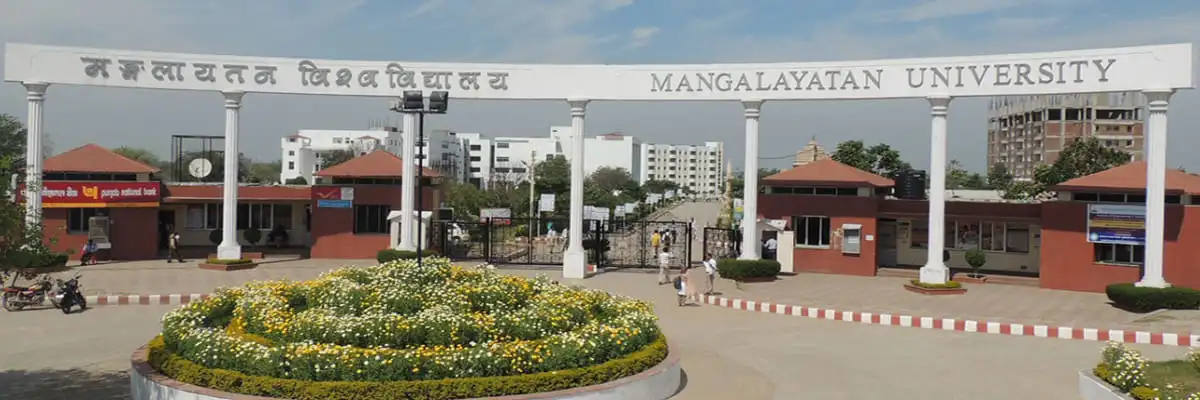
Mangalayatan University, Aligarh
Mangalayatan University is a UGC-recognized private university located in Aligarh, Uttar Pradesh, India. Known for its strong industry connections, cutting-edge curriculum, and commitment to technology-driven education, Mangalayatan University has established itself as one of central India's premier higher education institutions.
The university's vision is to foster academic excellence, industry readiness, and global competitiveness among its graduates — making it an ideal partner for EasyShiksha's mission of accessible, quality online education.
EasyShiksha has signed an MoU with Mangalayatan University to facilitate applications for various university programs and jointly offer B.Voc programs. All degrees and certifications under these programs will be awarded by Mangalayatan University. The EasyShiksha team will provide complete assistance and support throughout the admission and program process.
Mangalayatan University, Uttar Pradesh
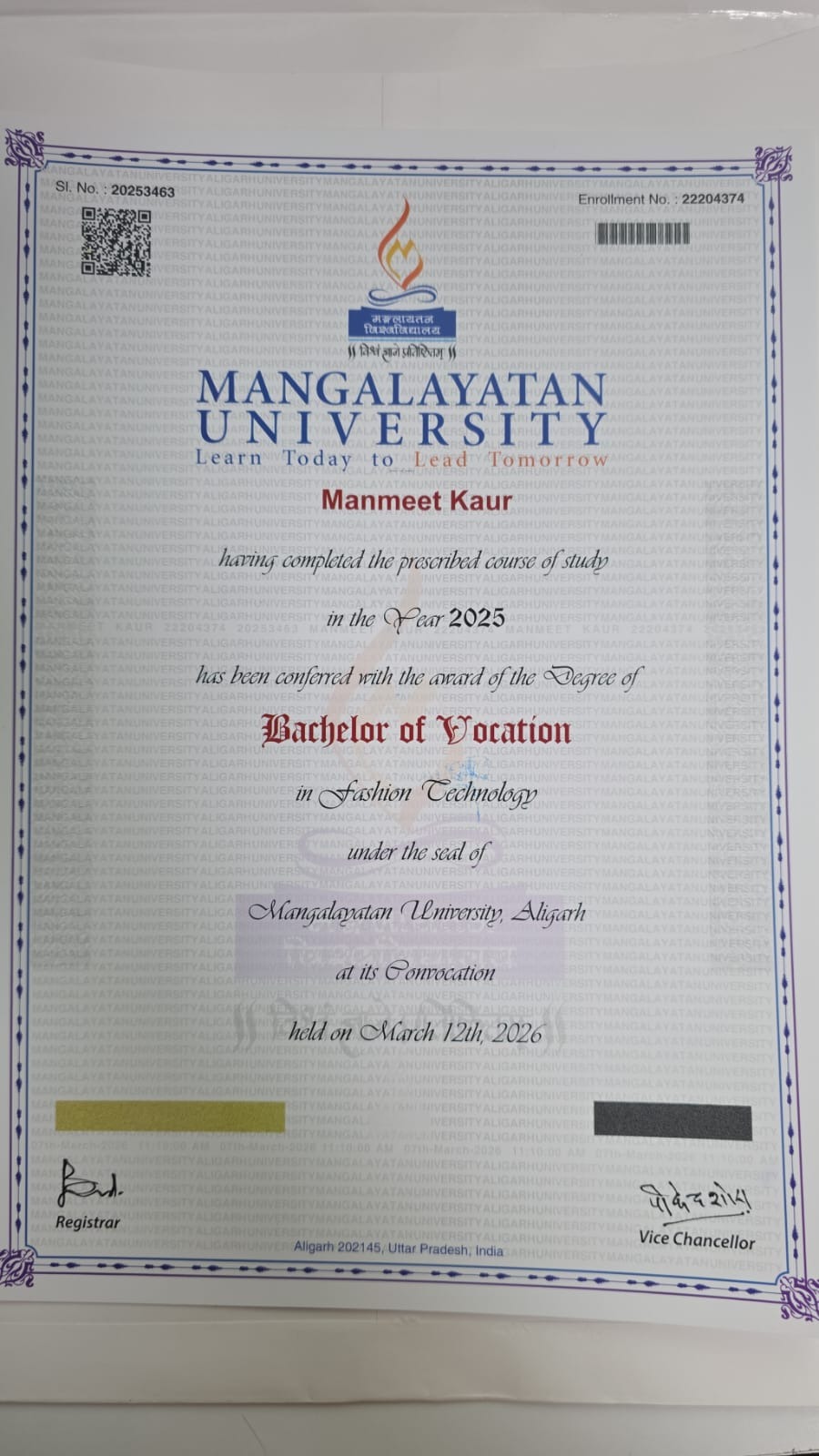
Sample Degree
Documents
Media Gallery
Frequently Asked Questions
Mangalayatan University is located at 33rd Milestone, Aligarh-Mathura Highway, Beswan, Aligarh, Uttar Pradesh, India. The campus is situated in close proximity to the Yamuna Expressway and the cities of Aligarh and Mathura.
Mangalayatan University was established in 2006 under the Mangalayatan University, Uttar Pradesh Act, 2006. The University states that it has the right to confer degrees under Sections 2(f) and 22(1) of the UGC Act.
Yes. Mangalayatan University states that it is recognized by the University Grants Commission (UGC) and was established through an Act of the Uttar Pradesh State Legislature. The University also lists NAAC A+ accreditation among its recognitions.
Yes. The University states that it is recognized by UGC-DEB for Open and Distance Learning (ODL) and is entitled by the UGC to offer online degree programmes. It also states that its online programmes are approved by AICTE.
Mangalayatan University offers programmes across multiple academic levels, including UG, PG, Diploma, PG Diploma and PhD. Its programme portfolio covers areas such as Engineering & Technology, Computer Applications, Management, Agriculture, Biotechnology, Pharmacy, Physiotherapy, Nursing, Journalism & Mass Communication and other disciplines.
Depending on the programme, applicants may be required to provide Class 10 and Class 12 certificates and marksheets, graduation/post-graduation marksheets where applicable, competitive examination rank card where applicable, migration/transfer certificate and recent passport-size photographs. Original documents may be required for verification.
Yes. The University states that students can apply for an education loan through banks, subject to the bank's eligibility criteria.
The B.Voc in Hardware and Networking at Mangalayatan University is a vocational undergraduate program focused on computer hardware, troubleshooting, operating systems, networking, server administration, cloud computing and cybersecurity. The curriculum also covers programming, AI, IoT, data science and blockchain, along with professional development and industry training.
The curriculum covers subjects such as PC-Fundamentals and Support, Troubleshooting Hardware Devices and components, Computer Networks, Server Operating System Administration-I, Advanced Computer Networking, Introduction to Cloud Computing, Cyber Security, Internet of Things (IoT), Introduction to Artificial Intelligence, Data Science and Block Chain, Enterprise Security and programming subjects including C/C++, Java, Python and Shell Programming.
Yes. The curriculum includes several laboratory courses, a Minor Project, Major Project, Capstone Project, Industrial Training and Industrial Project Report. The Industrial Training is specified as a minimum of 4–6 weeks in a recognized IT, networking, cloud or cybersecurity organization.
The curriculum supports skills in computer hardware troubleshooting, operating-system administration, networking, server administration, cloud administration, cybersecurity, programming, shell scripting, AI-assisted system administration, IoT, data science, blockchain, technical communication and professional workplace practices.
Graduates can explore opportunities in areas such as hardware and desktop support, networking, server administration, cloud support, cybersecurity, IT helpdesk, technical support, programming and system administration. The curriculum also provides exposure to emerging areas such as AI, IoT, data science and blockchain, as well as entrepreneurship.