


















B.Voc in Bakery & Pastry Arts
Program Overview
The B.Voc in Bakery & Pastry Arts at Mangalayatan University is a three-year vocational undergraduate program focused on bakery production, confectionery, pastry, desserts, chocolate, kitchen management, hospitality and the business aspects of bakery operations. The curriculum begins with fundamental knowledge of bakery and confectionery ingredients, equipment, sanitation, food science, nutrition and professional communication, before progressing into advanced bakery and pastry techniques.
Students progressively study Fundamentals of Bakery and Confectionery - I and II, Cake Engineering, Advanced Bakery and Patisserie, Chocolate Art, Modern Pastry and Plated Dessert, along with subjects covering environmental studies, computers and communication. Practical and technical topics include breads, pastries, cakes, cookies, desserts, sugar work, chocolate products, artisan bread, laminated dough, plated desserts and modern pastry techniques.
The program also develops operational and management knowledge through Professional Kitchen Management & Kitchen Hygiene & Sanitation, Human Resource Management in Hospitality, Strategic Management in Hospitality and Food system and Supply Chain. Students learn about menu engineering, purchasing, receiving, food costing, food safety, HACCP, staffing, performance management, strategic planning and supply-chain issues.
The final year includes Internship Evaluation + Log Book Assessment, Training Report and Major Project, giving the curriculum an explicit practical and experiential component. Semester VI combines bakery-business concepts, strategic management, food systems and supply chains with an 8-credit Major Project.
Eligibility Criteria
The minimum eligibility for admission in B.Voc is 10+2 (in any stream) or equivalent or a two-year ITI Diploma after Class 10th or a three-year Polytechnic Diploma after Class 10th.
Approval Details
MHRD, Government of India and UGC
Curriculum
Semester I introduces students to the fundamental principles required for bakery and pastry education. The semester covers bakery and confectionery operations, ingredients, food science and nutrition, together with professional communication. It carries 20 credits.
1. BVBPA101 – Fundamentals of Bakery and Confectionary - I
This subject establishes the basic knowledge required for bakery and confectionery production, including ingredients, equipment, sanitation and measurement.
Key Topics:
- Bakery & Confectionery etiquettes
- Bakery & Confectionery section and layout
- Hierarchy and responsibilities
- Tools, utensils and equipment
- Equipment sanitation and safety
- Flour, wheat grain and milling
- Fats, oils, milk and milk products
- Eggs and sweeteners
- Leavening and gelling agents
- Fruits, nuts, yeast, improvers and emulsifiers
- Weights, measurements, formulas and recipe conversion
2. BVBPA102 – Food science and Nutrition
This subject introduces the scientific and nutritional principles associated with food preparation and bakery products.
Key Topics:
- Introduction and importance of Food Science
- Food processing challenges
- Relationship between Food Science and Food Microbiology
- Browning and its prevention
- Food flavors and their applications
- Macronutrients and micronutrients
- Sources of nutrients
- Balanced diet
- Keto Diet
- Paleo Diet
- Food Pyramid
3. BVBPA103 – Communication Skills
This subject develops communication abilities required for professional bakery and hospitality environments.
Key Topics:
- Fundamentals of communication
- Verbal, non-verbal and written communication
- Communication barriers
- Oral communication and public speaking
- Presentations, group discussions and interviews
- Grammar and business correspondence
- Emails, reports, notices and resumes
- Listening and reading skills
- Professional etiquette
- Teamwork and leadership communication
- Conflict resolution and feedback
Download Syllabus
Semester II advances students from basic bakery concepts to breads, pastries, desserts, cakes and decorative techniques. Computer Fundamentals adds basic digital skills relevant to bakery documentation, costing, inventory and communication. The semester carries 20 credits.
1. BVBPA201 – Fundamentals of Bakery and Confectionery - II
This subject develops practical and technical understanding of breads, pastries, desserts, cakes, cookies and other bakery products.
Key Topics:
- International breads
- Sourdough, enriched dough and laminated dough
- Basic pastries
- Short Crust, Choux, Puff, Danish and Filo Pastry
- Hot, cold and frozen desserts
- Entremets and mirror glaze
- Cake classification and mixing methods
- Cookies and their production
- Quick breads
- Doughnuts, fritters, pancakes and waffles
- Basic syrups, creams and sauces
2. BVBPA202 – Cake Engineering
This subject focuses on cake decoration, sugar techniques, icing and advanced cake presentation.
Key Topics:
- Cake decorating techniques
- Types of icing
- Cake balancing formulas
- Low-fat and high-fat cakes
- Pastillage, marzipan, gum paste and nougatine
- Sugar art
- Spun, pulled and blown sugar
- Fondant, royal icing and buttercream
- Fondant flowers
- 2D and 3D fondant figurines
- Tier cakes and wedding cakes
- Airbrush techniques and edible colors
3. BVBPA203 – Computer Fundamentals
This subject introduces computer and digital skills applicable to bakery operations, documentation and marketing.
Key Topics:
- Computer hardware, software and operating systems
- Data storage and file management
- Microsoft Word
- Bakery-related menus, reports and brochures
- Microsoft Excel
- Costing, inventory and sales tracking
- Charts and basic data analysis
- Microsoft PowerPoint
- Professional presentations
- Internet and digital communication
- Social media for bakery marketing
- Cyber security and safe online practices
Semester III introduces advanced bakery and patisserie production, specialized chocolate techniques and environmental concepts relevant to food and hospitality operations. It carries 20 credits.
1. BVBPA301 – Advanced Bakery and Patisserie
This subject develops advanced skills in artisan bread, rich yeast dough, pastries, desserts and fruit-based preparations.
Key Topics:
- Artisan bread
- Pre-fermented and sourdough starters
- Poolish and Biga
- Wild yeast, autolyse and fermentation
- Rich yeast dough
- Croissant, Danish pastry, brioche and sweet rolls
- Pies and tarts
- Custards, puddings, mousse and soufflés
- Frozen desserts
- Ice cream, sorbet, parfait and bombes
- Fruit desserts, compotes and preserves
2. BVBPA302 – Chocolate Art
This subject covers chocolate from cocoa-bean processing through chocolate production, tempering and artistic presentation.
Key Topics:
- History of chocolate
- Cocoa beans and fermentation
- Chocolate ingredients
- Cocoa bean processing
- Roasting, winnowing and grinding
- Cocoa butter and cocoa powder production
- Liquid chocolate making and conching
- Cocoa butter crystallization
- Pre-crystallization and tempering
- Chocolate manufacturing and molding
- Couverture chocolate
- Chocolate truffles and filled chocolates
- Chocolate showpieces and 3D sculptures
- Chocolate flowers and garnishes
3. BVBPA303 – Environmental Studies
This subject introduces environmental concepts and their application to food, hospitality and bakery operations.
Key Topics:
- Environment and ecosystems
- Biotic and abiotic components
- Natural resources and conservation
- Environmental pollution
- Waste management
- Food waste and packaging waste in bakeries
- Climate change and global warming
- Environmental ethics
- Sustainable development and green practices
- Population and environmental issues
- Health, hygiene and sanitation
- Environmental management in hospitality and bakery operations
Semester IV moves into modern pastry techniques, hospitality human-resource management and professional kitchen operations. It carries 20 credits.
1. BVBPA401 – Modern Pastry and Plated Dessert
This subject introduces modern pastry science, contemporary cooking techniques and professional dessert presentation.
Key Topics:
- Coagulation, gelatinization and crystallization
- Foams, froths and bubbles
- Spherification
- Specialty ingredients in molecular gastronomy
- Sous-vide techniques
- Vacuum-seal processes
- Fruit compression and infusion
- Plated-dessert planning
- Visualization and flavor profiles
- Dessert garnishes and sauces
- Tuiles, meringues and sugar garnishes
- Chocolate garnishes and marzipan
- Dessert sauces and coulis
- Food-plating and dessert-menu design
2. BVBPA402 – Human Resource Management in Hospitality
This subject develops knowledge of human-resource functions and employee management in hospitality environments.
Key Topics:
- Meaning, scope and functions of HRM
- Role of the HR Manager
- HR policies and procedures
- Manpower planning
- Recruitment, selection and induction
- Training programs
- Job analysis and job design
- Performance appraisal
- Rewards, promotions and motivation
- Employee attrition and retention
- Compensation and salary administration
- Labour welfare and social security
- Trade unions and grievance handling
- Collective bargaining
- Labour law in hospitality
3. BVBPA403 – Professional Kitchen Management & Kitchen Hygiene & Sanitation
This subject combines professional kitchen management with food safety, hygiene, storage and cost control.
Key Topics:
- Menu engineering and menu planning
- Purchasing procedures
- Purchase-manager responsibilities
- Receiving department procedures
- Standards and specifications
- Food Cost and Bakery Mathematics
- Standardized recipe formulation
- Yield calculation
- Food safety and hazards
- Contamination prevention
- Kitchen hygiene
- Food handling and storage
- Food handlers and allergens
- HACCP
- Food-borne illness
- Food adulteration
Semester V is dedicated to the program's internship-related practical components. It carries 22 credits, comprising a 20-credit internship evaluation and log-book assessment and a 2-credit training report.
1. BVBPA501 – Internship Evaluation + Log Book Assessment (Practical)
This is the major practical component of Semester V and carries 20 credits. It formally assesses the student's internship experience and associated log book.
Key Areas:
- Internship participation and practical exposure
- Log-book maintenance
- Practical assessment
- Application of bakery and pastry knowledge
- Workplace learning documentation
- Professional and operational experience
The curriculum explicitly identifies this subject as Assessment (Practical).
2. BVBPA 502 – Training Report (Practical)
This 2-credit practical component focuses on documenting the student's training experience.
Key Areas:
- Training documentation
- Recording practical learning
- Presentation of training experience
- Structured reporting
- Reflection on practical exposure
The curriculum identifies BVBPA 502 Training Report as a practical component.
Semester VI integrates bakery-business concepts, hospitality strategy and food-supply-chain knowledge with a major practical project. It carries 22 credits, including an 8-credit Major Project.
1. BVBPA601 – Bakery Concept
This subject, as titled in the official curriculum, covers strategic-management concepts, business growth strategies and corporate responsibility in the context presented by the syllabus.
Key Topics:
- Levels of management
- Corporate-level management
- Vision, mission and objectives
- Strategic management process
- Internal and external environmental analysis
- Michael Porter's Five Force Model
- SWOT/C analysis
- Competitive advantage
- Strategy selection and implementation
- Organic growth and product-line strategies
- Product range and product life cycle
- Portfolio analysis
- Acquisitions, mergers and joint ventures
- Backward and forward integration
- Business ethics and values
- Corporate Social Responsibility
- Social audit and corporate governance
2. BVBPA602 – Strategic Management in Hospitality
This subject develops strategic-management knowledge with specific reference to hospitality and bakery businesses.
Key Topics:
- Nature and concept of strategic management
- Corporate, business and functional strategies
- Strategy formulation, implementation and evaluation
- Hospitality and bakery business growth
- PESTEL analysis
- SWOT and value-chain analysis
- Porter's Five Forces
- Industry life cycle
- Growth, stability, retrenchment and diversification
- Cost leadership, differentiation and focus
- Mergers, acquisitions and strategic alliances
- Strategic decision-making and risk assessment
- Innovation and digital transformation
- Organizational structure and resource allocation
- Leadership, motivation and communication
- KPIs, benchmarking and strategic audits
- Continuous improvement and sustainability
3. BVBPA603 – Food system and Supply Chain
This subject examines food supply chains, sustainability, food loss and waste, processing and food-system planning.
Key Topics:
- Global food chains
- Supply and demand
- Consumer behavior
- Agriculture food chain
- Food quality and safety
- Food-price volatility
- Food waste, fraud and traceability
- Food shelf life and legal considerations
- Sustainable food packaging
- Sustainable food processing
- Production planning and scheduling
- Transportation and refrigeration technologies
- Food loss and waste
- Life-cycle thinking
- Urban food planning
- Food banks and food poverty
- Food-system challenges
- Fresh fruit and vegetable supply planning
4. BVBPA604 – Major Project (Practical)
The curriculum identifies BVBPA604 – Major Project (Practical) as an 8-credit component in Semester VI.
Key Areas:
- Practical project work
- Application of knowledge acquired during the program
- Project-based learning
- Practical documentation and presentation
The uploaded curriculum identifies the Major Project and its practical nature but does not provide sufficient detailed project-specific units to define additional mandatory requirements. Therefore, no specific project topic or methodology is assumed here.
Fee Structure
Admission Process
Students can apply for the B.Voc Bakery & Pastry Arts programme through EasyShiksha. The complete application process is designed to make admission simple and convenient for eligible students.
Step 1: Click on Apply Now
Click the Apply Now button on the B.Voc Bakery & Pastry Arts programme page and begin your application through EasyShiksha.
Step 2: Complete Personal Information
Fill in the required personal, contact and academic details accurately in the application form.
Step 3: Upload Required Documents
Upload the required documents for eligibility and admission verification as specified during the application process.
Step 4: Pay Application Fee
Pay the applicable application fee through the available online payment options to submit your application and initiate the admission process.
Step 5: Application Review
The EasyShiksha team reviews your application and submitted documents to verify your eligibility and ensure that the required information and documents have been provided.
Step 6: University Enrollment
Once the application is successfully reviewed and the student is found eligible, EasyShiksha facilitates the enrollment process with Mangalyatan University.
Step 7: LMS Access
After successful enrollment, the student is provided access to the Learning Management System (LMS) to begin their academic journey and access the available learning resources.
Start Your Application
Ready to begin your journey in Software Development? Click Apply Now to submit your application through EasyShiksha.
Career & Placements
The curriculum develops technical bakery and pastry skills alongside knowledge of kitchen operations, hospitality management, food safety, human resources, strategic management and food supply chains. Based on these areas, graduates can explore opportunities in bakery production, pastry and confectionery, chocolate, kitchen operations, hospitality and food-service environments.
Bakery & Pastry Production
- Bakery Production Roles – Potential roles involving bread, bakery products, dough preparation and production processes.
- Pastry Roles – Opportunities involving pastries, desserts, plated desserts and advanced patisserie products.
- Confectionery Roles – Work related to confectionery products, creams, sauces, cakes and decorative techniques.
- Cake Decoration Roles – Opportunities involving icing, fondant, sugar art, tier cakes and decorative cake techniques.
- Chocolate Production & Art Roles – Potential work involving chocolate processing, tempering, molding, truffles, garnishes and chocolate showpieces.
Kitchen & Food-Service Operations
- Professional Kitchen Operations – Roles involving kitchen organization, menu planning, purchasing and receiving.
- Food Costing Roles – Potential positions involving standardized recipes, yield calculations and food-cost management.
- Food Safety & Hygiene Operations – Areas related to food safety, HACCP, sanitation, storage and contamination prevention.
- Bakery Kitchen Supervision – Opportunities involving coordination of production and professional kitchen activities.
Hospitality Management
- Hospitality Operations – The curriculum supports roles involving hospitality operations and management.
- Human Resource Roles in Hospitality – Potential areas involving recruitment, training, performance management and employee relations.
- Hospitality Strategy Roles – Opportunities connected with strategic planning, organizational management and business development.
Food Supply Chain & Operations
- Food Supply Chain Operations – Potential roles involving food sourcing, supply-chain processes and distribution.
- Food Inventory & Planning – Areas involving purchasing, storage, shelf life and supply planning.
- Food Sustainability Operations – Opportunities connected with food waste, sustainable processing, packaging and supply-chain practices.
Entrepreneurship & Bakery Business
- Bakery Entrepreneurship – The curriculum's business and strategic-management subjects provide knowledge relevant to developing and managing bakery-oriented ventures.
- Pastry & Confectionery Business – Students can explore business opportunities involving pastry, cakes, desserts and confectionery.
- Food-Service Entrepreneurship – Potential entrepreneurial pathways connected with professional kitchens and hospitality operations.
The curriculum does not guarantee employment or specify particular job designations, so these should be understood as potential career areas based on the skills and subjects covered in the program.
Mangalayatan University, Aligarh
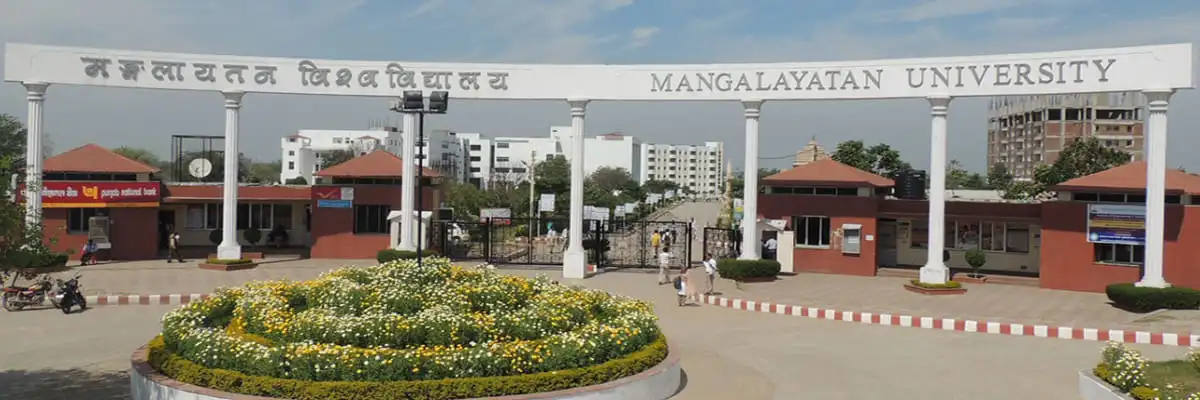
Mangalayatan University is a UGC-recognized private university located in Aligarh, Uttar Pradesh, India. Known for its strong industry connections, cutting-edge curriculum, and commitment to technology-driven education, Mangalayatan University has established itself as one of central India's premier higher education institutions.
The university's vision is to foster academic excellence, industry readiness, and global competitiveness among its graduates — making it an ideal partner for EasyShiksha's mission of accessible, quality online education.
EasyShiksha has signed an MoU with Mangalayatan University to facilitate applications for various university programs and jointly offer B.Voc programs. All degrees and certifications under these programs will be awarded by Mangalayatan University. The EasyShiksha team will provide complete assistance and support throughout the admission and program process.
Mangalayatan University, Uttar Pradesh
Sample Degree
Documents
Media Gallery
Frequently Asked Questions
Mangalayatan University is located at 33rd Milestone, Aligarh-Mathura Highway, Beswan, Aligarh, Uttar Pradesh, India. The campus is situated in close proximity to the Yamuna Expressway and the cities of Aligarh and Mathura.
Mangalayatan University was established in 2006 under the Mangalayatan University, Uttar Pradesh Act, 2006. The University states that it has the right to confer degrees under Sections 2(f) and 22(1) of the UGC Act.
Yes. Mangalayatan University states that it is recognized by the University Grants Commission (UGC) and was established through an Act of the Uttar Pradesh State Legislature. The University also lists NAAC A+ accreditation among its recognitions.
Yes. The University states that it is recognized by UGC-DEB for Open and Distance Learning (ODL) and is entitled by the UGC to offer online degree programmes. It also states that its online programmes are approved by AICTE.
Mangalayatan University offers programmes across multiple academic levels, including UG, PG, Diploma, PG Diploma and PhD. Its programme portfolio covers areas such as Engineering & Technology, Computer Applications, Management, Agriculture, Biotechnology, Pharmacy, Physiotherapy, Nursing, Journalism & Mass Communication and other disciplines.
Depending on the programme, applicants may be required to provide Class 10 and Class 12 certificates and marksheets, graduation/post-graduation marksheets where applicable, competitive examination rank card where applicable, migration/transfer certificate and recent passport-size photographs. Original documents may be required for verification.
Yes. The University states that students can apply for an education loan through banks, subject to the bank's eligibility criteria.
Mangalayatan University has a 70+ acre campus in Aligarh, Uttar Pradesh.
Mangalayatan University holds an A+ accreditation grade from the National Assessment and Accreditation Council (NAAC).
Yes. Mangalayatan University carries AICTE approval for its technical programmes.
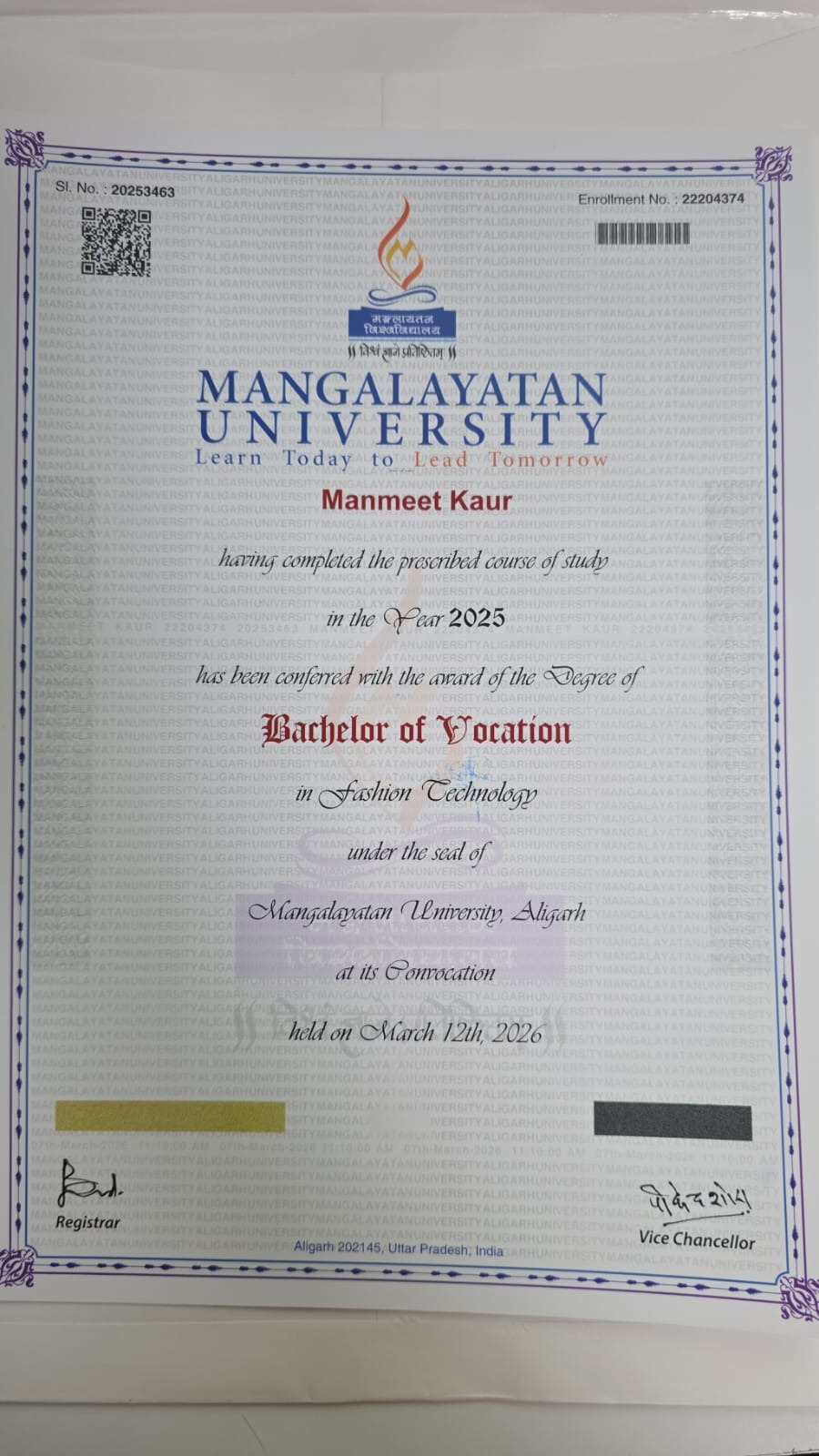
The degree certificate is issued and signed directly by Mangalayatan University, rather than by EasyShiksha or another third-party platform.
The degree certificate is personalised with the student's name, programme, and completion date and carries the university's official signature and seal.
Yes. The university's campus hosts optional immersion sessions associated with select Executive and Hybrid-mode programmes.
Students can select a Mangalayatan University programme, submit their personal details and required documents, pay the application fee, and proceed through the university's application review process.
Yes. Applications submitted through EasyShiksha can be monitored through the dashboard, where applicants can view status updates such as Under Review and Accepted along with their reference ID.
The B.Voc in Bakery & Pastry Arts is a three-year, six-semester vocational undergraduate program at Mangalayatan University. The official curriculum is titled Bachelor of Vocational Bakery & Pastry Arts and contains 124 credits. It covers bakery, confectionery, pastry, chocolate, modern desserts, kitchen management, hospitality and related business subjects.
The curriculum includes Fundamentals of Bakery and Confectionary - I, Food science and Nutrition, Communication Skills, Fundamentals of Bakery and Confectionery - II, Cake Engineering, Computer Fundamentals, Advanced Bakery and Patisserie, Chocolate Art, Environmental Studies, Modern Pastry and Plated Dessert, Human Resource Management in Hospitality, Professional Kitchen Management & Kitchen Hygiene & Sanitation, Internship Evaluation + Log Book Assessment, Training Report, Bakery Concept, Strategic Management in Hospitality, Food system and Supply Chain and Major Project.
Yes. Semester V includes BVBPA501 – Internship Evaluation + Log Book Assessment (Practical) and BVBPA 502 – Training Report (Practical). Semester VI includes BVBPA604 – Major Project (Practical). The curriculum allocates 20 credits to the internship evaluation and log-book assessment, 2 credits to the training report and 8 credits to the Major Project.
Students can develop skills related to bakery and pastry production, bread and dough preparation, cake decoration, chocolate art, modern pastry, plated-dessert presentation, food safety and hygiene, kitchen management, food costing, purchasing, communication, hospitality HR and strategic management. The curriculum also covers digital tools, food supply chains and sustainability.
Graduates can explore potential career areas in bakery production, pastry and confectionery, cake decoration, chocolate production and art, professional kitchen operations, hospitality, food-service operations, food safety, food supply chains and bakery-related entrepreneurship. The actual career pathway will depend on the graduate's skills, experience and chosen area of work.