









Join thousands of students achieving their dreams with expert-led courses.
Join free and unlock everything on EasyShiksha.
Takes less than 3 seconds — no password needed
Please enter a valid email address.
Checking your email…
Almost done — just verify your number so we can send course updates and certificates.
Used only for verification & updates
Incorrect OTP. Please try again.
Takes less than 10 seconds
Please select your country.
Please select your state.

The NEET‑UG (National Eligibility cum Entrance Test – Undergraduate) is India’s single national‑level entrance exam for admission to MBBS, BDS, and other medical and dental courses in government and private colleges, including AIIMS and JIPMER (under the NEET‑UG umbrella).
If you are aiming for a medical career in 2026, understanding NEET‑UG and preparing with a smart plan is the key to clearing one of the toughest exams in India and securing a seat in a good college.
NEET‑UG is conducted by NTA (National Testing Agency) once a year in offline mode (OMR‑based pen‑and‑paper test).
Subjects covered: Physics, Chemistry, Botany, Zoology (all from Class 11 & 12 level).
Total questions: 180 multiple‑choice questions (MCQs).
Total marks: 720 marks (each correct answer: +4; each wrong answer: –1; unattempted: 0).
Duration: 3 hours (3 hours 20 minutes for PwD candidates).
Languages: The paper is offered in 13 languages, including English and major regional languages.
Clearing NEET‑UG is the only gateway to admission in most medical colleges in India.
Massive competition:
Over 20 lakh students appear every year, but only a few lakh seats are available in MBBS/BDS across India.
Single‑attempt mindset:
Since it is held once a year, pressure is extremely high; a small rank difference can decide whether you get a college.
NCERT + depth:
Most questions are directly or indirectly based on NCERT Biology, Physics, and Chemistry, but the exam tests concept‑clarity, speed, and accuracy under stress.
Negative marking:
With –1 for each incorrect answer, blind guessing can be risky, so strategy and practice matter a lot.
Follow this structured approach if your target is NEET‑UG 2026.
Syllabus first:
Complete the entire NEET syllabus from Class 11 and 12 in all four subjects.
NCERT as base:
Biology (Botany + Zoology) is high‑weightage and NCERT‑heavy. Read NCERT line‑by‑line, learn diagrams, and revise them regularly.
Standard reference books:
Physics: NCERT + HC Verma or ALLEN/MTG‑style problem books.
Chemistry: NCERT + OP Tandon / MTG / Allen‑type books.
Biology: NCERT + MTG “NEET Champion” or Errorless‑style MCQ books.
Chapter‑wise practice:
After each chapter, solve 30–50 questions to test understanding.
Previous‑year papers (PYQs):
NEET‑UG PYQs from 2013–2025 help you understand repeated patterns, difficulty level, and favourite topics.
Daily target:
30–40 MCQs from Biology
20–25 from Physics
20–25 from Chemistry
Mock‑test routine:
In the last 4–6 months, take 1 full mock per week in the first phase, then 2–3 per week in the final 2 months.
Time management:
Aim to finish 180 questions in 3 hours, with at least 15–20 minutes reserved for revision and re‑checking.
Analysis after every mock:
Note weak chapters.
Find out how many mistakes are due to concept gap vs silly errors.
Adjust your speed and negative‑marking strategy.

Biology (Botany + Zoology – 50% of paper)
Diagram‑based questions carry good weight. Practice drawing and labelling them.
Focus on Genetics, Human Physiology, Ecology, Reproduction, Biomolecules, and Plant Physiology as high‑weightage areas.
Physics
Emphasise Mechanics, Electro‑magnetism, Optics, and Modern Physics.
Learn to solve numericals quickly; use standard formula‑sheets and practice.
Chemistry
Physical Chemistry: Equilibrium, Thermodynamics, Mole‑concept, Electrochemistry.
Organic Chemistry: Reaction mechanisms, named reactions, and NCERT‑based questions.
Inorganic Chemistry: Periodic table, Coordination compounds, and NCERT‑reactions.
A sample daily routine (adjust as per your class‑11/12 schedule):
Morning (2–3 hours): Biology + memorisation (diagrams, definitions)
Afternoon (2–3 hours): Physics theory + numericals
Evening (2 hours): Chemistry (theory + reactions)
Night (1–1.5 hours): PYQs or mock‑test practice + revision of formulas and diagrams
Add 1 full‑length mock on Sunday and revise weak topics on Saturday.
After the exam, NTA releases NEET‑UG rank and percentile.
Admission to MBBS/BDS is done through state counselling and NEET‑based central counselling.
Use college‑ranking resources and placement data to shortlist colleges where you can get a realistic seat with your expected rank.
Many students also compare government vs private medical colleges (fees, quality, infrastructure) before finalising choices.
NEET‑UG demands long hours, discipline, and mental strength. But remember:
Every day you study, you come closer to your white coat.
Every mock test, even a low‑score one, is a step toward improvement.
You are not alone: lakhs of students are walking the same path, and the ones who succeed are not the smartest; they are the ones who never quit.
If you stay consistent, revise regularly, and trust your hard work, NEET‑UG 2026 can be the exam that opens the door to the medical career you dream of.
More News Click here








Discover thousands of colleges and courses, enhance skills with online courses and internships, explore career alternatives, and stay updated with the latest educational news..

Gain high-quality, filtered student leads, prominent homepage ads, top search ranking, and a separate website. Let us actively enhance your brand awareness.
Download EasyShiksha Mobile Apps from Android Play Store, Apple App Store, Amazon App Store, and Jio STB.
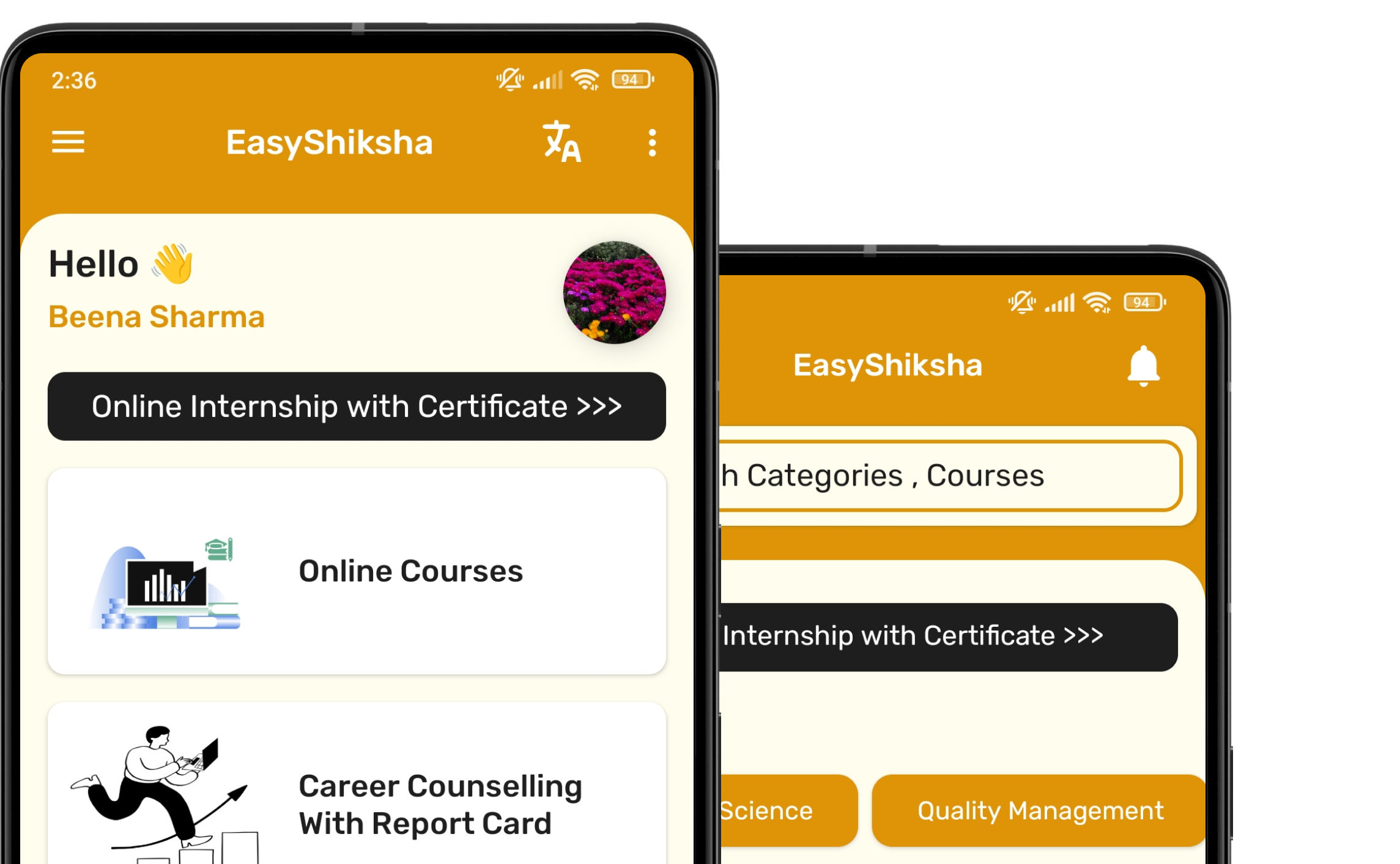


1 million+ learned on the EasyShiksha App
Trusted by Standards & Global Compliance Frameworks





Built under internationally recognized standards for quality, information security, educational excellence and business continuity.
ISO 9001:2015 | ISO/IEC 27001:2022 | ISO 21001:2018 | ISO 22301:2019 | DPIIT Recognized Startup | MSME Registered