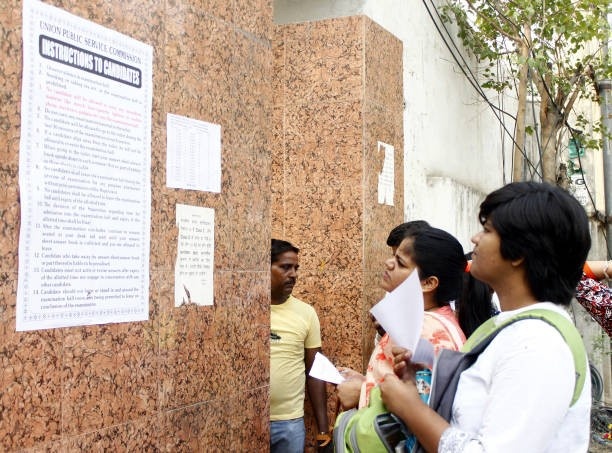
There is one exam in India that separates dreamers from doers. One exam that tests not just your knowledge — but your character, your patience, your willpower, and your soul.
That exam is UPSC Civil Services Examination.
Every year, over 10 lakh aspirants sit for this exam. Only 180 make it to IAS. That is a success rate of less than 0.02%. No other exam in the world demands what UPSC demands — years of sacrifice, an ocean of knowledge, and an unbreakable spirit.
If you are on this journey — whether you are just starting or on your third attempt — this blog is written for you.
Why UPSC Is Called India's Toughest Exam
People often argue about which exam is tougher — JEE, GATE, CAT, or UPSC. But UPSC is in a different league entirely. Here is why:
The scale of the syllabus is unlike anything else. History, Geography, Polity, Economy, Science & Technology, Environment, Ethics, Current Affairs, and optional subjects — UPSC expects you to know something about everything and everything about something.
The three-stage process is brutal by design. Prelims filters the unprepared. Mains tests depth of understanding. The Personality Test (Interview) tests who you are as a person. You must win all three battles to become an IAS, IPS, or IFS officer.
The time it demands is years, not months. The average successful candidate takes 3–4 attempts spanning 4–6 years. This is not an exam you prepare for — it is a lifestyle you adopt.
The emotional toll is real. Watching friends get jobs, get married, move ahead in life while you sit with Laxmikanth and newspaper clippings — that requires a special kind of courage.
You Are Not Just Preparing for an Exam. You Are Preparing to Serve a Nation.
Let that sink in.
When you crack UPSC, you do not just get a job. You get the power to change lives. An IAS officer can transform a district. An IPS officer can make streets safer. An IFS officer can represent India on the world stage.
The difficulty of this exam is proportional to the responsibility of the role. India does not hand over the power to shape lives to anyone who studied for six months. It hands it to the ones who proved — over years of relentless preparation — that they have the discipline, knowledge, and character to serve.
Every difficult day of your preparation is India testing whether you deserve that responsibility.
The Harsh Truth About UPSC That Nobody Tells You
Let us be honest. UPSC is not just about hard work. Thousands of hardworking candidates fail every year. Here is what separates those who crack it from those who do not:
Strategy Over Volume
Reading 50 books randomly will not help you. A focused reading of 10 right books — deeply understood and regularly revised — will. UPSC rewards depth over breadth, quality over quantity.
Answer Writing Is Everything in Mains
Most aspirants spend 90% of their time reading and 10% writing. Toppers do the opposite. If you cannot express what you know in a structured, analytical 250-word answer — the examiner will never know what you know.
Current Affairs Is Not Optional
The newspaper is your second textbook. The Hindu, Indian Express, PIB, Yojana — these are not optional reading. UPSC increasingly rewards candidates who can connect static syllabus topics with current events. If you are skipping daily current affairs, you are leaving marks on the table.
Mental Health Is a Preparation Strategy
Burnout has ended more UPSC journeys than lack of intelligence ever has. Sleep, exercise, social connection, and mental rest are not luxuries — they are necessities. A burnt-out mind cannot retain, analyse, or write well.
The 3 Kinds of UPSC Aspirants — Which One Are You?
The Dreamer
They talk about IAS at every family gathering. They have bought every book and joined every test series. But they have not started — really started — yet. They are waiting for the perfect moment, the perfect plan, the perfect mindset.
The perfect moment never comes. Start now. Start imperfect.
The Burnout
They started strong. 12 hours a day, every day. Within 3 months they were exhausted, anxious, and questioning everything. They confused busyness with productivity. Now they are stuck — neither moving forward nor willing to quit.
Rest is not failure. Rebuild your routine. Start with 4 focused hours instead of 12 scattered ones.
The Persistent One
They are not the smartest in the room. They are not the fastest reader. But they show up every single day. They revise when they would rather sleep. They write answers when they would rather scroll. They do not wait for motivation — they have built discipline.
This is the aspirant who cracks UPSC. Be this person.
What the Toughest Exam in India Teaches You — Win or Lose
Here is something that UPSC toppers and non-toppers both agree on — the preparation itself transforms you.
By the time you have spent a year seriously preparing for UPSC, you will have:
- Read more than most people read in a lifetime
- Developed opinions on governance, economy, and society
- Built a discipline that will serve you in any field
- Understood India — its history, its struggles, its potential — at a depth most citizens never reach
- Become a better thinker, writer, and human being
UPSC does not just make IAS officers. It makes extraordinary individuals.
Even if you do not clear it on the first attempt — or the second — the person you become in the process is worth the journey.
7 Powerful Habits of Successful UPSC Aspirants
1. Read the Newspaper Like an Examiner
Do not just read — analyse. Ask yourself: What is the policy behind this news? What are its social, economic, and political implications? How does this connect to the UPSC syllabus? Make short notes of important stories every day.
2. Revise More Than You Read
Reading a topic once and moving on is the biggest mistake UPSC aspirants make. Revise every topic at least 3 times. The first read is for understanding. The second is for retention. The third is for mastery.
3. Write One Answer Every Single Day
Pick one Mains question every day and write a full answer — structure, introduction, body, conclusion, diagrams where needed. Over one year, you will have written 365 answers. Your Mains performance will reflect every single one of them.
4. Build a Short Notes System
As you read, maintain subject-wise short notes in your own words. These become your revision material in the final months. Trying to revise 20 books in the last 30 days is impossible. Revising your own 200-page notes is very much achievable.
5. Attempt Full Mock Tests Every Week
Prelims is a test of accuracy and time management. Attempt one full 100-question mock test every week. Analyze every wrong answer. Do not just note what the right answer was — understand why it was right.
6. Protect Your Sleep and Mental Health
8 hours of sleep is not laziness — it is neuroscience. Your brain consolidates memory during sleep. An aspirant who sleeps well, exercises regularly, and maintains social connections will outperform a sleep-deprived, isolated aspirant every single time.
7. Find Your Community
UPSC is a lonely journey if you walk it alone. Join a study group, find a mentor, connect with fellow aspirants online. Share resources, discuss current affairs, review each other's answers. Community does not slow you down — it carries you forward.
Key Takeaways
- UPSC is India's toughest exam — and that is exactly why your success will mean everything
- Strategy, depth, and consistency matter more than reading volume
- Answer writing practice is non-negotiable for Mains success
- Daily current affairs is your second most important preparation tool
- Mental health and sleep are preparation strategies — not luxuries
- The UPSC journey transforms you into an extraordinary individual — win or lose
- The only way to fail UPSC with certainty is to stop trying
Conclusion
UPSC is not just an exam. It is a calling. It is India's way of finding the rare few who have the knowledge, the character, and the resilience to serve 1.4 billion people.
The path is long. The nights are hard. The doubts are real. But so is the dream.
Every page you read, every answer you write, every mock test you attempt — it is all building the officer that India needs and the person you are meant to become.
The list is published every year. Your name can be on it.
Study with purpose. Serve with passion. Never give up.