Digital education has made it easier for students to acquire new knowledge, complete online courses and demonstrate what they have learned through quizzes, assignments and projects. However, one important question remains: when a student successfully completes a task, does that achievement demonstrate a dependable skill, or does it reflect success under a particular set of circumstances? A learner may build a website by following a tutorial, solve a familiar problem after receiving guidance or complete a marketing assignment using a template. These achievements can represent genuine progress, but they do not always establish whether the student can reproduce the same competency across different tasks independently.
This challenge is becoming increasingly important as education moves towards skill-based learning, digital credentials and practical career preparation. Employers need people who can apply knowledge consistently, not merely complete one successful assignment. Universities and online learning platforms also need credible ways to determine whether students have developed capabilities that extend beyond a single examination or project. A certificate may confirm that a learner completed a course, but demonstrating a skill repeatedly under different conditions provides stronger evidence that the capability has been developed.
The Skill Reproducibility Test offers a framework for evaluating this consistency. It examines whether a learner can demonstrate the same underlying competency across multiple independent tasks rather than relying on a single successful performance as proof of mastery. The tasks may differ in their examples, data, constraints, tools or practical context while requiring the same core skill. The purpose is to determine whether the learner can apply that competency reliably when the situation changes.
For EasyShiksha, which connects online courses, quizzes, internships, certificates, university programmes and career guidance, the concept creates an opportunity to strengthen the relationship between learning and demonstrable ability. Instead of evaluating students only through course completion or isolated assessment results, a platform could examine whether learners can repeatedly apply what they have learned. This would make educational progress more meaningful and help students build confidence in their skills before moving towards advanced projects, internships or employment.
What Is the Skill Reproducibility Test?
The Skill Reproducibility Test is a proposed assessment method designed to determine whether a learner can demonstrate a defined competency across several independent tasks that assess the same underlying capability. The central idea is that genuine skill should produce reasonably dependable performance across relevant variations of a task, provided the conditions remain appropriate for the learner's level.
The test does not require students to produce identical outputs every time. Different tasks may have different correct solutions, and practical work often allows several valid approaches. Instead, the assessment examines whether the learner consistently demonstrates the essential capability required by the learning objective. A student who understands responsive web design, for example, should be able to create suitable layouts for different pages and screen sizes, even though each implementation may differ.
This distinction separates reproducibility from repetition. Repeating the same question can show whether a student remembers the answer, but it provides limited evidence that the student can apply the underlying skill in a different situation. A reproducibility test therefore uses related but independent tasks. Each task examines the same competency through a new example, problem structure or practical requirement.
Consider a student who has completed a beginner data analytics course. The student successfully cleans one dataset and produces an accurate report. This is a useful achievement, but the result alone may not establish whether the learner can recognise data-quality problems in another dataset. A Skill Reproducibility Test might present several different datasets containing missing values, inconsistent categories, duplicated records or unusual observations. The learner must identify the relevant problems, select suitable methods and explain the decisions made.
If the student demonstrates the target competency across these tasks, the assessment provides stronger evidence that the skill is not limited to one familiar example. If performance varies substantially, the results can help identify where additional practice may be needed.
Why a Single Successful Task Cannot Prove Complete Mastery
A single successful performance is valuable, but it can be influenced by factors that do not necessarily reflect stable competence. The task may closely resemble a tutorial, provide extensive instructions, involve familiar data or allow the learner to follow a predefined procedure. The student may also receive help from an instructor, collaborate with peers or use AI assistance where permitted.
These forms of support are not inherently problematic. Guided learning is essential when students are developing new capabilities. The difficulty arises when an assessment treats success under supported conditions as sufficient evidence of independent, transferable skill without examining the conditions under which the performance occurred.
For example, a learner may complete a JavaScript exercise after following a detailed walkthrough. The exercise demonstrates that the student can follow the learning process and may indicate growing understanding. However, if the student cannot write a similar function when the variable names, input structure or requirements change, the original performance may not yet represent a reproducible capability.
The same issue appears in many disciplines. A finance student may calculate a familiar financial ratio correctly but struggle when the available information is presented in a different format. A digital marketing learner may create one successful campaign using a template but have difficulty adapting the strategy to a different audience. A student studying cybersecurity may recognise a vulnerability in a classroom example but fail to identify a related weakness in another scenario.
The Skill Reproducibility Test addresses this limitation by gathering evidence across several tasks. It does not dismiss the first achievement. It places that achievement within a broader assessment of consistency, adaptation and understanding.
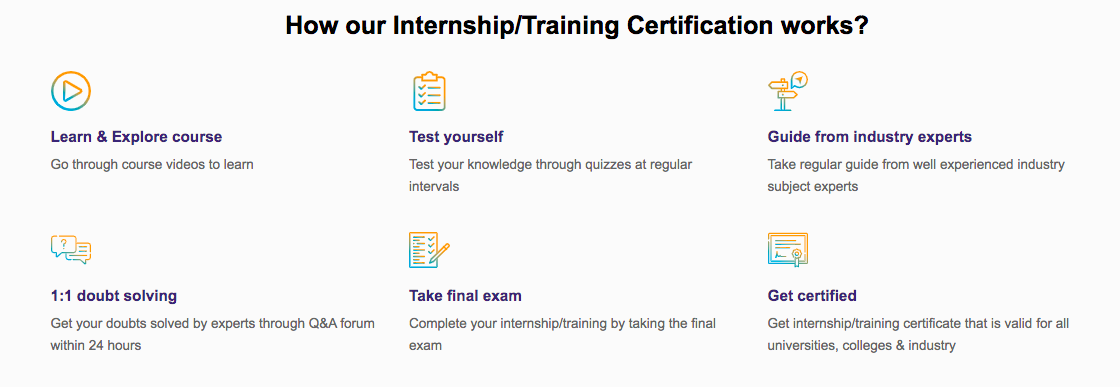
How EasyShiksha Internship/Training Program Works
The Difference Between Reproducibility, Accuracy and Transferability
Skill reproducibility is closely related to accuracy and knowledge transfer, but these concepts measure different aspects of performance. Accuracy concerns whether a particular response or result is correct. Transferability concerns whether a learner can apply knowledge in a new context. Reproducibility concerns whether the learner can demonstrate the targeted competency consistently across multiple independent opportunities.
A student may be accurate on one task without being consistently accurate across a series of tasks. Another student may transfer a concept successfully to a new context but require several attempts before performing reliably. A third student may repeatedly complete a narrow task correctly but struggle when the context changes substantially.
A well-designed assessment should therefore identify which of these capabilities it intends to measure. If the learning objective is basic procedural accuracy, closely related tasks may be appropriate. If the objective is flexible problem-solving, the tasks should vary more substantially while preserving the underlying competency. If the objective is professional readiness, assessments may need to combine consistency with realistic changes in requirements, tools and constraints.
For EasyShiksha, distinguishing these concepts could improve the interpretation of course assessments. A student might demonstrate accuracy through quizzes, reproducibility through multiple independent exercises and transferability through a practical project with unfamiliar requirements. Together, these forms of evidence provide a more complete understanding of learning than any single assessment can offer.
Designing Independent Tasks Around a Shared Competency
The foundation of the Skill Reproducibility Test is the definition of the competency being evaluated. Before creating multiple tasks, educators must identify exactly what students are expected to demonstrate. Without a clearly defined competency, differences between task results may reflect changes in what is being assessed rather than genuine variation in the learner's ability.
For example, a web development assessment might focus on responsive layout implementation. Every task should require the student to apply principles of flexible layout, appropriate sizing and adaptation to different screen widths. One task may involve a landing page, another a product card layout and a third a navigation component. Although the outputs differ, the essential competency remains consistent.
A data analytics assessment could focus on identifying and correcting data-quality problems. Different tasks might involve survey responses, sales records and customer information. The datasets would vary, but the learner would repeatedly need to recognise inconsistencies, choose suitable corrections and explain the effect of those decisions.
A communication course could assess the ability to structure a clear professional message. One task might require a project update, another a response to a client concern and another an explanation of a technical issue to a non-technical audience. The scenarios differ, but the learner must demonstrate audience awareness, clarity, logical organisation and appropriate tone.
Task design should avoid making the assessments so similar that students can succeed by remembering a template. It should also avoid making them so different that each task requires an entirely new competency. The aim is to create controlled variation: the context changes enough to test independent application, while the central learning objective remains stable.
Measuring Consistency Across Multiple Attempts
The Skill Reproducibility Test can use performance across several tasks to estimate how consistently a learner demonstrates a competency. The assessment should consider both the quality of each result and the variation between results.
Suppose a student completes four independent tasks designed to assess the same competency. The learner performs well on three tasks but struggles significantly on the fourth. An overall average may hide this variation. A more informative assessment would examine the pattern of performance and investigate why the fourth task was difficult.
The result might indicate a genuine gap in understanding, an unfamiliar task format, an unexpected technical issue or a condition that was not adequately controlled. The assessment cannot identify the cause automatically, but it can highlight a pattern that deserves further investigation.
Consistency should not mean demanding identical scores on every task. Small variations are natural because tasks differ in complexity, context and available information. The purpose is to determine whether the learner demonstrates the required competency at an acceptable level across relevant tasks, not whether every performance is mathematically identical.
A platform could report the number of tasks completed successfully, the range of performance, the types of errors observed and the conditions under which difficulties occurred. This would make the result more actionable than a single aggregate score.
The number of tasks should be proportionate to the importance and complexity of the skill. A short introductory competency may require only a few carefully designed tasks, while a complex professional capability may need a broader collection of practical assessments. More tasks do not automatically produce better evidence if they are poorly designed or measure unrelated skills.
Why Task Independence Matters
Independent tasks are essential because repeated exposure to the same problem can inflate apparent competence. If students answer an identical question several times, they may improve through memorisation rather than through deeper understanding. The resulting consistency would not necessarily establish that they can apply the skill elsewhere.
Independence means that each task provides a distinct opportunity to demonstrate the underlying competency. The learner should not simply reproduce the exact answer or solution from an earlier task. The task may use a new dataset, different requirements, a changed scenario or a new set of constraints.
However, independence does not mean that all learning support must disappear. Students may still use approved documentation, reference materials or assistive technologies if those resources are permitted by the assessment design. The important requirement is that the assessment accurately defines the competency being measured and the conditions under which it must be demonstrated.
If the objective is to measure independent problem-solving without AI assistance, the relevant tasks should specify that condition. If the objective is professional performance using approved tools, the assessment should allow those tools and evaluate how responsibly and effectively the learner uses them. A reproducibility test is only meaningful when its conditions match the intended learning outcome.
For EasyShiksha, clear assessment conditions could help students understand what their results mean. A learner should know whether a task measures unaided application, AI-supported performance or tool-assisted professional work. These are different capabilities and should not be presented as interchangeable evidence.
The Role of Quizzes in Skill Reproducibility
Quizzes can support the Skill Reproducibility Test by assessing foundational knowledge across multiple question variations. Instead of repeating the same questions, an assessment can examine a concept through different examples, numerical values, scenarios or decision-making situations.
For instance, a finance learner might answer questions involving several different cash-flow scenarios. A student studying cybersecurity could analyse different examples of suspicious activity. A marketing learner could interpret campaign performance under varying audience and budget conditions. These variations help reveal whether the learner understands the principle behind the question rather than remembering a particular answer.
However, quiz performance alone may not be sufficient for complex skills. A student can select the correct answer without being able to perform the task in practice. Multiple-choice questions may also fail to reveal the reasoning behind a response. Quizzes are therefore most useful when combined with explanations, practical exercises or other forms of evidence where appropriate.
EasyShiksha could use quizzes as an early stage in a reproducibility pathway. Once students demonstrate foundational understanding, they could move to practical tasks that require them to apply the same concepts independently. If the results reveal inconsistent understanding, the platform could recommend targeted revision before the learner advances to a more demanding project.
This approach would make quizzes part of a broader learning process rather than treating a single quiz score as definitive proof of competence.
Applying the Test to Online Courses and Practical Projects
Online courses frequently combine explanations, demonstrations, practice questions and final assignments. The Skill Reproducibility Test can strengthen this structure by introducing multiple independent demonstrations of the key skills taught in a course.
In a beginner programming course, students might first complete a guided coding exercise, then solve a similar problem with changed requirements and finally diagnose an error in an unfamiliar example. These tasks would assess whether the learner can progress from following instructions to applying the underlying programming concepts.
In a graphic design course, students might create several layouts for different audiences or screen formats. The assessment could examine their ability to apply visual hierarchy, spacing, alignment and consistency while adapting to different design constraints. The purpose would not be to demand identical designs, but to verify that the learner can repeatedly apply the relevant principles.
In a digital marketing course, students might evaluate different campaign scenarios, interpret performance data and recommend appropriate adjustments. A reproducibility test could reveal whether the learner understands how to connect campaign objectives, audience characteristics and performance indicators across different situations.
These assessments can be integrated into a course without turning every lesson into a formal examination. Short tasks can provide formative evidence during learning, while a more structured set of independent tasks can be used to evaluate readiness for advanced study or a practical project.
For EasyShiksha, the potential benefit is a clearer link between course completion and demonstrated ability. A student would not merely finish the course; the learner would also receive feedback about which competencies have been demonstrated consistently and which require further practice.
Connecting Reproducibility With Internships and Career Readiness
Professional work requires people to apply their skills across changing tasks. A developer may need to fix several different interface issues, an analyst may need to interpret multiple datasets and a marketing professional may need to adjust campaigns as audience behaviour changes. Success on one task does not guarantee consistent performance in all related situations.
The Skill Reproducibility Test can help students prepare for these expectations by evaluating relevant capabilities before they enter an internship. Instead of relying only on course completion or a single project, a learner could demonstrate the same core skill across several independent scenarios.
For example, a student preparing for a web development internship might complete tasks involving form validation, responsive layout changes and basic debugging. Although these tasks differ, they could collectively assess foundational frontend capabilities such as reading code, applying logic and diagnosing common problems.
A data analytics learner might work with separate datasets that require cleaning, interpretation and communication of findings. A marketing student might evaluate campaigns for different products and audiences while explaining the rationale behind each recommendation.
These assessments could help learners identify areas that need improvement before entering a workplace. They could also give career guidance systems more specific information about the skills a student has practised and demonstrated.
Nevertheless, reproducibility tests should not replace real workplace experience. Internships involve collaboration, communication, deadlines, organisational processes and unpredictable requirements that cannot be fully represented by a collection of controlled tasks. The test should complement practical experience by helping students establish a foundation of reliable skills.
AI-Assisted Learning and the Reproducibility Challenge
Artificial intelligence introduces another dimension to skill assessment. Students can use AI tools to generate code, explain concepts, draft content, analyse data and suggest solutions. These tools can improve learning when students use them to explore ideas, receive feedback and understand alternative approaches.
However, a successful AI-assisted output does not necessarily demonstrate that the learner can independently reproduce the underlying skill. A student may generate several working programs with AI assistance but struggle to explain the logic or modify the code when the requirements change. Another student may use AI as a tutor, test its explanations and gradually develop the ability to solve similar problems without help.
The Skill Reproducibility Test can help distinguish these situations by documenting the conditions under which performance occurs. When independent competence is the objective, selected tasks can be completed without AI-generated answers. When effective AI collaboration is the objective, students can be assessed on how they evaluate suggestions, verify outputs and adapt the results responsibly.
These two assessment approaches should remain distinct. The aim is not to penalise AI use throughout the learning journey, but to determine whether the student has developed the specific capability that the assessment claims to measure.
EasyShiksha could use this principle to create a balanced progression in which students first learn with guidance, then practise with reduced support and finally demonstrate the relevant competency under clearly defined conditions. The results could help learners understand whether they can perform independently, collaborate effectively with AI or need more practice in a particular area.
Using AI to Support Reproducibility Assessment
AI could potentially assist educators in designing task variations, identifying recurring errors and organising evidence from multiple assessments. For example, an educational system could generate different scenarios that target the same learning objective, provided the tasks are reviewed for accuracy, difficulty and fairness.
AI-assisted analysis could also identify patterns across student responses. If a learner repeatedly misunderstands a particular concept, the system could recommend targeted learning material. If the student performs well on familiar tasks but struggles when the context changes, the system could suggest additional transfer exercises.
However, automatically generated tasks require quality control. Two questions may appear different while testing the same narrow procedure, or they may differ so much in difficulty that comparing results becomes unfair. An AI system may also incorrectly classify a valid alternative solution as an error if its evaluation criteria are too rigid.
For this reason, AI should support rather than replace assessment design and human judgement. Educators need to define the competency, verify the task variations, establish clear scoring criteria and review questionable results. Automated evaluation should be especially cautious when the outcome affects certification, progression or employment opportunities.
The system should also explain the basis of its conclusions. Instead of stating that a student lacks a skill, it should identify the observed pattern, such as repeated errors in a particular type of task or inconsistent application of a concept. Such feedback is more useful, more transparent and less likely to turn a limited assessment result into an unfair judgement about the learner.
Building a Skill Reproducibility Profile
A single score can simplify communication, but it may hide important differences in how students perform. A more informative approach is to develop a skill reproducibility profile that records the competencies assessed, the number and type of tasks completed, the performance pattern and the conditions under which the evidence was collected.
For example, a learner's frontend development profile could show consistent performance in HTML structure and responsive layout, improving performance in JavaScript logic and less consistent performance in debugging unfamiliar code. This profile would provide a clearer basis for future practice than a general label such as beginner or intermediate.
The profile should also distinguish between skills that have been demonstrated repeatedly and skills that have only been assessed once. The amount of evidence matters because a competency demonstrated across several tasks is supported by more observations than one inferred from a single assignment.
A reproducibility profile should not imply that skills remain permanently stable. Students may forget concepts, encounter new tools or need to adapt to changing professional requirements. Evidence should therefore be associated with the assessment date, relevant context and level of difficulty. Older results may remain useful, but they should not automatically be treated as proof of current competence.
For EasyShiksha, this approach could help connect learning records with course recommendations, project preparation, internship applications and career guidance. Students could use the profile to understand their strengths and identify the next capability to develop. With appropriate consent and privacy safeguards, selected evidence could also help them communicate their skills to prospective employers.
Certificates and the Value of Reproducible Skills
Certificates are useful because they document participation, completion or achievement within a defined learning programme. Their meaning, however, depends on what the credential actually verifies. A certificate based on course completion communicates something different from one supported by assessments that demonstrate consistent practical performance.
The Skill Reproducibility Test could contribute to a richer model of digital credentials by adding evidence about how a competency was assessed. A course certificate might confirm completion, while a related skill record could indicate that the learner demonstrated a defined capability across several independent tasks.
This distinction would help avoid overstating what a certificate proves. A learner who has completed a course should receive appropriate recognition, but the credential should not imply broad professional mastery unless the assessment provides sufficient evidence for that claim.
The assessment conditions should also be transparent. Employers and students need to know which competency was tested, whether tasks were independent, whether AI assistance was permitted and how performance was evaluated. A credential becomes more meaningful when its claims are clear and its supporting evidence can be interpreted accurately.
For EasyShiksha, this could strengthen the relationship between online courses, quizzes, practical projects and certificates. The platform could help students move from learning a skill to demonstrating it and then presenting that evidence as part of their professional profile. The objective would be to improve the credibility of learning records without making unsupported claims about what an assessment can establish.
Fairness, Accessibility and Assessment Reliability
A reproducibility test must be designed carefully to avoid confusing inconsistent performance with a lack of ability. Students may perform differently because of fatigue, anxiety, language barriers, unfamiliar interfaces or technical difficulties. If these factors are not considered, the assessment may produce misleading conclusions.
Task difficulty must also be controlled. If the first task is straightforward and the next task requires advanced reasoning, a decline in performance may reflect the increase in difficulty rather than a lack of reproducibility. Comparable tasks should assess the same core competency at an appropriate level while introducing meaningful variation.
Accessibility is equally important. Students who use assistive technologies or approved accommodations should be able to demonstrate the intended skill without unnecessary barriers. The assessment must distinguish between tools that enable participation and tools that perform the competency being evaluated.
Scoring criteria should recognise valid alternative solutions. In programming, design, analytics and many other fields, more than one approach may satisfy the task requirements. An assessment that accepts only one expected method can incorrectly mark competent learners as unsuccessful.
Results should also be interpreted in proportion to the evidence available. A short series of tasks may support a limited conclusion about a specific skill, but it should not be used to make broad claims about a student's intelligence, employability or long-term potential. Reproducibility is a useful source of evidence, not a complete description of a person.
Turning Inconsistent Performance Into a Learning Opportunity
The greatest educational value of the Skill Reproducibility Test lies in what happens after the assessment. If a student demonstrates a competency inconsistently, the result should lead to targeted learning rather than simply a lower score.
A learner who struggles with unfamiliar examples may benefit from varied practice that gradually changes the context while keeping the underlying concept stable. A student who repeatedly makes the same technical error may need a clearer explanation of the relevant principle and opportunities to diagnose incorrect solutions. A learner who performs well with guidance but struggles independently may benefit from gradually reducing the level of support during practice.
After this additional learning, the student should attempt a new task rather than simply repeat the original assessment. A fresh task provides better evidence of whether the learner has developed a more dependable capability or merely remembered the earlier solution.
This creates a continuous cycle of assessment, diagnosis, practice and reassessment. The system identifies a performance pattern, recommends a learning activity and then checks whether the targeted capability has improved. The process should remain proportionate to the skill being developed and avoid unnecessary testing.
For EasyShiksha, such a cycle could connect online learning with quizzes, projects, certificates and internship preparation. Students would receive more specific guidance about their next steps, while educators could evaluate whether learning activities are helping students develop consistent, usable skills.
Empower your team. Lead the industry
Get a subscription to a library of online courses and digital learning tools for your organization with
EasyShiksha
The Future of Reproducible Competency in Digital Education
As digital credentials and skills-based hiring continue to develop, educational platforms will need better ways to communicate what learners can actually do. Course completion and isolated assessment scores will remain important, but they may be complemented by evidence gathered across multiple independent tasks.
A future learning ecosystem could maintain structured records of demonstrated competencies, assessment conditions, task variation and performance over time. Students might use these records to identify strengths, prepare for internships and select advanced courses. Employers could use appropriately shared evidence to understand what a candidate has demonstrated, while recognising that assessments cannot replace interviews, practical evaluation or workplace experience.
The Skill Reproducibility Test could form one part of this broader approach. It would help answer a practical question: can the learner apply the same competency again when the example changes? This question is relevant across programming, finance, marketing, communication, analytics, design and many other fields.
The framework will only be useful if it is implemented with clear learning objectives, comparable tasks, transparent evaluation and responsible data practices. Technology can help generate variations and analyse results, but educators must ensure that the assessment remains fair and meaningful. Students should be able to understand what their results demonstrate and how they can improve.
Conclusion: From Successful Attempts to Dependable Skills
The Skill Reproducibility Test represents a shift from evaluating isolated achievements to examining whether learners can demonstrate the same competency across multiple independent tasks. It recognises that a single successful assignment may show progress without fully establishing consistency, adaptability or reliable application.
By using varied tasks built around a shared learning objective, educators can gather stronger evidence of whether students understand and can apply a skill beyond one familiar example. When results are interpreted carefully, performance patterns can reveal where a learner is consistent, where difficulties emerge and what kind of practice may help.
For EasyShiksha, this concept offers a potential way to connect online courses, quizzes, practical projects, certificates, internships and career guidance through a more evidence-based model of learning. Students could move from guided instruction to independent application, receive feedback on their demonstrated capabilities and build a clearer record of their progress.
The purpose is not to demand identical performance in every situation or to reduce learning to repeated examinations. It is to establish whether a learner can apply a competency dependably under relevant conditions. In an environment where AI can generate answers and complete many routine tasks, the ability to understand, adapt and reproduce a skill remains an important part of genuine competence. The strongest educational systems will help students move beyond completing a task once and towards developing skills they can use with confidence across changing situations.
Anshika Jain is an Engineer, Developer, and Educational Content Author known for her dedication to technology and knowledge sharing. With a strong analytical mindset and a passion for innovation, she has consistently contributed to creating meaningful digital solutions and insightful educational articles.
Her ability to simplify complex technical concepts into engaging and easy-to-understand content makes her work valuable for students and learners across various platforms. Along with her technical expertise, Anshika is admired for her creativity, professionalism, and commitment to continuous learning.
She represents a perfect blend of technical excellence and impactful communication, inspiring others through both her development work and educational contributions.