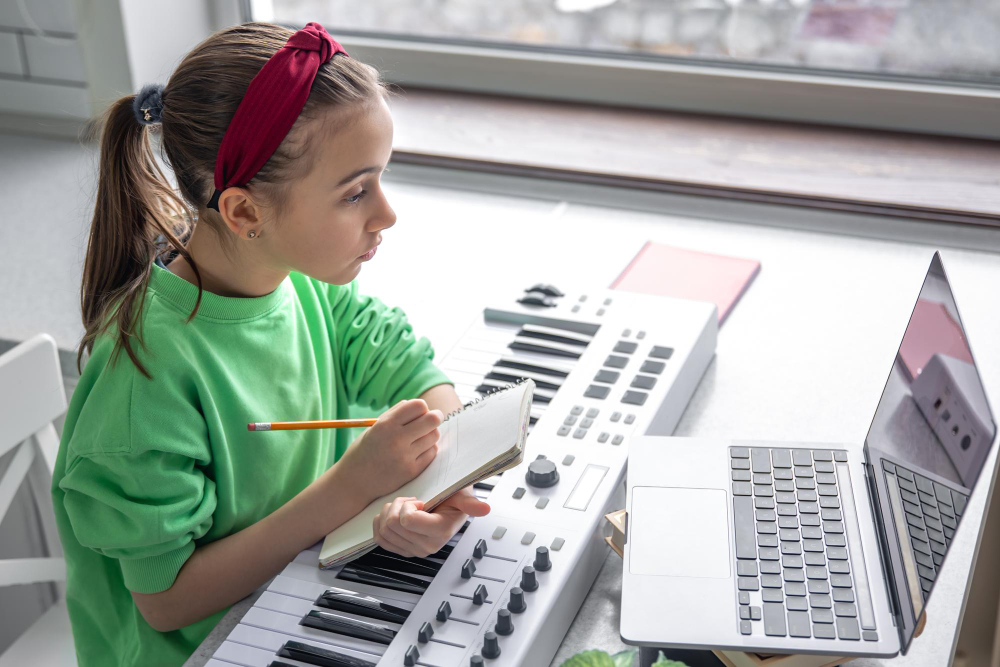
Learning is not just a cognitive process; it is also deeply connected to emotions, sensory experiences, and patterns. Among the many tools that enhance learning, music and rhythm stand out as powerful influences on a child’s brain development. From nursery rhymes to educational songs, rhythm has always been an integral part of early learning experience.
In today’s evolving educational landscape, platforms like EasyShiksha are rediscovering the importance of music as a learning tool. By integrating rhythm-based techniques into digital education, they are making learning more engaging, effective, and enjoyable for children. Understanding how music influences the brain can help parents and educators create better learning environments that accelerate a child’s ability to grasp and retain informations.
The Science Behind Music and Brain Development
Music has a profound impact on the brain, activating multiple regions simultaneously. When children listen to or engage with music, areas responsible for language, memory, attention, and emotion are stimulated.
This multi-sensory engagement strengthens neural connections, making it easier for children to process and retain information. Rhythm, in particular, helps organize brain activity, creating patterns that enhance learning efficiency.
EasyShiksha leverages this scientific understanding by incorporating music-based learning elements into its content, ensuring that children benefit from a holistic education.
One of the most significant benefits of music in learning is its ability to improve memory. Rhythmic patterns and melodies make it easier for children to remember information.
This is why children often recall songs and rhymes more easily than spoken words. The repetitive nature of music reinforces learning, helping information move from short-term to long-term memory.
EasyShiksha uses rhythmic learning techniques to help children retain concepts more effectively, making education both enjoyable and impactful.
Document
#AbIndiaSikhegaGharSe
Online Internships for Students
EasyShiksha offers comprehensive online virtual internship programs tailored for students, graduates, freshers, and working professionals seeking academic advancement and upskilling certifications.
Get Job-Ready with Our Online Summer Internship 2025 Opportunities
Explore our wide selection of online job-ready internships featuring globally recognized certificates accepted by universities, colleges, and companies worldwide.
Obtain two authorized certificates recognized by universities & corporates.
Access our 100% online internships at genuine price.
Choose from flexible internship durations ranging from 2 weeks to 6 months.
Upon completion, you will receive two certificates: an Internship Certificate and a Course Completion Certificate
Learn conveniently anytime, anywhere.
Access learning materials seamlessly via web or mobile. (Download App)
Music plays a crucial role in language development. Songs introduce children to new words, sounds, and sentence structures in a natural and engaging way.
Rhythm helps children understand the flow and patterns of language, improving pronunciation and comprehension. Singing along to songs also enhances listening skills and encourages verbal expression.
EasyShiksha integrates music into its language learning modules, helping children build strong communication skills from an early age.
Boosting Focus and Attention
Maintaining focus can be challenging for young learners, especially in digital environments. Music and rhythm can help improve attention by providing a structured and engaging framework.
Rhythmic patterns create a sense of predictability, which helps children stay focused and organized. Background music can also reduce distractions and create a conducive learning atmosphere.
EasyShiksha incorporates engaging audio elements to maintain students’ attention and enhance their overall learning experience.
Encouraging Emotional Connection to Learning
Emotions play a vital role in learning, influencing motivation and retention. Music has the unique ability to evoke emotions, making learning experiences more memorable.
When children associate positive emotions with learning, they are more likely to engage and participate actively. This emotional connection enhances their willingness to explore new concepts.
EasyShiksha uses music to create an enjoyable and emotionally engaging learning environment, encouraging children to develop a love for learning.
Supporting Cognitive and Motor Skills Development
Engaging with music often involves physical movement, such as clapping, tapping, or dancing. These activities help develop motor skills and coordination.
At the same time, processing rhythm and melody enhances cognitive abilities such as pattern recognition and problem-solving. This combination of physical and mental engagement supports overall development.
EasyShiksha integrates interactive music-based activities that promote both cognitive and motor skills in children.
Making Learning Fun and Interactive
One of the biggest challenges in education is keeping children interested and motivated. Music transforms learning into a fun and interactive experience, making it more appealing to young learners.
Educational songs, rhythmic games, and musical activities create an environment where children can learn without feeling pressured. This approach reduces stress and increases engagement.
EasyShiksha uses music-driven content to make learning enjoyable, ensuring that children remain motivated and enthusiastic.
Strengthening Mathematical and Logical Skills
Music and rhythm are closely related to mathematical concepts such as patterns, sequences, and timing. Engaging with rhythm helps children develop an intuitive understanding of these concepts.
For example, counting beats and recognizing patterns in music can enhance numerical skills and logical reasoning. This connection makes music an effective tool for teaching mathematics.
EasyShiksha incorporates rhythm-based learning techniques to support the development of mathematical and logical skills.
Building Confidence and Self-Expression
Music provides children with a platform for self-expression, allowing them to explore their creativity and individuality. Singing, playing instruments, or participating in musical activities helps build confidence.
As children become more comfortable expressing themselves, they develop a positive self-image and improved communication skills. This confidence extends to other areas of learning and life.
EasyShiksha encourages creative expression through music-based activities, fostering confidence and personal growth.
Integrating Music with Digital Learning
The integration of music with digital learning platforms has opened new possibilities for education. Interactive audio elements, animations, and rhythm-based activities can enhance engagement and understanding.
EasyShiksha leverages technology to deliver music-enhanced learning experiences that are both effective and accessible. By combining traditional techniques with modern tools, it creates a dynamic educational environment.
The Role of Parents and Educators
Parents and educators play a crucial role in incorporating music into a child’s learning journey. Encouraging children to participate in musical activities and integrating songs into daily routines can enhance learning outcomes.
Creating a supportive environment where children feel comfortable exploring music can further strengthen their development. Collaboration between parents, educators, and platforms like EasyShiksha ensures a comprehensive approach to learning.
Long-Term Benefits of Music-Based Learning
The benefits of music-based learning extend beyond immediate academic outcomes. Children who engage with music develop skills such as creativity, critical thinking, and emotional intelligence.
These skills are essential for success in both academic and professional settings. By fostering a love for music and learning, children are better prepared for future challenges.
EasyShiksha’s approach ensures that students gain long-term benefits from music-enhanced education.
Conclusion
Music and rhythm are powerful tools that significantly enhance a child’s ability to learn and grow. By engaging multiple areas of the brain, improving memory, and creating emotional connections, music accelerates the learning process.
EasyShiksha’s integration of music into its platform demonstrates how traditional methods can be adapted to meet modern educational needs. By combining rhythm with digital learning, it creates an environment that is both engaging and effective.
In a world where education is constantly evolving, the use of music and rhythm offers a timeless and impactful approach. By embracing these techniques, EasyShiksha empowers children to learn faster, think creatively, and develop the skills needed for a successful future.
Anshika Jain is an Engineer, Developer, and Educational Content Author known for her dedication to technology and knowledge sharing. With a strong analytical mindset and a passion for innovation, she has consistently contributed to creating meaningful digital solutions and insightful educational articles.
Her ability to simplify complex technical concepts into engaging and easy-to-understand content makes her work valuable for students and learners across various platforms. Along with her technical expertise, Anshika is admired for her creativity, professionalism, and commitment to continuous learning.
She represents a perfect blend of technical excellence and impactful communication, inspiring others through both her development work and educational contributions.