The traditional university has long been associated with physical classrooms, lecture halls, libraries, laboratories, campuses, and face-to-face interaction. Students travel to a particular location, attend scheduled classes, interact with teachers and classmates, participate in practical activities, and gradually progress through an academic programme. While this model continues to play an important role in education, rapid developments in artificial intelligence, extended reality, virtual reality, augmented reality, and spatial computing are creating new possibilities for how a university could exist in the digital world.
An AI-powered immersive virtual university represents a vision of education in which students can enter a digital learning environment and interact with academic content, teachers, classmates, laboratories, libraries, simulations, and professional experiences through immersive technologies. Instead of simply watching a recorded lecture on a screen, students could potentially enter a virtual classroom, explore a three-dimensional model, conduct a simulated experiment, collaborate with other learners, or interact with an AI-powered educational assistant.
Extended Reality, commonly referred to as XR, encompasses technologies such as virtual reality, augmented reality, and mixed reality. Spatial computing goes further by allowing digital content to interact with the physical environment and enabling users to interact with computing systems through spatial interfaces. When combined with artificial intelligence, these technologies could create educational environments that are more interactive, adaptive, and personalized.
For an EdTech platform such as EasyShiksha, the development of immersive digital education represents an opportunity to explore the next generation of online learning. Digital education can move beyond traditional videos and documents toward environments in which students learn by interacting, experimenting, collaborating, and solving problems.
An AI-powered virtual university does not necessarily mean replacing physical universities. Instead, it can complement existing educational institutions and provide new forms of learning that are difficult or expensive to deliver through traditional classrooms. The future could involve a combination of physical campuses, online education, immersive virtual environments, and AI-supported learning.
Understanding the Concept of an Immersive Virtual University
An immersive virtual university can be understood as a digital educational environment that reproduces or reimagines important aspects of a university experience within an interactive three-dimensional space. Students may be represented through digital avatars or other interfaces and can enter virtual classrooms, laboratories, libraries, meeting spaces, and collaborative environments.
Unlike conventional online learning, where students primarily interact with content through two-dimensional screens, immersive learning attempts to create a stronger sense of presence. Learners can look around virtual environments, manipulate objects, interact with simulations, and communicate with other participants.
Artificial intelligence adds another layer to this environment. AI can potentially personalize learning experiences, provide virtual tutoring, adapt simulations, analyze learner progress, and support interactions between students and digital educational systems.
The result is a model of education that combines the accessibility of online learning with some of the interactive characteristics of physical environments.
What Is Extended Reality?
Extended Reality is an umbrella term that includes Virtual Reality, Augmented Reality, and Mixed Reality.
Virtual Reality places users inside a fully digital environment. With a suitable headset, a learner can enter a virtual laboratory, historical environment, engineering facility, or classroom and interact with digital objects.
Augmented Reality overlays digital information onto the physical world. A student using an AR-enabled device could potentially see a three-dimensional representation of an anatomical structure, machine component, or scientific model while remaining in a physical environment.
Mixed Reality combines physical and digital elements in ways that allow users to interact with virtual objects as though they exist within the surrounding environment.
These technologies offer different possibilities for education. Their common characteristic is the ability to make learning more interactive and spatial.
Spatial computing refers broadly to computing experiences that understand and interact with physical space. Instead of treating the computer as a separate screen, spatial computing allows digital information to be positioned within the user's environment.
For education, this can create new ways of interacting with information.
A student studying engineering could potentially manipulate a three-dimensional machine model. A medical student could explore a digital anatomical structure. An architecture student could walk through a virtual building. A physics learner could interact with a simulation of forces and motion.
Spatial computing can therefore change the relationship between the learner and educational content.
Rather than simply reading about an object, students may be able to examine it from different angles, manipulate it, and observe how it behaves.
The Role of Artificial Intelligence
Artificial intelligence can become the intelligence layer of an immersive virtual university.
Without AI, an immersive environment may provide an impressive visual experience, but AI can make that environment responsive to the learner.
An AI-powered virtual tutor could answer questions, explain concepts, provide examples, and adjust explanations according to the student's level of understanding.
AI could also analyze learning behaviour and identify areas where students may require additional support. A student struggling with a virtual laboratory experiment could receive contextual guidance rather than simply being directed to a general tutorial.
The combination of AI and XR could therefore create learning environments that respond dynamically to individual students.
Personalized Learning in a Virtual University
Traditional education often provides a common curriculum to a large group of students. Although teachers may differentiate instruction, there are practical limits to how personalized a physical classroom can become.
An AI-powered virtual university could potentially personalize many aspects of learning.
A student who already understands the fundamentals of a subject could move toward advanced simulations, while another student could receive additional foundational explanations.
AI systems could potentially monitor performance across different activities and recommend appropriate learning pathways.
This could transform the virtual university from a static digital campus into a dynamic learning environment that evolves with each student.
AI-Powered Virtual Tutors
Virtual tutors could become one of the most visible applications of artificial intelligence in immersive education.
Instead of interacting with an AI chatbot through a traditional text interface, students could potentially communicate with an AI tutor through voice, visual interfaces, or an embodied virtual character.
The tutor could explain concepts inside the environment where learning takes place.
For example, while a student is exploring a virtual chemistry laboratory, the AI tutor could explain the properties of a particular compound or guide the learner through a simulated procedure.
The ability to provide contextual support could make AI tutoring more useful than generic question-and-answer systems.
However, AI tutors should complement rather than replace human educators. Teachers provide mentorship, encouragement, contextual understanding, ethical guidance, and human connection that technology cannot fully reproduce.
Immersive Virtual Classrooms
Virtual classrooms can provide an alternative to conventional video conferencing.
Instead of seeing a grid of faces on a screen, students could enter a shared virtual classroom. They could interact with classmates, participate in discussions, examine digital models, and work together on projects.
Teachers could use virtual whiteboards, three-dimensional objects, interactive presentations, and simulations.
The environment could also support students who are geographically separated. A learner in one city could collaborate with classmates from different regions or countries within the same virtual space.
This can create a broader sense of academic community.
Virtual Laboratories
One of the most promising applications of XR in higher education is the virtual laboratory.
Physical laboratories can be expensive to build and maintain. They also require equipment, safety systems, physical space, and supervision.
Virtual laboratories can provide simulations in which students experiment without the same physical constraints.
A chemistry student could conduct a simulated experiment. An engineering student could examine machine components. A physics student could manipulate variables and observe outcomes.
Virtual laboratories should not necessarily replace physical laboratories in every field. However, they can complement them by allowing students to practice concepts repeatedly and explore situations that may be difficult or dangerous to reproduce physically.
Medical and Healthcare Education
Healthcare education provides particularly strong use cases for immersive learning.
Students can use virtual environments to study anatomy, practice procedures, explore medical scenarios, and understand complex biological systems.
Three-dimensional models can make anatomical concepts more intuitive by allowing students to examine structures from different perspectives.
Simulated environments can also allow learners to practice decision-making without putting real patients at risk.
AI can provide contextual feedback and generate different scenarios according to the learner's level.
The technology should be used responsibly and alongside appropriate professional training, but it can provide valuable supplementary learning experiences.
Engineering and Technical Education
Engineering education often involves complex systems that can be difficult to visualize through textbooks and two-dimensional diagrams.
XR can make these systems more tangible.
Students can examine virtual machines, explore infrastructure, manipulate components, and simulate engineering processes.
An AI system could introduce different scenarios and ask students to identify problems or optimize a design.
This combination of spatial interaction and intelligent feedback can help learners connect theoretical principles with practical applications.
Architecture and Design Education
Architecture and design are inherently spatial disciplines, making them particularly suitable for immersive technologies.
Students can enter virtual buildings, examine designs at full scale, test spatial arrangements, and explore lighting or environmental conditions.
A design that looks convincing on a two-dimensional screen may feel very different when experienced spatially.
Virtual environments can therefore provide students with opportunities to evaluate their work from perspectives that traditional design tools may not fully capture.
Historical and Cultural Education
Immersive technology can also transform humanities education.
Students studying history could potentially explore reconstructions of historical environments. Instead of simply reading about ancient cities or civilizations, learners could walk through digital reconstructions and examine objects and structures.
Such experiences can make historical concepts more engaging and contextual.
However, historical simulations need to be developed carefully. Digital reconstructions should distinguish between documented evidence, scholarly interpretation, and fictional elements so that immersive experiences do not create misleading impressions.
Global Classrooms and International Collaboration
A virtual university can make international academic interaction more accessible.
Students from different countries can participate in shared virtual classrooms, collaborative projects, debates, workshops, and cultural exchanges.
This can expose learners to different perspectives without requiring everyone to travel internationally.
For Indian learners, such environments could provide opportunities to interact with students and professionals from other regions while remaining within their existing educational programmes.
The result could be a more globally connected educational experience.
The Role of EasyShiksha in Immersive Digital Education
EasyShiksha operates within the broader digital learning ecosystem, where students increasingly expect flexible access to knowledge and skills. The emergence of XR and spatial computing creates an opportunity for platforms such as EasyShiksha to explore more immersive approaches to online education.
A future learning experience could potentially combine online courses with interactive simulations, virtual laboratories, AI tutoring, practical projects, and digital assessments.
Instead of completing a course exclusively through videos and quizzes, students could enter an immersive environment to practice concepts.
For example, a learner studying technology could participate in simulated projects, while a learner exploring business could enter virtual case-study environments and make decisions based on changing scenarios.
Such experiences can help connect digital learning with practical application.
Immersive Career Education
A virtual university can also extend beyond academic learning into career development.
Students can explore professional environments before entering the workforce. A virtual workplace could allow learners to experience different roles, interact with simulated colleagues, complete projects, and understand professional expectations.
AI can analyze performance and recommend areas for development.
This can help students make more informed career decisions.
For EasyShiksha, integrating career-oriented simulations with online learning could create a stronger connection between education and employability.
Virtual Internships and Industry Collaboration
Immersive technology can also support new forms of industry-academia collaboration.
Companies can create virtual environments that introduce students to workplace processes. Learners can participate in simulated projects, attend virtual workshops, interact with professionals, and complete industry-oriented challenges.
This can provide exposure to professional environments even when physical internships are limited.
EdTech platforms can act as a bridge between educational institutions and companies by providing the infrastructure for these experiences.
Empower your team. Lead the industry
Get a subscription to a library of online courses and digital learning tools for your organization with
EasyShiksha
Artificial intelligence may eventually make it easier to create customized educational environments.
Instead of manually designing every scenario, AI systems could potentially generate simulations based on learning objectives.
A teacher might define a learning goal, and the system could create a virtual scenario in which students need to apply the relevant concepts.
For example, an economics instructor could create a simulated market environment in which students observe how different decisions influence supply, demand, pricing, and business outcomes.
This could significantly expand the range of immersive learning experiences available to educators.
AI-Based Assessment in Immersive Education
Assessment is another area where AI and XR can work together.
Instead of assessing students only through written examinations, an immersive university could evaluate how students perform practical tasks.
A student might conduct a virtual experiment, diagnose a simulated problem, design a structure, manage a business scenario, or collaborate on a project.
AI can record relevant performance information and provide feedback.
This approach can assess not only what students know but also how they apply knowledge.
However, assessment criteria need to be transparent, reliable, and appropriately validated.
Digital Twins and Immersive Learning
The concept of a student digital twin can also connect with immersive virtual universities.
A learner's digital profile can potentially include academic progress, skills, projects, assessments, learning preferences, and career interests.
Immersive learning activities can contribute additional evidence to this profile.
For example, a student's performance in a virtual engineering simulation could become part of their demonstrated skill record.
This creates a more comprehensive picture of learner development.
For an EdTech platform such as EasyShiksha, integrating immersive experiences with skill profiles could support a more personalized learning journey.
Accessibility and Inclusion
One of the major promises of digital education is improved accessibility, but immersive technologies also introduce new challenges.
VR headsets and advanced spatial computing devices can be expensive. Some learners may experience discomfort, motion sickness, or difficulty using particular interfaces.
Students with disabilities may require specialized accessibility features.
Developers therefore need to consider inclusive design from the beginning.
Immersive education should not become a system that excludes learners who cannot use advanced hardware. Where possible, experiences should be available through different interfaces, including conventional screens and mobile devices.
The Digital Divide
Access remains an important consideration for the future of immersive education.
A sophisticated virtual university requires devices, reliable internet connectivity, sufficient computing capacity, and technical support.
Students in regions with limited digital infrastructure may face barriers to participation.
For platforms such as EasyShiksha, a practical approach may involve developing experiences that can operate across different levels of technology. Basic learning should remain accessible through ordinary devices, while immersive features can provide additional experiences for learners with compatible hardware.
This can help prevent technological innovation from creating new educational inequalities.
Privacy and Student Data
AI-powered immersive environments can collect extensive information about learners. Depending on the technology, this may include academic performance, interaction patterns, movement within virtual environments, voice information, and other behavioural data.
Such information requires strong privacy protections.
Educational platforms should clearly explain what data is collected and how it is used. Learners should have appropriate control over their information, and organizations should adopt strong security practices.
The more intelligent an educational environment becomes, the more important responsible data governance becomes.
AI Ethics in Virtual Universities
AI-powered education raises important ethical questions.
If an AI system recommends particular courses or career pathways, learners need to understand that these are recommendations rather than fixed judgments about their abilities.
AI systems should also be evaluated for bias. Recommendations should not unfairly restrict opportunities based on incomplete or inaccurate data.
Human educators should remain involved in important academic decisions.
The objective of AI should be to expand educational possibilities rather than reduce students to algorithmic profiles.
The Importance of Human Teachers
Even the most advanced virtual university will require human educators.
Teachers provide mentorship, motivation, intellectual guidance, emotional support, and context. They can recognize circumstances that an algorithm may not understand.
Immersive technology should therefore be viewed as a tool for educators rather than a replacement for them.
A teacher can use AI and XR to create richer learning experiences while continuing to guide students through discussion, reflection, collaboration, and critical thinking.
The most effective future university may be one where technology handles some repetitive functions while educators focus more deeply on human-centered teaching.
Social Interaction in Virtual Universities
One concern about digital education is the possibility of social isolation.
A well-designed virtual university can address this by creating opportunities for collaboration.
Students can work together in virtual project spaces, participate in discussions, attend events, form study groups, and interact with mentors.
The objective should not simply be to reproduce a physical campus digitally. Instead, virtual environments can create new forms of interaction that complement physical experiences.
Gamification and Engagement
Immersive environments can incorporate gamification to make learning more engaging.
Students can complete challenges, solve problems, explore virtual environments, and receive progress feedback.
However, gamification should support educational objectives rather than become the primary purpose of the experience.
The strongest immersive learning experiences will combine engagement with meaningful learning outcomes.
The Future of University Campuses
The physical university campus is unlikely to disappear simply because virtual education becomes more advanced.
Physical campuses provide laboratories, social communities, cultural experiences, sports facilities, face-to-face interaction, and many other forms of human experience.
Instead, the future may involve a hybrid campus model.
Students could attend physical classes and laboratories while using virtual environments for additional practice, simulations, international collaboration, and personalized learning.
This combination could provide greater flexibility without abandoning the strengths of physical education.
The Economic Potential of Virtual Universities
Virtual universities may also change the economics of education.
Digital environments can potentially serve large numbers of learners without requiring every student to occupy physical classroom space.
Virtual laboratories may reduce some costs associated with equipment and physical facilities, while online collaboration can reduce geographical barriers.
However, immersive technology also requires significant investment in hardware, software development, content creation, infrastructure, and technical support.
The economic benefits will therefore depend on how effectively these technologies are implemented.
Preparing Students for a Spatial Computing Economy
Spatial computing itself is becoming an emerging area of technology and employment.
Students who learn how to create immersive applications, three-dimensional interfaces, digital environments, simulations, and spatial experiences may find opportunities in fields such as gaming, architecture, engineering, healthcare, education, manufacturing, entertainment, and enterprise technology.
An immersive virtual university can therefore serve two purposes. It can use spatial computing to teach students, while also teaching students how to develop and work with spatial technologies.
This creates a connection between the technology used for education and the skills required by emerging industries.
The Future of EasyShiksha and Immersive Learning
The evolution of digital education creates opportunities for EasyShiksha to explore learning experiences that go beyond conventional online courses.
The future learning environment could connect courses, AI tutoring, immersive simulations, projects, assessments, digital portfolios, and career exploration within a single ecosystem.
A learner might begin with a foundational course, enter an interactive simulation, receive AI-supported guidance, complete a practical project, and then demonstrate the resulting skills through an immersive assessment.
This would create a more connected learning journey.
The emphasis would remain on making technology useful for students rather than introducing immersive features simply because they are technologically advanced.
Challenges in Building an AI-Powered Virtual University
Creating a complete virtual university is a complex undertaking. High-quality immersive content requires educational expertise, technology development, instructional design, and significant resources.
Hardware accessibility is another challenge. Not every learner has access to VR or spatial computing devices.
There are also questions surrounding digital fatigue, user comfort, privacy, accessibility, and the effectiveness of immersive learning compared with simpler digital methods.
Educational institutions and EdTech companies therefore need to evaluate each use case carefully.
Immersion is not automatically better. A three-dimensional environment should be used when it provides a meaningful educational advantage.
Frequently Asked Questions
Q. How can I apply for an internship with EasyShiksha?
You can apply by visiting our website, browsing available internships, and following the application instructions provided.
Q. What types of internships are available through EasyShiksha?
EasyShiksha offers a wide range of internships across technology, business, marketing, healthcare, and more.
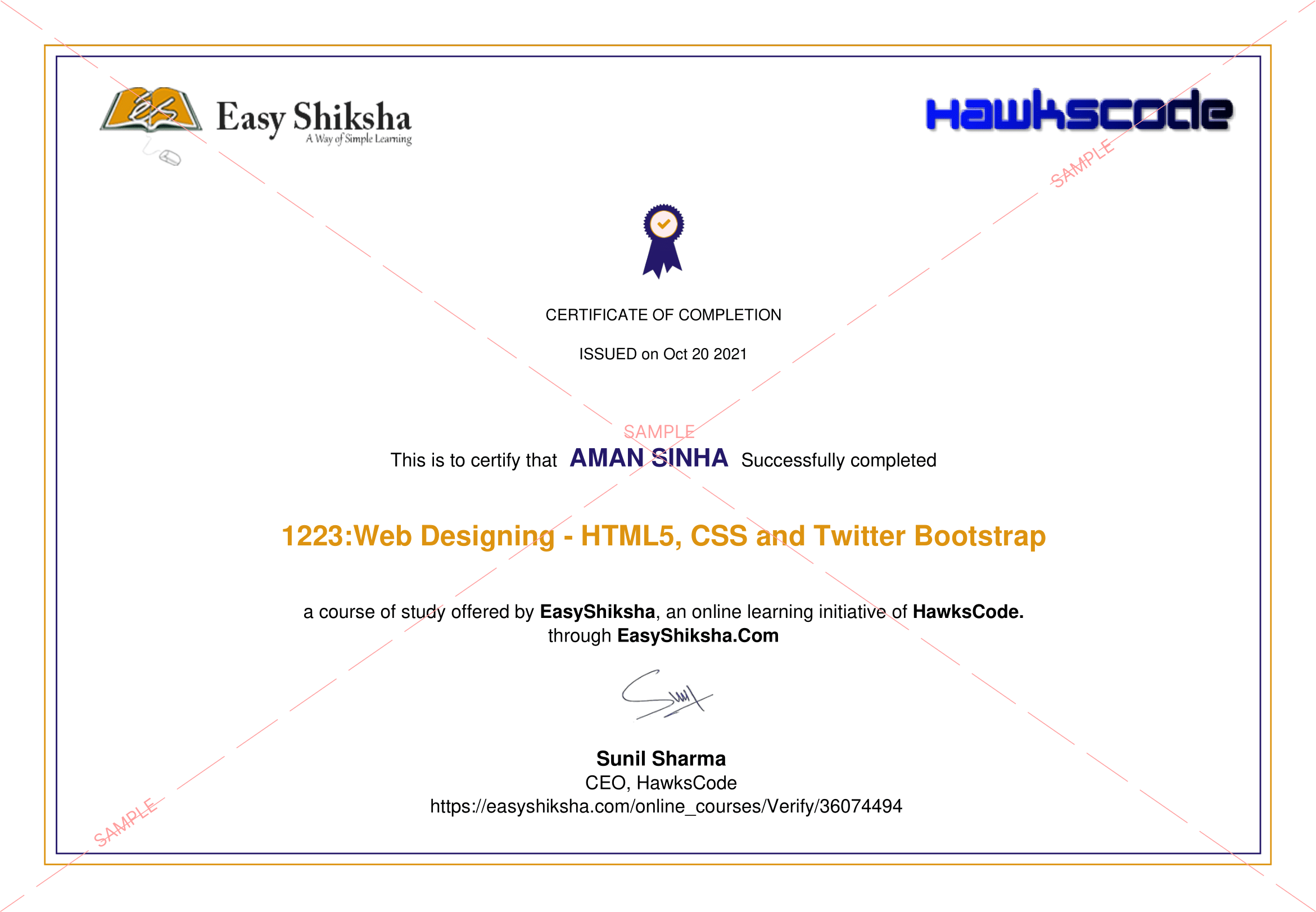
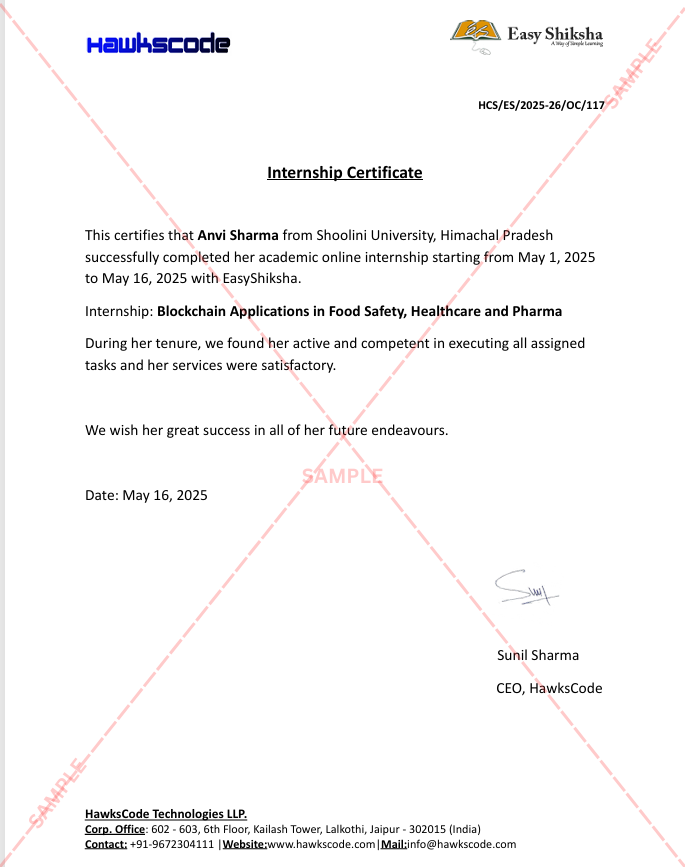
Q. Will I receive a certificate upon completing an internship?
Yes, upon successful completion, you will receive a certificate recognizing your participation and achievements.
Q. Are EasyShiksha's certificates recognized?
Yes, the certificates are recognized by universities, colleges, and employers worldwide.
Q. When can I start the course?
You can choose any course and start immediately without delay.
Q. What are the course and session timings?
These are fully online courses. You can learn at any time and pace that fits your schedule.
Q. What will happen when my course is over?
After completion, you will have lifetime access to the course for future reference.
Q. Can I download the notes and study material?
Yes, you can access and download course materials and have lifetime access for future reference.
Q. What software/tools would be needed?
All necessary software/tools will be shared during the training as needed.
Q. I’m unable to make a payment. What should I do?
Try using a different card. If the problem persists, email us at info@easyshiksha.com.
Q. Do I get the certificate in hard copy?
No, only a soft copy is provided, which can be downloaded and printed if required.
Q. The payment got deducted but shows “failed”?
The deducted amount will be returned to your account in 7-10 working days automatically.
Q. Payment successful but dashboard shows ‘Buy Now’?
Reflection may take 30 mins. If longer, email info@easyshiksha.com with your screenshot.
Q. What is the refund policy?
Refunds are available for technical issues. No refunds once a certificate is generated.
Q. Can I enroll in a single course?
Yes, select any course, complete the details, and start learning immediately.
Q. Need further help?
Contact us at info@easyshiksha.com for any other questions.
A Balanced Vision for the Future
The future of education should not be defined by technology alone. The objective should always remain effective learning.
AI, XR, and spatial computing can provide powerful tools, but they need to be combined with strong curriculum design, qualified teachers, meaningful assessment, accessibility, and ethical practices.
A successful virtual university will not simply be a digital replica of a physical campus. It will use technology to provide learning experiences that are difficult to achieve through conventional methods.
Students should be able to explore, experiment, collaborate, practice, and reflect in ways that complement traditional education.
Conclusion
An AI-powered immersive virtual university using XR and spatial computing represents one of the most ambitious possibilities in the future of digital education. By combining artificial intelligence with virtual reality, augmented reality, mixed reality, and spatial computing, education can move beyond conventional screens and create more interactive learning environments.
Students could potentially enter virtual classrooms, conduct simulated laboratory experiments, explore three-dimensional models, collaborate with learners around the world, interact with AI tutors, participate in virtual internships, and practice professional skills within realistic environments.
For EasyShiksha and the wider EdTech ecosystem, this transformation creates opportunities to connect online education with immersive and practical learning. Digital courses could become part of larger learning journeys that include simulations, projects, assessments, digital portfolios, and career exploration.
At the same time, the development of immersive education must remain responsible and inclusive. Access to technology, privacy, accessibility, AI ethics, data security, and human oversight will be essential considerations. Advanced technology should expand educational opportunities rather than create new barriers.
The university of the future may therefore not be entirely physical or entirely virtual. It may combine physical campuses, digital classrooms, AI-powered tutors, immersive laboratories, virtual collaboration, and spatial computing experiences.
In this model, technology does not replace the fundamental purpose of education. Instead, it provides new ways for students to explore knowledge and apply what they learn.
The real potential of an AI-powered virtual university lies not in creating a visually impressive digital campus but in creating a more interactive, personalized, accessible, practical, and connected learning ecosystem. With thoughtful implementation, platforms such as EasyShiksha can become part of this transformation, helping learners move from simply consuming educational content to actively experiencing, practicing, and applying knowledge in increasingly immersive way.
Anshika Jain is an Engineer, Developer, and Educational Content Author known for her dedication to technology and knowledge sharing. With a strong analytical mindset and a passion for innovation, she has consistently contributed to creating meaningful digital solutions and insightful educational articles.
Her ability to simplify complex technical concepts into engaging and easy-to-understand content makes her work valuable for students and learners across various platforms. Along with her technical expertise, Anshika is admired for her creativity, professionalism, and commitment to continuous learning.
She represents a perfect blend of technical excellence and impactful communication, inspiring others through both her development work and educational contributions.