For generations, educational progress has been measured through familiar milestones such as completing a course, passing an examination, earning a degree, or receiving a certificate. These milestones provide a structured way to track academic achievement and recognize a student's commitment to learning. However, in a world where professional opportunities increasingly depend on practical skills, adaptability, and the ability to solve real-world problems, completion alone may not fully represent what a learner can actually do. A student may complete several online courses without developing the confidence to apply the knowledge independently, while another may acquire valuable practical capabilities through projects, internships, and self-directed learning that are not adequately reflected in traditional academic records.
This raises an important question for the future of digital education: What if education platforms measured progress through capability rather than completion? Instead of focusing primarily on how many lessons a student has finished or how many certificates they have collected, a learning platform could examine how effectively a student understands concepts, applies knowledge, solves problems, and demonstrates practical skills. Such a system would shift the meaning of educational progress from finishing educational activities to developing meaningful abilities.
For a connected learning ecosystem such as EasyShiksha, this idea creates an opportunity to rethink how online courses, educational resources, quizzes, internships, certificates, and career guidance can contribute to a student's development. By connecting learning activities with demonstrated capabilities, digital education platforms could help students understand not only what they have completed but also what they are becoming capable of doing. This approach could make learning more purposeful, measurable, and closely aligned with long-term academic and professional growth.
The Limitations of Completion-Based Education
Why Course Completion Does Not Always Reflect Understanding
Course completion has traditionally served as a convenient indicator of educational progress because it is relatively easy to measure. When a student finishes a course, the platform can record the achievement, issue a certificate, and display the completed learning activity on the student's profile. This creates a clear record of participation and encourages learners to continue progressing through structured educational content. However, completing a course does not necessarily demonstrate that the student has mastered the concepts covered in it.
A learner might finish a programming course by watching every video and reading every lesson without independently writing a functioning program. Another student might complete a digital marketing course while still struggling to develop a campaign strategy, interpret analytics, or identify the right audience for a product. In both cases, the completion record confirms participation, but it provides limited information about the learner's practical abilities.
This difference becomes especially important when education is connected to employment. Employers frequently need people who can apply knowledge to unfamiliar situations, collaborate with others, communicate ideas, and solve problems. A certificate may indicate that a learner has studied a particular subject, but practical demonstrations are often needed to establish what the learner can actually accomplish.
The Problem with Counting Certificates as Progress
The growing availability of online education has made it easier for students to access courses across a wide range of subjects. Learners can study programming, finance, artificial intelligence, communication, digital marketing, and other disciplines without being restricted to a single institution or location. While this accessibility creates valuable opportunities, it can also encourage a completion-oriented approach in which students focus on collecting certificates rather than developing deeper understanding.
A student may accumulate numerous certificates in related subjects without developing a coherent set of practical skills. Another learner may spend several weeks building a single substantial project that demonstrates technical knowledge, problem-solving ability, and independent thinking. If progress is measured primarily through certificate counts, the first learner may appear more advanced even when the second has demonstrated greater practical capability in a particular area.
This does not mean certificates lack value. They can provide evidence of structured learning, participation, and successful assessment. The limitation arises when certificates become the primary measure of progress rather than one component of a broader picture. A capability-based model would preserve the value of course completion while connecting it to evidence of understanding and application.
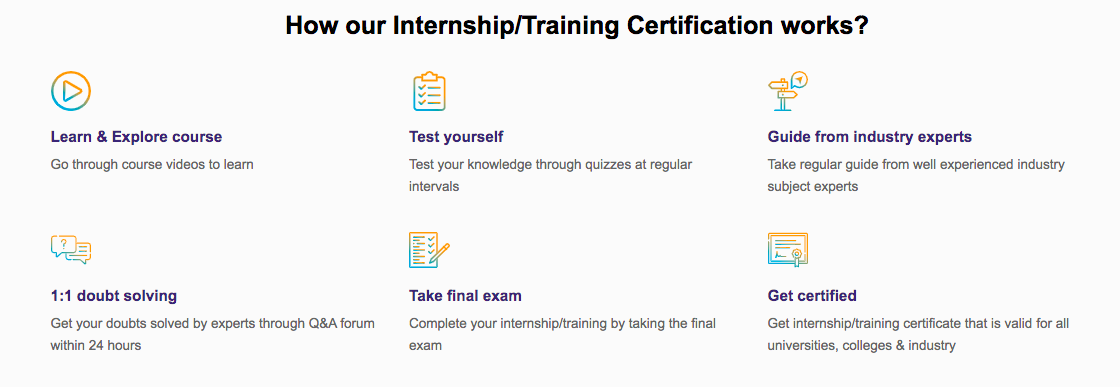
How EasyShiksha Internship/Training Program Works
What Does Capability-Based Learning Mean?
Understanding Capability as a Measurable Educational Outcome
Capability-based learning focuses on what a student can demonstrate after engaging with educational content. Rather than treating the completion of a lesson as the final outcome, it examines whether the learner can explain a concept, apply a technique, complete a task, solve a problem, or transfer knowledge to a new situation.
Capability is broader than memorizing information. A student who studies web development, for example, may initially demonstrate the ability to identify HTML elements and explain basic CSS properties. With further learning and practice, the student may become capable of creating a responsive webpage, identifying layout problems, and improving the accessibility of a digital interface. Each stage represents a meaningful development in the learner's ability to use knowledge.
A capability-based system would therefore describe educational progress through demonstrated outcomes. It could distinguish between introductory familiarity, guided application, independent performance, and the ability to adapt knowledge to unfamiliar challenges. These stages would help students understand how their abilities are developing and what kind of learning experience could help them advance further.
The Difference Between Knowledge, Skill, and Capability
Knowledge, skill, and capability are closely related, but they describe different dimensions of learning. Knowledge refers to what a student understands about a subject, including concepts, principles, facts, and methods. Skill refers to the ability to perform a particular task, often developed through practice and repetition. Capability brings these elements together by examining whether the learner can use knowledge and skills effectively in a specific context.
For instance, a student studying data science may understand statistical concepts and know how to use spreadsheet functions. However, practical capability involves selecting appropriate methods, organizing data, identifying patterns, interpreting results, and communicating findings in a meaningful way. The learner must combine knowledge, technical skills, judgment, and communication to complete the task successfully.
This distinction matters because educational platforms can support each dimension through different learning experiences. Courses can introduce knowledge, quizzes can test understanding, practical exercises can develop skills, and projects or internships can help learners demonstrate broader capabilities. A connected platform can make these experiences more meaningful by showing how they contribute to the same learning objective.
From Course Completion to Demonstrated Capability
Reimagining the Meaning of Educational Progress
Imagine a digital education platform where a student's progress is represented not only by completed courses but also by the abilities developed through those courses. Instead of displaying a profile that simply states that a learner has completed five programming courses, the platform could describe the student's demonstrated capabilities in a structured way.
The profile might show that the learner understands programming fundamentals, can write basic functions, can identify common errors, and has completed a project using a particular programming language. It could also indicate which abilities have been demonstrated independently and which still require guided practice. This would provide a more informative picture of the learner's development than a simple list of completed activities.
Such a system would not eliminate traditional educational milestones. Degrees, certificates, examinations, and course completion records would continue to serve important purposes. The difference would be that these milestones would become part of a broader learning record that connects academic achievement with practical evidence. Students would be able to see how their educational activities contribute to specific capabilities rather than treating every completed activity as an isolated achievement.
Making Learning Outcomes Visible
Many students struggle to understand how individual learning activities contribute to their long-term goals. A course may introduce valuable concepts, but learners may not immediately recognize how those concepts connect to a career, a project, or a practical challenge. Capability-based progress tracking could help make these connections visible.
For example, a student learning digital marketing might begin by studying search engine optimization, audience research, content strategy, and analytics. A capability-oriented platform could connect these subjects to broader outcomes such as developing a content plan, conducting keyword research, evaluating website performance, and interpreting campaign data.
As the student completes lessons, quizzes, assignments, and practical activities, the platform could update the learner's progress toward these outcomes. This would help students understand why each learning activity matters and how different subjects combine to support a practical objective.
The Role of EasyShiksha in Capability-Oriented Education
Connecting Courses with Practical Outcomes
EasyShiksha brings together educational opportunities such as online courses, degrees, internships, quizzes, certificates, and career-related resources. These learning experiences can be understood as interconnected stages of a student's development rather than separate activities that end when a course is completed.
Within a capability-oriented approach, online courses could serve as the foundation for developing subject knowledge and technical understanding. Students could then use quizzes to assess their comprehension, apply concepts through practical assignments, and explore internships to gain experience in professional environments. Each stage would contribute a different form of evidence about the learner's development.
For example, a student interested in web development could begin with foundational courses, use quizzes to assess understanding of programming concepts, and apply those concepts by creating a website. An internship could provide an opportunity to work on practical tasks, collaborate with others, and experience professional expectations. The learner's educational journey would therefore be understood as a progression from foundational knowledge to demonstrated capability.
This model reflects the broader potential of connected digital education. Instead of treating courses, assessments, and internships as unrelated opportunities, a platform could help students understand how each activity contributes to a coherent learning journey.
Building a More Meaningful Student Learning Profile
A student learning profile could become more useful if it recorded demonstrated capabilities alongside academic achievements. Traditional profiles often emphasize qualifications, completed courses, certificates, and educational history. While these details remain valuable, they may not fully communicate the practical abilities a student has developed.
A capability-oriented profile could connect learning records with projects, assessment results, practical experience, and verified achievements. For example, a student studying finance might demonstrate the ability to prepare a basic financial analysis, interpret financial statements, organize spreadsheet data, and explain findings. The profile could connect these capabilities to the courses and practical activities through which they were developed.
For EasyShiksha, such a concept could support a more connected view of student development. Rather than presenting educational information as a collection of separate records, the platform could help learners understand the relationship between what they have studied, what they have practised, and what they can demonstrate. Any implementation would need clear assessment standards and reliable verification processes to ensure that the information remains meaningful.
How Quizzes Could Measure Understanding Rather Than Simple Recall
Moving Beyond Memorization-Based Assessment
Quizzes are widely used in digital education because they provide a convenient way to assess learning and offer immediate feedback. However, their educational value depends significantly on the types of questions they contain. A quiz focused entirely on definitions and factual recall may show whether a student remembers information, but it may not establish whether the learner can apply that information in a practical situation.
A capability-oriented assessment system could include questions that require students to interpret information, identify patterns, choose appropriate methods, and solve realistic problems. In a programming course, for example, learners could be asked to identify an error in a code snippet, predict the result of a function, or select an appropriate approach to a simple programming task.
In a finance course, students could interpret a basic financial statement, identify a calculation error, or determine which information is needed to answer a business question. These assessment formats would provide more meaningful evidence of applied understanding than questions focused only on memorized definitions.
Using Assessment Results to Identify Learning Gaps
A capability-oriented quiz system would not treat every incorrect answer as a simple loss of marks. Instead, assessment results could help identify the specific concepts or skills that require additional attention. If a student understands theoretical principles but struggles to apply them, the platform could recommend practice activities that focus on application.
For example, a student studying cybersecurity might perform well on questions about security terminology but struggle with identifying vulnerabilities in a sample scenario. The results could indicate that the learner needs more practice interpreting security situations rather than repeating introductory definitions.
This approach could help students use quizzes as tools for improvement rather than merely as checkpoints. By connecting assessment results with learning resources, a platform could support a more personalized learning process in which students revisit concepts, practise specific skills, and gradually develop greater independence.
Projects as Evidence of Practical Capability
Why Projects Reveal More Than Completion Records
Projects allow learners to apply knowledge to a defined task and produce a tangible outcome. They can demonstrate how students approach problems, organize information, make decisions, use tools, and respond to challenges. For this reason, projects can provide important evidence of capability when they are designed with clear learning objectives and appropriate assessment criteria.
A student studying web development might build a responsive website, while a data science learner could analyze a dataset and present findings. A digital marketing student might create a campaign plan, and a graphic design learner could develop a visual identity for a fictional brand. Each project provides an opportunity to demonstrate practical application.
However, a project should not be treated as automatic proof of mastery. The quality of the work, the level of guidance received, the complexity of the task, and the learner's individual contribution all matter. A meaningful capability assessment should consider these factors and explain what the project demonstrates and what remains unverified.
Developing a Portfolio of Demonstrated Skills
A digital portfolio can help students organize projects and present evidence of their development over time. Instead of relying exclusively on a list of certificates, learners could maintain a collection of work that demonstrates their abilities across different subjects and levels of complexity.
A portfolio might include completed projects, practical assignments, research summaries, presentations, and records of relevant experience. Each item could be connected to specific capabilities, making it easier for students to understand how their work contributes to their broader learning profile.
For students using EasyShiksha, a portfolio-oriented approach could connect online learning with practical achievements and career preparation. Students could use their projects to reflect on their progress, identify areas for improvement, and communicate their experience when applying for internships or entry-level opportunities. The usefulness of such a portfolio would depend on the authenticity of the work and the clarity of the evidence supporting each claimed capability.
Internships and Real-World Capability Development
Moving from Simulated Tasks to Professional Experience
Online courses and projects can help students develop foundational skills, but professional environments introduce additional challenges. Workplace tasks may involve collaboration, deadlines, communication, changing requirements, and decisions that cannot be fully anticipated in advance. Internships can expose students to these realities and provide opportunities to apply their learning in practical settings.
A capability-oriented education platform could connect internship experiences with the abilities students are expected to develop. For example, a student participating in a digital marketing internship might practise content planning, campaign reporting, audience research, and professional communication. A software development intern might contribute to testing, documentation, debugging, or feature development under supervision.
The experience would contribute to a broader understanding of the learner's capabilities, especially when tasks, expectations, and feedback are clearly documented. Rather than treating an internship certificate as the only outcome, students could reflect on the specific responsibilities they handled and the skills they practised.
Understanding the Difference Between Exposure and Mastery
Professional exposure does not automatically establish mastery. A student may participate in an internship without independently completing complex tasks, while another may demonstrate substantial responsibility in a particular area. Therefore, capability-based progress tracking should distinguish between observing a task, assisting with it, completing it under guidance, and performing it independently.
This distinction can help students develop realistic expectations about their progress. It can also help educators and employers interpret experience more accurately. A learner who has observed a project management process has gained exposure, but that experience is different from independently planning and managing a project.
When platforms document these distinctions transparently, internships can become more informative components of a student's learning journey. Students can identify the experiences they need next and understand how their responsibilities are changing as their capabilities develop.
Personalized Learning Paths Based on Capability Gaps
Recommending the Next Learning Activity
A completion-based learning platform typically guides students through a predefined sequence of lessons and assessments. This structure can be useful for introducing subjects in an organized way, but it may not always reflect the different needs of individual learners. Some students may understand certain concepts quickly, while others may need additional explanations, examples, or practice.
A capability-oriented platform could use assessment results and learning evidence to help identify the next appropriate activity. If a student demonstrates strong theoretical understanding but limited practical application, the system could suggest a guided project or simulation. If the learner struggles with foundational concepts, it could recommend revision materials and introductory exercises.
For EasyShiksha, this concept could connect courses, quizzes, projects, and career-oriented learning resources into more personalized pathways. The purpose would not be to force every student into a single sequence but to help learners identify relevant next steps based on their current understanding and goals.
Supporting Students with Different Starting Points
Students enter digital education with different levels of knowledge, experience, access to technology, and confidence. A learner who has already completed several programming projects may not need the same introductory material as someone encountering coding for the first time. Similarly, a student with practical work experience may have capabilities that are not reflected in formal academic records.
Capability-oriented learning can recognize these differences by focusing on demonstrated outcomes rather than assuming that all learners must follow identical paths. Students could be encouraged to build on existing knowledge while addressing specific gaps that prevent them from progressing toward their goals.
This approach also requires careful consideration of fairness. A learner's performance may be influenced by language barriers, accessibility needs, limited internet connectivity, or unfamiliarity with a particular assessment format. A meaningful system should offer multiple ways to demonstrate learning and avoid interpreting a single assessment result as a complete measure of ability.
Artificial Intelligence and Capability-Based Progress Tracking
Using AI to Interpret Learning Evidence
Artificial intelligence could support capability-oriented education by helping platforms organize learning data, identify patterns, and recommend relevant educational resources. When used responsibly, AI-enabled systems could examine quiz responses, project submissions, learning activity, and assessment feedback to help students understand their progress.
For example, an AI-supported learning system might identify that a student repeatedly struggles with a particular type of programming problem. It could recommend additional exercises, explain the underlying concept, or direct the learner toward a relevant course module. In another situation, the system might recognize that a student has demonstrated consistent understanding of a topic and suggest a more challenging application task.
These functions could make learning pathways more responsive to individual needs. However, AI-generated interpretations should not be treated as definitive judgments about a student's ability. Automated systems can make errors, misinterpret context, or produce inconsistent results, particularly when evidence is incomplete or assessments are poorly designed.
Maintaining Transparency and Human Oversight
Capability-based education requires trustworthy assessment practices. Students should understand what a capability means, how it is measured, and what evidence is required to demonstrate it. If an AI system recommends a learning activity or updates a progress indicator, the platform should make the underlying reasoning understandable wherever possible.
Human oversight remains important when assessments affect significant educational opportunities, internship eligibility, or career-related decisions. Teachers, mentors, and evaluators can provide context that automated systems may miss, including creativity, collaboration, persistence, and the complexity of a student's working environment.
A responsible system should also protect student privacy and give learners appropriate control over their educational records. Learning data should be collected for clearly explained purposes, and sensitive information should not be used to make unsupported assumptions about a student's potential. Technology should support educational judgment rather than replace it entirely.
Capability Frameworks Across Different Subjects
Measuring Technical Capabilities
Technical subjects often provide opportunities for practical assessment because learners can demonstrate their abilities through projects, experiments, simulations, and problem-solving tasks. In programming, capability might involve writing functional code, debugging errors, using version control, and understanding basic software design principles.
In data science, students might demonstrate the ability to clean data, select suitable analytical methods, interpret results, and communicate findings. In electronics, capability could involve understanding circuit components, assembling a basic circuit, diagnosing common problems, and explaining how a system works.
A structured capability framework could describe the expected outcomes at different levels of learning. The framework would need to account for differences in task complexity and the amount of support provided, ensuring that students are assessed against clear and appropriate standards.
Measuring Communication and Professional Capabilities
Not all meaningful capabilities are technical. Communication, collaboration, critical thinking, organization, and professional responsibility can influence how effectively students apply their knowledge in academic and workplace settings.
A student may understand a subject thoroughly but struggle to explain the findings to others. Another may demonstrate strong individual performance but need additional practice collaborating on shared tasks. These capabilities can be developed through presentations, group projects, written assignments, peer feedback, and supervised practical experiences.
Assessing such abilities requires clear criteria and careful interpretation. Communication quality, for example, should be evaluated in relation to the purpose and audience of a task rather than through vague judgments. A transparent framework can help students understand expectations and identify specific areas for improvement.
Capability-Based Learning and Career Readiness
Connecting Education with Workplace Expectations
Career readiness involves more than completing a degree or collecting certificates. Students need to understand how their knowledge and skills relate to professional responsibilities and how they can demonstrate their abilities to potential employers.
A capability-oriented learning profile could help students connect educational experiences with practical expectations. A student interested in software development might identify capabilities related to programming fundamentals, debugging, collaboration, and project documentation. A student pursuing digital marketing could focus on research, content planning, analytics, and campaign evaluation.
This connection can make career exploration more concrete. Students can compare their current abilities with the requirements of different roles and identify learning experiences that could help them develop relevant skills. Career counselling and educational discovery resources can support this process by helping learners explore options and understand the preparation associated with them.
Helping Students Communicate Their Abilities
When applying for internships or jobs, students often need to explain what they can do and provide evidence supporting their claims. A capability-oriented profile could help them organize this information through projects, assessments, practical experience, and verified achievements.
Instead of stating only that a course has been completed, a student could describe the practical work performed during the course and identify the specific capabilities demonstrated. For example, a learner might explain that they created a responsive website, tested its functionality, and documented the development process.
Such evidence can make a student's experience easier to understand, although it does not guarantee employment or replace the need for interviews, professional references, or employer-specific assessments. Its value lies in helping students communicate their learning more clearly and accurately.
The Role of Degrees and Certificates in a Capability-Based System
Preserving the Value of Formal Qualifications
A shift toward capability-based progress does not require abandoning degrees, certificates, or formal academic qualifications. Degrees provide structured education and can represent substantial academic achievement. Certificates can document participation and successful completion of specific learning programs. Both can remain important indicators of educational history.
The opportunity lies in connecting these credentials with clearer evidence of learning outcomes. A degree could continue to demonstrate completion of an academic program while projects, practical assessments, and supervised experiences provide additional information about particular capabilities.
This approach would allow educational achievements to be understood in a broader context. Students would not have to choose between formal qualifications and practical skills. Instead, they could build a learning record that reflects both academic development and demonstrated ability.
Making Credentials More Informative
A certificate becomes more informative when it clearly describes what the learner studied, how learning was assessed, and what outcomes were demonstrated. A course certificate based on attendance or completion communicates something different from a credential earned through practical assessment.
Digital education platforms could help students distinguish between these forms of evidence. A learning profile might identify whether a capability was demonstrated through a quiz, a project, a supervised assignment, or an internship evaluation. It could also describe the level of independence involved and the date on which the evidence was recorded.
Clear documentation would help learners and other stakeholders interpret credentials more accurately. It would also reduce the risk of treating all certificates as equivalent, regardless of the learning requirements behind them.
Challenges in Implementing Capability-Based Education
Defining Capabilities Clearly
One of the central challenges is determining what a capability means in a particular subject. Broad terms such as problem-solving, creativity, communication, or technical proficiency can be difficult to assess unless they are connected to observable outcomes.
A useful framework must translate these broad concepts into specific demonstrations. In programming, problem-solving might involve identifying the cause of an error and implementing a workable solution. In communication, it might involve presenting an argument clearly, responding to questions, and adapting information to an audience.
Developing these frameworks requires subject expertise, careful assessment design, and regular review. Capabilities may also change as technologies and professional practices evolve, meaning that educational platforms must update their learning outcomes to remain relevant.
Ensuring Fairness and Accessibility
A capability-based system can create new opportunities for demonstrating learning, but it can also introduce barriers if assessments are not designed inclusively. Students may have different access to devices, reliable internet connections, specialist software, quiet study environments, or professional networks.
A student who lacks access to expensive tools should not automatically be considered less capable than someone who has greater resources. Similarly, an assessment that depends heavily on a particular language style may fail to measure the intended technical capability accurately.
Educational platforms should therefore consider accessible assessment formats, reasonable accommodations, transparent evaluation criteria, and alternative ways to demonstrate learning. Fairness requires attention not only to the final result but also to the conditions under which students are expected to produce it.
Avoiding Excessive Measurement
Another challenge is the risk of turning every learning activity into a performance metric. If students feel that every experiment, mistake, or practice session must contribute to a permanent record, they may become reluctant to explore unfamiliar topics or take creative risks.
Learning includes uncertainty, experimentation, and temporary setbacks. A student should be able to attempt a difficult task, make mistakes, and revise their work without those experiences being interpreted as permanent evidence of limited ability.
A thoughtful capability-based model should distinguish between formative practice and formal assessment. Practice activities should help students learn, while verified capability records should be based on clearly defined evidence. This distinction can preserve the value of experimentation and encourage students to approach challenging subjects with greater confidence.
How Students Could Experience a Capability-Based Learning Journey
From Curiosity to Demonstrated Ability
Consider a student who becomes interested in artificial intelligence after exploring its applications in everyday life. In a traditional completion-based pathway, the student might enroll in an introductory course, finish its lessons, and receive a certificate. The learning experience would provide foundational knowledge, but the student might still be uncertain about how to apply that knowledge.
In a capability-oriented journey, the same student could begin with introductory lessons and use quizzes to assess understanding. After developing a foundation, the learner could complete a guided exercise involving a simple dataset or a basic AI application. A project could then provide an opportunity to apply the concepts independently, while an internship or supervised practical experience could introduce professional expectations.
At each stage, the student would receive information about the knowledge and capabilities demonstrated. If the learner struggled with a particular concept, the platform could recommend additional practice. If the learner demonstrated readiness for a more challenging task, the next activity could involve a greater level of independence.
This journey illustrates how EasyShiksha's connected educational resources could support a learning process that focuses on meaningful development rather than isolated completion milestones.
Building Confidence Through Visible Progress
Students often find it difficult to recognize their own growth, especially when learning involves complex subjects or long-term goals. A capability-oriented system could make progress more visible by showing how a learner's abilities have developed over time.
A student who initially struggled to write basic code might later complete a functional application. A learner who began with limited knowledge of financial analysis might eventually interpret financial data and communicate findings clearly. These changes represent meaningful progress that may not be adequately captured by counting completed courses alone.
Visible progress can also help students develop more realistic confidence. Rather than relying on a general statement that they have become proficient, learners can examine the specific tasks they can now perform and identify the areas where further development is needed.
Empower your team. Lead the industry
Get a subscription to a library of online courses and digital learning tools for your organization with
EasyShiksha
The Future of Digital Education: From Learning Records to Capability Records
A More Connected View of Student Development
Digital education platforms have the potential to connect learning experiences that are often recorded separately. Courses, assessments, projects, degrees, internships, and career exploration activities can contribute different forms of evidence about a student's development.
A connected capability record could bring these elements together in a structured profile. Students might be able to see which capabilities are supported by formal qualifications, which have been demonstrated through projects, and which are still developing through practice. Such a profile could help learners organize their educational history and make more informed decisions about future learning.
For EasyShiksha, this concept aligns with the broader idea of connecting educational discovery, online learning, assessment, practical experience, and career guidance. The platform's value in such a model would come from helping students understand the relationships between these experiences and how they contribute to personal and professional development.
Supporting Lifelong Learning and Career Transitions
Learning does not end when a student completes a degree or enters the workforce. Professionals may need to acquire new technical skills, adapt to changing responsibilities, or explore entirely different career paths. A capability-oriented learning record could help individuals understand which abilities they already possess and which require further development.
For example, a professional moving from a traditional marketing role into digital marketing might already have experience in communication, customer research, and campaign planning. The learner could build on those capabilities while developing additional skills in analytics, digital advertising, and marketing technology.
A connected learning platform could help organize this transition by linking existing knowledge with new courses, assessments, projects, and practical experiences. This approach would support a broader understanding of education as an ongoing process rather than a sequence of qualifications completed at fixed stages of life.
Conclusion: Measuring What Learners Can Actually Do
The future of digital education may depend partly on how effectively learning platforms connect educational activity with meaningful outcomes. Course completion, certificates, and academic qualifications remain valuable, but they provide only part of the picture of a student's development. Understanding what learners can explain, apply, create, and demonstrate can provide a more detailed view of educational progress.
A capability-oriented model would connect knowledge with practical application, assessment with feedback, and learning activities with clear outcomes. It would help students recognize their strengths, identify gaps, and understand how their educational experiences contribute to their goals. It would also encourage platforms to move beyond counting completed activities and focus more directly on the development of meaningful abilities.
For EasyShiksha, this idea offers a framework for connecting online courses, degrees, quizzes, certificates, internships, and career guidance into a more coherent learning journey. By helping students understand the relationship between what they study and what they can demonstrate, a connected education ecosystem could make digital learning more purposeful and transparent.
Ultimately, measuring progress through capability does not mean rejecting completion. It means giving completion a clearer purpose. A completed course becomes the beginning of a practical learning opportunity, a certificate becomes one part of a broader record, and an educational journey becomes a process of continuously developing and demonstrating the ability to apply knowledge in meaningful ways.
Anshika Jain is an Engineer, Developer, and Educational Content Author known for her dedication to technology and knowledge sharing. With a strong analytical mindset and a passion for innovation, she has consistently contributed to creating meaningful digital solutions and insightful educational articles.
Her ability to simplify complex technical concepts into engaging and easy-to-understand content makes her work valuable for students and learners across various platforms. Along with her technical expertise, Anshika is admired for her creativity, professionalism, and commitment to continuous learning.
She represents a perfect blend of technical excellence and impactful communication, inspiring others through both her development work and educational contributions.