The digital transformation of education has created an unprecedented number of opportunities for students to learn, explore careers, develop skills, and access academic resources from almost anywhere. Online courses, digital degrees, educational videos, quizzes, internships, career counselling platforms, and college discovery websites have made education more accessible and flexible than ever before. Students can now choose learning opportunities according to their interests, schedules, and professional ambitions rather than relying exclusively on traditional educational institutions. However, this growing availability of digital resources has also introduced a new challenge: education has become increasingly fragmented across platforms, applications, and services that often operate independently of one another.
A student searching for a suitable college may need one platform to compare institutions, another to explore degree programs, a separate website to learn professional skills, another application to practice through quizzes, and an entirely different service to find internships. Career counselling, certificates, educational games, and practical learning opportunities may exist in additional digital environments. Although each service may provide value independently, students are frequently responsible for connecting these experiences and determining how they contribute to their overall educational journey. The result is a digital education experience that offers extensive choice but can require considerable time, effort, and decision-making.
This situation has created renewed interest in the idea of the rebundling of education. Rebundling refers to bringing previously separated educational services, resources, and experiences together into a connected system that makes learning easier to navigate. Instead of requiring students to move continuously between disconnected platforms, a unified educational ecosystem could connect discovery, learning, assessment, practical experience, and career development within a more coherent journey.
For a platform such as EasyShiksha, which provides access to online education, degrees, courses, internships, quizzes, certificates, educational discovery, career counselling, and games, the concept of rebundling offers an opportunity to rethink the student experience. The goal is not simply to place multiple services under one digital roof. It is to help students understand how different educational opportunities relate to one another and how each stage can support their academic and professional development.
As digital education continues to evolve, the central question is becoming increasingly important: Could students benefit from having their entire educational journey connected through one integrated learning ecosystem rather than navigating a collection of separate services?
Understanding the Rebundling of Education
From Traditional Educational Bundles to Digital Learning Services
Traditional education has historically operated through bundled structures. Schools, colleges, and universities typically combine teaching, assessments, academic guidance, learning resources, examinations, and qualifications within a single institution. Students enroll in a program and receive access to a collection of educational services that are designed to support a relatively structured academic journey. Although these systems can vary significantly, the institution generally serves as the central point through which students access multiple aspects of their education.
The growth of digital education introduced a different model. Instead of depending entirely on a single institution, learners gained the ability to select individual services according to their needs. They could enroll in an online course, use a separate platform for practice questions, attend virtual workshops, discover internships through a job portal, and seek career advice from independent services. This unbundling of education increased flexibility and expanded access to learning opportunities that might otherwise have been difficult to obtain.
However, unbundling also transferred much of the responsibility for coordinating education to the student. Learners must now identify reliable resources, compare opportunities, organize their progress, manage multiple accounts, and determine how different activities fit into a broader educational plan. Rebundling represents a potential response to this challenge by reconnecting useful services without necessarily returning to the rigid structures of traditional education.
What Rebundling Means in a Digital Education Ecosystem
The rebundling of education involves creating meaningful connections between services that have become separated through digital specialization. A connected platform could allow students to discover educational institutions, explore courses, pursue degrees, assess their knowledge, gain practical experience, and access career guidance through a coordinated system.
The important distinction is that rebundling does not require every educational service to be developed or delivered by a single organization. A platform could connect its own learning features with external institutions, training providers, employers, and educational partners. The result would be an ecosystem in which students can access different opportunities through a more consistent experience.
For example, a student interested in digital marketing could begin by exploring career options, identify relevant skills, discover suitable courses, practice through quizzes, complete a project, and explore internship opportunities. If these stages are connected, the learner would not need to independently reconstruct the relationship between each activity. The platform could help explain how the student's choices contribute to a developing set of skills and experiences.
Rebundling, therefore, is not simply about combining features. It is about creating continuity between educational activities so that students can move from one stage to another with greater clarity.
Why Digital Education Became Fragmented
The Rise of Specialized Learning Platforms
One of the main reasons education has become fragmented is the growth of specialized digital services. Different platforms focus on specific aspects of the learning experience, such as online courses, professional certificates, degree programs, assessments, tutoring, internships, or career development. Specialization allows providers to concentrate on particular needs and develop services that may be more focused than those offered by broad educational systems.
For students, however, specialization can create a complicated digital environment. A learner may need several platforms to complete a single educational objective. Someone preparing for a career in data science might use one service for mathematics, another for programming, a third for machine learning, and a separate platform to find practical projects or internships. The student must then determine how these experiences fit together and whether the acquired knowledge is sufficient for the intended career pathway.
This fragmentation does not mean that specialized platforms are inherently unsuitable. Different providers may offer distinct expertise, teaching methods, and learning opportunities. The challenge is that students often lack a convenient way to connect these services into a coherent educational journey.
The Separation of Learning and Career Development
Education and career development are frequently treated as separate activities, even though they are closely related. Students may complete academic programs without receiving sufficient guidance about how their knowledge connects to professional opportunities. Similarly, career platforms may present internships and job opportunities without helping learners understand which educational experiences could prepare them for those roles.
This separation can create uncertainty, especially for students who are still exploring their interests. A learner may know that they want to work in technology but remain unsure whether to pursue programming, cybersecurity, data analytics, cloud computing, or another specialization. Without connections between career exploration, skill development, and practical experience, students may struggle to identify a suitable learning pathway.
A rebundled educational ecosystem could connect career discovery with courses, assessments, projects, and internships. This would allow students to explore professional possibilities while understanding the learning activities that may help them prepare for different opportunities.
The Burden of Managing Multiple Digital Experiences
Fragmented education also creates practical difficulties. Students may need to manage several accounts, track separate course histories, store certificates in different locations, and remember where they completed particular assignments or assessments. These administrative tasks can make digital learning feel more complicated than necessary.
When educational records remain disconnected, students may also struggle to recognize their progress. A learner who completes courses on several platforms may have accumulated meaningful knowledge without possessing a clear overview of how those experiences relate to one another. A connected system could reduce this fragmentation by bringing relevant learning records and educational activities into a more organized environment.
The objective would not be to eliminate every external service but to make the overall educational experience easier to manage and understand.
Why Students May Want Everything Connected Again
Convenience Without Losing Educational Choice
Students often value flexibility because it allows them to choose learning opportunities that match their interests, schedules, and budgets. However, flexibility can become difficult to manage when every choice requires navigating another independent platform. Rebundling offers a way to preserve educational choice while making the process of discovering and using learning opportunities more convenient.
A connected platform could allow students to explore multiple educational options without requiring them to begin the search process from scratch every time their goals change. A student interested in business, for example, could discover relevant degree programs, compare online courses, explore practical projects, and identify internship opportunities within a coordinated environment.
This approach would not require students to follow a single prescribed path. Instead, it would provide a structured environment in which learners can make independent choices while understanding how those choices relate to their broader goals.
A Clearer View of the Entire Learning Journey
Students frequently encounter education as a sequence of separate activities: selecting a course, completing lessons, taking an examination, receiving a certificate, and searching for the next opportunity. Although these activities may contribute to a larger objective, the connection between them is not always visible.
A rebundled system could present education as a continuous journey in which each stage builds on earlier learning. Students could begin with educational discovery, move into structured learning, assess their understanding, practice through projects, gain practical experience, and revisit their goals as their interests develop.
This connected view could help students understand not only what they have completed but also what they have learned, where they may need further development, and which opportunities could support their next steps.
Less Time Searching and More Time Learning
Digital education has made educational resources widely available, but students may spend considerable time searching for appropriate materials and comparing opportunities. They may also encounter duplicated content, conflicting recommendations, or resources that do not match their current skill level.
A connected learning ecosystem could reduce unnecessary searching by helping students discover relevant opportunities according to their interests, educational background, and learning objectives. Instead of navigating multiple disconnected services, learners could explore a coordinated set of options and decide which ones are appropriate for their needs.
This does not mean that a platform should make every decision automatically. Students should remain free to compare resources independently and explore unfamiliar subjects. The value of rebundling lies in reducing unnecessary complexity while preserving meaningful choice.
EasyShiksha as a Connected Education Ecosystem
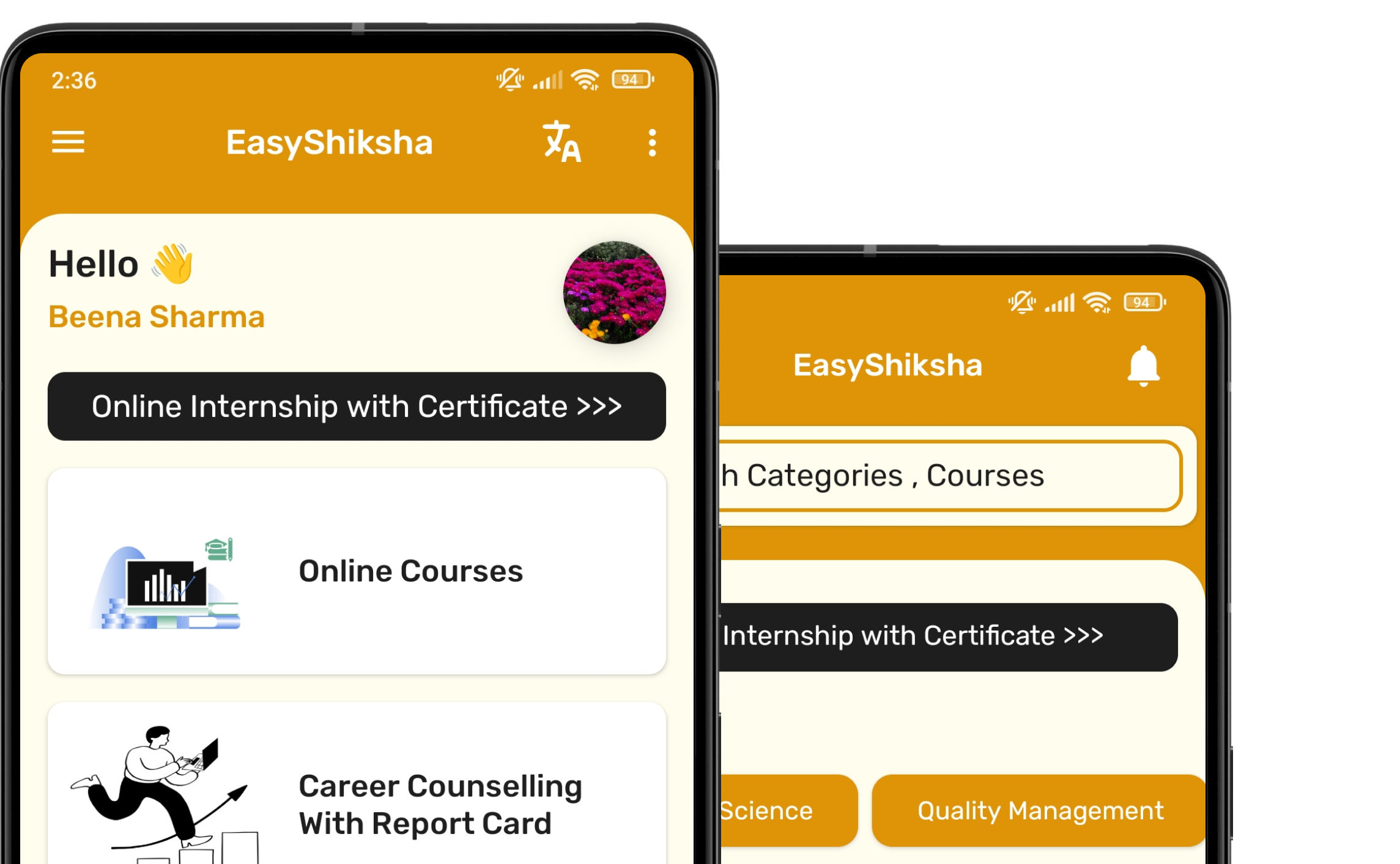
EasyShiksha offers a range of educational opportunities, including online courses, degrees, internships, quizzes, certificates, educational discovery, career counselling, and games. These services address different stages of the student journey, from identifying educational opportunities to developing knowledge and gaining practical experience.
The concept of rebundling provides a way to understand how these features could work together as parts of a connected educational ecosystem. Rather than treating each service as an independent destination, a unified student experience could help learners move naturally between educational discovery, structured learning, assessment, practical application, and career exploration.
For example, a student searching for a suitable degree program could also explore the skills associated with related career pathways. Once the student identifies an area of interest, the platform could help connect that interest with relevant courses, learning resources, quizzes, and practical opportunities. As the learner progresses, career guidance could help them reflect on their developing interests and identify possible next steps.
The broader opportunity is to make education easier to navigate without limiting students to a single academic or professional direction. By connecting different educational services, EasyShiksha could support a more continuous learning experience in which students can explore, learn, practice, and develop their skills within a coordinated digital environment.
However, a connected ecosystem must offer more than a large collection of features. Its effectiveness depends on how well those features work together, how clearly students understand their options, and whether the platform helps learners make meaningful progress toward their goals.
Connecting Educational Discovery With Learning
From Searching for Colleges to Exploring Complete Educational Pathways
Educational discovery is often treated as a search activity in which students compare colleges, universities, courses, or degree programs. Although this is an important part of the decision-making process, selecting an institution is only one stage of a much broader educational journey.
Students also need to understand the subjects they will study, the skills they may develop, the practical opportunities available, and the possible career directions associated with different programs. A connected educational platform could help bring these considerations together by linking institution discovery with course information, learning resources, career exploration, and practical experience.
For example, a student exploring a degree in computer science could also discover introductory programming courses, quizzes that help assess foundational knowledge, and project-based learning opportunities. This could help the learner understand the subject before committing to a longer educational program and identify areas where additional preparation may be useful.
Such an approach could make educational discovery more informative by helping students consider not only where to study but also how their learning could develop over time.
Connecting Career Interests With Academic Choices
Career interests often influence educational decisions, but students may not always know which qualifications or skills are associated with particular professions. A connected platform could help learners explore these relationships by presenting educational options alongside relevant career information.
A student interested in digital marketing, for example, could explore related degree programs, short-term courses, analytical tools, communication skills, and internship opportunities. This would help the learner understand that career preparation may involve several complementary forms of education and experience rather than a single qualification.
Career guidance could further support the process by helping students reflect on their interests, compare possible pathways, and identify the learning activities that align with their goals. The purpose would be to expand students' understanding of available choices rather than prescribe a particular career direction.
Connecting Courses, Degrees, and Skill Development
Short Courses as Building Blocks for Long-Term Learning
Online courses can help students develop specific skills, explore unfamiliar subjects, or strengthen knowledge acquired through formal education. Degrees, meanwhile, generally provide a broader academic structure and may be required for particular professional or academic pathways. When these forms of education remain disconnected, students may struggle to understand how short-term learning contributes to long-term educational goals.
A rebundled platform could connect short courses with broader learning pathways by helping students identify how individual subjects relate to degree programs, professional skills, and practical applications. A learner studying business administration, for instance, might supplement formal education with courses in data analysis, digital marketing, financial tools, or communication.
These additional learning experiences could strengthen the student's understanding of specific topics while complementing the broader academic program. However, short courses should not be presented as automatic substitutes for formal qualifications when a profession or institution requires a recognized degree or credential.
Building a Connected Skill Development Pathway
Skills are often developed through a combination of theoretical learning, repeated practice, feedback, and practical application. A course may introduce a concept, a quiz may help assess understanding, and a project may allow the learner to apply the concept in a realistic situation. Internships can then provide opportunities to use related skills in a professional environment.
A connected education platform could help students understand how these stages contribute to skill development. For example, a learner interested in web development might begin with HTML and CSS, continue with JavaScript, practice through quizzes, build a website, and later explore an internship that involves front-end development.
By connecting these activities, the platform could make the learning pathway more visible and help students identify which skills they have practiced and which areas may require additional development. This would encourage students to think beyond course completion and focus on the knowledge and abilities they can apply.
The Role of Quizzes in a Rebundled Learning System
Quizzes can serve as an important connection between learning and assessment. In a fragmented educational environment, students may complete lessons on one platform and use a separate service to test their understanding. A rebundled system could integrate quizzes into the learning journey so that assessment becomes a natural part of the educational experience.
After completing a course or lesson, students could use quizzes to identify concepts they understand well and topics that may require further review. The results could help learners decide whether to continue to a more advanced topic, revisit foundational material, or practice through additional exercises.
For example, a student studying finance could complete a lesson on financial statements and then answer questions that assess their understanding of revenue, expenses, assets, and liabilities. If the learner struggles with a particular concept, the platform could recommend a relevant explanation or practice activity.
Quizzes could also connect learning across different subjects. A student studying data science might revisit concepts from mathematics, statistics, and programming through assessments that demonstrate how these areas contribute to analytical work. This could help students develop a more integrated understanding of knowledge rather than treating each course as an isolated experience.
The purpose of integrated assessment should be to support learning, not to reduce students to scores or labels. Quiz performance provides limited evidence about understanding and should be interpreted alongside practical work, reflection, and other learning experiences.
Connecting Learning With Projects and Internships
Turning Knowledge Into Practical Experience
One of the central challenges in education is helping students move from theoretical understanding to practical application. Courses and degrees can provide important foundational knowledge, but students also need opportunities to use that knowledge in meaningful contexts.
Projects can serve as a bridge between academic learning and practical experience. A student studying digital marketing might develop a campaign plan, conduct audience research, or analyze sample performance data. A programming student might create a website or build a small application. These projects allow learners to test their understanding and identify areas that require improvement.
A rebundled platform could connect courses with relevant projects, making it easier for students to apply newly acquired knowledge. Instead of completing a course and independently searching for a practical activity, learners could discover projects that relate directly to the concepts they have studied.
This connection could also help students preserve evidence of their work and reflect on the skills they developed during the process.
Connecting Internships With Prior Learning
Internships can provide valuable opportunities to apply knowledge, understand professional expectations, and gain experience in a workplace environment. However, students may struggle to identify which internships are appropriate for their current level of preparation or how an internship relates to their educational goals.
A connected learning ecosystem could help students explore internship opportunities alongside relevant courses, practical projects, and career guidance. Learners could use this information to understand the skills associated with a particular opportunity and identify areas where additional preparation may be useful.
For example, a student interested in a data analytics internship might discover that the role involves spreadsheet analysis, data visualization, and basic statistical reasoning. The learner could then review relevant courses, complete practice activities, and develop a small project before applying.
This approach would not guarantee internship selection or professional success. Instead, it would help students make more informed decisions about preparation and identify practical learning opportunities that align with their interests.
Career Counselling as the Connecting Layer
Career counselling can play an important role in connecting educational activities with personal goals. Students often encounter a wide range of courses, degrees, skills, and internship opportunities but may struggle to determine which options are relevant to their interests and circumstances.
A rebundled education platform could connect career guidance with educational discovery, learning progress, and practical experience. This would allow students to explore possible career directions while considering the qualifications, skills, and experiences associated with different pathways.
For example, a student interested in technology but uncertain about specialization could explore programming, cybersecurity, cloud computing, data analytics, and other fields. Career counselling could help the learner reflect on interests, understand differences between roles, and identify learning opportunities that support further exploration.
Career guidance should remain flexible because students' goals can change over time. A connected system should make it easier to revisit earlier decisions, explore new interests, and adapt learning plans without treating a change in direction as a failure.
Educational Games and the Future of Connected Learning
Educational games can contribute to a rebundled learning environment by making practice more interactive and engaging. Games may encourage students to explore concepts, solve problems, respond to challenges, and receive feedback in a format that differs from conventional lessons.
When connected to broader learning activities, educational games could support the development of knowledge introduced through courses or reinforced through quizzes. A student learning basic financial concepts, for instance, might use a simulation to explore budgeting decisions, while a learner studying programming could engage with logic-based challenges.
The value of educational games depends on their learning objectives and design. A game should provide meaningful opportunities to understand or practice a concept rather than simply reward repeated activity. When games are connected to courses, assessments, and practical projects, they can become one part of a broader educational experience.
For EasyShiksha, educational games could contribute to a more engaging learning journey by giving students additional ways to explore subjects and reinforce concepts. Their role would be to complement structured learning rather than replace deeper study or practical application.
Artificial Intelligence and the Future of Educational Rebundling
Artificial intelligence could help make connected educational ecosystems more responsive to individual learners. AI-assisted systems may analyze learning activities, identify relationships between topics, summarize educational information, and suggest resources that align with a student's goals.
For example, a learner completing an introductory course in data science could receive suggestions for related mathematics lessons, programming exercises, or practical projects. A student exploring a new career direction might discover courses and educational resources associated with the skills required for that field.
AI could also help students navigate large collections of educational opportunities by organizing information according to interests, learning objectives, and previous experiences. This could make a connected platform more useful as students move between different stages of their education.
However, AI-generated recommendations should be treated as suggestions rather than authoritative decisions. Systems may misunderstand a student's interests, overlook important requirements, or recommend resources that are unsuitable for the learner's circumstances. Students should be able to review options independently and seek guidance when making significant educational decisions.
Responsible educational rebundling would also require clear privacy protections. Learning records can contain personal information, and students should understand how their data is collected, used, and shared. Personalization should support student autonomy rather than create unnecessary surveillance or restrict access to educational opportunities.
The Difference Between a Super-App and a True Education Ecosystem
The growing interest in connected digital services has encouraged the development of platforms that bring multiple features into one application. In education, this may include courses, degree discovery, quizzes, internships, certificates, career counselling, and other resources within a single environment.
However, combining multiple features does not automatically create a meaningful educational ecosystem. A platform may offer many services while leaving students responsible for navigating them independently. In such a situation, the digital experience may remain fragmented even though the features are technically available in one place.
A true education ecosystem connects services through a coherent learning journey. A student's course activity could inform relevant revision opportunities, practical projects could build on previously studied concepts, and career guidance could help the learner understand how educational experiences relate to future goals.
The distinction lies in the relationships between services rather than the number of features available. A connected platform should help students move between learning activities with clarity while preserving the freedom to explore different subjects and pathways.
For EasyShiksha, the concept of rebundling is therefore closely related to the idea of a unified educational journey. The goal is to make courses, degrees, quizzes, internships, career guidance, and educational discovery work together in ways that are meaningful to students.
Challenges in Rebundling the Education Ecosystem
Maintaining Quality Across Multiple Services
A connected platform may bring together educational services that differ in content quality, teaching methods, assessment standards, and learning outcomes. Students need reliable information to make informed decisions, especially when selecting degree programs, professional courses, or internships.
Maintaining quality requires clear descriptions of educational offerings, transparent information about qualifications, and appropriate evaluation of learning resources. Platforms should distinguish between recognized academic qualifications, participation certificates, informal learning activities, and practical experiences so that students understand what each opportunity represents.
The objective should be to help learners make informed choices rather than imply that all educational services provide equivalent outcomes.
Ensuring Seamless Integration
Connecting different educational services can involve technical and organizational challenges. Platforms may use different systems for accounts, learning records, assessments, certificates, and communication. Without appropriate integration, students may still encounter duplicated information, disconnected progress records, or inconsistent experiences.
A connected ecosystem would need clear data structures, reliable interfaces, and appropriate agreements between participating organizations. Integration should reduce unnecessary complexity while respecting the independence and requirements of individual educational providers.
The student experience should remain simple even when the underlying system involves multiple institutions and technologies.
Avoiding Information Overload
A platform that offers courses, degrees, internships, quizzes, games, and career guidance may create a new problem if students are presented with too many options at once. A large collection of resources can become overwhelming when learners do not know where to begin or how to prioritize their goals.
A rebundled system should therefore focus on clarity and relevance. Students should be able to explore opportunities at their own pace, compare alternatives, and understand the purpose of each suggested activity. Personalized guidance may help organize options, but learners should retain control over their educational decisions.
Protecting Student Data and Autonomy
A connected educational ecosystem may collect information from multiple learning activities, including course progress, quiz results, certificates, projects, and career interests. This information can help students understand their development, but it also creates responsibilities related to privacy and data security.
Students should have clear control over their personal learning records and understand which information is visible to educational institutions, employers, or other partners. Platforms should avoid sharing personal information without appropriate authorization and should provide practical ways for students to manage their records.
Rebundling should make education more accessible and coherent without reducing student independence or creating unnecessary barriers to learning.
Measuring the Success of a Rebundled Education Platform
The success of educational rebundling should not be measured only by the number of services available on a platform or the number of students who register. These indicators may demonstrate reach and activity, but they do not necessarily show whether students are receiving a more connected learning experience.
A meaningful evaluation would consider whether students can discover appropriate educational opportunities more easily, move between courses and practical experiences with greater clarity, and understand how their learning contributes to their goals. It would also examine whether students find it easier to track their progress, identify knowledge gaps, and access relevant career guidance.
Learning outcomes should remain central to this evaluation. A connected platform should help students develop knowledge, practice skills, and apply what they have learned. The value of integration lies in improving the educational experience, not merely increasing the number of interactions across digital services.
Student feedback is equally important. Learners should be able to explain whether the platform reduces unnecessary searching, makes educational choices easier to understand, and helps them pursue meaningful learning goals. These insights can guide improvements to the platform's design and ensure that rebundling remains focused on actual student needs.
The Future of Education: From Fragmented Services to Connected Learning Journeys
The future of education may involve a gradual shift from isolated digital services toward more integrated learning ecosystems. As students gain access to an expanding range of courses, degrees, assessments, internships, and career resources, the ability to connect these opportunities may become increasingly important.
A rebundled education system could allow students to explore academic options, develop knowledge, assess their understanding, practice through projects, and gain experience within a more coordinated environment. Instead of treating each educational activity as a separate destination, students could experience learning as a continuous process in which previous knowledge supports future development.
For EasyShiksha, this vision aligns with the possibility of connecting educational discovery, online courses, degrees, quizzes, internships, certificates, career counselling, and games into a unified digital experience. Such an ecosystem could help students navigate education more confidently while retaining the flexibility to pursue different interests and career directions.
The future of rebundling will also depend on collaboration among educational institutions, learning providers, technology platforms, and employers. A connected system cannot rely on technology alone. It requires reliable educational information, meaningful learning opportunities, transparent standards, and respect for student choice.
The most important development may not be the creation of a single platform that contains every educational service. Instead, it may be the emergence of systems that make different services work together while allowing students to retain control over their learning journey.
Conclusion: Why Connected Education May Become the Next Digital Learning Model
The rebundling of education reflects a growing need to make digital learning more connected, understandable, and manageable. While the unbundling of education expanded access to specialized courses, degrees, quizzes, internships, and career services, it also created an environment in which students must coordinate many separate experiences on their own.
A connected educational ecosystem could help address this challenge by bringing educational discovery, structured learning, assessment, practical experience, and career guidance into a more coherent journey. Students could explore opportunities, develop skills, practice concepts, and gain experience while understanding how each stage contributes to their broader goals.
For EasyShiksha, rebundling represents an opportunity to connect its educational services in ways that support continuous student development. Online courses, degrees, quizzes, internships, certificates, career counselling, and educational discovery can become more meaningful when students can move between them with clarity and purpose.