Education has traditionally relied on a relatively fixed approach to explaining concepts. A teacher introduces a topic, presents examples, explains its underlying principles, and expects students to understand the material at approximately the same pace. However, learners rarely begin with identical knowledge, reasoning abilities, learning habits, or levels of confidence. A concept that appears straightforward to one student may be confusing to another, while an explanation that helps a beginner may feel unnecessarily basic to an advanced learner. As education increasingly incorporates artificial intelligence, this difference creates an opportunity to rethink how explanations are designed and delivered.
The AI Explanation Ladder is a proposed educational framework in which an artificial intelligence system changes the depth, complexity, structure, and detail of its explanations according to a learner’s demonstrated understanding. Instead of providing the same response to every student, an AI learning assistant could begin with a suitable explanation, observe how the learner responds, identify remaining gaps, and gradually adjust the level of detail. A student struggling with a fundamental concept might receive a simpler explanation with familiar examples, while a student demonstrating strong comprehension could progress towards technical details, complex applications, and deeper theoretical reasoning.
This approach has significant implications for digital education platforms such as EasyShiksha, which connects learning with courses, quizzes, educational games, certificates, university programmes, internships, and career guidance. Within such an ecosystem, explanations could become an adaptive layer connecting different educational activities rather than remaining static pieces of course content. A learner’s performance in a quiz, progress through a lesson, or ability to apply knowledge in a practical task could help an AI system determine what kind of explanation might be most useful next.
However, adaptive explanations require more than simplifying sentences or shortening answers. Genuine educational adaptation involves understanding what a student already knows, identifying the nature of their confusion, deciding how much additional information is necessary, and checking whether the revised explanation improves comprehension. The central question is therefore not simply whether AI should explain concepts differently, but how intelligently it should change the depth of an explanation without making learning superficial, repetitive, or overly dependent on automated assistance.
Understanding the AI Explanation Ladder
From Fixed Explanations to Adaptive Understanding
A fixed explanation follows a predetermined structure regardless of the learner’s response. A digital lesson might introduce a definition, provide an example, and conclude with an assessment. This structure can work well when students share similar preparation and progress at a comparable pace. However, it becomes less effective when a learner has misunderstood an earlier concept, needs additional context, or is ready to explore a more sophisticated interpretation.
An adaptive explanation system would treat the initial explanation as the beginning of an interaction rather than the final delivery of information. After presenting a concept, the system could evaluate the learner’s response through a short question, a worked example, a practical exercise, or a request to explain the concept in their own words. The resulting evidence would help determine whether the student needs a more accessible explanation, a different example, a deeper conceptual discussion, or an opportunity to apply the knowledge.
The AI Explanation Ladder represents the progression between these different levels of explanation. At its foundation, it offers accessible language and familiar examples. At intermediate levels, it introduces conceptual relationships, step-by-step reasoning, and connections between related ideas. At advanced levels, it explores technical terminology, assumptions, exceptions, complex applications, and independent problem-solving. These levels would not necessarily form a rigid sequence because students may need different depths of explanation for different topics.
The purpose of the ladder is not to classify students permanently as beginners or advanced learners. Instead, it allows the same student to move between levels according to the concept being studied and the evidence of understanding available at that moment. A learner who understands basic financial terminology may still require foundational explanations when studying machine learning. Similarly, a student who struggles with one programming concept may demonstrate advanced reasoning in another subject.
Explanation Depth Is Different From Explanation Length
One of the most important principles behind this framework is the distinction between explanation depth and explanation length. A long answer is not automatically more advanced, and a short answer is not necessarily easier to understand. An explanation can contain many words while avoiding the central reasoning that makes a concept meaningful. Conversely, a concise explanation can communicate a complex principle effectively when the learner already possesses the necessary background knowledge.
Explanation depth refers to the level of conceptual detail, abstraction, technical precision, reasoning, and application included in a response. A foundational explanation of artificial intelligence might describe it as technology that enables computers to perform tasks associated with human intelligence. A deeper explanation might introduce training data, model parameters, pattern recognition, and inference. An advanced explanation could examine statistical learning, generalisation, model evaluation, and the limitations of different architectures.
The correct level depends on the learner’s objective and existing knowledge. A student preparing for an introductory quiz may need a clear definition and an everyday example. A student completing an advanced technical project may require mathematical reasoning, implementation details, and an examination of potential failure cases. Giving both students the same explanation would ignore their different educational needs.
For EasyShiksha, this distinction could support learning experiences that are both accessible and intellectually rigorous. Rather than simply reducing the amount of text shown to a struggling learner, an adaptive system could identify which concepts require clarification and which details can be temporarily postponed. Likewise, it could introduce greater depth for students who demonstrate readiness without overwhelming them with unnecessary information.
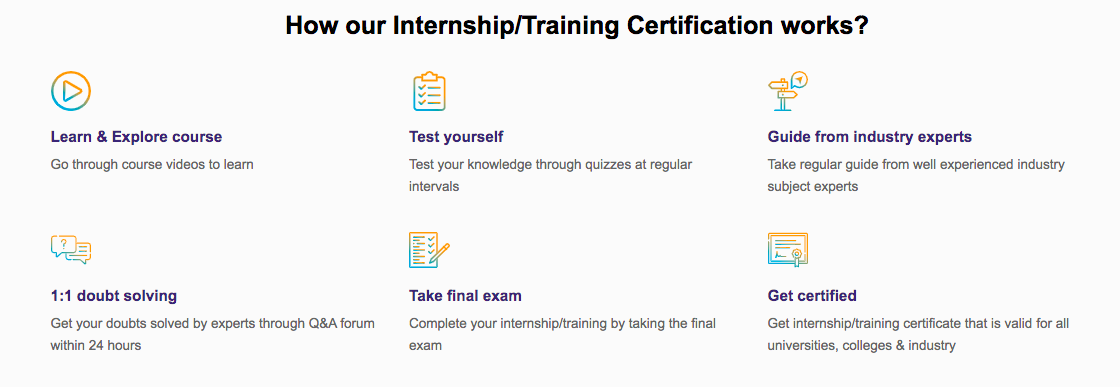
How EasyShiksha Internship/Training Program Works
The Different Levels of an AI Explanation Ladder
Level One: Foundational Clarity
The first level focuses on making a concept understandable to someone who has limited prior knowledge. At this stage, the AI system would prioritise plain language, familiar situations, essential terminology, and a clear explanation of why the concept matters. Technical details would be introduced only when they contribute directly to understanding the basic idea.
Consider a student beginning to learn about cloud computing. A foundational explanation could describe cloud computing as using computing services over the internet instead of relying entirely on a personal computer or local server. The explanation might compare it to accessing photographs through an online storage service rather than keeping every image on one device. This analogy provides an initial mental model without requiring the student to understand distributed infrastructure immediately.
The purpose of foundational clarity is not to make a subject intellectually weak. It is to create a starting point from which more sophisticated knowledge can develop. When students lack a basic mental model, advanced terminology may create the appearance of learning without producing genuine comprehension. Establishing the essential meaning first allows subsequent explanations to connect new information to something the learner already understands.
An EasyShiksha learning experience could use this level when a learner enters a course for the first time, performs poorly on a prerequisite question, or indicates that a concept is unfamiliar. The system could introduce the idea through a short lesson, an accessible example, or a simple interactive activity. It could then check whether the learner understands the central principle before introducing additional complexity.
Level Two: Guided Conceptual Understanding
Once a student understands the basic definition, the next level should explain how the concept works and why particular outcomes occur. The system would move beyond describing what something is and begin exploring relationships, sequences, causes, and consequences. This transition is essential because memorising definitions does not necessarily enable students to solve problems or recognise a concept in unfamiliar situations.
For example, a student learning about cloud computing may understand that services are delivered through the internet but remain uncertain about how data becomes accessible across devices. A guided explanation could introduce remote servers, network connections, authentication, and synchronisation. It could show how a file uploaded from one device becomes available elsewhere and explain why a stable connection and appropriate access permissions matter.
At this level, the AI system could divide a complex process into meaningful stages without reducing it to disconnected fragments. It should maintain a coherent explanation that shows how individual steps contribute to the overall process. Students could also be asked to predict what would happen if one part of the process failed, helping them develop causal reasoning rather than merely repeating information.
Within EasyShiksha, this level could be connected to guided practice and course assessments. After explaining a concept, the system could present a related question and use the student’s answer to identify whether the underlying relationship has been understood. A correct answer would provide useful evidence, but a brief explanation of the reasoning could reveal whether the student understands the concept or has simply guessed correctly.
Level Three: Analytical Understanding
At the analytical level, explanations would introduce comparisons, assumptions, limitations, exceptions, and relationships between multiple concepts. Students would be encouraged to examine why a method works in one situation but may be unsuitable in another. Instead of focusing exclusively on remembering information, this stage would support interpretation, evaluation, and more independent reasoning.
A student studying cybersecurity, for instance, might already understand what a password and multi-factor authentication are. A deeper explanation could compare their security benefits, examine the risks associated with compromised devices, and explain why security depends on more than the strength of a single password. The learner could then investigate how usability, user behaviour, and organisational policies influence the effectiveness of a security system.
This level is particularly important for students who are preparing for practical projects, advanced assessments, or employment-related tasks. Professional work rarely presents problems in the same format as a textbook example. Learners must evaluate incomplete information, recognise constraints, and decide which principles apply to the situation they encounter.
An adaptive AI system could introduce analytical explanations when students consistently answer foundational questions correctly but struggle with comparison or application tasks. This would help distinguish between knowledge of a definition and the ability to reason with that knowledge. EasyShiksha could potentially use this distinction to connect course learning with more challenging quizzes, project-based activities, and career-oriented practice.
Level Four: Technical and Advanced Explanation
The fourth level introduces greater technical precision, formal terminology, theoretical detail, and more demanding examples. Depending on the subject, this could include mathematical reasoning, algorithms, professional standards, specialised vocabulary, research findings, or detailed implementation choices. The purpose is to help learners move beyond introductory familiarity towards deeper subject competence.
In a machine learning course, a foundational lesson might explain that a model learns patterns from examples. An advanced explanation could examine the distinction between training and validation data, the role of loss functions, overfitting, regularisation, and the relationship between model complexity and generalisation. The student would begin to understand not only what the system does but also how its design influences performance and reliability.
Technical depth should not be introduced simply because a student answers a few questions correctly. The system needs evidence that the learner possesses the prerequisite knowledge required to understand the additional detail. Introducing unfamiliar equations or specialised terminology too early can increase cognitive demands without improving comprehension. However, withholding advanced explanations from a prepared student can also restrict intellectual progress.
An adaptive learning platform could make advanced material available when the learner demonstrates readiness or explicitly requests deeper treatment. The system should still explain assumptions and define specialised terms when necessary. Advanced education does not mean abandoning clarity; it means providing greater precision while preserving the logical connections that make an explanation understandable.
Level Five: Independent Application and Critical Evaluation
The highest level of the ladder would focus on applying knowledge independently, examining competing explanations, testing assumptions, and evaluating the limitations of a concept. At this stage, AI should not simply provide increasingly elaborate answers. It should help learners develop the ability to use knowledge without depending on continuous guidance.
For example, a student studying digital marketing could progress from understanding conversion rates to analysing a campaign with incomplete performance data. The AI assistant might ask the student to determine which metric requires investigation, justify the proposed interpretation, and explain what additional evidence would be necessary before changing the campaign. Rather than revealing the complete solution immediately, the system could provide targeted guidance when the learner encounters a genuine obstacle.
This level is also where critical evaluation of AI-generated information becomes essential. Students should learn to question assumptions, verify factual claims, compare alternative methods, and recognise when an automated explanation is incomplete or incorrect. A sophisticated explanation system should not present its own output as unquestionable authority. It should encourage learners to evaluate the reasoning and evidence supporting an answer.
For EasyShiksha, this stage could connect academic learning with projects, educational games, internships, and career preparation. Students might demonstrate their understanding through a practical assignment, a simulated workplace problem, or an independent project. The objective would be to move beyond receiving explanations towards using knowledge confidently and responsibly in new situations.
How AI Can Identify a Student’s Understanding
Moving Beyond Correct and Incorrect Answers
The effectiveness of an AI Explanation Ladder depends on the quality of the evidence used to adjust explanation depth. A traditional quiz often records whether an answer is correct or incorrect. Although this information is useful, it provides only a partial picture of understanding. A student may select the correct answer through guessing, memorisation, or recognition without understanding the underlying principle.
A more informative system could examine patterns across several learning activities. It might consider how a student explains an answer, whether they can apply a concept to a new example, how consistently they perform across related questions, and whether they can identify an error in a worked solution. These signals would help the system form a more useful estimate of the learner’s current understanding.
For example, a student may correctly identify the definition of an algorithm but struggle to construct one independently. The system should not interpret the correct definition as proof of complete mastery. Instead, it could provide an explanation that connects the definition to a practical problem, demonstrate how the steps are organised, and invite the learner to build a simple solution.
Within an EasyShiksha course, quizzes could contribute evidence about conceptual knowledge, while projects and practical exercises could reveal whether the learner can apply that knowledge. Educational games might provide additional information about decision-making and strategy, although game performance should not automatically be treated as proof of subject mastery. Combining different types of evidence would provide a more balanced basis for adjusting explanations.
Detecting Misconceptions Rather Than Only Mistakes
Not every incorrect answer indicates that a student needs a simpler explanation. Sometimes, a learner has developed a specific misconception that must be addressed directly. Repeating the same explanation in easier language may not resolve the problem because the learner is interpreting the concept through an incorrect mental model.
Consider a student who believes that a computer stores all information permanently in its memory. Simply repeating the difference between memory and storage may be insufficient if the student does not understand the role of temporary memory, persistent storage, and active processes. A better response would identify the misunderstanding and explain how the different components work together, perhaps through an analogy followed by a technical clarification.
An AI system could attempt to detect misconceptions by examining recurring wrong answers, written explanations, and responses to carefully designed diagnostic questions. It could then select an explanation that addresses the underlying error rather than restarting the entire lesson. However, automated interpretation of student reasoning is imperfect, particularly when answers are brief, ambiguous, multilingual, or expressed in unconventional language.
The system should therefore treat its conclusions as provisional. When uncertainty remains, it could ask a clarifying question rather than confidently assigning the student a particular misunderstanding. This approach would reduce the risk of adapting instruction according to an incorrect assumption about the learner.
Understanding Confidence and Learning Readiness
A student’s confidence can also provide useful information, although confidence should never be treated as a direct measure of competence. Some learners understand a topic but underestimate their abilities, while others feel confident despite holding significant misconceptions. Comparing confidence with demonstrated performance can help identify situations in which additional explanation or independent verification may be valuable.
An adaptive learning environment could occasionally ask students how confident they feel about an answer and compare that response with their actual performance. A learner who repeatedly answers correctly but remains uncertain might benefit from a clear explanation of the reasoning and an opportunity to apply the concept independently. A confident learner who repeatedly makes the same error may need a targeted correction that challenges their existing assumption.
This process should support self-awareness rather than turn confidence into another rigid student score. Confidence is influenced by previous educational experiences, language proficiency, assessment pressure, and individual differences. It should therefore be interpreted alongside other evidence and used to guide supportive learning decisions rather than to label students.
Designing the Right Explanation for the Right Moment
Adaptive Examples and Analogies
Changing explanation depth is not only about changing technical complexity. The AI system must also choose examples that connect with the learner’s existing knowledge. An analogy that works well for one student may be confusing to another, especially when learners come from different academic backgrounds or have different levels of practical experience.
For a student learning financial concepts, an explanation of interest could begin with a simple savings example. A learner studying engineering might benefit from a numerical model that demonstrates how interest accumulates over time. Someone preparing for a finance internship could examine a more realistic scenario involving borrowing costs, repayment schedules, and financial decision-making.
The underlying concept remains consistent, but the route to understanding changes. An effective AI system should distinguish between adapting the context of an explanation and changing the accuracy of the information. Simplification must preserve essential relationships, and analogies should be clarified when they stop matching the real-world concept.
EasyShiksha could potentially use examples that connect course concepts to students’ academic goals, practical interests, and career aspirations. However, personalisation should be based on relevant information rather than assumptions about a learner’s background. Students should also have the option to request a different example when the first one does not make sense.
Changing the Structure of an Explanation
Different students may need different forms of explanation even when they are studying the same concept. Some benefit from a worked example followed by a general principle, while others understand better when the principle is introduced first and then demonstrated. A learner facing a complex process may need a sequential explanation, whereas another may benefit from a comparison between alternative methods.
An AI Explanation Ladder could adapt the structure of a response as well as its depth. If a learner struggles with an abstract definition, the system could introduce a concrete example and gradually connect it to the underlying theory. If the learner understands the example but cannot generalise the principle, the system could compare several situations and ask what they have in common.
This flexibility could be particularly useful in online education, where learners do not always have immediate access to a teacher who can notice confusion and change teaching strategies in real time. An adaptive system could offer alternative explanations within the same learning session, reducing the need for students to search across multiple resources without knowing which resource addresses their specific difficulty.
Nevertheless, changing explanation structure should remain purposeful. Constantly switching between analogies, diagrams, definitions, and examples can increase cognitive load. The system should select an alternative when there is a reasonable indication that the current approach is not working, rather than changing formats merely to create the appearance of personalisation.
Knowing When to Stop Explaining
One of the most overlooked challenges in AI-assisted education is deciding when an explanation has become sufficient. Generative AI can produce additional detail almost indefinitely, but more information does not always improve learning. Repeated explanations may consume time, distract students from practice, and create the impression that understanding requires continuous assistance.
A well-designed explanation system should identify when a learner has demonstrated adequate comprehension for the current objective. It could then move towards independent practice, a transfer question, or the next connected concept. This does not mean that the learner must achieve perfect performance before progressing. It means that the system should use reasonable evidence to determine when further explanation is less valuable than applying what has already been learned.
For example, after a student successfully explains a programming concept and uses it correctly in a new problem, the system might stop repeating the definition and offer a more challenging exercise. If the student later encounters a related difficulty, the system could return to the relevant explanation level. Learning would therefore become a flexible cycle rather than a permanent progression through fixed stages.
For EasyShiksha, this principle could support a learning journey in which courses, quizzes, games, and practical activities reinforce one another. Explanations would remain available when needed, but they would not replace the learner’s responsibility to practise, recall, reason, and apply knowledge independently.
Integrating the AI Explanation Ladder Into EasyShiksha
Connecting Courses With Intelligent Explanation Support
EasyShiksha’s educational ecosystem offers a useful context for exploring how adaptive explanations could connect with structured digital learning. A course introduces concepts and establishes a learning sequence, while an AI explanation layer could respond to individual difficulties within that sequence. Instead of requiring every student to follow an identical explanation path, the system could provide additional support where evidence suggests that it is necessary.
Imagine a learner taking an introductory course in data analytics. The student understands basic spreadsheet operations but struggles to interpret a correlation between two variables. An adaptive assistant could first explain correlation using a familiar example, then show how two variables can change together without one necessarily causing the other. If the student demonstrates understanding, the assistant could introduce a dataset and ask the learner to interpret the relationship independently.
If the learner continues to confuse correlation with causation, the system could introduce a contrasting example and explain why the observed relationship does not establish a causal link. Once the misconception is addressed, the student could return to the course and complete the relevant assessment. This process would connect explanation, diagnosis, practice, and assessment without treating them as isolated activities.
Such a model could be designed as a potential enhancement to EasyShiksha rather than assumed to be an existing platform feature. Its value would depend on the quality of course content, the accuracy of diagnostic methods, and the extent to which adaptive explanations genuinely improve learning outcomes.
Using Quizzes to Guide Explanation Depth
Quizzes can play a larger role than simply recording marks. When carefully designed, they can reveal whether a learner remembers a fact, understands a relationship, applies a principle, or evaluates a more complex situation. An AI system could use these distinctions to determine which type of explanation is appropriate after an assessment.
A student who answers a definition question incorrectly may need foundational clarification. A student who defines a concept correctly but fails a scenario-based question may need an explanation of how the concept operates in practice. Someone who performs well on both may be ready for a more advanced application. These distinctions would make feedback more informative than a generic message indicating that an answer is wrong.
EasyShiksha could potentially connect quiz results with targeted explanations and follow-up questions. The system might explain why a particular answer is incorrect, identify the relevant concept, and offer a similar question that tests whether the misunderstanding has been resolved. The objective would be to turn assessment into an opportunity for learning rather than an endpoint.
However, the quality of this approach depends on the questions themselves. Poorly designed assessments may produce misleading signals, and a student can misunderstand a question without misunderstanding the subject. Explanation adaptation should therefore consider question difficulty, wording, prerequisite knowledge, and patterns across multiple responses.
Extending Adaptive Explanations Into Educational Games
Educational games create additional opportunities to observe how learners make decisions and respond to challenges. Unlike conventional assessments, a game may reveal whether a student can apply a principle repeatedly, recognise a pattern, or modify a strategy after receiving feedback. These observations could help an AI system identify where further explanation might be useful.
For example, a learner playing a business simulation may understand revenue and expenses in isolation but struggle to manage a budget when several costs change simultaneously. The system could introduce a short explanation of how the variables interact, demonstrate the effect of a decision, and allow the learner to try again. As performance improves, the simulation could introduce more complicated scenarios that require independent judgement.
This approach could make the explanation ladder responsive to practical behaviour rather than dependent exclusively on written answers. It could also help students understand the consequences of their decisions through experimentation in a controlled learning environment.
Nevertheless, game performance should be interpreted carefully. A student may perform well because they have discovered a successful strategy through trial and error, even if they cannot explain the underlying principle. Conversely, someone may understand the concept but struggle with the game's interface. A reliable system should combine game behaviour with conceptual questions and other relevant evidence before changing explanation depth.
Linking Learning With Projects and Internships
The greatest value of adaptive explanations may emerge when students move from academic understanding to practical application. A learner might successfully complete a course and pass its quizzes but still struggle to use the same concepts in a project or workplace task. This gap indicates that understanding must be evaluated beyond the original learning environment.
In a project-based activity, an AI assistant could provide increasingly targeted guidance as the learner encounters obstacles. It might begin by asking the student to identify the problem, then offer a conceptual reminder, and finally provide a more detailed explanation if the difficulty persists. The assistance should help the learner make progress without automatically completing the task on their behalf.
For students pursuing internships, this distinction is especially important. Professional tasks often involve ambiguity, incomplete instructions, and constraints that do not appear in simplified classroom exercises. Learners need to develop the ability to ask useful questions, evaluate evidence, and determine when they need support. An explanation system should strengthen these abilities rather than encourage students to wait for a complete solution.
EasyShiksha could explore connecting adaptive learning support with project preparation and internship-related activities. The broader objective would be to create continuity between learning a concept, understanding it, practising it, and applying it in a meaningful context. Such continuity could make digital education more closely aligned with the demands of academic and professional development.
The Educational Risks of Adaptive Explanation Systems
Oversimplification and Shallow Understanding
An AI system that responds to every difficulty by simplifying content may unintentionally prevent students from developing the ability to handle complexity. Challenging ideas sometimes require sustained effort, and students need opportunities to work through unfamiliar terminology, abstract relationships, and difficult problems. If the system continually removes these demands, it may produce temporary comfort without building durable understanding.
The solution is to distinguish between unnecessary confusion and productive intellectual effort. Unnecessary confusion occurs when a learner lacks essential information, encounters an unexplained assumption, or cannot identify the connection between two steps. Productive struggle occurs when the learner has enough understanding to attempt a problem but must reason carefully to reach a solution. The AI system should reduce the first while preserving opportunities for the second.
A well-designed explanation ladder would therefore not always move towards simpler content after an incorrect response. It might instead provide a hint, ask the learner to revisit a prerequisite, or offer a partial example that supports further reasoning. The appropriate intervention would depend on the nature of the difficulty rather than on the error alone.
AI Hallucinations and Incorrect Explanations
Generative AI systems can produce explanations that sound convincing but contain factual errors, faulty reasoning, or invented details. This creates a serious challenge when explanations are personalised dynamically because students may receive different versions of the same concept without recognising that some versions are inaccurate.
An educational explanation system should therefore be grounded in reliable course material wherever possible. Definitions, formulas, learning objectives, and essential subject claims should be checked against approved educational sources or verified content. In technical subjects, calculations and code examples should be tested where practical, while uncertain or disputed claims should be presented with appropriate qualifications.
The system should also maintain consistency across explanation levels. A foundational explanation may omit certain details for accessibility, but it should not contradict the advanced explanation students encounter later. Simplification must preserve the core truth of the concept and make clear when an analogy is incomplete.
For EasyShiksha, the responsible development of such a system would require content review, testing, mechanisms for reporting errors, and ongoing evaluation. Personalisation is valuable only when the explanations remain educationally sound.
Bias, Accessibility, and Fairness
An AI explanation system may interpret learners differently because of variations in language proficiency, disability, cultural context, access to technology, or familiarity with particular examples. A student who writes briefly may understand a concept well but receive a lower estimate of comprehension if the system relies heavily on lengthy written responses. A learner using a second language may understand a technical principle while struggling to express it fluently.
To reduce these risks, the system should evaluate understanding through multiple forms of evidence and avoid treating one communication style as the universal standard of competence. Where appropriate, it could support alternative examples, accessible formats, additional thinking time, and explanations that use clear language without compromising subject accuracy.
Fairness also requires examining whether the system systematically provides less advanced content to particular groups of learners. If past performance is used too rigidly, early difficulties may lead to lower expectations and fewer opportunities for challenge. Adaptive systems should make it possible for students to demonstrate improvement and access advanced material when they are ready.
The explanation ladder should therefore be a flexible support mechanism rather than a gatekeeping system. Its purpose is to help learners progress, not to limit their educational opportunities based on incomplete or biased predictions.
Privacy and Responsible Use of Learning Data
Adapting explanations may require information about quiz performance, learning progress, repeated errors, and interactions with educational content. Such information can improve personalisation, but it also raises questions about privacy, data retention, access, and the potential misuse of student profiles.
An educational platform should collect only information necessary for its stated learning purposes and explain how that information is used. Students should not be subjected to unnecessary surveillance simply because adaptive technology makes extensive data collection possible. Sensitive inferences about intelligence, motivation, or personal characteristics should not be drawn from limited interaction data.
The system should also avoid turning temporary difficulties into permanent labels. A student who struggles with a concept on one occasion should be able to demonstrate improvement without being continually treated as a weak learner. Learning records should support progress and provide opportunities for correction rather than becoming fixed judgements about an individual’s potential.
Responsible data practices would be essential if EasyShiksha or another education platform explored adaptive explanation capabilities. Trust, transparency, and meaningful learner control would be as important as the technical ability to personalise educational content.
Measuring Whether the AI Explanation Ladder Works
Evaluating Comprehension, Retention, and Application
A successful adaptive explanation system should be evaluated according to educational outcomes rather than the number of explanations it generates. A student may spend less time reading after receiving a clearer explanation, but shorter interaction alone does not prove that learning has improved. Similarly, a student may interact with an AI assistant frequently without developing stronger independent reasoning.
Evaluation should examine whether learners understand concepts more accurately, retain knowledge over time, and apply it in situations that differ from the original examples. Delayed assessments can help determine whether understanding persists beyond the immediate lesson. Transfer tasks can reveal whether students can use a principle in a new context rather than merely reproduce a familiar solution.
For example, after learning a programming concept through an adaptive explanation, students could be asked to solve a new problem without step-by-step assistance. Their performance could then be compared with their earlier work and, where appropriate, with the outcomes of learners using a different instructional approach. Such evaluation would help determine whether adaptive explanations produce meaningful improvements rather than temporary increases in confidence.
EasyShiksha could potentially assess the usefulness of this approach through controlled educational pilots, feedback from learners and educators, and comparisons of learning outcomes. Any claims of effectiveness should be based on evidence collected in relevant learning contexts rather than assumptions that personalisation is automatically beneficial.
Measuring Independence Rather Than AI Dependence
Another important measure is whether students become more capable of learning independently. If an AI explanation system improves quiz performance only when it is available, it may be providing useful assistance without necessarily building lasting competence. Educationally successful support should gradually help learners perform tasks with less guidance when they are ready.
This does not mean that students should stop using AI altogether. Professional environments increasingly require people to work with digital tools, and knowing how to use assistance effectively is itself a valuable skill. The important distinction is between using AI to strengthen understanding and using it to avoid the thinking required to develop understanding.
An explanation ladder could support independence by gradually reducing the amount of guidance provided during familiar tasks while preserving access to help when genuinely necessary. Students might first receive a detailed worked example, then a partially completed example, and finally an independent problem. Their performance would indicate whether they are ready for greater responsibility or need targeted support.
For EasyShiksha, this approach could reinforce the broader relationship between structured learning, practical experience, and career readiness. The objective would not be to maximise dependence on an AI assistant but to help students develop the knowledge and judgement required to use educational tools effectively.
The Future of AI-Powered Explanation Design
From Personalised Content to Personalised Reasoning Support
The next stage of AI-supported education may involve moving beyond personalised content recommendations towards personalised reasoning support. Recommending a course based on a learner’s interests can help them choose what to study, but it does not necessarily help them understand a difficult concept once they begin. Adaptive explanations address a different challenge by responding to the learner’s changing needs within the learning process itself.
In a more advanced model, an educational assistant could maintain a provisional understanding of which concepts a learner has mastered, which prerequisites remain uncertain, and which explanation strategies have been helpful in the past. It could use this information to select an appropriate teaching approach while continuing to verify whether the selected approach works. Such a model would need to remain flexible because previous success with one explanation style does not guarantee that the same style will work for every subject.
The system could also distinguish between immediate learning needs and long-term objectives. A student preparing for an upcoming assessment may require concise clarification of a specific concept, while a student completing a research project may need a deeper theoretical explanation and guidance on evaluating competing ideas. Adaptation would depend on both the learner’s current understanding and the purpose of the learning activity.
For EasyShiksha, this creates an opportunity to think about AI not merely as a question-answering tool but as a potential layer of educational guidance connecting courses, assessments, practical learning, and career development. Its usefulness would depend on whether the system helps learners make meaningful progress through the complete educational journey.
Frequently Asked Questions
Q. How can I apply for an internship with EasyShiksha?
You can apply by visiting our website, browsing available internships, and following the application instructions provided.
Q. What types of internships are available through EasyShiksha?
EasyShiksha offers a wide range of internships across technology, business, marketing, healthcare, and more.
Q. Will I receive a certificate upon completing an internship?
Yes, upon successful completion, you will receive a certificate recognizing your participation and achievements.
Q. Are EasyShiksha's certificates recognized?
Yes, the certificates are recognized by universities, colleges, and employers worldwide.
Q. When can I start the course?
You can choose any course and start immediately without delay.
Q. What are the course and session timings?
These are fully online courses. You can learn at any time and pace that fits your schedule.
Q. What will happen when my course is over?
After completion, you will have lifetime access to the course for future reference.
Q. Can I download the notes and study material?
Yes, you can access and download course materials and have lifetime access for future reference.
Q. What software/tools would be needed?
All necessary software/tools will be shared during the training as needed.
Q. I’m unable to make a payment. What should I do?
Try using a different card. If the problem persists, email us at info@easyshiksha.com.
Q. Do I get the certificate in hard copy?
No, only a soft copy is provided, which can be downloaded and printed if required.
Q. The payment got deducted but shows “failed”?
The deducted amount will be returned to your account in 7-10 working days automatically.
Q. Payment successful but dashboard shows ‘Buy Now’?
Reflection may take 30 mins. If longer, email info@easyshiksha.com with your screenshot.
Q. What is the refund policy?
Refunds are available for technical issues. No refunds once a certificate is generated.
Q. Can I enroll in a single course?
Yes, select any course, complete the details, and start learning immediately.
Q. Need further help?
Contact us at info@easyshiksha.com for any other questions.
The Role of Teachers and Human Guidance
Even highly capable AI systems cannot replace every function of a teacher or mentor. Educators bring subject expertise, contextual judgement, interpersonal understanding, and the ability to recognise circumstances that may not be visible through digital interactions. They can also challenge students in ways that go beyond correcting errors or adjusting explanation complexity.
An effective adaptive system should complement these human capabilities. Teachers could use aggregated information about common misconceptions to identify concepts that require additional classroom attention, while students could receive individual explanations for difficulties that emerge during independent study. Human educators would remain responsible for interpreting complex situations, providing mentorship, and making important educational decisions that require broader context.
Students should also be encouraged to question AI explanations, consult reliable learning materials, and seek human guidance when an answer remains unclear. An educational assistant that acknowledges its limitations can support stronger learning habits than one that presents every response as definitive.
In this model, the AI Explanation Ladder would become part of a wider educational environment in which technology supports teaching rather than attempting to automate every aspect of it. For platforms such as EasyShiksha, the long-term opportunity lies in combining accessible digital learning with opportunities for practice, mentorship, and real-world experience.
Conclusion: The Best AI Explanation Is the One That Moves Learning Forward
The AI Explanation Ladder offers a useful framework for rethinking how artificial intelligence can support different levels of student understanding. Instead of providing the same explanation to every learner, an adaptive system could begin with an accessible introduction, assess the learner’s response, and adjust the depth of its explanations as understanding develops. It could move from foundational clarity to guided conceptual reasoning, analytical interpretation, advanced technical detail, and independent application without treating these stages as rigid classifications.
The success of this approach depends on recognising that students’ difficulties have different causes. Some need clearer language, others need a missing prerequisite, and some require a different example or more opportunities to practise. An effective system must distinguish between these situations, use reliable evidence, and preserve the intellectual challenge necessary for meaningful learning. It must also avoid oversimplification, incorrect AI-generated information, biased assessments, and unnecessary dependence on automated assistance.
For EasyShiksha, the concept could support a more connected educational experience in which courses establish knowledge, quizzes reveal learning gaps, games encourage experimentation, projects test practical application, and internships provide opportunities to use skills in realistic contexts. Adaptive explanations could connect these activities by helping students understand what they need to learn next and why a particular concept matters.
Ultimately, the objective of AI-powered education should not be to make every explanation easier or more elaborate. It should be to make explanations more appropriate to the learner’s current needs while gradually strengthening independent reasoning. When artificial intelligence can recognise when to simplify, when to deepen, when to challenge, and when to step back, it has the potential to become a more effective educational partner. The real measure of the AI Explanation Ladder will be whether students leave the learning experience not merely with better answers, but with stronger understanding, greater confidence, and the ability to apply what they have learned independently.
Anshika Jain is an Engineer, Developer, and Educational Content Author known for her dedication to technology and knowledge sharing. With a strong analytical mindset and a passion for innovation, she has consistently contributed to creating meaningful digital solutions and insightful educational articles.
Her ability to simplify complex technical concepts into engaging and easy-to-understand content makes her work valuable for students and learners across various platforms. Along with her technical expertise, Anshika is admired for her creativity, professionalism, and commitment to continuous learning.
She represents a perfect blend of technical excellence and impactful communication, inspiring others through both her development work and educational contributions.