Digital education platforms have transformed how students access knowledge. Learners can enrol in online courses, watch video lessons, complete quizzes, earn certificates, practise through educational games and develop professional skills through projects and internships. These experiences make learning more flexible and accessible, but they also introduce a fundamental question: how can an education platform determine what a student actually understands at a particular moment?
Most learning systems record visible activities. They know which lessons a student has opened, which courses have been completed, how many questions have been answered and which certificates have been earned. Although these records provide useful information, they do not necessarily represent the learner's current understanding. A student may complete a course but forget important concepts several weeks later. Another may answer a question incorrectly despite understanding the underlying principle, simply because the question is confusing. A third may perform well on familiar exercises but struggle to apply the same knowledge in an unfamiliar situation.
The difference between recorded activity and actual understanding creates an opportunity for a more advanced educational model: the Knowledge State Engine. A Knowledge State Engine is a system designed to estimate what a student currently understands, which concepts they can apply, where uncertainty remains and how their knowledge changes as they learn, practise and forget. Rather than treating learning as a sequence of completed activities, it models understanding as a continuously evolving state.
For an education ecosystem such as EasyShiksha, this concept could connect online courses, quizzes, educational games, projects, certificates, internships and career guidance through a shared understanding of learner progress. Instead of recommending the next course solely because a student has finished the previous one, the platform could consider whether the learner has developed the knowledge required for the next stage. It could also identify when previously learned concepts need revision or when practical experience would help consolidate understanding.
The objective is not to create a perfect digital representation of a student's mind. Human understanding is complex, contextual and sometimes difficult to measure. The objective is to build a useful, continuously updated estimate that helps students and educators make better learning decisions.
What Is a Knowledge State Engine?
A Knowledge State Engine is an educational intelligence system that maintains an evolving model of a learner's understanding across relevant concepts, skills and applications. It uses evidence from learning activities to estimate what the learner knows, what they can do independently, which concepts may be unstable and what support could improve their progress.
The term knowledge state refers to the learner's estimated understanding at a particular moment. Unlike a final examination score, which captures performance under specific conditions, a knowledge state can change over time. A student may understand a concept after completing a lesson, become less confident in it after several weeks without practice and regain fluency after reviewing an example. The system aims to reflect these changes instead of assuming that knowledge remains permanently established once a course is completed.
For example, a student studying Python programming may demonstrate a strong understanding of variables and conditional statements but only a developing understanding of functions. The student may also be able to write a simple program independently while needing guidance to debug a more complex one. A Knowledge State Engine could represent these differences separately rather than assigning one general label such as beginner or advanced.
This distinction makes the model more useful for personalisation. Two students enrolled in the same course may have different knowledge states because they have different backgrounds, learning experiences and strengths. Even the same student may require different levels of support across topics within a single subject.
EasyShiksha could explore this approach to make its learning pathways more responsive to demonstrated understanding. The platform could use available assessment and activity evidence to estimate readiness, recommend appropriate practice and help learners identify their next meaningful step.
Why Traditional Learning Analytics Are Not Enough
Traditional learning analytics generally focus on measurable activity and outcomes. Platforms may record time spent on a lesson, completion rates, quiz scores, assessment attempts, course enrolments and certificate achievements. These indicators are useful for understanding engagement and performance, but they cannot independently explain what a learner understands.
A student who watches every video in a course has demonstrated exposure to the material, not necessarily mastery. A learner who earns a high quiz score may have understood the concepts, memorised familiar answers or benefited from repeated attempts. A student who spends less time on a lesson may already know the subject rather than be disengaged. The same observable behaviour can have several explanations.
This creates a limitation when learning recommendations depend heavily on activity data. A platform might recommend an introductory course to someone who has already mastered the content, while another student may advance to an intermediate course despite having unresolved foundational gaps. Both recommendations can be inefficient because the system has not adequately distinguished participation from understanding.
A Knowledge State Engine would shift the focus from what the learner has done to what the available evidence suggests the learner can currently understand and apply. It could consider assessment results alongside explanations, repeated performance, practical tasks and the relationships between concepts.
For EasyShiksha, this would create a stronger foundation for personalised learning. Course completion would remain important, but it would become one signal within a broader model of progress rather than the primary indicator of readiness.
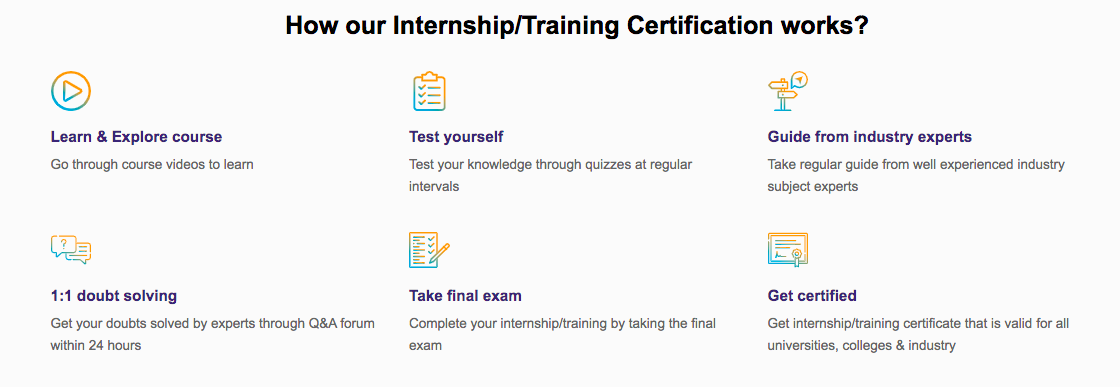
How EasyShiksha Internship/Training Program Works
Knowledge Is Not a Single Score
One of the most important principles behind a Knowledge State Engine is that understanding cannot be represented adequately by a single number. Students develop knowledge across multiple dimensions, and their strengths may differ considerably within the same subject.
A learner studying digital marketing, for example, may understand search engine optimisation and audience segmentation but have limited experience interpreting campaign analytics. Another student may be confident with data interpretation while struggling to connect the results with a broader marketing strategy. Both students could achieve similar overall assessment scores while requiring different learning activities.
Knowledge also has different levels of depth. A student may recognise a definition, explain it in their own words, apply it to a familiar example or transfer it to an unfamiliar situation. These abilities are related, but they are not identical. Recognising a concept does not always mean the learner can explain its underlying logic or use it independently.
A useful Knowledge State Engine would therefore model understanding at an appropriate level of detail. It could distinguish foundational knowledge from conceptual relationships, procedural fluency and practical application. It could also represent uncertainty when the available evidence is insufficient to make a reliable estimate.
This multidimensional approach would help EasyShiksha avoid reducing students to simplistic labels. Instead of categorising a learner as weak in programming, for instance, the system could identify a more specific development need, such as difficulty connecting functions with data structures or applying conditional logic independently.
The purpose of this detail would be to improve learning decisions, not to create a permanent judgement about a student's ability.
How a Knowledge State Engine Works
A Knowledge State Engine would begin with a model of the concepts and skills relevant to a course or learning pathway. These concepts would be connected through relationships showing which ideas support others, which skills are needed for particular tasks and which capabilities can be demonstrated through practical activities.
The system would then collect evidence from learning experiences. A learner's responses to quizzes, performance on exercises, explanations of concepts and results from projects could provide different signals about understanding. Each signal would need to be interpreted in context. One incorrect answer should not automatically imply that a concept is unknown, just as one correct answer should not automatically establish mastery.
Based on the evidence, the engine would update its estimate of the learner's knowledge state. It might increase confidence that a concept is understood after consistent independent performance or lower that confidence when repeated difficulties appear in different contexts. It could also distinguish between a lack of knowledge and uncertainty caused by limited evidence.
The updated state would then inform the next learning recommendation. A learner with strong foundational knowledge might progress to an advanced exercise. Someone who understands a concept but struggles to apply it could receive a practical task. Another student might benefit from a short revision activity before moving forward.
This process would repeat as new evidence becomes available. The engine would not assume that understanding is permanently fixed after one assessment. It would continuously refine its estimate as the student learns, practises, encounters challenges and revisits earlier material.
The Role of Diagnostic Quizzes in Estimating Understanding
Quizzes can provide some of the most accessible evidence for a Knowledge State Engine because they allow a platform to observe how students respond to targeted questions. However, their value depends on the quality and variety of the questions.
A quiz that asks learners to recognise definitions can help estimate foundational recall. Questions requiring explanations, comparisons or predictions can provide evidence of deeper understanding. Scenario-based questions can reveal whether a learner can apply concepts in a new context. When these question types are combined, the platform can build a more informative picture of what the student currently understands.
Consider a student learning cybersecurity. The learner may correctly define phishing, authentication and encryption. A more advanced question could ask the student to analyse a suspicious email, identify the risk and explain which security measures would help prevent the attack. The second task provides different evidence because it requires several concepts to work together.
EasyShiksha could connect diagnostic quizzes with its courses and learning pathways so that assessment results influence what happens next. If a student consistently demonstrates understanding, the platform could reduce unnecessary repetition. If the learner struggles with a specific concept, it could recommend targeted practice instead of sending them back through the entire course.
The system should also account for repeated attempts, question difficulty and the possibility of guessing. Quiz performance is evidence, not direct access to a student's mind. Combining it with other forms of assessment would make knowledge estimates more reliable.
Modeling Knowledge Decay and the Passage of Time
Knowledge changes over time. Some concepts remain accessible after long periods without practice, while others become harder to recall or apply. A student may understand a formula immediately after a lesson but struggle to use it several months later. Another may retain the underlying concept even after forgetting the exact terminology.
A Knowledge State Engine could account for this by treating mastery as something that may require maintenance. Instead of assuming that a completed lesson remains permanently mastered, the system could estimate whether previously demonstrated knowledge is likely to remain accessible and use new evidence to update that estimate.
For example, a learner who completed a spreadsheet course six months ago may have strong historical performance but limited recent practice. Before recommending an advanced financial modelling course, EasyShiksha could offer a short readiness check covering the relevant spreadsheet concepts. If the learner performs well, the system could allow them to proceed. If difficulties appear, it could recommend a brief refresher.
This approach would be more efficient than requiring every student to repeat old courses at fixed intervals. The timing and type of revision could depend on the importance of the concept, the learner's recent performance and the requirements of the next task.
Knowledge decay should not be treated as a universal countdown. Different skills behave differently, and forgetting a detail does not necessarily mean that the learner has lost the ability to reconstruct it. A responsible engine would use periodic evidence rather than assume that every concept deteriorates at the same rate.
AI as the Intelligence Layer of the Knowledge State Engine
Artificial intelligence could help a Knowledge State Engine interpret large amounts of learning evidence and identify patterns that would be difficult to detect through simple completion tracking. It could examine recurring mistakes, compare performance across related concepts and recommend activities designed to address the learner's specific needs.
Suppose a student repeatedly struggles with data analysis tasks. An AI-supported system might identify that the student understands charts individually but has difficulty choosing an appropriate chart for a particular dataset. It could recommend a focused comparison exercise rather than another general data visualisation course.
AI could also help interpret written explanations and practical work. A learner might describe a concept correctly but fail to connect it with a related principle. The system could ask a follow-up question, offer a worked example or recommend a project that requires both concepts to be used together. These interactions could provide additional evidence for updating the knowledge state.
However, AI predictions must remain estimates. Language models can misinterpret answers, overlook valid alternative reasoning or produce incorrect feedback. Students may also have difficulty expressing knowledge in a language or format preferred by the system. Human educators and carefully designed assessments remain important for validating high-impact decisions.
For EasyShiksha, AI would be most useful as a support layer that helps students understand their progress and choose effective next steps. It should not function as an unquestionable authority that decides a learner's potential or permanently restricts access to advanced learning.
From Personalised Recommendations to Personalised Readiness
Many learning platforms personalise recommendations by considering interests, previous enrolments or popular courses. This can help learners discover relevant content, but interest alone does not establish readiness. A student may be highly motivated to study artificial intelligence while still needing support with programming, statistics or foundational mathematical reasoning.
A Knowledge State Engine could make recommendations more responsive by considering both the learner's goal and their current understanding. Instead of simply recommending an advanced course because it matches the student's interests, the platform could identify the foundational capabilities required for success and check whether those capabilities have been demonstrated.
This does not mean that every learner must complete a long prerequisite sequence before exploring a new subject. Sometimes, an introductory activity within the advanced topic can provide context and motivate the learner to develop the necessary foundations. The system could offer different routes depending on the student's background and the demands of the material.
EasyShiksha could use personalised readiness estimates to connect students with relevant courses, quizzes, projects and internships. A learner preparing for a digital marketing internship might need practice with analytics and campaign interpretation, while another preparing for a web development opportunity might need to demonstrate practical programming skills.
By considering readiness alongside interest, the platform could help learners make progress without either repeating unnecessary content or moving forward without sufficient support.
Connecting Courses, Projects and Internships Through One Knowledge Model
A student's knowledge state should not be inferred exclusively from classroom-style assessments. Courses introduce concepts, quizzes test understanding, projects demonstrate integration and internships reveal how knowledge performs in practical environments. Each experience can contribute different evidence to the learner's evolving profile.
For example, a student may complete a Python course and demonstrate strong performance on its quizzes. A project requiring the learner to clean a dataset, process information and explain the results could reveal whether those concepts can be combined independently. An internship task might then show whether the learner can apply the same skills while working with real requirements and deadlines.
EasyShiksha could connect these stages through a shared knowledge model. Instead of treating each course or internship as an isolated record, the platform could associate learning outcomes with the concepts and capabilities they demonstrate. The learner's knowledge state could then be updated as new evidence becomes available.
This would make the learning journey more coherent. A project could identify a skill that needs further practice, a targeted course could address the gap and a later assessment could check whether the learner has improved. Internship preparation could use the resulting evidence to identify relevant strengths and development areas.
The model would also help prevent certificates from being interpreted too broadly. A certificate could document course completion, while projects and practical assessments could provide additional evidence of what the learner can actually do.
Knowledge State Engine and the Student's Digital Learning Profile
A digital learning profile usually records a student's achievements, completed courses, certificates, assessment results and practical experiences. A Knowledge State Engine could add an evolving representation of current understanding to this record.
Such a profile would distinguish between historical achievements and present readiness. A student might have completed an introductory course in the past, demonstrated strong understanding at that time and subsequently had limited opportunities to practise. The profile could retain the achievement while indicating that a current readiness check would be useful before progressing to a demanding task.
The profile could also reveal relationships between skills. A learner might have strong knowledge of spreadsheet functions, developing confidence in data interpretation and limited experience communicating findings to a non-technical audience. This would create a more useful picture of capability than a single overall score.
For EasyShiksha, this model could support a connected student experience across courses, quizzes, projects, internships and career guidance. Students could understand which capabilities have been demonstrated, where additional practice may help and how their learning relates to future goals.
Transparency would be essential. Students should be able to see the evidence behind their learning estimates, correct inaccurate records and understand how their information is used. The profile should remain a tool for personal development rather than a permanent classification of the learner.
Knowledge State Engine for Career Guidance and Job Readiness
Career guidance becomes more useful when it considers the difference between a student's interests, qualifications and current capabilities. A learner may be interested in data analytics and have completed several relevant courses, but still need practical experience with data cleaning, visualisation and communicating insights before pursuing certain roles.
A Knowledge State Engine could help connect career goals with learning readiness. If a student identifies a target role, the system could map the relevant skills and concepts, compare them with available evidence and suggest a realistic pathway for development. It could distinguish between knowledge that has been studied, skills demonstrated through assessments and capabilities shown in projects or internships.
For example, a learner preparing for a digital marketing role might demonstrate strong understanding of content strategy but need additional practice interpreting campaign metrics. EasyShiksha could recommend a practical analytics exercise followed by a project that combines content planning with performance evaluation. The resulting evidence could then inform further guidance.
Such recommendations should not be interpreted as definitive career judgements. A learner's knowledge state represents only part of their professional potential. Motivation, creativity, communication, experience and personal circumstances also matter. The system should help students explore options and prepare for opportunities, not automatically exclude them from careers based on an incomplete model.
Designing a Knowledge State Engine for EasyShiksha
Building a Knowledge State Engine would require a carefully designed process connecting learning objectives, evidence collection, knowledge estimation and educational recommendations. The first step would be to define the concepts and skills that matter within selected courses. These concepts would be connected through prerequisite relationships and associated with assessments capable of providing meaningful evidence.
The second step would involve collecting evidence from quizzes, exercises and practical activities. The platform would need to distinguish between different types of evidence, such as recall, conceptual explanation and independent application. It should also account for uncertainty and avoid treating a single answer as conclusive proof of mastery.
The third step would be to update the learner's knowledge model as new evidence arrives. Consistent success across varied tasks could strengthen confidence in an estimate, while repeated difficulties might suggest that a concept requires attention. Historical achievements would remain part of the record, but current readiness could be checked when relevant.
The fourth step would connect the model to learning interventions. Depending on the evidence, the system could recommend a short revision, a diagnostic quiz, an interactive game, a practical project or an advanced lesson. The recommendation should explain why the activity is useful and what the learner is expected to gain from it.
The fifth step would evaluate whether the approach improves learning outcomes. EasyShiksha could assess whether targeted recommendations reduce repeated errors, improve the successful application of concepts and help students move into projects or internships with stronger preparation. The system should be refined according to observed results rather than assuming that a more complex model automatically produces better education.
Challenges in Modeling Human Understanding
A Knowledge State Engine faces an important limitation: understanding is not directly observable. The system must infer it from behaviour, explanations and performance, all of which can be influenced by factors beyond knowledge. A student may answer incorrectly because a question is ambiguous, an instruction is unfamiliar or the assessment format creates unnecessary difficulty.
Knowledge is also context-dependent. A learner may apply a concept successfully in a familiar situation but struggle when the surrounding conditions change. This does not always mean that the original understanding was false. It may indicate that the learner needs more experience transferring knowledge across contexts.
Another challenge concerns the amount of detail in the model. A highly detailed representation could become difficult to maintain and may generate misleading precision. A simpler model may be easier to explain but overlook important differences between types of understanding. The design should therefore reflect the educational decisions the system needs to support rather than attempting to model every aspect of cognition.
Fairness and privacy must also remain central. Students should not be permanently disadvantaged because an automated system misjudges their performance. Knowledge estimates should be revisable, explanations should be available and consequential decisions should allow appropriate human review. The data collected should be limited to what is useful for the educational purpose and protected through clear governance practices.
The goal is to create a reliable learning aid, not a digital authority that claims to know everything about a student.
Empower your team. Lead the industry
Get a subscription to a library of online courses and digital learning tools for your organization with
EasyShiksha
The Future of Education: Learning Systems That Understand Progress
As online education expands, the next major improvement may not come from increasing the amount of available content. It may come from helping students navigate existing content more intelligently. When a platform understands which concepts a learner has mastered, which remain uncertain and which foundations support future progress, it can offer more relevant learning experiences.
A Knowledge State Engine could help make education less dependent on fixed sequences. Students could enter learning pathways from different starting points, demonstrate existing knowledge and receive support where necessary. Previously learned concepts could be revisited when relevant, while strong understanding could allow learners to progress without unnecessary repetition.
AI could support this process by interpreting evidence and recommending interventions, while projects and internships could demonstrate whether understanding transfers into practice. Digital learning profiles could preserve the evidence of development and help learners connect their current capabilities with future opportunities.
For EasyShiksha, the long-term opportunity would be to connect online courses, quizzes, games, certificates, projects, internships and career guidance through a shared understanding of student progress. Each learning experience could contribute evidence, and each new estimate could help shape the next useful activity. This would move the platform toward a more responsive learning ecosystem in which the learner's current understanding matters as much as their completed activities.
Conclusion: Education Should Respond to What Students Understand Now
The Knowledge State Engine represents a shift from tracking educational activity to estimating the learner's current understanding. Course completion, quiz scores and certificates remain valuable, but they provide only part of the picture. Students need learning systems that recognise differences between recall, conceptual understanding, practical application and readiness for advanced material.
By modelling knowledge as an evolving state, an education platform could identify when students are ready to progress, when they need targeted revision and when practical experience would strengthen their capabilities. Diagnostic quizzes, AI-assisted analysis, projects and internships could provide complementary evidence, while transparent learning profiles could help students understand their progress.
EasyShiksha could explore this model to connect its educational offerings into a more coherent learning journey. Rather than recommending activities only because a learner has completed a course or expressed interest in a subject, the platform could consider what the learner currently understands and which experience would help them move forward.
The central principle is simple: educational progress should reflect more than the activities students finish. It should reflect the knowledge they develop, the relationships they understand and the skills they can apply. When learning systems respond to what students understand at any given moment, education can become more personalised, more efficient and better connected to lifelong learning and career development.
Anshika Jain is an Engineer, Developer, and Educational Content Author known for her dedication to technology and knowledge sharing. With a strong analytical mindset and a passion for innovation, she has consistently contributed to creating meaningful digital solutions and insightful educational articles.
Her ability to simplify complex technical concepts into engaging and easy-to-understand content makes her work valuable for students and learners across various platforms. Along with her technical expertise, Anshika is admired for her creativity, professionalism, and commitment to continuous learning.
She represents a perfect blend of technical excellence and impactful communication, inspiring others through both her development work and educational contributions.