Join thousands of students achieving their dreams with expert-led courses.
Join free and unlock everything on EasyShiksha.
Takes less than 3 seconds — no password needed
Please enter a valid email address.
No password needed if you use Google above
Checking your email…
Almost done — just verify your number so we can send course updates and certificates.
Used only for verification & updates
Incorrect OTP. Please try again.
Takes less than 10 seconds
Please select your country.
Please select your state.
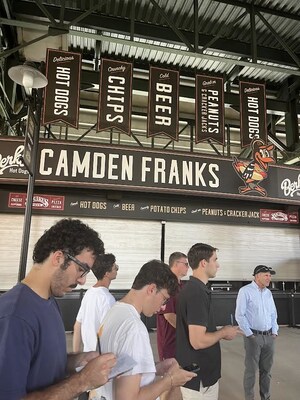
COLLEGE PARK, Md., March 25, 2026 /PRNewswire/ -- The Shirley Povich Center for Sports Journalism at the University of Maryland's Philip Merrill College of Journalism today launched a five-act oral history, "Creating Camden Yards," that tells the compelling story of the people and events that shaped an iconic ballpark.
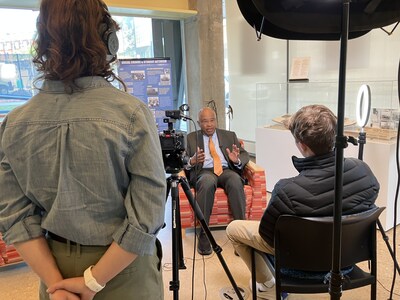
The project, which took more than a year to complete, is comprised of interviews with more than 60 key figures in the ballpark story, with student journalists conducting the interviews and handling the video production.
"Creating Camden Yards is a time capsule preserving seminal moments in baseball and Maryland history. Our student journalists have captured the voices and stories of the people who made the ballpark a reality," said Mark Hyman, director of the Povich Center. "We're proud to share this reporting and storytelling with sports fans, urban historians and all who care about history."
More than three decades after the first game in 1992, Camden Yards remains one of the most influential ballparks ever built, helping inspire a new generation of downtown ballparks that blend historic character with modern fan experiences. Through interviews and historical reporting, "Creating Camden Yards" traces the political battles, design debates and bold decisions that led to the opening of the ballpark in 1992. The five acts of the oral history guide audiences through the pivotal moments that shaped the project and examine the ballpark's lasting influence on baseball and urban development across the country.
Interview subjects include Orioles owner David Rubenstein; Camden Yards principal architect Joe Spear; former Orioles Vice President of Planning and Development Janet Marie Smith; former Baltimore Mayor Kurt L. Schmoke; baseball broadcaster Jon Miller; as well as former Orioles players Rick Sutcliffe, Ben McDonald and Joe Orsulak, all of whom were featured on the Orioles' roster for the first game at Camden Yards in 1992. The project also includes interviews with members of the Baltimore City Council and Maryland General Assembly; senior aides to former Gov. William Donald Schaefer; and leaders of the Maryland Stadium Authority who were instrumental in the ballpark plan, including Bruce Hoffman and Herb Belgrad. Belgrad, the first chairman of the stadium authority, died in April 2025, several months after his interview.
"Creating Camden Yards" also includes decades-old video and still images contributed by news organizations, by state and city archives, by the Orioles and by private collectors. Video includes the parade welcoming the team to Baltimore in 1954 and the Orioles' final game at Memorial Stadium in 1991. The oldest image included in the project is a panoramic view of Terrapin Park, home of the Baltimore Terrapins of the Federal League, on Opening Day 1915.
Work on the project started in early 2025 with students in a "Camden Yards History" course. That was followed by a second course in the Fall that continued research and reporting. Students then began to turn their reporting into text articles and video stories.
"Creating Camden Yards" was led by Hyman and Sandra Banisky, a retired professor of journalism at Merrill College. As Baltimore Sun reporters in the 1980s and 1990s, Hyman and Banisky covered the ballpark, writing numerous articles about the project; as course leaders, they led students in reporting on the project across two semester-long courses. In all, more than two dozen student reporters contributed to the project.
Nathan Stevens, broadcast production lecturer at Merrill College, led video production, and Kate Yanchulis, assistant director of the Povich Center, helped guide research and reporting.
"Projects like this one allow our students to dig into an important piece of sports and civic history while learning how to report complex stories that extend far beyond the playing field," said Yanchulis. "Camden Yards is a story about vision, politics, architecture and community, and our students had the chance to tell that story in a way that will preserve it for future generations."
The impact of Camden Yards has been seismic, extending far beyond Baltimore and Maryland. Watching a baseball game in a major league ballpark has changed in ways that can be credited directly to the Baltimore experiment. Denver, Cleveland, San Diego, Pittsburgh and San Francisco followed Baltimore's example by building downtown, building parks for baseball only and by mixing history and tradition with modern conveniences. And like Camden Yards, each has become a destination that attracts visitors from around the region and the U.S.
"Creating Camden Yards" can be viewed at www.creatingcamdenyards.org website. Visitors can explore all five acts of the oral history along with additional reporting and multimedia content.
About The Shirley Povich Center for Sports Journalism
The Shirley Povich Center for Sports Journalism prepares students to be innovators and leaders in all facets of sports media. The center's unique, experiential curriculum and public programs elevate and amplify discussion of race, gender, politics and the world — just as Shirley Povich did each morning in The Washington Post.
 View original content to download multimedia:https://www.prnewswire.com/news-releases/creating-camden-yards-new-oral-history-from-the-university-of-marylands-shirley-povich-center-for-sports-journalism-explores-the-creation-of-camden-yards-the-ballpark-that-changed-baseball-302724370.html
SOURCE Povich Center









Discover thousands of colleges and courses, enhance skills with online courses and internships, explore career alternatives, and stay updated with the latest educational news..

Gain high-quality, filtered student leads, prominent homepage ads, top search ranking, and a separate website. Let us actively enhance your brand awareness.
Download EasyShiksha Mobile Apps from Android Play Store, Apple App Store, Amazon App Store, and Jio STB.



1 million+ learned on the EasyShiksha App
Trusted by Standards & Global Compliance Frameworks





Built under internationally recognized standards for quality, information security, educational excellence and business continuity.
ISO 9001:2015 | ISO/IEC 27001:2022 | ISO 21001:2018 | ISO 22301:2019 | DPIIT Recognized Startup | MSME Registered