For many years, the traditional idea of career preparation followed a predictable timeline. Students completed school, entered college, attended lectures, passed examinations, graduated with a degree, and then started thinking seriously about employment. Internships, skill development, resume building, professional networking and practical experience were often treated as activities that could begin during the final year of college or after graduation. The modern student, however, is increasingly approaching career development differently. Instead of waiting for a degree to become the starting point of professional life, students are beginning to build skills, explore industries, complete projects, take online courses and seek internship experiences much earlier.
This change is not simply about students becoming more ambitious. It reflects a broader transformation in how education and employment are connected. A degree remains an important academic qualification, but students increasingly understand that academic knowledge alone may not demonstrate everything they can do. They want opportunities to apply what they learn, experiment with different skills and understand possible career directions before making major professional decisions.
Digital learning has made this shift easier. A student can now learn coding, digital marketing, graphic design, data analysis, communication, artificial intelligence, finance or other skills without waiting for a formal semester to begin. Online courses, quizzes, projects and internships can become part of the student journey alongside college education. Platforms such as EasyShiksha fit naturally into this changing environment by connecting learning with practical exposure and career preparation.
The result is a new approach to education in which career building does not necessarily begin after graduation. It can begin with the first meaningful skill a student decides to learn.
The Traditional Career Timeline Is Changing
The traditional education system often separated learning from employment. Students were expected to focus on academic performance first and consider professional development later. This approach worked within an environment where degrees were often treated as the primary evidence of educational achievement and where professional specialization could begin after formal education.
Today, students are exposed to professional opportunities much earlier. A teenager may discover programming through an online tutorial, a college student may complete a digital marketing course, another student may participate in a project competition, while someone else may start exploring internships before entering the final year. Social media, professional networks, online education platforms and digital communities have made career information much more accessible.
This does not mean every student needs to start working immediately. Instead, it means students have more opportunities to explore careers before they are required to make final decisions. Early exploration can help students understand what different professions involve and which skills they genuinely enjoy developing.
The concept of “career readiness” is therefore becoming broader. It is no longer limited to having a degree and preparing a resume at the end of college. It can involve gradually building a collection of knowledge, skills, experiences and projects throughout the education journey.
Why Students Are Starting Career Preparation Earlier
One major reason behind this change is the speed at which industries evolve. Technology has introduced new roles and transformed existing professions. Skills related to artificial intelligence, data, cybersecurity, cloud computing, digital content, automation and online business have become increasingly visible to students. At the same time, traditional careers are also becoming more technology-driven.
Students are therefore discovering that career planning cannot always wait until the final semester. By exploring skills earlier, they can understand how classroom concepts connect with real-world applications. A computer science student can experiment with development projects, a commerce student can explore accounting software or financial analysis, and a communication student can practice content creation or public speaking.
Early career preparation also gives students something valuable: time to experiment. A student who discovers during the first year that a particular field is not suitable can explore another direction without feeling that an entire degree has been wasted. Career development becomes a process of discovery rather than a single decision made at graduation.
Another factor is the increasing availability of online education. Students no longer have to depend entirely on the subjects offered in their formal curriculum. They can supplement academic education with specialized courses, practical assignments, quizzes and industry-oriented learning.
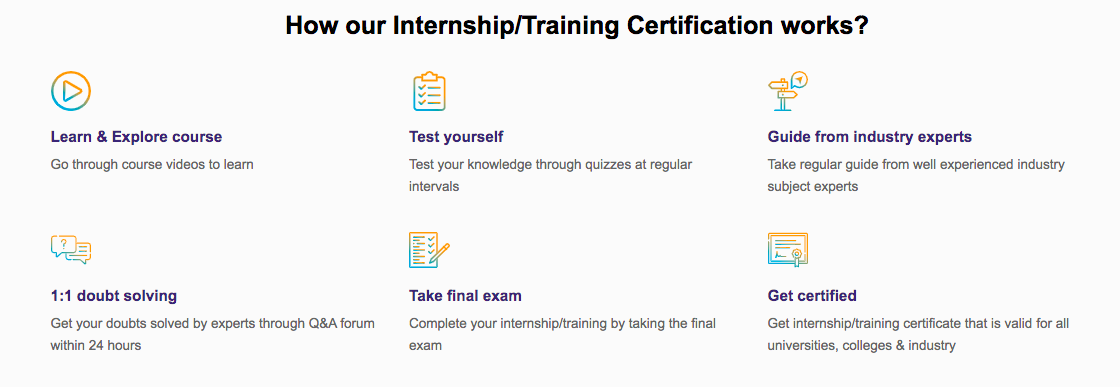
How EasyShiksha Internship/Training Program Works
From Degree-Centric Thinking to Skill-Centric Learning
Degrees continue to provide structured academic knowledge and formal qualifications, but students are increasingly interested in what they can demonstrate beyond the degree. This is where skill-centric learning becomes important.
Consider two students studying the same subject. Both may complete the same examinations and receive similar academic qualifications. However, one student may also have completed several practical projects, participated in internships, learned additional tools and developed communication skills. The second student may have a broader collection of experiences to discuss when applying for an internship or entry-level role.
The objective is not to reduce the importance of academic education. Instead, students can use additional learning to complement their degree. Academic knowledge can provide the foundation, while online courses and practical experiences can help students apply that knowledge in different contexts.
EasyShiksha can become part of this broader learning journey by allowing students to explore online courses and internship opportunities alongside their formal education. The emphasis is on creating a connection between what students learn and what they can practically experience.
Online Courses Give Students an Early Starting Point
One of the simplest ways students can begin career preparation is through structured online learning. Online courses allow students to explore subjects beyond their regular academic curriculum and develop skills at their own pace.
A student interested in artificial intelligence does not necessarily have to wait until a formal university course becomes available. They can begin with introductory concepts, learn relevant tools, complete quizzes and gradually explore practical applications. Similarly, a student interested in digital marketing can start learning about search engine optimization, social media, content strategy and analytics while continuing their regular studies.
The value of online learning becomes stronger when students approach it as more than a certificate-collection activity. Completing a course can be the beginning of a learning process rather than its conclusion. Students can use the knowledge from the course to create projects, solve practical problems and explore internships.
This is particularly relevant to EasyShiksha's learning approach, where online education can connect with practice and internship exposure. The broader idea is simple: students should have opportunities to move from learning a concept to applying it.
Internships Are Becoming Part of the Student Journey
Internships were once often associated with the final year of college or the period immediately before graduation. Today, many students view internships as an opportunity to understand professional environments much earlier.
An internship can help students see how theoretical knowledge is used outside the classroom. It can introduce them to deadlines, communication, teamwork, professional responsibilities and practical problem-solving. Even a beginner-level internship can provide context that textbooks cannot fully reproduce.
Early internship exposure can also help students understand what employers expect. A student may discover that technical knowledge is important but communication, documentation, collaboration and time management also matter. Another student may realize that a particular industry does not match their interests after experiencing it directly.
This makes internships valuable not only as resume additions but also as career exploration experiences. When students participate in practical work before graduation, they have more time to identify strengths and areas that need improvement.
EasyShiksha's focus on combining learning and internship exposure reflects this shift. Instead of treating education and professional experience as completely separate stages, students can view them as connected parts of their development.
Projects Turn Knowledge Into Evidence
One of the biggest differences between simply learning a skill and developing career readiness is the ability to demonstrate that skill. Projects provide an important bridge between the two.
A student may say that they understand web development, data analysis or digital marketing. A project allows them to show how they applied that knowledge. A website, analytical report, campaign concept, application prototype, research assignment or automation project can provide evidence of practical engagement.
Projects also encourage students to solve problems rather than simply remember information. When students work on a project, they may need to research, make decisions, test ideas, identify errors and improve their work. These experiences can strengthen both technical and transferable skills.
For students using EasyShiksha, project-oriented learning can make online education more meaningful. A course can provide the knowledge, while a project can provide an opportunity to apply it. This creates a more connected learning experience.
Quizzes Can Make Learning More Active
Career preparation does not always have to involve large projects or formal internships. Small learning activities can also contribute to long-term skill development.
Online quizzes are a simple example. A quiz can help students test whether they understand a concept rather than simply recognizing it while reading. Regular self-testing can reveal gaps in knowledge and encourage revision.
When quizzes are incorporated into an online learning journey, they can become part of a larger feedback system. Students can identify topics they understand and areas that require additional practice. This makes learning more active and helps students monitor their progress.
For an education platform such as EasyShiksha, quizzes can therefore support the larger idea of Learn + Practice + Intern. Learning introduces the concept, practice strengthens understanding, and practical exposure helps students see how knowledge works beyond the classroom.
Learning Profiles Can Show the Journey Behind the Degree
As students begin collecting courses, projects, quizzes, internships and achievements, another concept becomes increasingly valuable: the learning profile.
A traditional resume generally focuses on selected qualifications and experiences. A learning profile can provide a broader picture of how a student has developed over time. It can connect interests, completed courses, practical activities, projects, skills and internship experiences.
This can be particularly useful for students who are still exploring their career direction. Instead of defining themselves entirely through one degree or one job title, they can gradually build an evolving record of what they have learned and experienced.
The idea of a learning profile also changes how students think about progress. Instead of asking only, “What marks did I receive?” they can ask, “What have I learned?”, “What can I demonstrate?”, “Which skills have I practiced?” and “What should I explore next?”
EasyShiksha can support this broader way of thinking by connecting different forms of learning and career preparation. The student becomes more than a collection of examination results. Their learning journey becomes a developing record of skills and experiences.
Career Exploration Can Begin Before Students Choose a Final Path
One of the advantages of starting early is that students do not have to immediately decide on one permanent career. In fact, early exploration can make career decisions more informed.
A student might begin with programming because it seems interesting and later discover an interest in cybersecurity. Another student may start with graphic design and eventually move toward UI/UX design. Someone interested in business may experiment with digital marketing, finance or entrepreneurship before identifying a preferred direction.
The availability of online learning makes these experiments more accessible. Students can explore introductory courses and practical activities without necessarily making a major academic commitment every time they become curious about a subject.
This creates a healthier relationship with career planning. Instead of treating career choice as a single moment, students can treat it as an evolving process influenced by learning, experience and reflection.
Students often understand concepts differently when they have the opportunity to apply them. Learning by doing creates situations in which knowledge becomes connected to action.
For example, reading about marketing principles can introduce important concepts, but designing a small campaign can create a different level of understanding. Studying programming syntax is useful, but creating a working application can reveal how different concepts interact. Learning about business communication is valuable, but writing professional emails or presenting an idea can develop practical confidence.
This is why practical education has become such an important part of modern career preparation. Students are not simply looking for more information. They are looking for opportunities to use information.
The combination of courses, quizzes, projects and internships creates a more complete learning cycle. Students can learn something, test their understanding, apply it, receive feedback and continue improving.
Career Readiness Is More Than Technical Skills
Starting career preparation early does not mean students should focus exclusively on technical skills. Modern professional environments require a combination of technical knowledge and transferable abilities.
Communication, teamwork, problem-solving, adaptability, time management and professional behavior can influence how effectively a student works. These skills are developed through repeated practice rather than memorization.
Internships and projects can naturally create opportunities to develop such abilities. Students may need to communicate with teammates, explain their ideas, meet deadlines, respond to feedback or revise their work.
Online education can also incorporate these elements when learning is designed around practical activities rather than passive content consumption. This is why career preparation should be viewed as a broad developmental process.
Smartphones Are Becoming Learning and Career Tools
For today's students, smartphones are not only entertainment devices. They can also function as portable learning and career-development tools.
A student can access an online course while travelling, complete a quiz during a short break, research a career option, watch an educational lesson, review project material or explore internship opportunities. This flexibility makes learning less dependent on a specific classroom or schedule.
However, accessibility alone does not guarantee productive learning. Students need structure and intention. Without a clear learning goal, digital platforms can easily become sources of distraction.
The opportunity therefore lies in using technology deliberately. When students transform some of their everyday screen time into meaningful learning time, small activities can accumulate into substantial progress over months and years.
Turning Idle Time Into Learning Time
One of the most practical advantages of early career preparation is that it does not always require students to dedicate several hours every day. Consistency can be more important than intensity.
A student might spend a short period learning a new concept, completing a quiz or working on a project. Over time, these small sessions can create a significant collection of knowledge and experience.
This approach is particularly useful for college students balancing academic assignments, examinations and personal responsibilities. Career preparation can become a regular habit rather than an activity reserved for vacations or final-year placement preparation.
EasyShiksha's online learning environment can fit into this model because digital courses and practical opportunities can be integrated into a student's existing schedule. The broader objective is to make career development accessible enough to become part of everyday learning.
The Role of Certificates in Early Career Development
Certificates can provide evidence that a student has completed a learning experience, but their value becomes stronger when connected with actual knowledge and practice.
A certificate by itself may show course completion. When combined with quizzes, projects, internship exposure and demonstrated skills, it can become part of a larger story about the student's development.
Students should therefore think beyond collecting certificates. The more important question is what they learned through the process and how they can demonstrate it.
EasyShiksha's combination of online courses and certificate-oriented learning can help students create structured learning experiences. When these experiences are connected with practical exposure, students can develop a more meaningful record of their preparation.
How Early Preparation Can Change the Final Year of College
Students who begin career preparation earlier may enter their final year with a different set of experiences. Instead of starting from zero, they may already have explored several skills, completed projects, participated in internships and developed a clearer understanding of their interests.
This can change the nature of final-year preparation. Rather than spending the entire year discovering what skills are required, students can focus more on strengthening existing abilities, improving their professional profile and exploring suitable opportunities.
Early preparation can also make students more comfortable with the language of the professional world. Terms such as projects, portfolios, internships, professional communication and skill development become familiar through experience.
The goal is not to create pressure for students to constantly work toward employment. Education should still include curiosity, creativity and personal development. Early career preparation should complement education rather than turn college into an uninterrupted job hunt.
A More Practical Definition of Success
The changing student mindset also encourages a broader understanding of success. Academic marks remain important, but they are not the only way students can measure development.
A student may feel successful after completing a difficult course, solving a challenging problem, building a project or discovering a new area of interest. Another student may gain confidence after completing an internship or improving communication skills.
This creates the possibility of tracking progress through milestones rather than only final outcomes. Each new skill, project or practical experience can become part of a longer journey.
Learning profiles can support this mindset by making progress more visible. Instead of seeing career preparation as one large goal at the end of college, students can see a series of smaller achievements leading toward greater professional readiness.
AI Is Adding Another Layer to Career Exploration
Artificial intelligence is also changing how students can approach learning and career development. AI-powered tools can help students explore concepts, generate practice questions, receive explanations, organize ideas and experiment with different approaches to learning.
The role of AI in education should be considered carefully. Students still need to understand concepts, verify information and develop independent problem-solving abilities. AI can support learning, but it should not replace genuine understanding or practical effort.
For career exploration, AI may also help students discover connections between skills and possible learning paths. A student interested in data, for example, may discover related areas such as analytics, visualization, machine learning or business intelligence.
The future of learning platforms may therefore become increasingly personalized, with technology helping students identify relevant opportunities while allowing them to make their own decisions.
The Student Becomes the Owner of the Learning Journey
Perhaps the most important change is that students are becoming more active participants in their education.
Instead of depending entirely on institutions to determine what they should learn and when they should learn it, students can increasingly supplement their formal education with independent learning. They can identify gaps, explore interests, seek practical experiences and document their progress.
This does not reduce the role of teachers, colleges or universities. Educators remain essential for guidance, academic depth and structured learning. Digital platforms simply expand the range of opportunities available to students.
EasyShiksha fits into this student-centered model by giving learners access to courses, practical learning and internship opportunities that can complement their academic journey.
From Resume Building to Experience Building
Students often begin thinking about resumes only when they start applying for jobs. A more useful approach is to focus first on building experiences that naturally contribute to a professional profile.
A strong resume is ultimately supported by what a student has actually learned and done. Courses, projects and internships can provide substance behind the statements written on a resume.
This changes the order of thinking. Instead of asking, “What should I add to my resume?” students can ask, “What meaningful experience can I build next?”
That shift can encourage genuine development. The resume becomes a reflection of the learning journey rather than a document filled with disconnected claims.
EasyShiksha and the Early Career-Readiness Journey
EasyShiksha can play a role in this changing approach by connecting several stages of student development. Online courses can introduce students to new subjects, quizzes can help reinforce knowledge, projects can encourage practical application and internships can provide exposure to professional environments.
The value lies in connecting these experiences rather than treating them as isolated activities. A student can learn a concept through a course, test understanding through a quiz, apply it in a project and explore its professional relevance through an internship.
This reflects the broader “Learn + Practice + Intern” approach. It encourages students to move beyond passive consumption and gradually build practical experience.
The platform can also support students who are still exploring their direction. Not every learner begins college with a clearly defined career goal, and that is perfectly normal. Exposure to different subjects and experiences can help students make more informed choices over time.
Empower your team. Lead the industry
Get a subscription to a library of online courses and digital learning tools for your organization with
EasyShiksha
The future of career development is likely to become increasingly continuous. Instead of dividing life into separate stages of “education” followed by “career,” students may experience a more connected cycle of learning, practice, experience and professional growth.
Technology will continue to influence this process. Online education, AI tools, digital portfolios, virtual internships, interactive learning and skill-based platforms can create new opportunities for students to experiment and demonstrate their abilities.
However, technology is only an enabler. The most important element remains the student's willingness to learn, practice, reflect and improve.
Students do not need to have their entire career mapped out at eighteen or twenty years old. What matters is having opportunities to explore possibilities and gradually develop the skills and experiences that help them move forward.
Building Careers Before Graduation Without Losing the Purpose of Education
Starting career preparation early should not mean turning every educational activity into a race for employment. Students still need time to explore ideas, enjoy learning, develop creativity and understand subjects deeply.
The most effective approach is balance. Academic education can provide foundational knowledge, while online courses can support specialized learning. Projects can provide practical application, while internships can introduce students to professional environments. Quizzes can support revision, while learning profiles can help students see their overall progress.
When these elements work together, career preparation becomes part of education rather than something that begins after education ends.
This approach can also reduce the pressure associated with the final year. Students who have explored their interests earlier may have more information available when making career decisions. They can evaluate opportunities based on experience rather than assumptions alone.
Conclusion: Career Building Is Becoming a Continuous Learning Journey
Students are no longer necessarily viewing graduation as the starting line of their careers. For many learners, career development begins much earlier through online courses, skill exploration, projects, quizzes, internships and practical experiences.
This does not mean that students should abandon traditional education or constantly focus on employment. Instead, it represents a more connected approach in which academic learning and career development support each other.
The modern student can learn a skill during college, test that knowledge through quizzes, apply it through a project, gain practical exposure through an internship and document the journey through a learning profile. Each experience can become part of a larger process of discovering strengths and possibilities.
EasyShiksha's approach to online courses, practical learning and internships aligns with this changing student mindset. By bringing learning and experience closer together, platforms like EasyShiksha can help students make their education more practical and career-oriented without waiting until the final semester to begin.
The most important shift is not simply that students are starting earlier. It is that they are beginning to understand career development as a journey rather than a single destination. A career does not suddenly begin on the day a student receives a degree. It can grow through every skill learned, every project attempted, every challenge solved and every practical experience gained along the way.
For the next generation of learners, the journey from education to career may therefore become less of a transition and more of a continuous process. Students can learn today, practice tomorrow, gain experience along the way and keep building toward new possibilities long before graduation arrives.
Anshika Jain is an Engineer, Developer, and Educational Content Author known for her dedication to technology and knowledge sharing. With a strong analytical mindset and a passion for innovation, she has consistently contributed to creating meaningful digital solutions and insightful educational articles.
Her ability to simplify complex technical concepts into engaging and easy-to-understand content makes her work valuable for students and learners across various platforms. Along with her technical expertise, Anshika is admired for her creativity, professionalism, and commitment to continuous learning.
She represents a perfect blend of technical excellence and impactful communication, inspiring others through both her development work and educational contributions.