The education sector is undergoing a significant transformation as technology continues to change the way students learn, teachers teach, and institutions understand academic and career development. Traditional education generally evaluates students through examinations, assignments, attendance, and classroom participation. While these methods provide important information, they offer only a partial picture of a student's learning journey, interests, strengths, challenges, and future potential. The emergence of artificial intelligence, data analytics, machine learning, and personalized learning technologies is creating new possibilities for understanding students in a much more comprehensive way.
One of the emerging concepts in this transformation is the idea of a Digital Twin of a Student. A digital twin is a dynamic digital representation of a real-world entity. In education, a student digital twin can be understood as a continuously evolving digital model that represents relevant aspects of a learner's academic progress, learning behaviour, skills, interests, preferences, achievements, and career development. Instead of looking at a student's performance only through individual examinations or certificates, a digital twin can bring different forms of learning information together to create a broader picture of the learner.
The concept has significant potential for predictive learning and career intelligence. By analyzing patterns in learning activity and performance, educational technology systems can potentially identify areas where a student may need additional support, recommend appropriate learning resources, and suggest possible skill-development pathways. Over time, such systems could help students make more informed decisions about courses, skills, internships, projects, and career exploration.
For an EdTech ecosystem such as EasyShiksha, the concept of a student digital twin represents an opportunity to move from conventional course delivery toward more personalized and intelligent learning experiences. Rather than simply offering a collection of courses, a platform could potentially understand a learner's evolving interests and capabilities and help create a more connected learning journey.
The development of student digital twins also raises important questions about privacy, consent, data security, fairness, and the responsible use of artificial intelligence. A student's future should never be determined entirely by an algorithm. Instead, predictive technology should function as a support mechanism that provides insights while allowing students, educators, mentors, and families to make informed decisions.
Understanding the Concept of a Digital Twin
The concept of a digital twin originated in fields where physical objects, machines, industrial systems, and infrastructure could be represented digitally. A digital model can receive information from the real-world system and use that information to represent its current condition, behaviour, and potential future scenarios.
When this concept is applied to education, the physical entity is the student and the digital representation becomes a continuously updated model of the learner. The objective is not to create a digital copy of every aspect of a person's life. Instead, the educational digital twin would focus on relevant learning and development information.
A student digital twin could potentially include academic performance, course participation, assessment results, completed projects, demonstrated skills, learning preferences, interests, professional goals, and progress over time. With appropriate consent and safeguards, it could also incorporate information from internships, certifications, competitions, and other educational activities.
The important characteristic of a digital twin is that it is dynamic. A student's capabilities are not fixed. A learner who struggles with programming during the first year of college may develop strong programming skills after completing additional courses and projects. Similarly, a student who initially shows interest in one career field may discover a different area through internships or practical experiences.
A useful student digital twin therefore needs to evolve as the learner evolves.
From Student Records to Student Intelligence
Traditional educational records are generally designed to document what has already happened. Marksheets record examination results, certificates document course completion, and attendance records indicate participation.
A digital twin could potentially move beyond documentation toward interpretation and intelligence. Instead of simply showing that a student completed a programming course, a learning system could examine how the student performed during programming exercises, which concepts were difficult, which projects were successfully completed, and how performance changed over time.
This creates a more detailed picture of learning.
The distinction is important because two students can receive the same final grade while having very different learning profiles. One may perform consistently across all topics, while another may struggle initially but demonstrate significant improvement. A digital learning system capable of understanding such patterns could provide more meaningful recommendations.
This does not mean that algorithms should replace teachers or academic judgment. Rather, data-driven systems can provide additional information that educators and learners can use when making decisions.
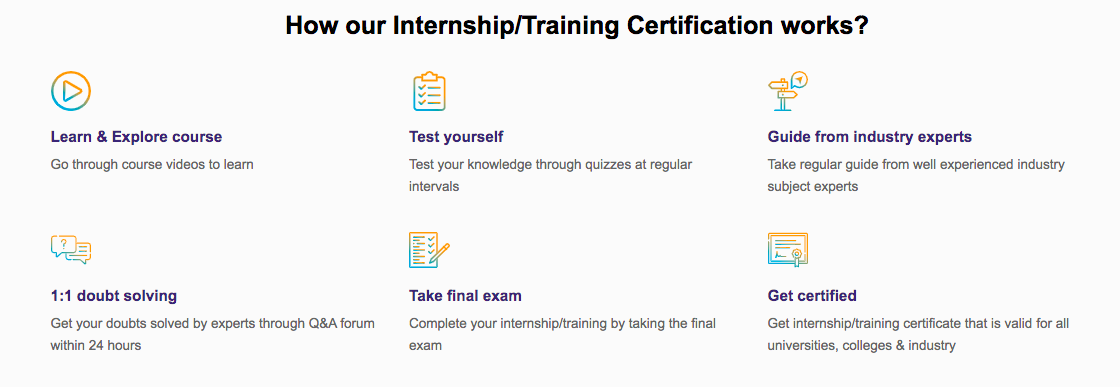
How EasyShiksha Internship/Training Program Works
Digital Twins and Personalized Learning
Personalization is one of the most promising applications of a student digital twin. Traditional education often delivers the same curriculum to a large group of learners even though students may have different backgrounds, abilities, interests, and learning speeds.
A digital twin can potentially support adaptive learning by helping an educational platform understand where an individual learner is currently performing well and where additional support may be required.
For example, a student learning web development may demonstrate strong understanding of HTML and CSS but experience repeated difficulties with JavaScript logic. Instead of recommending the entire introductory curriculum again, a personalized system could identify the specific learning gap and suggest targeted exercises, explanations, or projects.
Another student may already have strong foundational knowledge and could be directed toward more advanced challenges.
This approach can make learning more efficient because students receive learning experiences that are more closely connected to their individual needs.
Predictive Learning: Looking Beyond Current Performance
Predictive learning refers to the use of data and analytical techniques to identify patterns that may provide insights into future learning outcomes. In an educational environment, predictive systems can potentially identify signals associated with learning difficulties, disengagement, skill development, or progress.
A student digital twin can serve as a foundation for such systems because it brings different forms of learning information together.
For example, a platform may observe that a student has stopped completing assignments, is spending less time on learning activities, and is repeatedly struggling with a particular topic. These signals could indicate that the learner may benefit from additional support.
The objective should not be to label the student or predict failure as a predetermined outcome. Instead, the system can identify a situation in which intervention or support may be useful.
Predictive learning is therefore most valuable when it leads to constructive action. A recommendation for additional practice, a conversation with a teacher, or a change in learning strategy can be more useful than simply generating a prediction.
Early Identification of Learning Challenges
One potential benefit of student digital twins is the early identification of learning challenges.
In traditional education, a student's difficulties may become visible only after an examination or major assessment. By that time, the learner may already have developed significant gaps in understanding.
Digital learning environments can provide more frequent signals. Online quizzes, practice exercises, assignment submissions, and learning interactions can create a continuous stream of information about student progress.
A digital twin can potentially analyze these patterns and highlight areas that deserve attention.
For example, if a learner repeatedly makes similar mistakes in mathematics, the system could recommend foundational practice before introducing more advanced concepts. If a student consistently struggles with a particular programming topic, the platform could provide alternative explanations or additional examples.
This approach shifts education from reacting to learning problems toward identifying them earlier.
The Role of Artificial Intelligence
Artificial intelligence is likely to play a central role in developing student digital twins. Machine learning systems can analyze large amounts of educational data and identify patterns that may not be immediately visible through manual observation.
AI can potentially support personalized recommendations, automated feedback, skill mapping, learning-path creation, and career exploration.
A future learning platform could analyze a student's completed courses, project performance, assessment results, and interests to identify areas of strength and potential development. It could then recommend relevant learning resources.
However, AI should not be treated as an unquestionable authority. Educational decisions involve human circumstances that may not be fully represented in digital data. Motivation, family circumstances, personal aspirations, creativity, and changing interests can be difficult to capture through algorithms.
For this reason, AI-powered student digital twins should support human decision-making rather than replace it.
Building a Student Skill Profile
A digital twin can potentially help shift educational attention from qualifications alone toward skills.
A student's academic record may show subjects studied and marks obtained, but it may not fully communicate what the learner can practically do.
A digital skill profile can provide a more detailed representation of capabilities. A student might demonstrate skills in programming, data analysis, communication, project management, design, research, or digital marketing through different learning activities.
The profile can evolve as the learner completes additional courses and projects.
This approach can be especially valuable for students preparing for employment because they can identify which skills they have already developed and which areas require additional improvement.
For EasyShiksha, integrating skill-oriented learning into a broader learner profile could help students view their education as a developing collection of competencies rather than simply a series of completed courses.
Career Intelligence Through Student Digital Twins
Career decisions are often difficult for students because they are expected to choose fields before having significant exposure to professional environments.
A student may know that they are interested in technology but may not know whether they prefer software development, data science, cybersecurity, design, product management, or another area.
A digital twin could potentially support career exploration by analyzing a learner's demonstrated skills, interests, course performance, projects, and learning behaviour.
The system could present possible career areas for exploration rather than making definitive career decisions.
For example, a learner who consistently performs well in programming and mathematics and demonstrates interest in analytical projects may receive information about data-oriented technology careers. Another student with strong communication, creativity, and marketing-related project performance may explore digital marketing or content-oriented career pathways.
These recommendations should be treated as possibilities rather than predictions of a student's future.
Moving From Career Prediction to Career Exploration
The phrase "career intelligence" should not mean that an algorithm determines what career a student will have. Human careers are influenced by many factors, including personal interests, economic conditions, opportunities, mentorship, geographical circumstances, changing technologies, and individual decisions.
A more responsible approach is career exploration.
A digital twin can help students discover possibilities they may not have considered. It can show how particular skills connect to different professional roles and identify areas where additional learning could be useful.
This can make career planning more informed without limiting a student's choices.
For an EdTech platform such as EasyShiksha, this approach can create a stronger connection between learning and career discovery.
Personalized Career Pathways
Career development can involve multiple stages. A learner may begin with foundational knowledge, develop specific skills, complete projects, gain internship experience, and eventually enter employment.
A student digital twin could potentially help organize this journey into a personalized pathway.
For example, a student interested in data analytics might begin with mathematics and spreadsheet fundamentals, continue into statistics and data visualization, then learn a programming language and complete practical projects. Later, the student might explore internships or advanced certifications.
The pathway would not have to remain fixed. As the student gains new experience, interests and goals could change.
This creates a dynamic model of career development rather than a single career recommendation.
Connecting Courses, Skills, and Careers
One of the major opportunities for EdTech platforms is creating stronger connections between educational content and professional requirements.
Students often complete courses without knowing how individual subjects connect to broader career pathways. A digital twin could potentially provide this context.
When a learner completes a course, the platform could identify the skills associated with that course and show how those skills relate to different areas of professional work.
This can help students understand why a particular course may be useful and what additional skills they may need to develop.
For EasyShiksha, such connections could make the learning experience more meaningful by helping students see how individual learning activities contribute to broader educational and career goals.
Digital Portfolios and Evidence of Skills
A student digital twin can become more useful when connected to a digital portfolio.
Instead of simply recording that a student completed a course, the system can potentially link the course with projects, assignments, assessments, and other evidence of learning.
A learner interested in software development, for example, could maintain a portfolio containing applications, coding projects, technical assignments, and related learning achievements.
A learner interested in design could showcase visual projects, while a marketing student could present campaign concepts, content strategies, and analytical work.
This evidence-based approach can help learners demonstrate practical capabilities rather than relying exclusively on academic qualifications.
The benefits of student digital twins are not limited to students. Teachers and mentors can also potentially use aggregated learning insights to provide more targeted support.
Instead of manually reviewing every learning activity, educators could receive information about areas where students are struggling or where additional support may be valuable.
A teacher could use these insights to organize additional sessions or recommend specific learning resources.
Mentors could also use student profiles to provide more relevant career guidance.
However, the system should be designed to support educators rather than overwhelm them with excessive data. The objective should be meaningful insight rather than simply generating more information.
Digital Twins and Industry-Academia Collaboration
Student digital twins can also strengthen relationships between educational institutions and industry.
Employers often want to understand whether candidates possess specific skills. Traditional academic qualifications may not always provide sufficient information about practical capabilities.
A skill-based digital profile could potentially provide a clearer representation of competencies, particularly when supported by verified projects and assessments.
Educational institutions and EdTech platforms could work with industry partners to define relevant skill frameworks. Students could then develop those competencies through courses and projects.
This creates a potential connection between academic learning, digital skill development, and professional requirements.
Supporting Upskilling and Reskilling
The concept of a digital twin is not limited to students in schools and colleges. It can also become relevant to working professionals.
As careers evolve, professionals may need to develop new skills. A continuously updated digital learning profile could help identify areas where additional learning may be useful.
For example, a professional with experience in traditional marketing may want to develop knowledge of analytics, automation, artificial intelligence, or digital strategy.
The digital profile could track completed learning and help organize a pathway for further development.
This creates a lifelong learning model in which the learner's educational profile evolves throughout their career.
The Role of EasyShiksha in Student-Centric Digital Learning
EasyShiksha can be viewed within the broader movement toward accessible, skill-oriented digital education. The idea of a student digital twin creates an opportunity for learning platforms to become more personalized and learner-centric.
Rather than treating every learner in exactly the same way, a platform can potentially organize learning around individual goals, interests, progress, and demonstrated skills.
The long-term opportunity is to create a connected ecosystem in which courses, assessments, projects, certificates, skill development, and career exploration contribute to one evolving learner profile.
Such an ecosystem could help students understand their educational journey more clearly and make more informed choices about what they want to learn next.
Privacy and Data Protection
The development of student digital twins also creates significant responsibilities. Educational data is highly sensitive because it can reveal information about a learner's academic performance, interests, behaviour, and development.
Platforms must therefore treat student data responsibly. Learners should understand what information is being collected, why it is being used, and how long it is retained.
Consent and transparency should be central to the design of educational digital twins.
Students should also have appropriate control over their profiles. They should be able to understand the information being used to generate recommendations and, where appropriate, correct inaccurate information.
Trust will be essential if students and educational institutions are expected to adopt intelligent learning systems.
Avoiding Algorithmic Bias
Artificial intelligence systems can reflect biases present in the data used to develop them. In education, this creates a serious concern because incorrect predictions or recommendations could influence how students perceive their abilities or career options.
A digital twin should therefore never become a mechanism for permanently categorizing learners.
A student's current performance does not determine their future potential. Learners can improve, change interests, discover new abilities, and pursue unexpected career paths.
AI systems should be regularly evaluated for fairness and accuracy, and their recommendations should be presented as guidance rather than absolute conclusions.
Human oversight remains essential.
The Importance of Student Autonomy
A student digital twin should ultimately serve the learner.
Students should not feel that an algorithm has decided what they are capable of doing. Instead, technology should help them discover possibilities and make informed choices.
A useful system might say that a student has demonstrated strengths relevant to several career areas and recommend opportunities to explore them. It should not tell the learner that they are suitable only for one profession.
This distinction is important because education is not simply about predicting outcomes. It is also about helping people discover their potential.
The Future of Predictive Learning
Predictive learning is likely to become increasingly sophisticated as educational platforms collect more learning data and artificial intelligence systems improve.
Future systems may be able to identify learning difficulties earlier, recommend personalized resources, and dynamically adjust learning pathways.
Students may receive real-time feedback about their progress and suggestions for the next stage of their learning journey.
However, predictive learning should remain focused on support rather than judgment. The goal should be to help students succeed, not to label them according to statistical probabilities.
The Future of Career Intelligence
Career intelligence can also become more dynamic. Instead of static career guidance provided at a particular stage of education, students could receive continuous opportunities for career exploration.
As a learner develops new skills, completes projects, and gains practical experience, the system could update the career pathways available for exploration.
This approach recognizes that career development is not a single decision. It is an evolving process.
A student may begin with one interest and discover another through experience. Digital systems should accommodate these changes rather than locking learners into early predictions.
A New Model of Education
The combination of digital twins, artificial intelligence, EdTech, and career intelligence could create a new model of education.
In this model, the learner becomes the centre of an evolving digital ecosystem. Courses contribute knowledge. Assessments provide evidence of understanding. Projects demonstrate practical application. Certifications document achievements. Mentorship provides human guidance. Career intelligence helps learners explore possibilities.
All of these elements can contribute to a continuously evolving student profile.
The result could be a more connected education system in which learning is not divided into isolated subjects and certificates but understood as a continuous journey of skill and personal development.
Challenges in Implementing Student Digital Twins
Building an effective student digital twin is technically and educationally complex. Educational data can come from many different sources, and these systems need to ensure that information is accurate, relevant, and appropriately interpreted.
There is also a risk of collecting too much data. More data does not automatically produce better educational decisions. Platforms need to identify which information is genuinely useful for learning and career development.
Another challenge is interoperability. Students may learn through multiple institutions and platforms, making it difficult to create a unified profile unless systems can communicate effectively.
There are also financial and infrastructure considerations. Developing advanced AI systems requires technical expertise, computing resources, security infrastructure, and ongoing maintenance.
For these reasons, student digital twins should be developed gradually and with clear educational objectives.
Empower your team. Lead the industry
Get a subscription to a library of online courses and digital learning tools for your organization with
EasyShiksha
EdTech platforms are likely to become increasingly important in connecting different elements of the education ecosystem.
Platforms such as EasyShiksha have the potential to evolve from course providers into broader learning environments where students can discover skills, complete projects, build portfolios, receive personalized recommendations, and explore career pathways.
The key will be maintaining a learner-first approach.
Technology should simplify learning rather than make it more complicated. Recommendations should be understandable, educational content should remain high quality, and students should retain control over their choices.
The strongest platforms will likely be those that combine technology with human guidance rather than relying exclusively on automated systems.
Conclusion
The concept of a Digital Twin of a Student represents an important emerging direction in educational technology. By creating a dynamic representation of a learner's academic progress, skills, interests, projects, and learning journey, digital twins could provide a more complete understanding of student development than traditional records alone.
When combined with artificial intelligence and predictive learning, student digital twins can potentially identify learning challenges earlier, personalize educational experiences, recommend relevant resources, and support continuous skill development. When connected with career intelligence, they can also help students explore professional possibilities based on their evolving interests and demonstrated capabilities.
For platforms such as EasyShiksha, this concept represents an opportunity to create a more personalized and connected digital learning experience. Instead of treating courses as isolated learning units, an intelligent learning ecosystem could connect courses with skills, projects, assessments, portfolios, and career exploration.
At the same time, technology must be implemented responsibly. Student data requires strong privacy protections, AI recommendations need transparency and human oversight, and learners must retain control over their educational and career decisions. A student's potential cannot be reduced to a collection of data points or algorithmic predictions.
The purpose of a student digital twin should therefore not be to predict a student's future with certainty. Its purpose should be to help learners understand their present position, identify opportunities for development, explore possibilities, and make better-informed decisions.
The future of education is likely to become increasingly personalized, data-informed, and connected. Digital twins could become one of the technologies supporting this transformation, while platforms such as EasyShiksha can contribute by creating accessible environments where students develop skills, build evidence of their abilities, and continuously explore new learning and career opportunities.
Ultimately, the most valuable digital twin will not be the one that predicts a student's future most precisely. It will be the one that helps the student build that future with greater awareness, flexibility, and confidence.
Anshika Jain is an Engineer, Developer, and Educational Content Author known for her dedication to technology and knowledge sharing. With a strong analytical mindset and a passion for innovation, she has consistently contributed to creating meaningful digital solutions and insightful educational articles.
Her ability to simplify complex technical concepts into engaging and easy-to-understand content makes her work valuable for students and learners across various platforms. Along with her technical expertise, Anshika is admired for her creativity, professionalism, and commitment to continuous learning.
She represents a perfect blend of technical excellence and impactful communication, inspiring others through both her development work and educational contributions.