


Join thousands of students achieving their dreams with expert-led courses.
Join free and unlock everything on EasyShiksha.
Takes less than 3 seconds — no password needed
Please enter a valid email address.
No password needed if you use Google above
Checking your email…
Almost done — just verify your number so we can send course updates and certificates.
Used only for verification & updates
Incorrect OTP. Please try again.
Takes less than 10 seconds
Please select your country.
Please select your state.
FREMONT, Calif., May 5, 2026 /PRNewswire/ -- The rapid integration of Artificial Intelligence (AI) into creative workflows presents novel challenges to established academic standards regarding authorship, originality, and ethical conduct. Current practices often lead to a problematic situation where corporations, legal persons responsible for developing AI models, are cited as authors for AI-generated text. While these corporations can legally assume responsibility for their dealings, attributing authorship to them is fundamentally inaccurate and constitutes a form of academic dishonesty akin to plagiarism (https://www.vicariousauthorship.com/cite-ai.html).
The problem with current citation practices is that while corporations are legal entities capable of accountability, they lack the capacity for genuine authorship. Authorship requires intentionality, originality, and personal expression, qualities inherent in human creativity but absent in AI models. "Citing the corporation as author misrepresents the creative process, obscures the role of the human contributor, and undermines the principles of intellectual honesty," explains Tarik Karenga, CEO at Amenism, Inc. Moreover, it falsely implies corporate agency in a work where that agency does not exist, and creates a situation where responsibility is diffused rather than clearly assigned to the individual who directed the AI's contribution.
The Vicarious Authorship model (https://www.vicariousauthorship.com), developed by Tarik Karenga and Google Gemma 3-27B, offers a clear and legally defensible solution to this ethical dilemma. This framework establishes that a human author, designated as the Principal Author, assumes full legal responsibility, intentionality, and accountability for works generated in partnership with AI, offering a clear path forward for ethical AI integration within academic research and creative endeavors (Karenga [v.a.] & Google Gemma 3-27B, 2026).
Key Advantages for Journals, Universities, Publishers & Creative Industries
The Vicarious Authorship model is not merely a legal framework; it's an ethical imperative in the age of AI-assisted creation. By adopting this standard, journals, universities, publishers, and creative industries can safeguard intellectual honesty, promote responsible innovation, and ensure that authorship remains firmly rooted in human creativity and accountability. It represents a necessary evolution in how we define and recognize creative work in a rapidly changing technological landscape.
References:
Karenga, T. [v.a.], & Google Gemma 3-27B. (2026, April 27). How to cite AI: A new model for responsible authorship. [v.a.] indicates contribution under the Vicarious Authorship model, recognizing Google Gemma 3-27B as a collaborative author. Vicarious Authorship. https://www.vicariousauthorship.com/cite-ai.html
Karenga, T. [v.a.], & Google Gemma 3-27B. (2026, April 27). Vicarious authorship: The model. [v.a.] indicates contribution under the Vicarious Authorship model, recognizing Google Gemma 3-27B as a collaborative author. Vicarious Authorship. https://www.vicariousauthorship.com/vicarious-authorship.html. (Original work published February 9, 2026).
Contact:
Amenism, Inc.
Email: 413038@email4pr.com
Phone: (510) 858-1009
Website: https://www.vicariousauthorship.com
 View original content to download multimedia:https://www.prnewswire.com/news-releases/reclaiming-authorship-in-the-age-of-ai-amenism-inc-unveils-the-vicarious-authorship-solution-302762169.html
SOURCE Amenism, Inc.









Discover thousands of colleges and courses, enhance skills with online courses and internships, explore career alternatives, and stay updated with the latest educational news..

Gain high-quality, filtered student leads, prominent homepage ads, top search ranking, and a separate website. Let us actively enhance your brand awareness.
Download EasyShiksha Mobile Apps from Android Play Store, Apple App Store, Amazon App Store, and Jio STB.
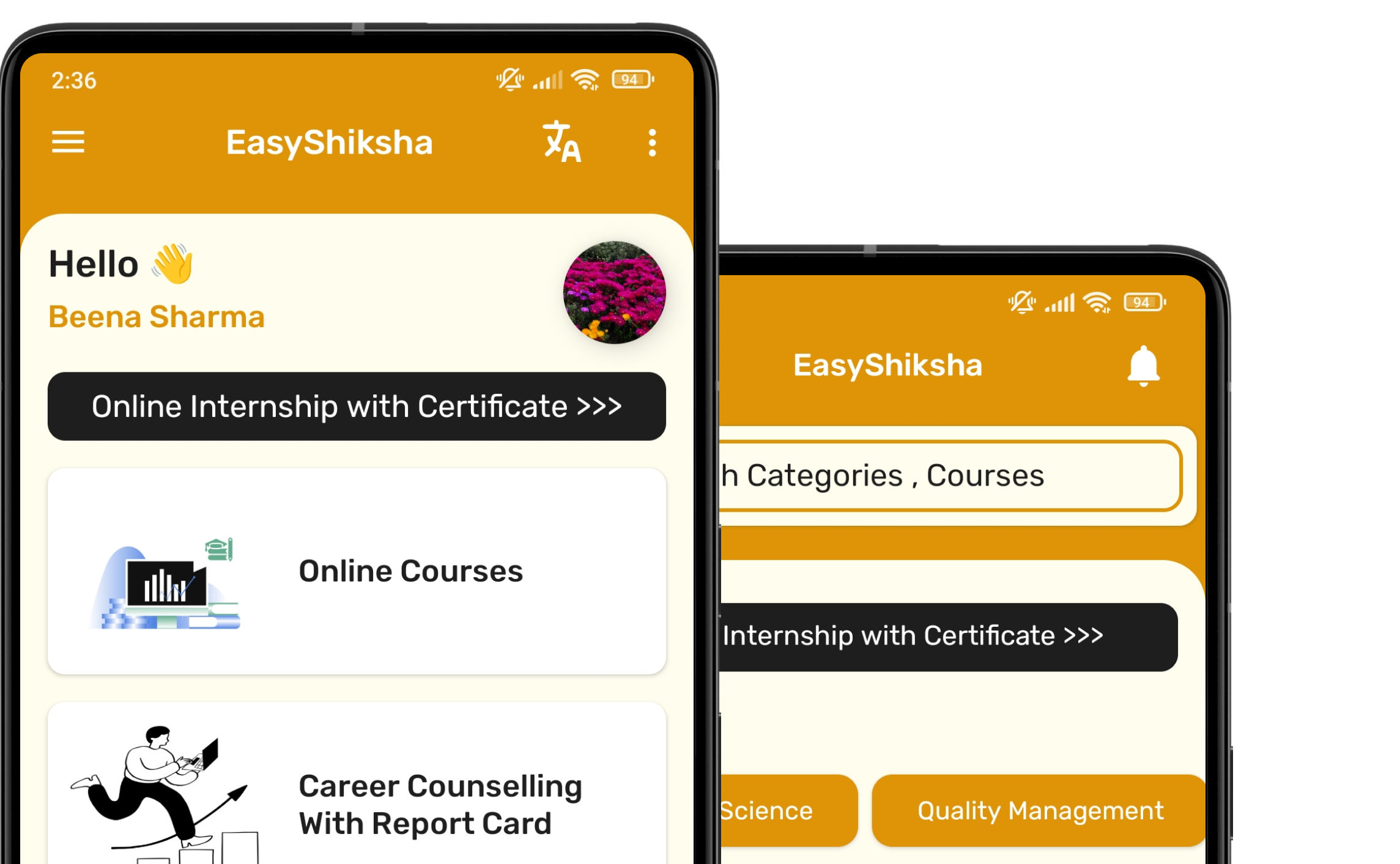


1 million+ learned on the EasyShiksha App
Trusted by Standards & Global Compliance Frameworks





Built under internationally recognized standards for quality, information security, educational excellence and business continuity.
ISO 9001:2015 | ISO/IEC 27001:2022 | ISO 21001:2018 | ISO 22301:2019 | DPIIT Recognized Startup | MSME Registered