India is experiencing a remarkable transformation in the way people learn. Classrooms, textbooks, coaching centres, private tutors, educational videos, online courses, mobile applications, and digital learning platforms are increasingly becoming part of the same educational ecosystem. The expansion of smartphones and affordable internet has made it possible for learners to access educational resources beyond the physical boundaries of their schools and colleges.
Yet access to information is not the same as access to quality education.
A student may have an internet connection but still struggle to find a teacher who can explain a difficult concept in a way they understand. A college student may have access to thousands of tutorials but not know which one is appropriate for their current skill level. A working professional may want to learn a new technology but have no instructor available when they encounter a problem. A learner from a smaller city may have the motivation to develop career-oriented skills but limited access to specialized mentors.
This is where artificial intelligence can play an increasingly important role.
AI tutors are emerging as digital learning assistants capable of answering questions, explaining concepts, generating practice exercises, providing feedback, adapting explanations, and supporting learners throughout their educational journey. When thoughtfully integrated into online learning platforms, these systems can potentially make personalized academic support available to a much larger number of learners.
For a platform such as EasyShiksha, which focuses on online courses, skill development, internships, and certifications, AI tutors can complement existing digital learning resources and help learners receive more individualized support.
The purpose of AI tutors is not to replace teachers. Their greater potential lies in extending educational support beyond traditional classrooms, making learning assistance available at more times, in more formats, and potentially to more learners.
The future of accessible education in India may therefore involve a combination of human educators, high-quality digital courses, interactive assessments, practical projects, and AI-powered learning assistance.
Understanding What an AI Tutor Actually Is
An AI tutor is a software-based educational assistant that uses artificial intelligence to interact with learners and support their learning process.
Unlike a conventional search engine, an educational AI tutor can be designed to respond within the context of a particular course or subject. Instead of simply providing a list of websites, it can explain a concept, ask a learner a question, provide a hint, create a practice exercise, or guide the learner through a problem.
For example, imagine a student taking a programming course through EasyShiksha.
The student understands variables but becomes confused about loops. Instead of leaving the course to search through multiple websites, the learner could ask an AI tutor for an explanation. The tutor could provide a simpler example, explain the concept step by step, and then ask the learner to solve a short problem.
If the learner makes a mistake, the tutor could provide a hint and encourage another attempt. This interaction is closer to tutoring than simply consuming educational content.
The quality of the experience depends heavily on how the AI system is designed. An AI tutor should not merely produce answers. Effective educational AI should encourage reasoning, practice, curiosity, and independent understanding.
Why India Needs More Accessible Learning Support
India has a large and diverse learner population. Students live in metropolitan cities, smaller towns, rural communities, and geographically remote areas. Their educational backgrounds, languages, financial circumstances, access to teachers, and learning needs can vary significantly.
Traditional education systems provide essential foundations, but high-quality individualized instruction can be difficult to scale. A classroom teacher may have dozens of students. A private tutor can only support a limited number of learners. Specialized experts may be concentrated in larger cities.
Digital learning platforms can expand access to educational content, but learners can still struggle when they need personalized explanations. AI tutors could help address part of this gap.
One AI-based learning assistant can potentially interact with many learners simultaneously. It can respond to questions at different times and provide explanations based on the learner's immediate need. This does not eliminate the need for teachers. Instead, it can extend the amount of support available to learners.
From Equal Access to Personalized Access
Providing everyone with the same educational content may appear fair, but learners do not all begin from the same point. One student may already understand basic mathematics. Another may need to revise foundational concepts before studying the same topic.
One learner may prefer concise explanations. Another may need examples and step-by-step reasoning. One learner may understand English comfortably. Another may benefit from explanations in Hindi or another Indian language.
This is why the future of accessible education is not only about giving everyone access to the same material. It is also about making educational experiences responsive to individual needs. AI tutors can potentially personalize support.
They can ask learners what they already understand, identify areas of difficulty through their responses, and adjust explanations accordingly. This can make digital education more flexible.
AI Tutors Can Provide Support Whenever Learners Need It
Traditional tutoring depends on availability. A learner may have a question at 11 p.m. when a teacher is unavailable. A professional may study after work when coaching centres are closed. A student may encounter a programming error while completing an assignment on a weekend. An AI tutor can potentially provide immediate assistance.
This availability is particularly relevant to online learning because digital education is often chosen precisely for its flexibility. A learner does not necessarily follow a traditional 9-to-5 schedule.
They may study early in the morning, late at night, during weekends, or in short periods between other responsibilities. AI tutoring can fit naturally into this model.
For EasyShiksha learners, an AI assistant could potentially provide course-related support whenever they are studying, helping them maintain momentum rather than abandoning a lesson because of a temporary question.
AI Tutors Can Explain the Same Concept in Different Ways
One of the most important abilities of an effective tutor is the ability to explain something differently when the first explanation does not work. Human teachers do this naturally.
If a student does not understand a mathematical concept, the teacher may use an analogy. If that still does not work, they may draw a diagram or provide a practical example.
AI tutors can potentially offer similar flexibility. A learner could ask, “Can you explain this more simply?”
The system might provide a simpler explanation. The learner could then ask for an example. The tutor can provide one.
The learner might then request a real-world application. The tutor can adapt again. This conversational flexibility can be particularly valuable for self-paced online learners.
AI Tutors Can Support Different Levels of Learners
A single online course can attract learners with very different backgrounds.
Consider an artificial intelligence course. One learner may be a complete beginner. Another may already understand Python. A third may have a degree in computer science and simply want to update their knowledge.
A fixed explanation may be too difficult for one learner and too basic for another. AI tutors can potentially adjust the level of explanation.
A beginner might receive a simple conceptual explanation before seeing technical terminology. An intermediate learner could receive more detailed examples.
An advanced learner could be challenged with a complex problem. This type of adaptive support can make online courses more useful to broader audiences.
AI Tutors Can Help Reduce the Fear of Asking Questions
Many learners hesitate to ask questions in classrooms. They may worry that their question is too basic or that other students will judge them. This can cause confusion to remain unresolved.
A private AI tutor can provide a low-pressure environment for asking questions. A learner can ask the same question multiple times, request a simpler explanation, or explore related topics without worrying about embarrassment.
This can encourage curiosity. The ability to ask questions freely is especially valuable when learning technical subjects.
Programming, mathematics, accounting, science, and technology often require learners to clarify small concepts before they can understand more advanced material. AI tutoring can potentially make this clarification process easier.
AI Tutors and Vernacular Education
Language is an important part of educational accessibility in India. Many learners are comfortable communicating in Hindi or another regional language even when their course material is in English.
AI tutors can potentially support multilingual learning by providing explanations in different languages. A learner might study a course containing English technical terminology but ask the AI tutor for a Hindi explanation.
The tutor could explain the concept in Hindi while retaining important professional terms in English. This approach can help learners understand difficult concepts without disconnecting them from the terminology they will encounter in higher education and professional environments.
India's multilingual digital education ecosystem is already expanding. Government initiatives such as DIKSHA have supported educational resources across numerous Indian languages, highlighting the importance of language-inclusive digital education.
For platforms such as EasyShiksha, AI-powered multilingual assistance could complement the gradual expansion of regional-language learning resources.
AI Tutors Can Make Digital Courses More Interactive
A conventional online course often follows a sequence. The learner watches a video, reads some material, completes a quiz, and moves to the next lesson.
An AI tutor can introduce an interactive layer.The learner can ask questions during the lesson.They can request examples.
They can ask for additional practice.They can receive hints while solving problems.They can discuss why an answer is incorrect.
This makes the course feel less like a digital textbook and more like an interactive learning environment. For EasyShiksha, such an approach can make online courses more engaging while preserving the flexibility that makes digital education attractive.
AI Tutors Can Strengthen Active Learning
Effective learning requires more than exposure to information.
Learners need to retrieve knowledge, apply concepts, solve problems, and receive feedback.AI tutors can support each of these activities.
Instead of immediately giving the answer to a question, an AI tutor can ask the learner what they think.If the learner is incorrect, it can provide a hint.
If the learner remains stuck, it can offer another clue. Eventually, it can explain the complete solution. This approach encourages active participation.
For example, a learner studying programming might ask an AI tutor why a piece of code is not working.
Rather than simply providing corrected code, the tutor could ask the learner to identify what the program is expected to do and examine the relevant line.The learner becomes part of the problem-solving process.
AI Tutors Can Provide Personalized Practice
Practice is one of the most important components of skill development.
However, not every learner needs the same practice.A student who consistently answers beginner-level questions correctly may benefit from more challenging exercises.
Another learner may need additional practice with foundational concepts.AI systems can potentially analyze performance and generate or recommend suitable exercises.
For an EasyShiksha course, this could mean that the learner's quiz performance influences the next practice activity.If a learner repeatedly struggles with a specific concept, the system can provide targeted questions.
If the learner demonstrates mastery, it can introduce a more complex challenge.This creates a more responsive learning journey.
AI Tutors Can Provide Immediate Feedback
Feedback is essential because it helps learners understand whether their approach is working.In traditional education, feedback may arrive after an assignment has been submitted and reviewed.
AI can provide immediate feedback for many learning activities.A learner solving a coding problem can receive information about an error.
A learner answering a multiple-choice question can receive an explanation.A learner practicing a language can receive feedback on grammar or vocabulary.
Immediate feedback allows learners to correct misunderstandings before they become deeply established.This is especially useful in self-paced online courses where the learner may otherwise have no immediate source of guidance.
AI Tutors Can Support Exam and Certification Preparation
Many learners use online education to prepare for examinations and professional certifications.AI tutors can potentially support this preparation by creating practice questions, identifying weak areas, explaining difficult concepts, and simulating assessment situations.
Imagine an EasyShiksha learner preparing for a technology certification.The AI tutor can ask diagnostic questions to identify areas of weakness.
The learner then receives a personalized revision plan.After studying the recommended concepts, the learner completes another assessment.
The system can compare performance and identify improvement.This creates a continuous preparation cycle rather than relying only on a final practice test.
AI Tutors Can Support Career-Oriented Learning
Education is increasingly connected to employability.Students and graduates want to know how concepts translate into professional skills.AI tutors can help make this connection.
A learner studying data analysis could ask how a particular statistical concept is used in business.A digital marketing learner could ask how SEO strategies are applied in a real campaign.
A programming learner could ask how a particular coding technique is used in software development.The AI tutor can provide examples and scenarios that connect theory with practical applications.
For EasyShiksha, this is particularly relevant because its learning ecosystem includes courses, certifications, internships, and career-oriented skill development.
AI Tutors Can Help Learners Build Projects
Projects are important because they demonstrate whether learners can apply knowledge.However, project-based learning can be difficult for beginners.
A learner may understand the theory but not know how to start.An AI tutor can potentially help break a large project into smaller steps.
For example, a learner building a website might ask what they should do first.
The tutor can help them define the objective and structure the project.When the learner encounters a problem, the tutor can provide guidance.
The important distinction is that the tutor should support the learner without doing the entire project for them.The goal should remain skill development.
AI Tutors Can Support Teachers Rather Than Replace Them
The debate around AI in education often focuses on whether artificial intelligence will replace teachers.
A more useful perspective is to consider how AI can support educators.Teachers spend significant time answering repetitive questions, preparing practice materials, reviewing basic assessments, and identifying students who need help.
AI tools can potentially assist with some of these tasks.An AI tutor can handle common questions while teachers focus on deeper mentorship, complex explanations, emotional support, classroom management, and professional guidance.
This could allow educators to spend more time on the aspects of teaching that require human judgment.For EasyShiksha and similar platforms, the combination of AI assistance and human expertise can create a stronger educational ecosystem.
Human Teachers Remain Essential
Despite the capabilities of AI, education is not simply an information-delivery process.Teachers understand context, motivation, emotions, cultural differences, and individual circumstances.
They can encourage students during difficult periods, recognize when a learner needs additional support, and provide mentorship that goes beyond the subject itself.AI systems can make mistakes. They may misunderstand a learner's question or generate an inaccurate explanation.
Therefore, educational AI needs appropriate safeguards and human oversight.The goal should be to expand educational support, not eliminate human educators.
AI Tutors Can Help Learners in Smaller Cities and Rural Areas
Specialized educational support is often concentrated in large urban centres.A learner in a smaller town may have fewer opportunities to interact with experts in areas such as artificial intelligence, cybersecurity, data science, advanced programming, or digital marketing.
Online learning can already reduce geographic barriers.AI tutoring can extend that advantage.
A learner does not need to live near a specialized instructor to ask questions about a difficult programming concept or receive practice exercises.This does not solve every educational inequality, but it can reduce one important barrier: access to individualized academic support.
AI Tutors and the Smartphone Revolution
India's mobile-first digital environment makes AI tutoring particularly interesting.Learners increasingly use smartphones to access educational content.
An AI tutor integrated into a mobile learning app can potentially provide assistance directly within the learner's existing study environment.A student watching an EasyShiksha lesson could pause and ask a question.
A professional completing a short course could request an example.A learner preparing for a quiz could ask for additional practice.
This removes the need to move between multiple applications.The learning assistant becomes part of the course itself.
AI Tutors Can Support Microlearning
Not every learner has hours available for study.Professionals may have only twenty or thirty minutes per day.
AI tutors can support short, focused learning sessions.A learner can ask for a quick explanation of one concept, complete a few practice questions, and receive feedback.
Over time, these small learning sessions can contribute to meaningful skill development.
This fits naturally with mobile learning and self-paced courses.For EasyShiksha, AI-assisted microlearning could help learners maintain consistency even when their schedules are busy.
AI Can Help Learners Identify What to Study Next
One common problem in online education is deciding what to learn next.The internet contains an enormous amount of information.
Learners can become overwhelmed by choices.An AI tutor can potentially use course progress, assessment performance, and learner goals to recommend the next step.
For example, a learner who has completed basic Python but struggles with functions may receive additional practice before moving into advanced programming.
A learner who has mastered the basics may be recommended a project.This creates a more structured learning path.
AI Tutors Can Support Lifelong Learning
Learning no longer ends with graduation.Professionals need to continuously update their skills because technology, industries, and job roles change.AI tutors can make lifelong learning more approachable.
A professional can begin a new subject without needing to enroll in a traditional program immediately.They can use an online course, ask questions, practice skills, and receive personalized guidance.
EasyShiksha's online learning model can support this kind of flexible education by allowing learners to develop skills according to their schedules and goals.AI tutoring can make that flexibility even more powerful.
AI Tutors and Accessibility for Learners With Different Needs
AI-powered education also has the potential to improve accessibility.Learners may benefit from features such as text-to-speech, speech-to-text, adjustable explanations, simplified language, captions, and conversational interfaces.
A learner who finds long written explanations difficult could request an audio explanation.Another learner could ask for a simplified version of a technical concept.
These capabilities can make digital education more flexible.Accessibility should remain a core part of AI educational design rather than an afterthought.
Privacy and Responsible AI in Education
The benefits of AI tutoring come with responsibilities.AI tutors may process information about learner interactions, questions, assessment performance, course progress, and learning preferences.
Educational platforms must therefore handle learner data responsibly.Learners should understand what information is collected, why it is collected, and how it is used.
AI systems should also be monitored for bias and inaccurate recommendations.A learner should not be permanently classified based on a few incorrect answers.
Educational AI should recognize that performance can change over time.Responsible design should prioritize privacy, transparency, security, fairness, and human oversight.
Avoiding the Risk of Overdependence on AI
Another challenge is learner dependence.
If students ask AI to solve every problem, they may become less capable of solving problems independently.This is why educational AI should be designed to encourage thinking.Instead of immediately providing the answer, an AI tutor can ask a guiding question.Instead of completing an assignment, it can provide a framework.
Instead of writing an entire project, it can help the learner break the project into stages.
The objective should be to make learners more capable, not more dependent.This distinction will become increasingly important as AI becomes integrated into education.
Document
#AbIndiaSikhegaGharSe
Online Internships for Students
EasyShiksha offers comprehensive online virtual internship programs tailored for students, graduates, freshers, and working professionals seeking academic advancement and upskilling certifications.
Get Job-Ready with Our Online Summer Internship 2025 Opportunities
Explore our wide selection of online job-ready internships featuring globally recognized certificates accepted by universities, colleges, and companies worldwide.
Obtain two authorized certificates recognized by universities & corporates.
Access our 100% online internships at genuine price.
Choose from flexible internship durations ranging from 2 weeks to 6 months.
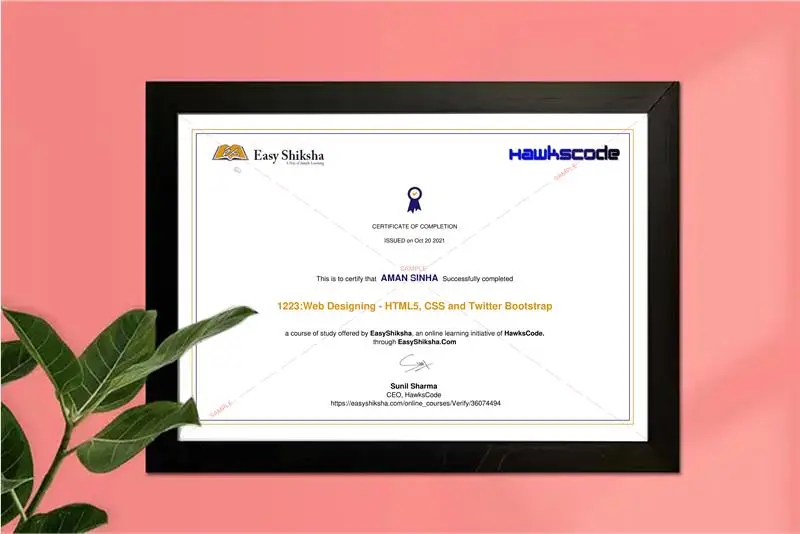
Upon completion, you will receive two certificates: an Internship Certificate and a Course Completion Certificate
Learn conveniently anytime, anywhere.
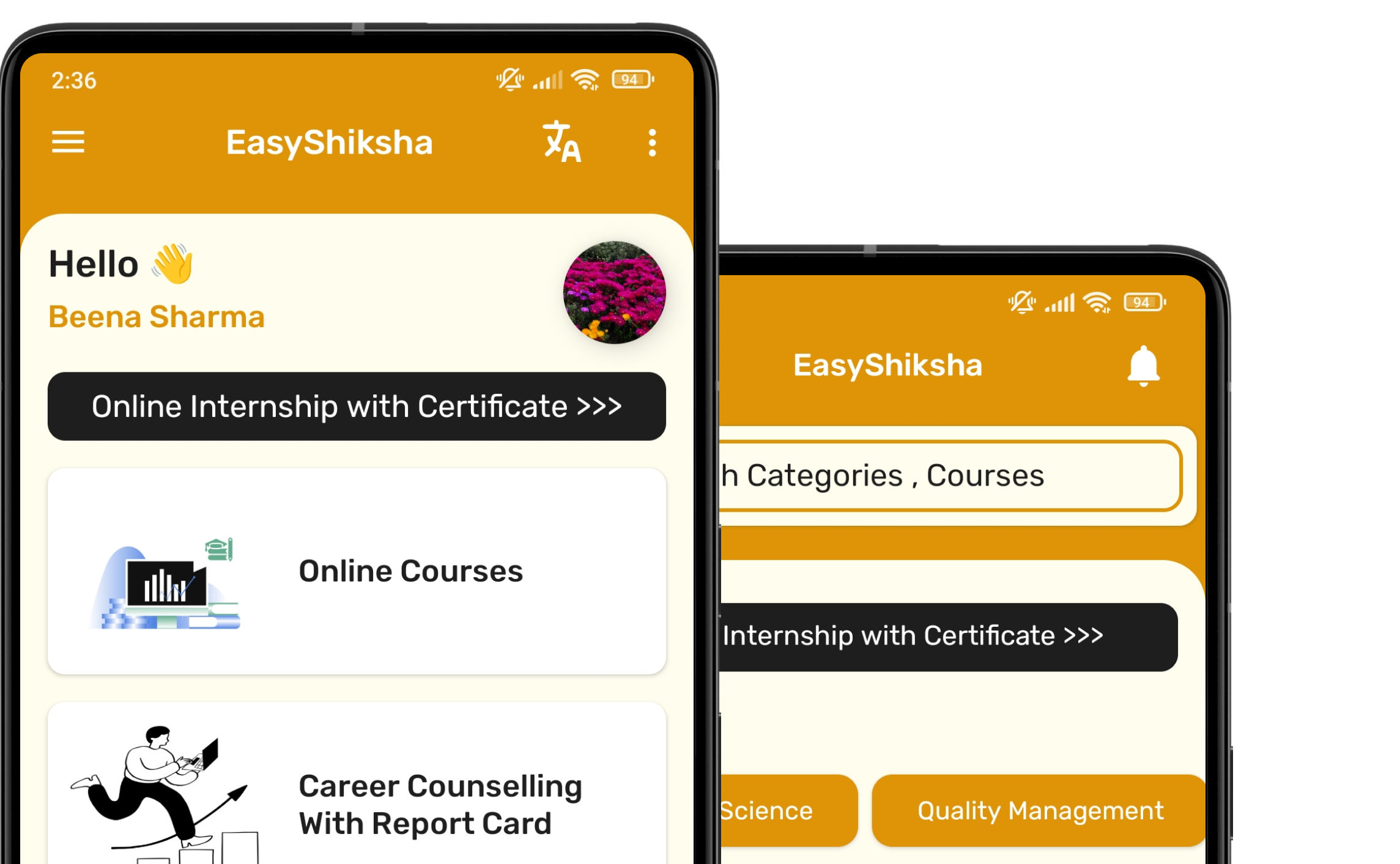
Access learning materials seamlessly via web or mobile. (Download App)
Traditional digital courses are often linear. The learner follows the instructor's sequence. AI introduces conversation. Learners can ask questions according to their curiosity. They can explore related concepts.
They can request examples. They can challenge explanations. This conversational model can make education more learner-centered.
A student who becomes interested in a related topic does not necessarily have to leave the course and search elsewhere. They can explore the question within the learning environment.
The Role of AI Tutors in EasyShiksha's Future
EasyShiksha's existing focus on online courses, internships, certifications, and skill development provides a strong foundation for AI-supported learning. An AI tutor could potentially become an additional layer across this ecosystem.
At the beginning of a course, AI could help learners understand prerequisites. During lessons, it could answer questions. After quizzes, it could explain mistakes.
During projects, it could provide hints. Before certification assessments, it could recommend revision. During career preparation, it could provide practice scenarios.
This would turn the AI tutor into a continuous learning companion rather than a separate chatbot. The learner would not need to interact with AI only when something goes wrong. The system could become part of the entire educational journey.
The Future of AI-Powered Online Education in India
The future of AI tutoring in India is likely to involve several technologies working together. AI tutors can provide conversational support. Adaptive learning systems can personalize difficulty. Interactive quizzes can assess understanding. Simulations can provide practical experiences. Vernacular language technology can improve accessibility. Learning analytics can identify progress and gaps.
Together, these technologies can create a much more responsive digital learning environment. Imagine a learner beginning an EasyShiksha course with a short diagnostic assessment.
The platform identifies the learner's current knowledge level and preferred language. The learner receives a personalized sequence of lessons. After each lesson, an interactive quiz checks understanding.
If the learner struggles, the AI tutor provides an alternative explanation and additional practice. If the learner performs strongly, the system introduces a more challenging activity. The learner completes a practical project with AI guidance but remains responsible for the final work.
Finally, an internship or professional activity provides an opportunity to apply the skills. This model moves online education closer to individualized learning at scale.
Making Quality Education More Affordable
One of the most significant potential benefits of AI tutoring is scalability. A human tutor can only teach a limited number of students at one time.
AI systems can potentially support large numbers of learners simultaneously. This does not mean AI tutoring should replace personalized human teaching entirely. Instead, it can provide an additional layer of support at a lower marginal cost.
For learners who cannot afford private tutoring, even basic AI assistance can be valuable.
A student may not have access to a subject specialist every day, but an AI learning assistant could potentially help them understand basic questions and practice independently. This can contribute to the broader goal of making quality learning support more accessible.
AI Tutors Can Help Build a Culture of Continuous Learning
Education becomes more powerful when learners develop the habit of asking questions and improving continuously. AI tutors can encourage this behavior because they make experimentation easier.
A learner can ask, “What happens if I change this?” They can request another example.
They can ask for a harder problem. They can explore a related concept. This can turn learning into an ongoing conversation rather than a fixed activity.
For students and professionals using EasyShiksha, such a learning environment could encourage continuous skill development beyond individual courses.
Challenges That AI Cannot Solve Alone
It is important to maintain realistic expectations. AI tutoring cannot solve every educational challenge in India.
Access to devices, internet connectivity, electricity, school infrastructure, teacher availability, financial constraints, educational quality, and socioeconomic inequality remain significant factors.
AI can help address some barriers, particularly those related to personalized support and content accessibility. But it cannot replace the broader educational ecosystem.
Teachers, schools, universities, families, communities, policymakers, and technology platforms all have important roles. The most effective future will therefore be collaborative.
Conclusion
AI tutors have the potential to become one of the most important developments in digital education.
They can provide immediate explanations, personalized practice, adaptive support, multilingual assistance, feedback, project guidance, and flexible learning opportunities. For learners who do not have regular access to private tutors or specialized instructors, these capabilities could make high-quality learning support more accessible.
For India, the opportunity is particularly significant because of the country's enormous and diverse learner population.
AI can help extend educational support beyond geographical boundaries and traditional schedules. It can help a learner in a smaller town access guidance that might otherwise be difficult to find. It can help a working professional learn after office hours. It can help a student ask questions without fear of judgment. It can help a learner understand a technical subject through a familiar language.
For EasyShiksha, integrating AI tutoring with its existing ecosystem of online courses, certifications, internships, and skill development could create a more personalized and interactive learning experience.
However, the success of AI in education will depend on responsible implementation. AI should support learning rather than encourage dependency. It should protect learner privacy, provide reliable information, respect linguistic and cultural diversity, and operate alongside human educators rather than attempting to eliminate them.
Anshika Jain is an Engineer, Developer, and Educational Content Author known for her dedication to technology and knowledge sharing. With a strong analytical mindset and a passion for innovation, she has consistently contributed to creating meaningful digital solutions and insightful educational articles.
Her ability to simplify complex technical concepts into engaging and easy-to-understand content makes her work valuable for students and learners across various platforms. Along with her technical expertise, Anshika is admired for her creativity, professionalism, and commitment to continuous learning.
She represents a perfect blend of technical excellence and impactful communication, inspiring others through both her development work and educational contributions.