
















Introduction to Electronic Components A Step By Step Guide
Gain hands-on electronics mastery by learning to read circuits, identify components, solder, and measure electrical properties confidently.
#1 Most Popular Online Course & Internship in Electronics You can enroll today & get certified from EasyShiksha & HawksCode.
 Build real-world projects
Internship with certificate
Resume-ready experience
Beginner to advanced
Lifetime access
Interview prep included
Build real-world projects
Internship with certificate
Resume-ready experience
Beginner to advanced
Lifetime access
Interview prep included
 Updated October 12, 2026
Join 5,00,000+ students already enrolled worldwide
No risk — 30-day full refund guarantee
Start instantly after payment — access in seconds
Certificate + Internship Joining Letter included
Updated October 12, 2026
Join 5,00,000+ students already enrolled worldwide
No risk — 30-day full refund guarantee
Start instantly after payment — access in seconds
Certificate + Internship Joining Letter included
 Free Preview
 33 On-demand Videos
 Internship Joining Letter
 2 Certificates (Course + Internship)
 Lifetime Access
 1 Quiz + Assignments
 Mobile & Desktop Access


Why This Course and Internship Stands Out
See exactly what separates EasyShiksha students from everyone else
 Watching scattered YouTube
videos with no structure
No certificate — nothing to show
employers
No internship experience on
resume
Wasting months without clear
direction
Struggling to stand out in job
applications
No proof of practical skills
Structured, beginner-to-advanced
learning path
Verified certificate — shareable
on LinkedIn
Real internship offer letter for
your resume
Go from zero to job-ready in one
programme
Resume-ready experience before
graduation
Practical projects you can show
any recruiter
Watching scattered YouTube
videos with no structure
No certificate — nothing to show
employers
No internship experience on
resume
Wasting months without clear
direction
Struggling to stand out in job
applications
No proof of practical skills
Structured, beginner-to-advanced
learning path
Verified certificate — shareable
on LinkedIn
Real internship offer letter for
your resume
Go from zero to job-ready in one
programme
Resume-ready experience before
graduation
Practical projects you can show
any recruiter
Internship Opportunity Included With This Course
"This is not just a course — it's real career experience. Walk away with documents that prove your skills to any employer."



This Course is Perfect For
Whether you're starting from scratch or switching careers — this course is designed with your success in mind.








This Introduction to Electronic Components course is intended for those interested in learning electronics. The course introduces students to the concept of electronic components, their uses, and how they work within an electrical system. The electronics industry has been skyrocketing over the last few years as more and more people are using electrical appliances for their everyday needs. It is so important to know the basics of how these components work, as they are a necessity in modern society. Here is a step-by-step guide to help you understand what electronic components are, what they do, and how they function.
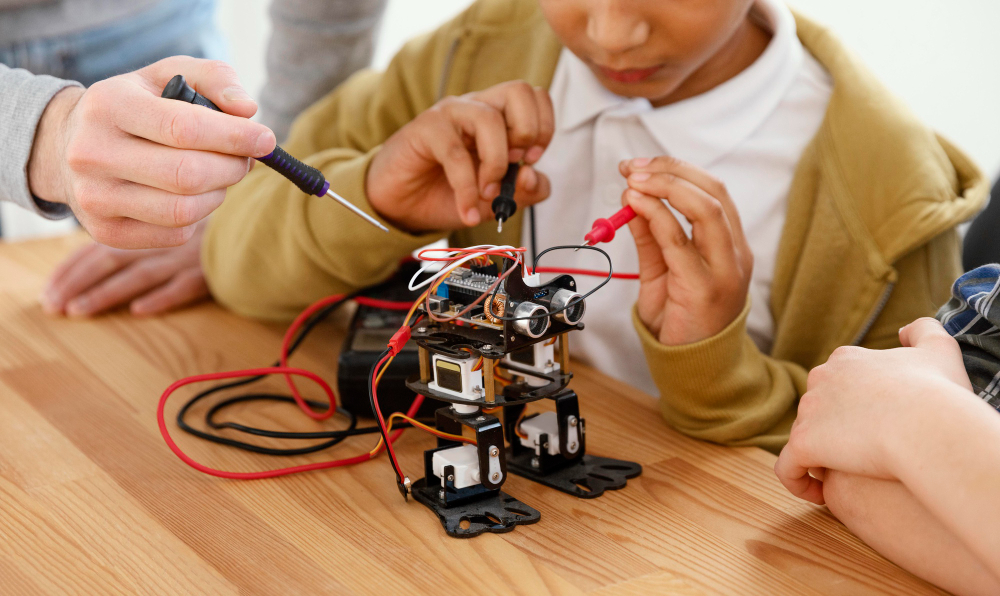
Electronic components are the building blocks of any electronic device, and they come in a wide range of sizes and shapes. These videos will walk you through some basic information about electronics so you know how to identify and use these building blocks. Practical examples are also added.
Why You Should Take This Course?
- Learn how to read circuit diagrams.
- Learn how to solder.
- Identify parts on an electronic schematic diagram.
- Become familiar with the most commonly used electronic components.
This course will give you everything you need to start playing with electronics components and fix electronic devices. It is designed so that you can quickly get started without having to spend months of your time learning lots of irrelevant information. It covers all of the basics, so even if you never plan on getting any further than this one course, you'll still learn more than enough. You will learn how to take care of the small components that are inside your electronics.
Topics Covered:
- The Components of Electricity
- Volt-Ohm-Meter Basics (Measuring Electricity)
- Circuit Diagrams Basics (Electronic Roadmaps)
- The Resistor
- Ohm’s Law
- The Capacitor
- The Inductor
- The Diode
- The Transistor (Electronic Valves)
In this Introduction to Electronic Components Course, we will begin by discussing the three components that make up electricity. Next, we will spend more extensive time on how to measure the three components of electricity. During this section, we will explore two of the three components (voltage and current). This section will cover VOM basics and allow you to become familiar with the most important and most basic piece of test equipment.
In the next section, Circuit diagrams section, you will learn how to use electronic component symbols on an electronic road map called a schematic or circuit diagram. Many of the symbols will represent new concepts for many of you, and these concepts will be fully developed once we finish the section. As a result, you will develop the fundamentals of interpreting circuit diagrams so that these illustrations of the arrangement of electronic components can help you with the remainder of the course.
The final of the three components, resistors, will be covered next. How the three components are related mathematically is Ohm’s Law, and this fundamental law will be covered in detail. These sections make up the basic, basic material of electronics.
Four additional components common to virtually all electronic circuits are the capacitor, inductor, diode, and transistor. I will cover these topics with a level of detail that will familiarize the audience with the function of these components and the basics of how they work and react in different situations. There are text reading assignments for each section of the course.
What You Will Learn
- Understand the basics of electricity and electronic components.
- Read and interpret circuit diagrams.
- Solder and handle electronic components.
- Identify and use resistors, capacitors, inductors, diodes, and transistors.
- Measure electrical properties using a volt-ohm meter (VOM).
 Unlock 31 More Lessons + Internship Access

 Missing this = losing the internship credential Missing this = losing your early-access advantage Missing this = falling behind candidates who did enroll

.svg?v1)
 Chat with us first →
 UPI
UPI
 Wallets
 Debit/ Credit card
 NetBanking
 EMIs
33 On-demand Videos Course Completion Certificate
Internship Certificate
Internship Joining/Offer Letter
Letter of Appreciation (LOA)
Internship Attendance Report
Internship Evaluation Report
Internship Certificate Hard Copy
Project Report Assitance
Internship Project Assitance
1:1 Live Mentor Call
Course Certificate in Elegant Wooden Frame
2 Certificates (Course + Internship) Lifetime Access Projects & Assignments 1 Quiz + Assignments
EMIs
33 On-demand Videos Course Completion Certificate
Internship Certificate
Internship Joining/Offer Letter
Letter of Appreciation (LOA)
Internship Attendance Report
Internship Evaluation Report
Internship Certificate Hard Copy
Project Report Assitance
Internship Project Assitance
1:1 Live Mentor Call
Course Certificate in Elegant Wooden Frame
2 Certificates (Course + Internship) Lifetime Access Projects & Assignments 1 Quiz + Assignments
Why Start Now?
The Opportunity Won’t Wait.
Every day you delay is a missed opportunity to grow your skills. Learners who start today gain the advantage — whether it's building skills, improving careers, or unlocking new opportunities.
Still Thinking?
Here's everything that makes this a no-brainer:
No prior experience needed — start from absolute zero Beginner friendly — explained step by step Risk-free — 30-day full refund guarantee One-time payment — access forever Student-friendly pricing — see details at checkout Real internship certificate includedWhat Happens After You Enroll?
From payment to certificate — here's exactly what to expect
 Secure Payment
 Instant Access
30-Day Refund
2 Certificates
Instant Access
30-Day Refund
2 Certificates
Imagine After Completing This Course
Picture yourself 30 days from now — with skills, experience, and credentials that open real doors.




 Includes Internship


















