Choosing a career has traditionally been treated as a decision made through marks, entrance examinations, degrees, counselling sessions and conversations with teachers or family members. Students often select a course because it is popular, financially attractive, recommended by someone they trust or considered suitable based on academic performance. However, the modern career landscape is changing rapidly. New technologies, evolving job roles, digital workplaces and skill-based hiring are making career exploration more complex than simply selecting a degree and waiting for employment opportunities.
Students increasingly need opportunities to understand what different careers actually involve before committing significant time and money to a particular educational path. Reading about a profession can provide information, but it does not always provide an experience of the work itself. A student may understand what data science means theoretically but still have no idea whether they enjoy analysing information. Someone interested in digital marketing may know the terminology but may never have experienced the process of creating a campaign, interpreting audience behaviour or improving content based on performance.
This is where the concept of a Digital Career Lab becomes valuable. A Digital Career Lab can bring together games, quizzes, simulations, learning activities, projects and career exploration tools within one digital environment. Instead of asking students to imagine their future careers entirely from descriptions, it can allow them to interact with career-related situations, answer questions, experiment with decisions and practise skills.
For a platform such as EasyShiksha, which brings together online education, courses, internships, quizzes, career guidance, games, online degrees and education discovery, this approach creates an opportunity to connect different stages of the student's journey. A student could discover an interest through a quiz, explore it through a game, understand the underlying concepts through a course, test practical decisions through a simulation and eventually develop evidence of capability through an internship or project.
The Digital Career Lab therefore represents more than another educational feature. It reflects a broader movement towards making career preparation continuous, practical and interactive.
What Is a Digital Career Lab?
A Digital Career Lab can be understood as an online environment where students explore careers by interacting with realistic learning experiences. It combines educational content with activities that encourage experimentation, decision-making and practical application.
The word "lab" is important because a laboratory is traditionally a place where people do not merely read about concepts. They observe, experiment, test assumptions and learn from outcomes. A Digital Career Lab applies the same philosophy to career exploration.
Instead of simply showing a student a page explaining what a software developer does, the platform could introduce a small coding challenge. A student interested in business could participate in a virtual business decision-making scenario. Someone exploring cybersecurity could investigate a simulated security incident. A student interested in finance could manage a simplified virtual budget or investment scenario using educational data. A future marketer could design a campaign and observe how different decisions affect simulated outcomes.
These activities would not replace formal education or real workplace experience. Their purpose would be to provide an accessible introduction to the nature of different skills and professional situations.
This model can also help students understand that career suitability is not determined by one test result. Career development involves interests, skills, curiosity, persistence, communication, problem-solving and the ability to learn. Interactive experiences can provide students with multiple opportunities to observe their own responses to different types of tasks.
Why Traditional Career Exploration Often Feels Incomplete
Career guidance frequently begins with questions such as "What subjects do you like?" or "What are your marks?" These questions can be useful, but they provide only part of the picture. Academic performance may indicate how a student performed in a particular educational environment, while career exploration requires understanding how a person responds to different kinds of real-world tasks.
A student may score highly in mathematics but discover that they particularly enjoy using mathematics to solve business problems rather than studying theoretical mathematics. Another student may initially consider computer science because of industry demand but discover through practical experimentation that they enjoy design, communication or product management more than programming.
The gap between knowing about a career and experiencing aspects of that career is therefore significant. Digital learning platforms can reduce this gap by creating low-risk environments in which students can explore possibilities.
This is particularly relevant for students who may not have access to extensive career counselling, professional networks or opportunities to interact with people from different industries. A digital environment can expose learners to a broader range of career scenarios while allowing them to explore at their own pace.
Games are often associated with entertainment, but their underlying mechanisms can also support learning. Interactive games require players to make decisions, understand rules, respond to feedback and adjust their strategies. These characteristics can be useful in career exploration.
Imagine a student entering a digital game called "Build a Startup." The student might begin with a limited virtual budget and make decisions about product development, marketing, hiring and customer research. The objective would not necessarily be to produce a realistic business forecast. Instead, the game could introduce the student to the interconnected nature of business decisions.
Similarly, a cybersecurity career game could present a fictional organisation experiencing suspicious network activity. The learner could investigate clues, identify possible risks and decide what action to take. A healthcare-related educational simulation could ask learners to interpret simplified patient information and understand the importance of careful decision-making.
The game environment makes experimentation less intimidating. Students can make mistakes, receive feedback and try again. This is particularly useful during early career exploration because students should be able to discover what interests them without the pressure of making an irreversible decision.
For EasyShiksha, games can become an entry point into its wider educational ecosystem. A student might encounter a career-related game and subsequently discover a relevant quiz, course or internship opportunity. In this way, entertainment and education can become connected rather than existing as separate experiences.
Quizzes Can Help Students Discover Learning Preferences
Quizzes have become a familiar part of digital education, but their potential extends beyond testing memory. Career-oriented quizzes can be designed to encourage reflection and identify areas that a student may want to explore further.
A career quiz could ask students how they would approach a fictional workplace situation. Instead of asking only whether they like mathematics or computers, it could present scenarios involving analysis, creativity, communication, organisation, problem-solving or leadership.
For example, a student could be asked to choose how they would respond when a project suddenly loses an important team member. Another question might ask how they would investigate a sudden decline in website traffic. Another could present a simple technical problem and ask which approach the learner would try first.
Such questions can introduce students to different types of thinking associated with professional environments. The results should not be treated as definitive predictions of a student's future career. Instead, they can serve as conversation starters and exploration guides.
EasyShiksha's quiz functionality can fit naturally into this model. A quiz can become the first step of a learning journey, directing students towards topics they may want to investigate through courses, games, simulations and practical experiences.
Simulations Bring Workplace Decisions Into the Learning Environment
Simulations are particularly powerful because they can reproduce selected aspects of real-world situations without requiring students to enter an actual workplace.
A simulation can present a scenario, provide information and ask the learner to make decisions. The system can then show consequences or provide feedback. This allows students to understand that professional work often involves uncertainty, competing priorities and incomplete information.
Consider a digital marketing simulation. The learner could receive a fictional campaign budget, a target audience and several advertising options. The student could distribute the budget, select messaging and review simulated performance data. The activity could then explain why certain choices produced particular results.
A project-management simulation could involve deadlines, resources and changing requirements. A learner would need to prioritise tasks and respond when an unexpected problem occurs. A software-development simulation could introduce requirements and ask students to identify logical issues before a product is launched.
The objective is not to create a complete replacement for professional experience. Instead, simulation provides a bridge between theoretical learning and practical exposure.
The Power of Combining Games, Quizzes and Simulations
Games, quizzes and simulations become considerably more useful when they are connected rather than presented as isolated features.
A student could begin with a short career discovery quiz. The results could suggest several areas for exploration without declaring a fixed career identity. The learner could then play a game associated with one of those areas. If the student finds the activity interesting, a simulation could provide a more detailed challenge. After completing the simulation, the platform could recommend an introductory course that explains the concepts used in the activity.
The student could subsequently complete a project or internship related to that subject. The learning journey would therefore move from curiosity to exploration, knowledge, practice and experience.
This model changes the role of digital education. Instead of a platform simply asking students to enrol in a course, it can provide multiple opportunities for students to discover why that course might matter to them.
For EasyShiksha, this connected approach aligns naturally with the broader concept of bringing education, quizzes, games, courses, internships, career guidance and education discovery into one online ecosystem.
From Career Interest to Career Evidence
One of the major challenges faced by students and freshers is the difference between claiming an interest and demonstrating capability. A student may write "interested in digital marketing" on a resume, but employers may want evidence that the student has actually applied relevant skills.
A Digital Career Lab can begin addressing this gap at an early stage. Interactive activities can generate records of completed challenges, projects and learning milestones. These records should not be confused with professional experience, but they can provide a structured history of learning and practice.
For example, a learner who completes a series of marketing simulations may later create a project based on campaign analysis. A student who experiments with programming challenges may develop a small application. Someone exploring data science could progress from quizzes to datasets and eventually complete a practical project.
This creates a progression from interest to knowledge, knowledge to practice and practice to evidence.
EasyShiksha's courses and internships can strengthen this progression by connecting digital exploration with structured learning and real-world exposure. The platform can become a place where students do not simply collect certificates but gradually build a record of what they have learned and attempted.
Personalised Learning Through Digital Career Experiences
The Digital Career Lab can also support personalised learning. Not every student needs the same introduction to a subject. Some learners may respond strongly to visual simulations, while others may prefer quizzes, projects or structured lessons.
Technology allows digital platforms to observe learning interactions such as completed activities, repeated attempts and areas where students spend more time. Used responsibly, this information can help personalise recommendations.
For instance, a student who performs well in logical problem-solving games may receive suggestions to explore programming, data analysis or cybersecurity. A student who enjoys communication-based scenarios could explore content creation, marketing, public relations or customer-facing roles.
These recommendations should remain exploratory rather than deterministic. A digital system cannot completely understand a student's personality, ambitions, circumstances or future development from a limited set of interactions. Its role should be to open possibilities, not close them.
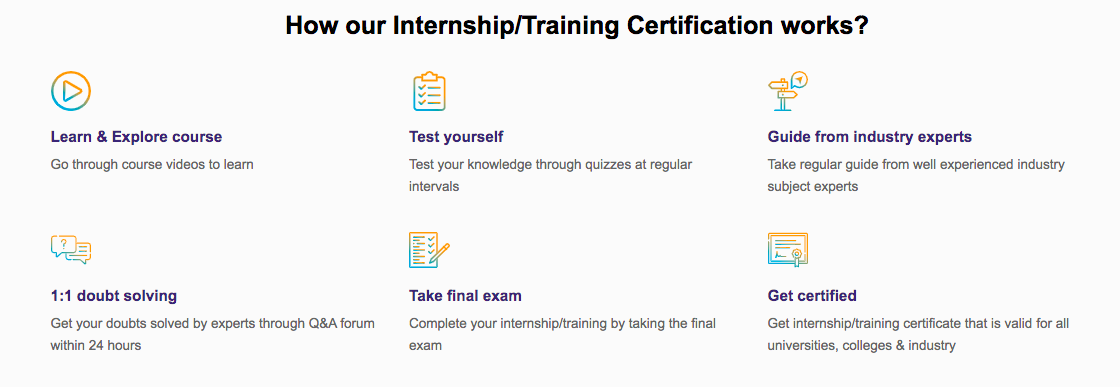
How EasyShiksha Internship/Training Program Works
The Role of AI in a Digital Career Lab
Artificial intelligence can make career-learning environments more responsive. AI systems can generate personalised questions, provide feedback on activities and adjust the difficulty of certain exercises.
An AI-supported simulation could change its scenarios depending on how a learner responds. A beginner might receive a straightforward challenge, while a more advanced learner could encounter greater uncertainty or additional constraints.
AI could also act as a learning assistant during simulations. Rather than immediately providing the answer, it could ask questions that encourage students to examine their reasoning. If a student makes a mistake, the system could explain the underlying concept and offer another opportunity to attempt the task.
However, effective AI-supported education should maintain a clear distinction between assistance and replacement. If an AI system solves every problem for the learner, the student may complete the activity without developing the intended skill. The most useful design is therefore one that encourages thinking, experimentation and practice.
Connecting Digital Career Exploration With Online Degrees
Career exploration becomes particularly important when students are considering longer educational commitments such as online degrees. An online degree can provide structured academic learning, but students may still benefit from understanding the broader career ecosystem surrounding a subject.
A Digital Career Lab can provide an introductory experience before or alongside degree selection. A student considering computer science could experiment with programming and problem-solving activities. Someone considering business could explore management or marketing simulations. A learner interested in finance could interact with educational financial scenarios.
This does not determine which degree a student should choose. Instead, it gives the student more information about the kinds of activities associated with different fields.
EasyShiksha's ability to bring online degrees, courses and career guidance together can make this relationship particularly useful. A learner can move from discovery to deeper educational research without having to treat each stage as an unrelated digital experience.
Career Counselling Becomes More Data-Informed
Career counselling traditionally depends heavily on conversations between counsellors and students. Those conversations remain valuable because human counsellors can understand personal circumstances, ambitions and concerns that automated systems cannot fully capture.
However, interactive learning data can provide an additional source of information for those conversations. A counsellor could potentially review which types of activities a student explored, which challenges they completed and what subjects they repeatedly returned to.
This can make career discussions more concrete. Instead of a student saying, "I think I like technology," the conversation could explore what happened when the student attempted different technology-related activities.
The combination of human guidance and digital exploration can therefore provide a richer career-development experience than either approach alone.
Making Career Exploration Accessible to Indian Students
India's education system serves students with widely different backgrounds, academic environments and career exposure. Students in metropolitan areas may have access to professional networks, career fairs, specialised coaching and internships, while others may have fewer opportunities to interact directly with professionals.
Online career exploration cannot eliminate these differences, but it can create additional opportunities for students to encounter unfamiliar fields.
A student from a smaller city could explore cybersecurity through a digital simulation, discover an online course and later apply for a remote internship. Another student could discover an interest in data analysis through a quiz and then begin structured learning.
The smartphone is already a major gateway to digital education for many learners. Designing career exploration experiences that work effectively across devices can therefore make the Digital Career Lab more accessible.
Games Should Not Become Distractions
There is an important distinction between gamification and meaningful game-based learning. Adding points, badges or leaderboards to an activity does not automatically make it educational.
A career game should have a clear learning purpose. Its mechanics should encourage the behaviour or thinking skill that the learner is supposed to develop. If a student earns points simply by clicking through content quickly, the points provide little educational value.
A well-designed career game can instead reward exploration, problem-solving, careful decisions and improvement. The focus should remain on what the learner understands and practises.
For EasyShiksha, this distinction is important because games can support the broader learning ecosystem only when they are connected to meaningful educational outcomes.
Quizzes Should Measure More Than Memory
The same principle applies to quizzes. A quiz that asks students to remember definitions can be useful for knowledge assessment, but career exploration often requires more than factual recall.
Scenario-based questions can test how learners interpret situations, choose between alternatives and apply concepts. A student exploring project management, for example, can be presented with a situation involving competing deadlines rather than simply being asked to define project management.
This makes quizzes more closely connected to practical learning. The results can then help students identify concepts they need to study further.
EasyShiksha can use this approach to transform quizzes from standalone assessments into gateways to deeper learning.
Simulations Can Make Failure Productive
Failure in traditional academic environments can sometimes feel final because it may affect grades or progression. Digital simulations can create a different environment where failure becomes part of experimentation.
A student can make a poor decision in a simulation, observe the outcome, review the reasoning and attempt the situation again. The experience can teach students that professional learning often involves iteration.
This is particularly valuable for career exploration because students should have permission to discover that a particular field may not interest them. A student who completes a coding simulation and realises that programming is not enjoyable has gained useful information. That outcome does not represent failure. It represents career discovery.
Building a Continuous Digital Career Journey
The long-term potential of the Digital Career Lab lies in continuity. Career exploration should not necessarily happen once during school or college. Students' interests and skills can change as they encounter new technologies, subjects and experiences.
A learner might initially explore graphic design, later discover user experience design and eventually become interested in product management. A digital platform can support this evolution by allowing students to explore different pathways without forcing them into a fixed identity.
This creates the possibility of a digital career journey that evolves alongside the learner. Games can introduce possibilities, quizzes can encourage reflection, courses can build knowledge, simulations can develop practical understanding and internships can provide workplace exposure.
EasyShiksha's broader ecosystem provides a foundation for connecting these experiences. Rather than viewing each feature independently, the platform can position them as stages within a student's ongoing educational and career journey.
The Future of Digital Career Labs
As online education continues to evolve, the boundaries between learning, career exploration and practical experience are likely to become less rigid. Students may increasingly expect educational platforms to help them understand not only what they can learn but also where that learning can lead.
Future Digital Career Labs could include immersive simulations, collaborative challenges, AI-supported mentors, virtual workplace environments and project-based assessments. Students could potentially explore multiple professional environments before deciding which areas deserve deeper investment.
The important principle will remain the same: technology should increase the student's ability to explore and make informed decisions rather than make those decisions for them.
The strongest digital career environments will therefore combine technology with human guidance. AI can personalise activities, games can create engagement, quizzes can encourage reflection, simulations can provide practical scenarios and counsellors can help students interpret their experiences within the context of their individual goals.
Empower your team. Lead the industry
Get a subscription to a library of online courses and digital learning tools for your organization with
EasyShiksha
EasyShiksha and the Connected Career Learning Model
EasyShiksha is positioned around multiple parts of the modern student's digital journey, including online education, courses, internships, quizzes, games, online degrees, career counselling and education discovery. A Digital Career Lab can connect these capabilities into a more continuous experience.
A student could begin with curiosity. A quiz or game could introduce a career field. The student could then explore an interactive simulation and discover whether the underlying activities are interesting. A relevant online course could provide structured knowledge. A practical project could turn that knowledge into evidence, while an internship could introduce workplace expectations.
The value of this model is not that one digital platform can predict a student's future. Career development is too complex for that. Its value lies in giving students more opportunities to explore, practise, reflect and learn before making important educational decisions.
The concept also changes how students can think about online education. Learning does not have to begin only when a student enrols in a course, and career preparation does not have to begin only when graduation approaches. A student can start exploring possibilities much earlier and continue developing skills throughout their education.
Conclusion: From Learning About Careers to Experiencing Them
The Digital Career Lab represents a shift from passive career information towards interactive career exploration. Games can introduce professional situations in an engaging format. Quizzes can encourage reflection and reveal areas worth exploring. Simulations can bring workplace-style decisions into a safe learning environment. Courses can build the knowledge required to understand those experiences, while internships and projects can take learning closer to real-world application.
For students, this approach can make career exploration more practical and continuous. Instead of choosing a career based only on marks, descriptions or external expectations, learners can gain more opportunities to interact with different kinds of tasks and understand their own interests through experience.
For EasyShiksha, the concept fits naturally with a connected digital education ecosystem where students can discover schools, universities and colleges, explore online degrees and courses, take quizzes, play educational games, receive career guidance and seek internship opportunities.
The future of career preparation may therefore be less about finding one perfect answer at the beginning of a student's journey and more about creating opportunities to explore, learn, practise and adapt along the way. A Digital Career Lab can become a meaningful part of that journey by turning career exploration into an active learning experience rather than a single decision made on paper.
Anshika Jain is an Engineer, Developer, and Educational Content Author known for her dedication to technology and knowledge sharing. With a strong analytical mindset and a passion for innovation, she has consistently contributed to creating meaningful digital solutions and insightful educational articles.
Her ability to simplify complex technical concepts into engaging and easy-to-understand content makes her work valuable for students and learners across various platforms. Along with her technical expertise, Anshika is admired for her creativity, professionalism, and commitment to continuous learning.
She represents a perfect blend of technical excellence and impactful communication, inspiring others through both her development work and educational contributions.