
















Choose your academic level
Whether you're starting out after 12th, advancing with a Master's, or pursuing doctoral research — find programmes matched to where you are academically right now.
Choose where you are in your academic journey

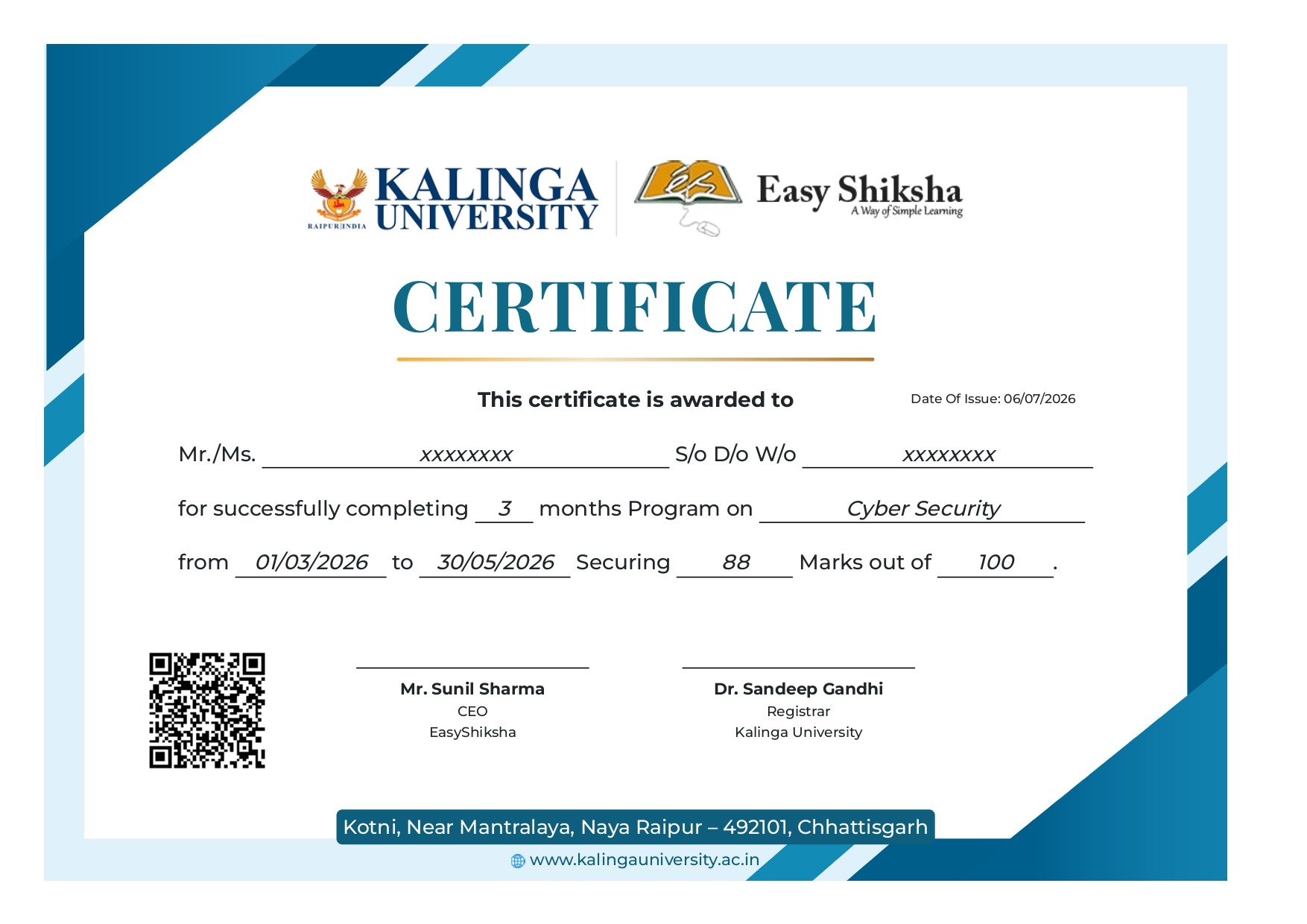
Certificate
A Certificate is a focused education and skill-development level designed to help learners build knowledge or practical capabilities in a specific subject, profession, technology or area of interest. Certificate programmes are generally more specialised and targeted than broad academic qualifications, making them useful for learners who want to develop a particular competency without necessarily pursuing a full degree programme.
Certificate courses may be considered by students, graduates, working professionals and individuals seeking additional skills or knowledge. Depending on the programme and university, certificates can cover areas such as technology, business, management, communication, creative fields, professional skills and other specialised subjects. Eligibility, duration, curriculum and recognition can vary significantly by programme and institution.
Certificate programmes may support academic preparation, professional upskilling or focused skill development, depending on their structure and purpose. At EasyShiksha, students can explore certificate programmes across universities and compare options based on eligibility, duration, specialisation, learning mode and curriculum to identify programmes aligned with their learning and career goals.

UG
UG, or Undergraduate, is an academic level that generally refers to higher education pursued after completing secondary or senior secondary education and before postgraduate study. Undergraduate education includes a wide range of degree programmes designed to provide foundational and specialised knowledge in a chosen field. Depending on the university and discipline, common UG programme types may include B.A., B.Com, B.Sc, BBA, BCA, B.Tech, B.Voc and other bachelor's programmes.
UG programmes help students develop subject knowledge, academic abilities and, depending on the programme, practical or professional skills. Eligibility, duration, curriculum and admission requirements vary according to the programme and university. Many UG programmes are considered by students after Class 12, although specific entry requirements depend on the chosen course.
For students planning further education, an undergraduate qualification can provide a pathway towards postgraduate study where applicable. It can also support entry into professional or employment-oriented pathways depending on the programme. At EasyShiksha, students can explore and compare Undergraduate (UG) programmes across universities based on programme type, specialisation, eligibility, duration and learning mode.

PG
PG, or Postgraduate, is an academic level that generally refers to higher education pursued after completing an appropriate undergraduate qualification. Postgraduate education allows learners to develop advanced or specialised knowledge in a chosen discipline and can support further academic study, professional development or career progression. Common PG programme types include M.Tech, M.Sc, MBA, MCA, M.A, M.Com and M.Voc, depending on the university and programme availability.
Postgraduate programmes are often designed for learners who want to deepen their understanding of a subject, develop specialised expertise or build on knowledge gained during undergraduate study. Eligibility, duration, curriculum, admission requirements and learning modes can vary considerably across programmes and universities.
Depending on the qualification and field, completing a PG programme may support progression towards specialised professional roles, further academic study or other career pathways. Students should evaluate programme-specific requirements and objectives before making a decision. At EasyShiksha, learners can explore and compare Postgraduate (PG) programmes across universities based on programme type, specialisation, eligibility, duration, curriculum and learning mode.

Diploma
A Diploma is a focused education and training level designed to provide learners with subject-specific knowledge, practical skills or professional competencies in a particular field. Diploma programmes can be academic, technical, vocational or professional in nature and are offered across a wide range of disciplines. They are distinct from degree programmes and should not be treated as equivalent to a bachelor's or master's qualification.
Diploma courses may be considered by students at different stages, depending on the programme's eligibility requirements. Some may be suitable after Class 10 or Class 12, while others can require prior qualifications or specific subject knowledge. Duration, curriculum, admission requirements and learning mode vary considerably between programmes and universities.
Depending on the programme, a diploma can support focused skill development, entry into a particular professional area, employment-oriented learning or progression to further education where applicable. Students should evaluate the specific programme before enrolling. At EasyShiksha, learners can explore and compare Diploma programmes across universities based on programme type, specialisation, eligibility, duration, learning mode and curriculum.

Advanced Diploma
An Advance Diploma is a specialised programme level designed to provide learners with deeper knowledge and practical skills in a particular academic, technical, vocational or professional field. It generally goes beyond introductory diploma-level learning by allowing students to develop more focused understanding and competencies in a chosen area. The exact academic structure and purpose can vary by programme and university.
Advance Diploma programmes may be considered by learners who already have relevant educational qualifications, prior diploma-level knowledge or an interest in specialised professional training, depending on the programme's eligibility requirements. They can cover fields such as technology, management, hospitality, design, business, creative studies and other specialised areas.
The duration, eligibility, curriculum, learning mode and progression opportunities of an Advance Diploma vary by institution and programme. Students should therefore evaluate individual course details before applying. At EasyShiksha, learners can explore and compare Advance Diploma programmes across universities based on programme type, specialisation, eligibility, duration, learning mode and curriculum.

PG Diploma
PG Diploma, or Postgraduate Diploma, is a specialised postgraduate-level qualification generally designed for learners who have completed an appropriate undergraduate education. It focuses on developing advanced or specialised knowledge and skills in a particular academic, technical, professional or vocational field. Compared with a broad postgraduate degree, a PG Diploma often concentrates on a defined area of study and may be useful for learners seeking targeted academic or professional development.
PG Diploma programmes can be available across areas such as management, technology, business, finance, healthcare-related fields, communication, education and other specialised disciplines, depending on university offerings. Eligibility, duration, curriculum, admission requirements and learning modes vary by programme and institution.
A PG Diploma may support professional development, specialised learning or further academic progression where applicable. Its exact progression value depends on the programme and the requirements of the next qualification or institution. At EasyShiksha, students can explore and compare Postgraduate Diploma programmes across universities based on programme type, specialisation, eligibility, duration, learning mode and curriculum.

Degree
A Degree is a formal academic qualification awarded by a recognised higher education institution after the successful completion of a structured programme of study. Degree programmes provide learners with systematic knowledge and understanding of a particular discipline and may combine theoretical learning, practical education, projects, research or other academic components depending on the programme.
Degree programmes are available at different academic stages, including Undergraduate (UG) degrees, Postgraduate (PG) degrees and Doctoral degrees. They cover a wide range of disciplines such as arts, science, commerce, management, technology, computer applications, education and other specialised fields.
The eligibility, duration, curriculum, admission requirements and learning mode vary according to the specific degree and university. Students should therefore evaluate the individual programme rather than assuming that all degrees have the same structure. At EasyShiksha, learners can explore and compare Degree programmes based on programme type, specialisation, eligibility, duration, learning mode, curriculum and other academic details.
How the three levels connect
Most students progress through these levels in order — though you can enter at whichever point matches your current qualification.
University partners across every level

















What learners say about choosing their level
"Starting at Undergraduate with a B.Voc gave me both the degree and the hands-on skills I needed right after 12th."
"Moving to Postgraduate for my MBA after working for two years made the whole programme click differently than it would have straight after my Bachelor's."
"Knowing exactly what eligibility each level needed saved me from applying to the wrong programme entirely."
Which academic level is right for you?
Undergraduate programmes are the entry point for students who've completed 12th grade — a full Bachelor's Degree, a shorter Diploma, or a skills-focused B.Voc, all recognised as your first university qualification. Typical duration ranges from one year (Diploma) to four years (Degree), and eligibility is usually just a completed 12th grade, sometimes with a minimum aggregate score.
Postgraduate programmes assume a completed Bachelor's degree and are the standard next step for career specialisation or academic advancement, including Master's degrees, PG Diplomas, and Executive Programmes for working professionals. Most Postgraduate degrees take one to two years, and many accept graduates from a related — though not always identical — undergraduate background.
Doctoral level and beyond
Doctoral level covers PhD and Post Doctoral research programmes, intended for scholars pursuing original research and academic careers, and typically requiring a completed Master's degree as a prerequisite. Duration varies far more than the other two levels, often running three years or longer depending on the research area and university.
Entering at the right point
You don't need to start at Undergraduate if you already hold a higher qualification — a graduate can go straight to Postgraduate programmes, and a postgraduate can move directly into Doctoral study. Use your current highest qualification, not your age or career stage, to decide which level page to start from.
Frequently asked questions
What are the eligibility requirements for each level?+
Undergraduate programmes typically require completed 12th grade; Postgraduate requires a Bachelor's degree; Doctoral requires a Master's degree. Exact eligibility varies by university and specific programme — check the individual programme page for details.
Can I pursue a Postgraduate degree without an Undergraduate degree from the same domain?+
In many cases, yes — cross-domain postgraduate study is common, though some specialised Master's programmes may require a related undergraduate background. Check individual programme eligibility criteria.
How long does each level typically take?+
Undergraduate Degrees typically take 3–4 years, with Diplomas and B.Voc programmes often shorter. Postgraduate Master's degrees typically take 1–2 years, PG Diplomas around 1 year. Doctoral programmes vary widely, often 3 years or more.
Can I skip a level, such as going straight to a PhD after a Bachelor's?+
This depends on the specific university and programme — some institutions offer integrated pathways, but most Doctoral programmes require a completed Master's degree as a prerequisite.
Ready to find your programme?
Browse by domain or programme type to narrow things down further.
Browse By Domain